
Still Life with Tea-pot
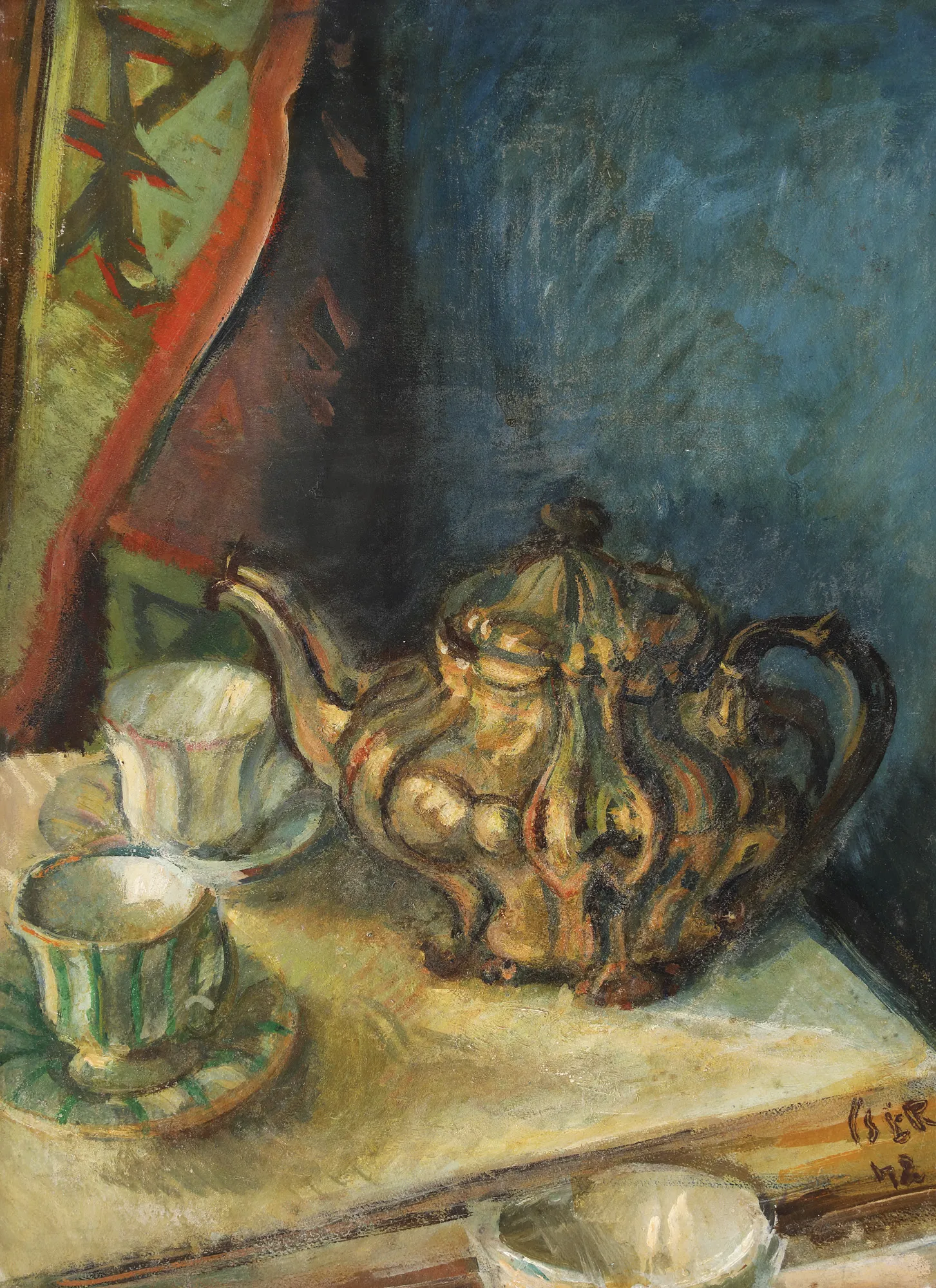
Still Life with Tea-pot
Description
Iosif Iser debuts in front of the public as a cartoonist-publicist sketching a satirical chronicle of reality in the pages of the newspapers of the time. Excellent, expressive, and synthetic observer, the artist devotes the extent of his canvases to deciphering human typologies. Starting with 1920, Iser begins to focus his attention more towards oil painting. He will take everyday life subjects and will use trips abroad as milestones in the making of his creations. He will focus initially on the events which he observes in his immediate reality and will discover, with the first trips to Dobrogea, the oriental world. The Tatar families, odalisques and compositions which have as central plan the Turkish props will become Iser's favourite subjects. In the present work, the artist restricts his chromatic palette to just a few shades, modelled alternately. The details of the tea-pot which floods the left plan, exposes a possible reminiscence of a Turkish coffee shop. The chromatic is opulent, inspired from the East; the subjects are architecturally ordered and the synthetic lines summarise the shapes exactly. Although insignificant in the economy of his entire work, still life brings a new spirit, strongly marked by oriental influences, which the artist takes up both in the shaping of forms and in his chromatic choices.
Biography
The catalogue of the retrospective exhibition "Iser", Bucharest, 1983.
Sizing
Width 45, Height 61
Signature
signed and dated bottom right, in brown, "ISER, (19)42"
Dating
1942
Medium
gouache on paper pasted on cardboard
Location
Artmark românia