


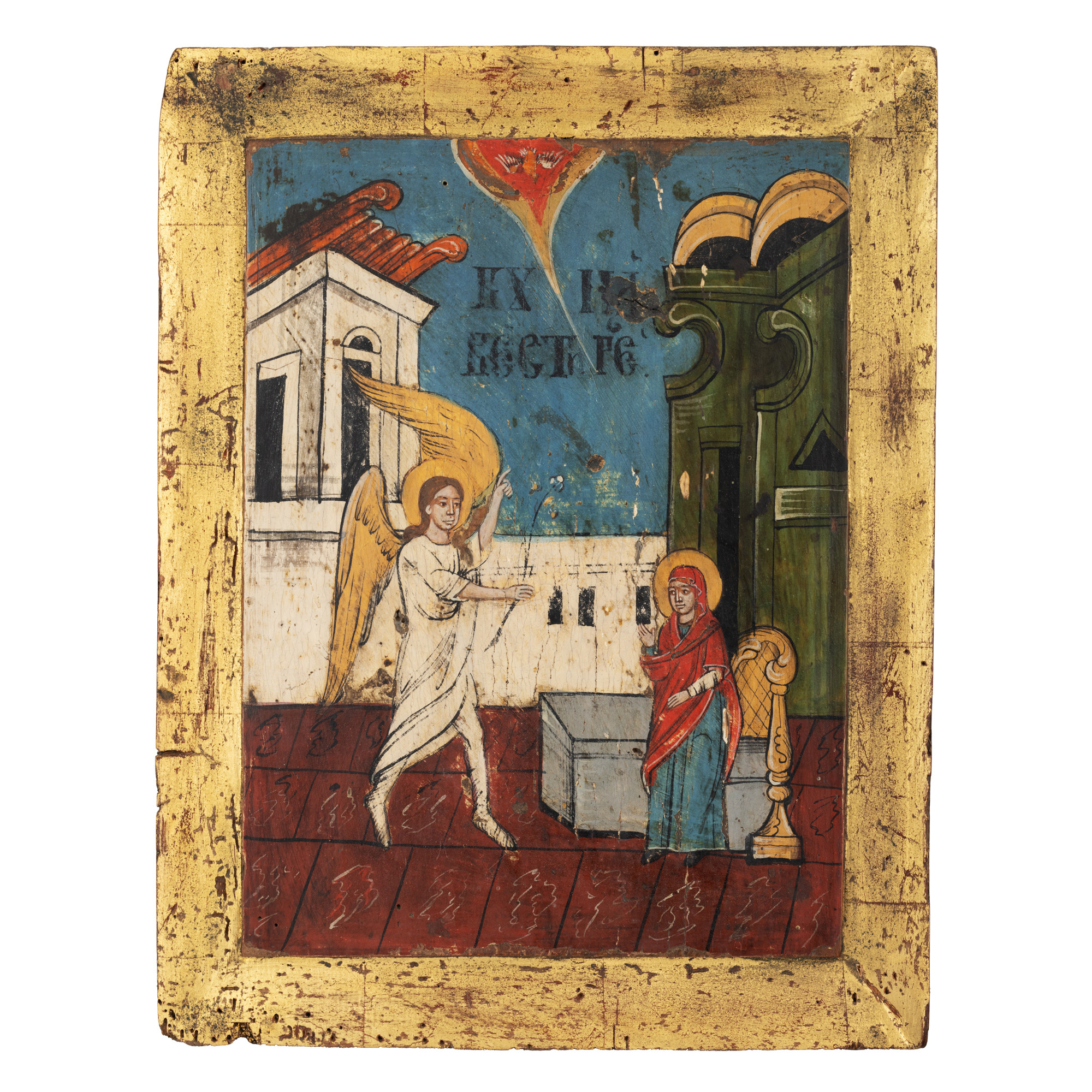
86. Icon on wood, "Annunciation", possibly painted by Simon Oprovici from Craiova, last decades of the 18th century, rare piece
The photos of the lot are informative and indicative, and cannot provide a highly detailed view of the object from all angles. We recommend a careful physical inspection of the lot before bidding.
86. Icon on wood, "Annunciation", possibly painted by Simon Oprovici from Craiova, last decades of the 18th century, rare piece
Starting price:
EUR 200
Sold
EUR 350
tempera pe lemn, 31.5 x 25.5 cm
Research information
Simion Oprovici (also known as Simon Zugrav Oprovici from Craiova, Simon Zugraf ot Craiova, Simon Zugraf, Simon Zugrav from Belgrade) was a mural painter and iconographer, originally from Wallachia, from Craiova, active in the last three decades of the 18th century, in the southern parts of Transylvania. His painting is within the spirit of the post-Brâncovenesc tradition, the artist proving talent and skill in creating compositions. He arrives in Transylvania, probably through his connections with painters from the outskirts of Sibiu, where he also created his earliest known and preserved works. His icons have a personal note, through the manner of treating faces and the plasticity of their relief. He settled in Transylvania from the last decade of the 18th century, in Alba Iulia.
The painter depicts the scene of the Annunciation, reducing it to essential compositional elements, treating it symmetrically. Against the blue background of the icon, in front of conventional architectures, painted by the artist in a personal style, the well-known scene of the Annunciation unfolds. On the left side, standing, is depicted Archangel Gabriel, and on the right side of the scene, in the same attitude, is depicted Virgin Mary. Between them, on the axis of symmetry, is the Dove of the Holy Spirit, descending from heaven. (A.D.)
For clarifications regarding the bidding procedure, hammer price costs, guarantee, payment, and collection terms for the winning lot, we recommend carefully reading/re-reading the Bidding Regulations.
For additional information regarding the lot and the auction, please contact the Art Consultants Department.
SESSION
Brought to you by
Similar lots
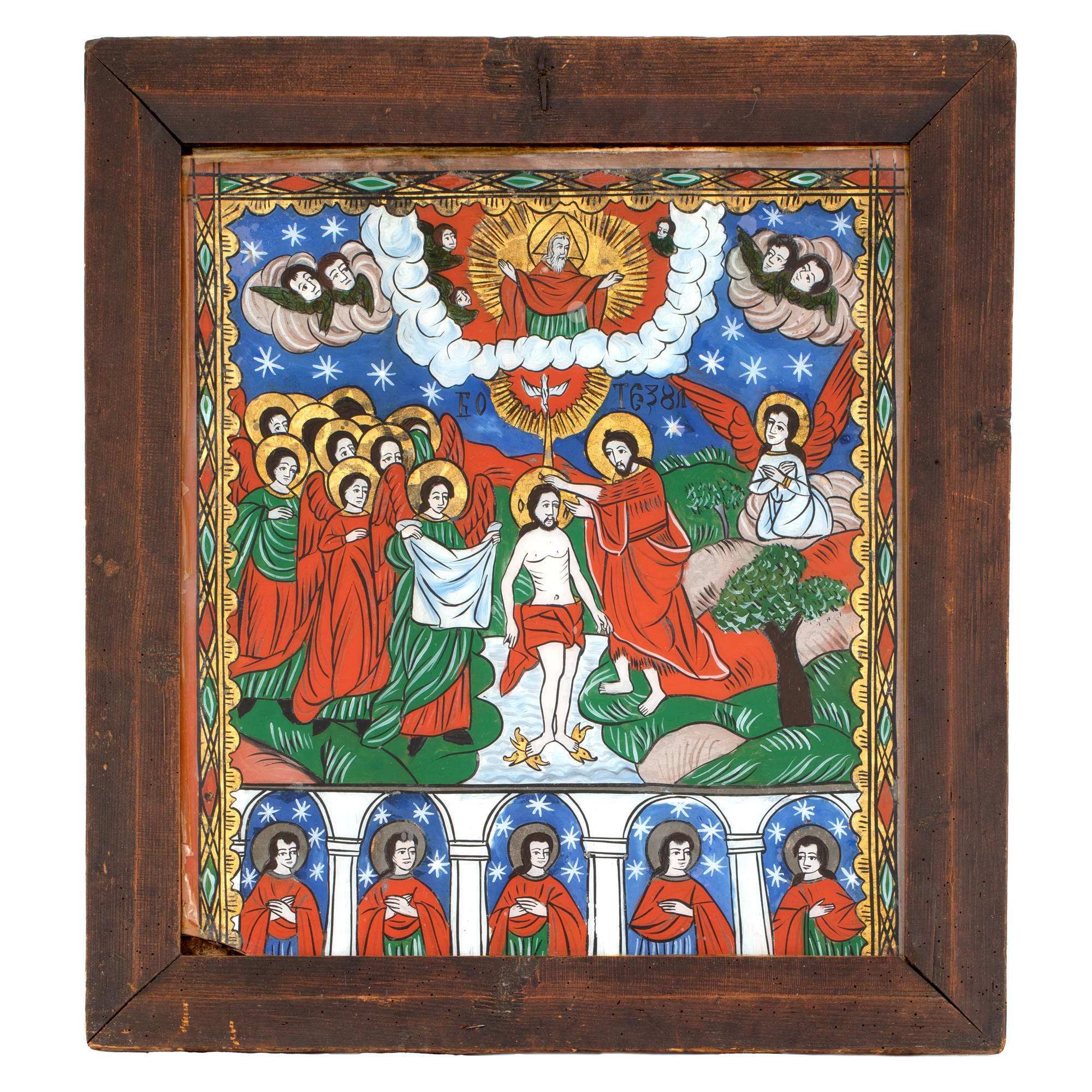
63. Icon on glass, "The Baptism of the Lord", workshop of the Tămaș family from Făgăraș, probably Moise Tămaș, mid 19th century, from collection
Starting price:
EUR 350
Sold
EUR 350
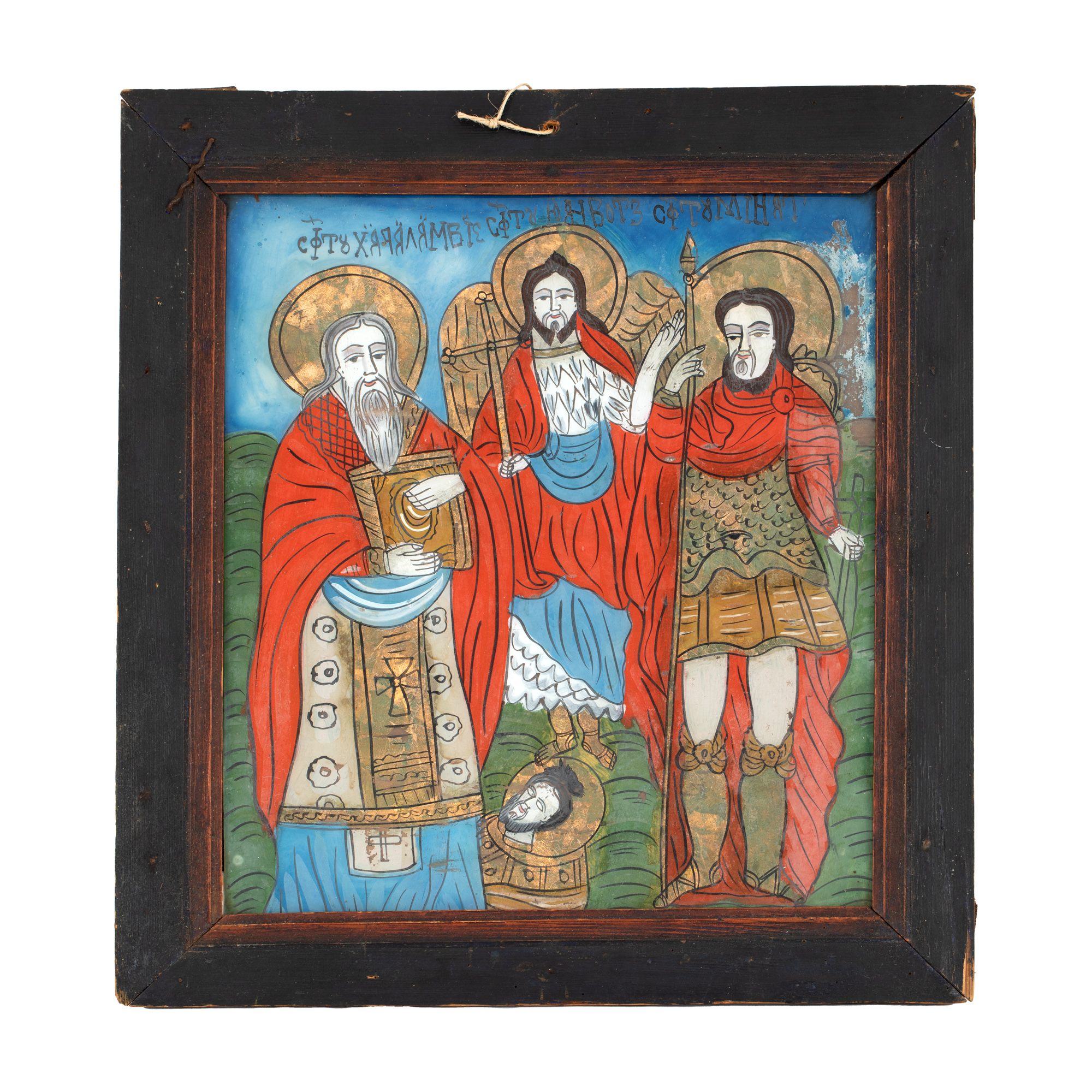
59. Icon on glass, "Saint Haralambie, John the Baptist and Mina", workshop from Scheii Brasovului, second half of the 19th century.
Starting price:
EUR 200
Sold
EUR 250
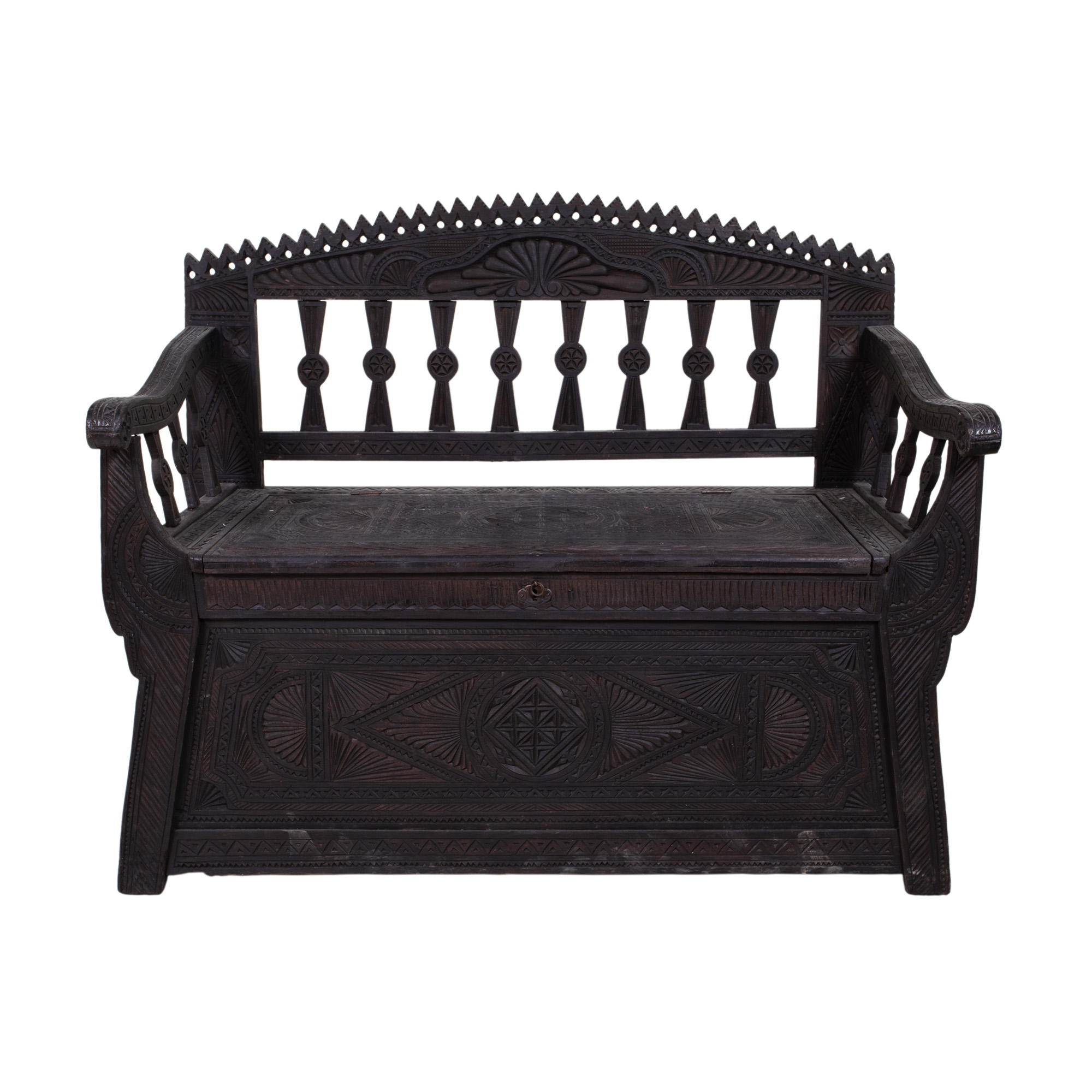
3. Bench decorated with Neo-Romanian motifs, beginning of 20th century
Starting price:
EUR 250
Sold
EUR 900