


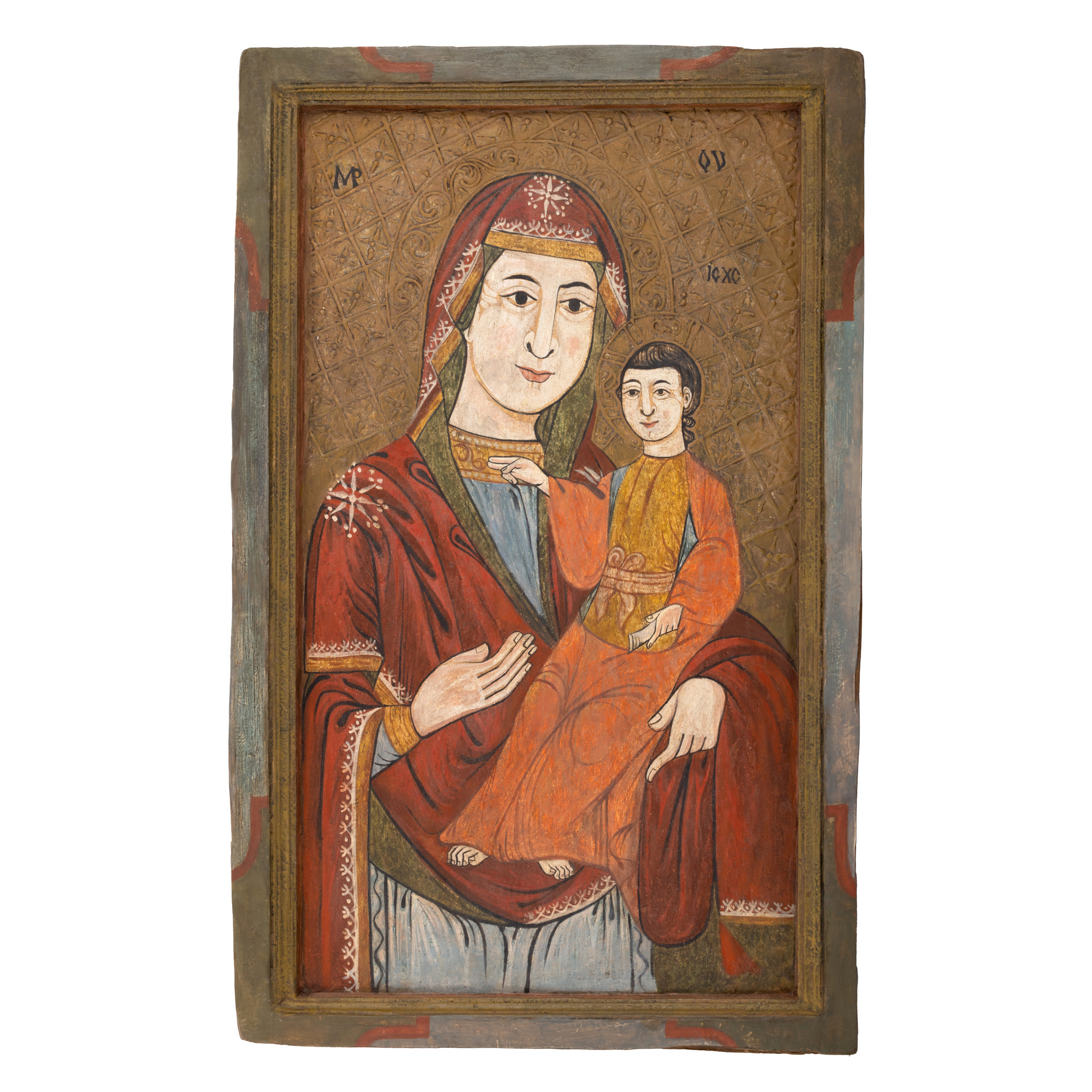
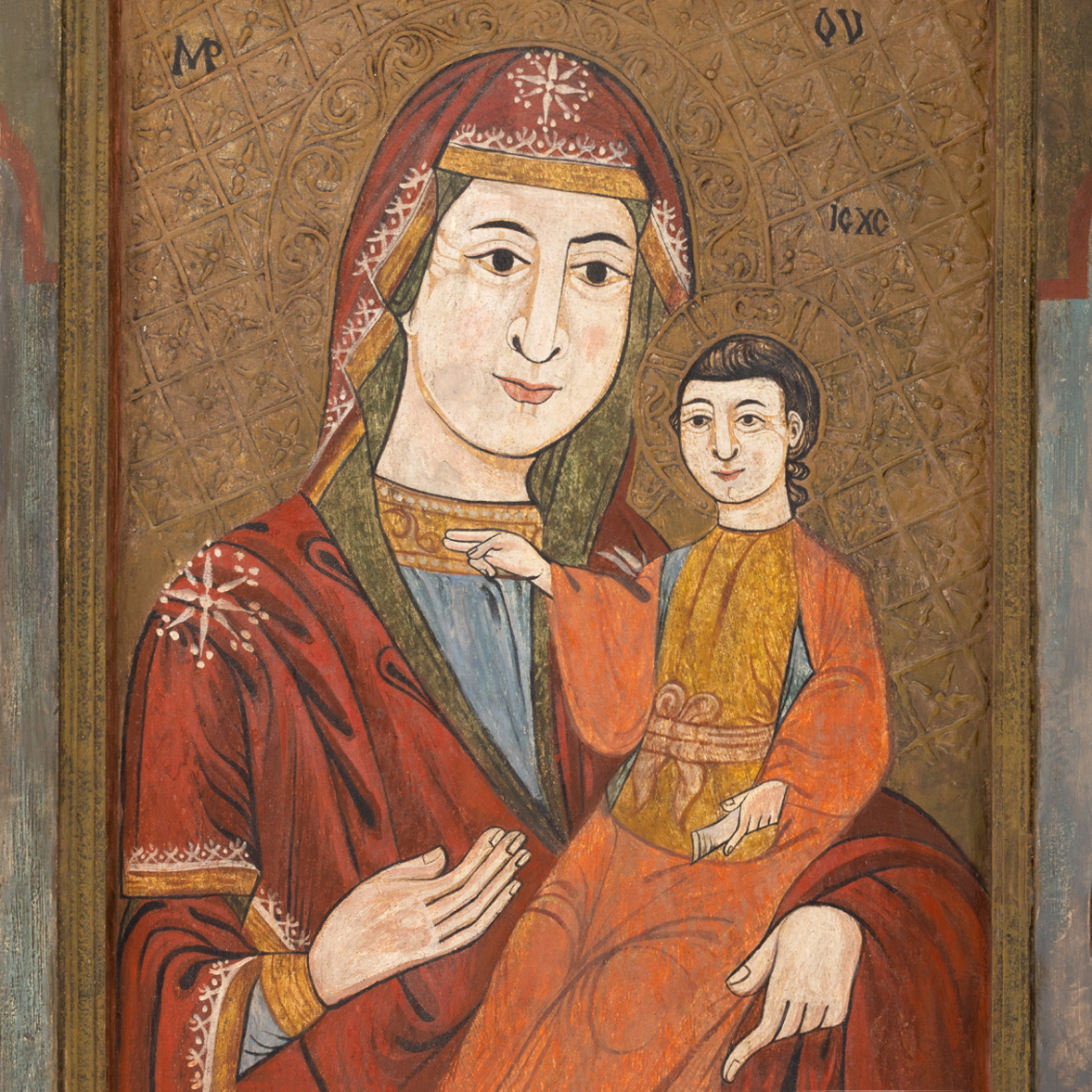
94. Imperial Icon on wood, "Mother of God with Child (Hodigitria)", painted frame, attributed to Nechita the Painter, mid 18th century, rare collection piece
The photos of the lot are informative and indicative, and cannot provide a highly detailed view of the object from all angles. We recommend a careful physical inspection of the lot before bidding.
94. Imperial Icon on wood, "Mother of God with Child (Hodigitria)", painted frame, attributed to Nechita the Painter, mid 18th century, rare collection piece
Starting price:
EUR 1.500
Not sold
tempera pe lemn, 81.5 x 51.5 cm
Research information
Nechita the painter was an icon and mural painter, active during the 1740–1775 period. His works are found equally in Bihor, in the lands of Huedin and Cluj, in the Transylvanian Plain, on the Someș River valley and in Sălaj. The painting created by the artist is marked by his strong personality, the icons and wall decor being easily recognized by many specific elements. His rich activity would have remained under the sign of anonymity, the painter having the habit of usually dating his works, but not signing them - according to some older traditions encountered throughout the Romanian Middle Ages and which have been preserved until the beginning of the 18th century.
The icon depicts the Virgin Mary represented in bust, holding baby Jesus on her left arm. Jesus holds a phylactery with his left hand, while blessing with the right. The Virgin wears a red maphorion, with a green pallium, and Jesus wears a red tunic. Around their heads, each has a halo decorated in relief with floral motifs. The background of the icon is silver, adorned with geometric motifs. (A.D.)
For clarifications regarding the bidding procedure, hammer price costs, guarantee, payment, and collection terms for the winning lot, we recommend carefully reading/re-reading the Bidding Regulations.
For additional information regarding the lot and the auction, please contact the Art Consultants Department.
SESSION
Brought to you by
Similar lots
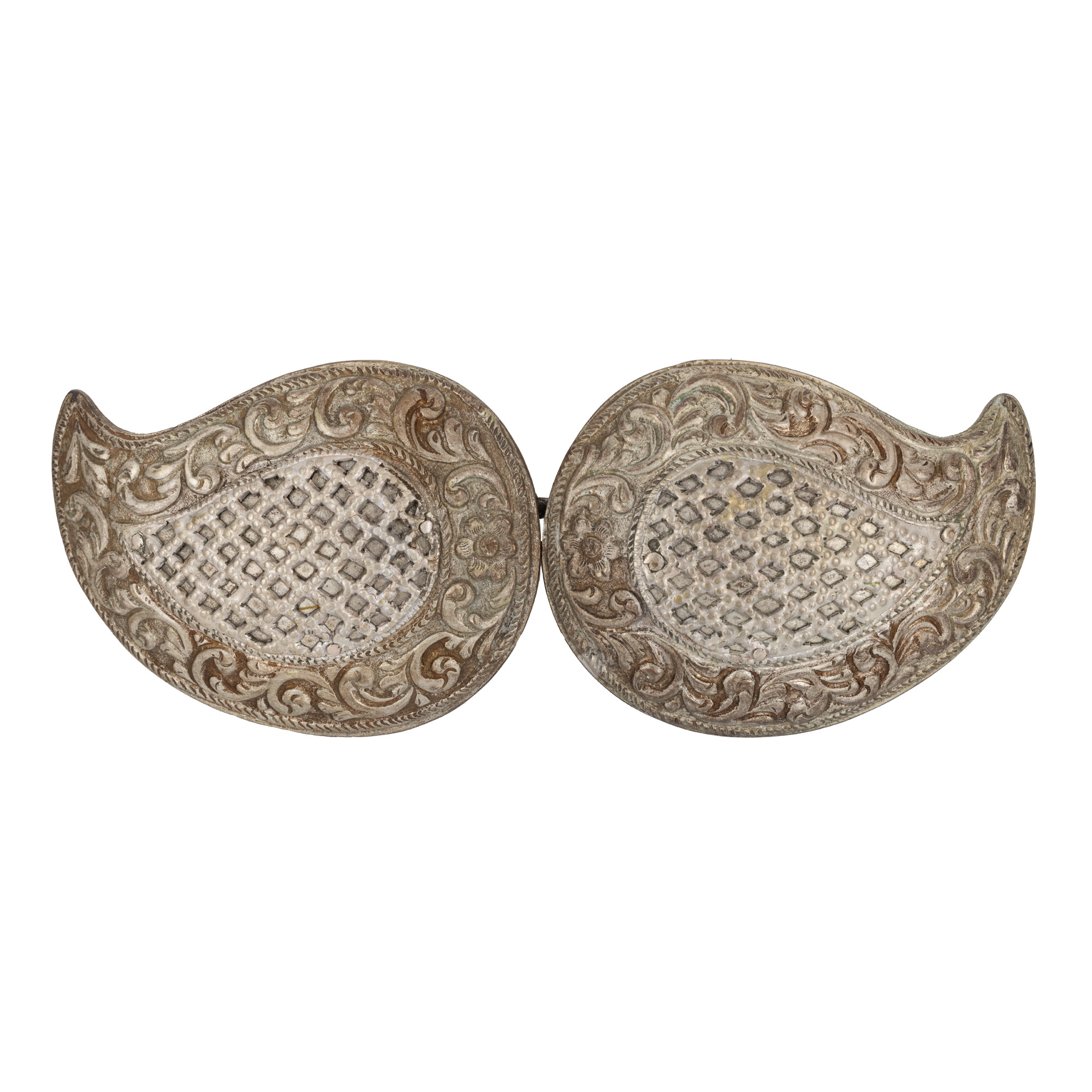
207. Silver plaque, decorated with floral motifs, Balkan workshop, early 20th century
Starting price:
EUR 250
Sold post auction
EUR 313
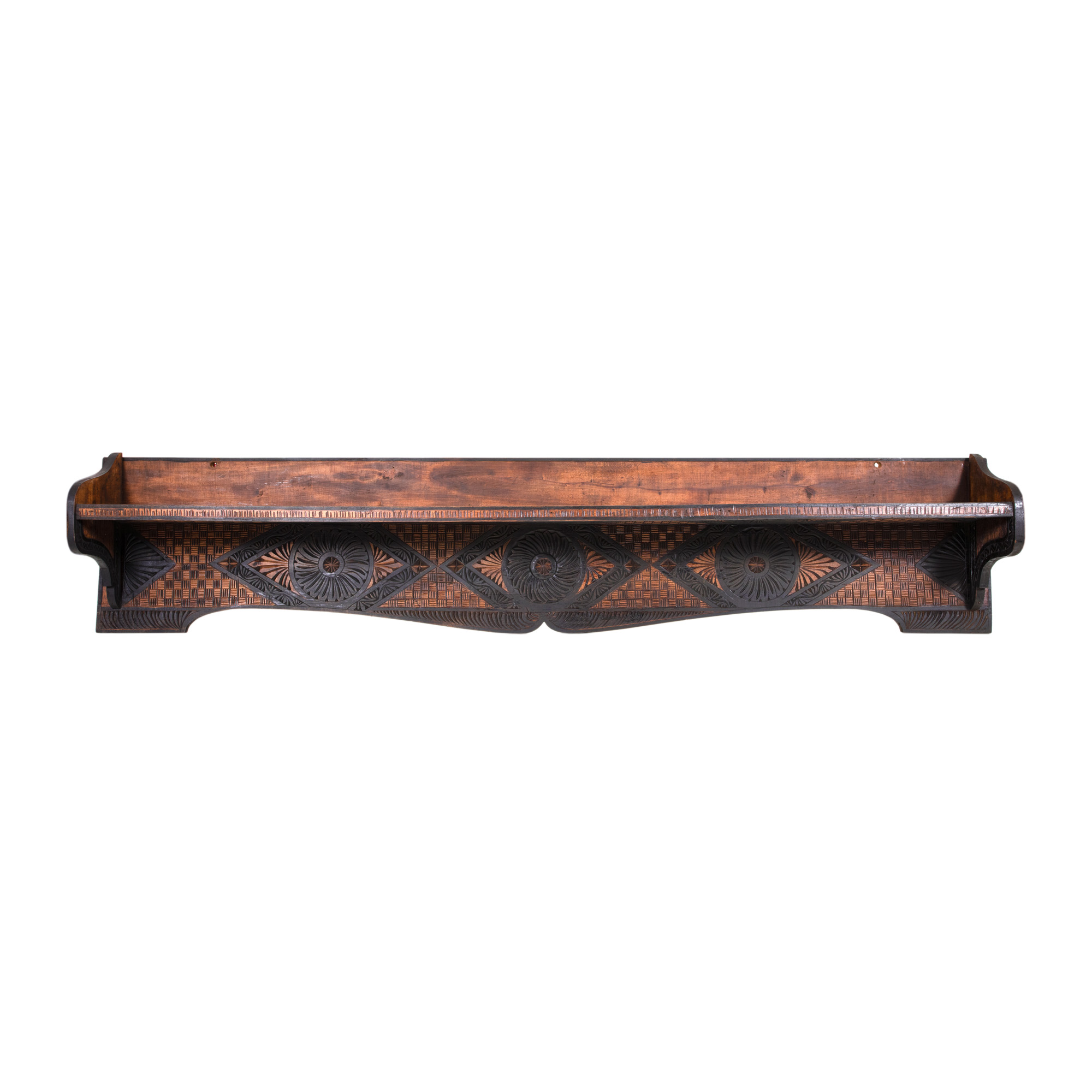
19. Shelf decorated with Neo-Romanian motifs, first half of the 19th century
Starting price:
EUR 150
Sold
EUR 175
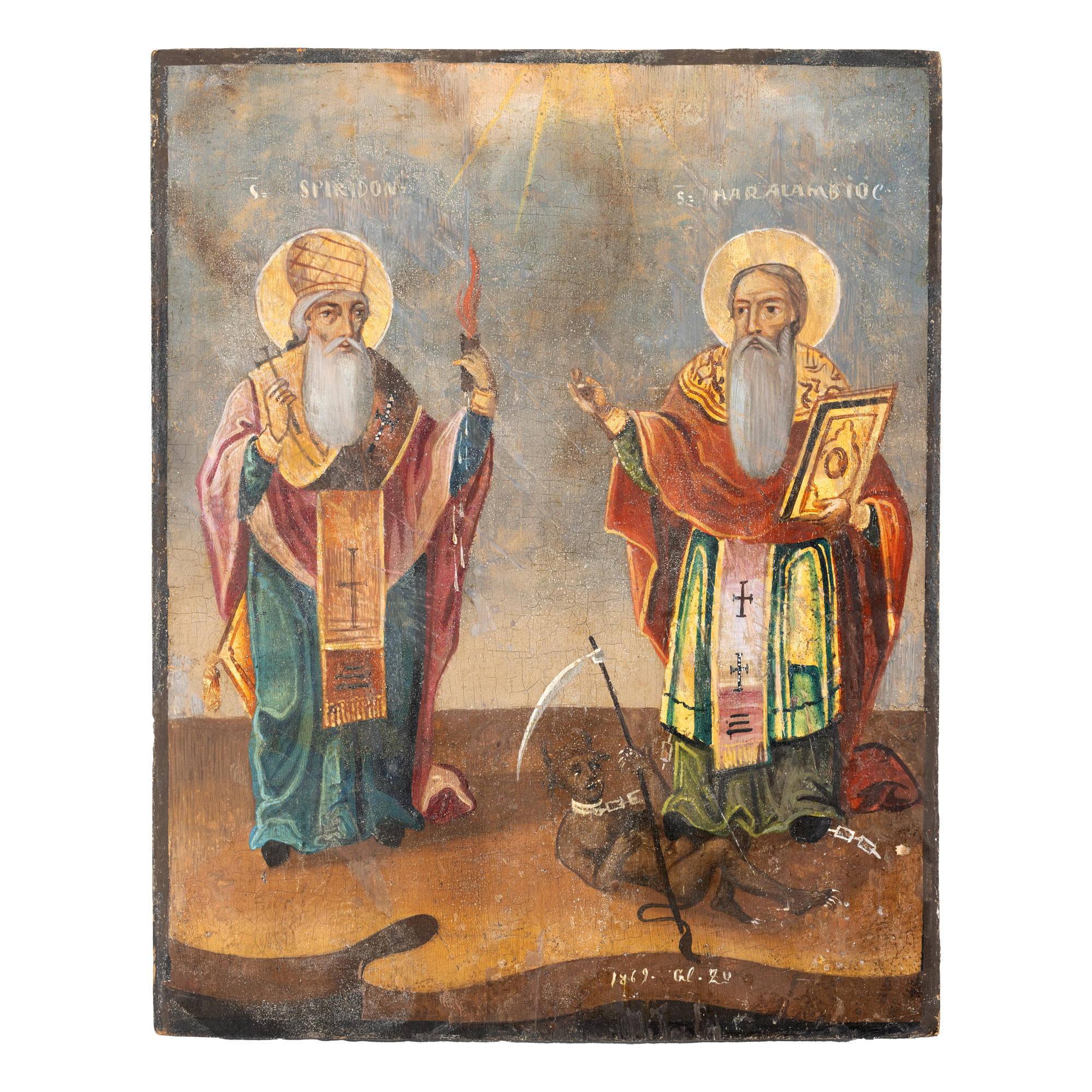
114. Icon on wood, "Saints Hierarchs Spiridon and Haralambie", probably painted by Ghelasie, probably Căldărușani, 1869
Starting price:
EUR 350
Not sold