

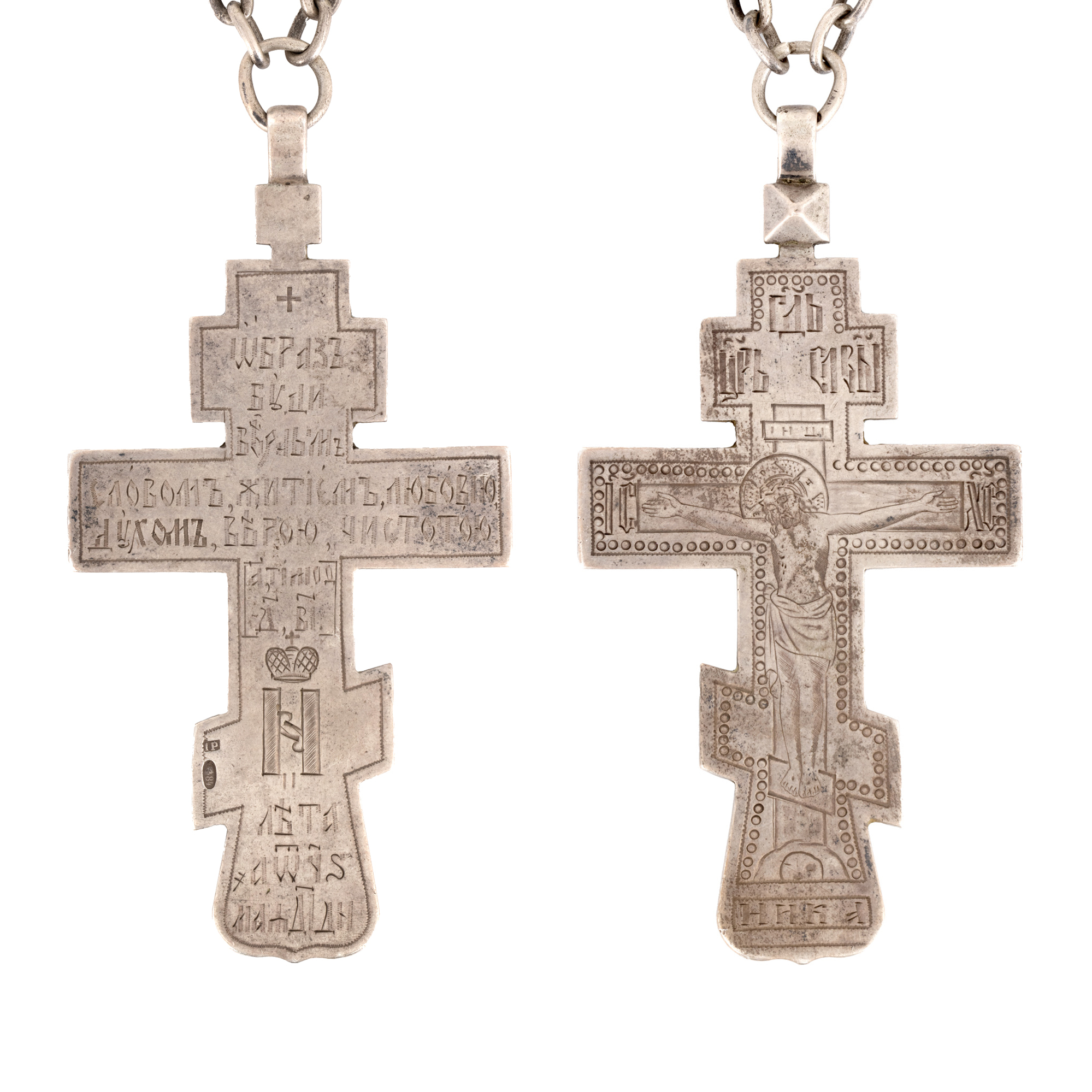
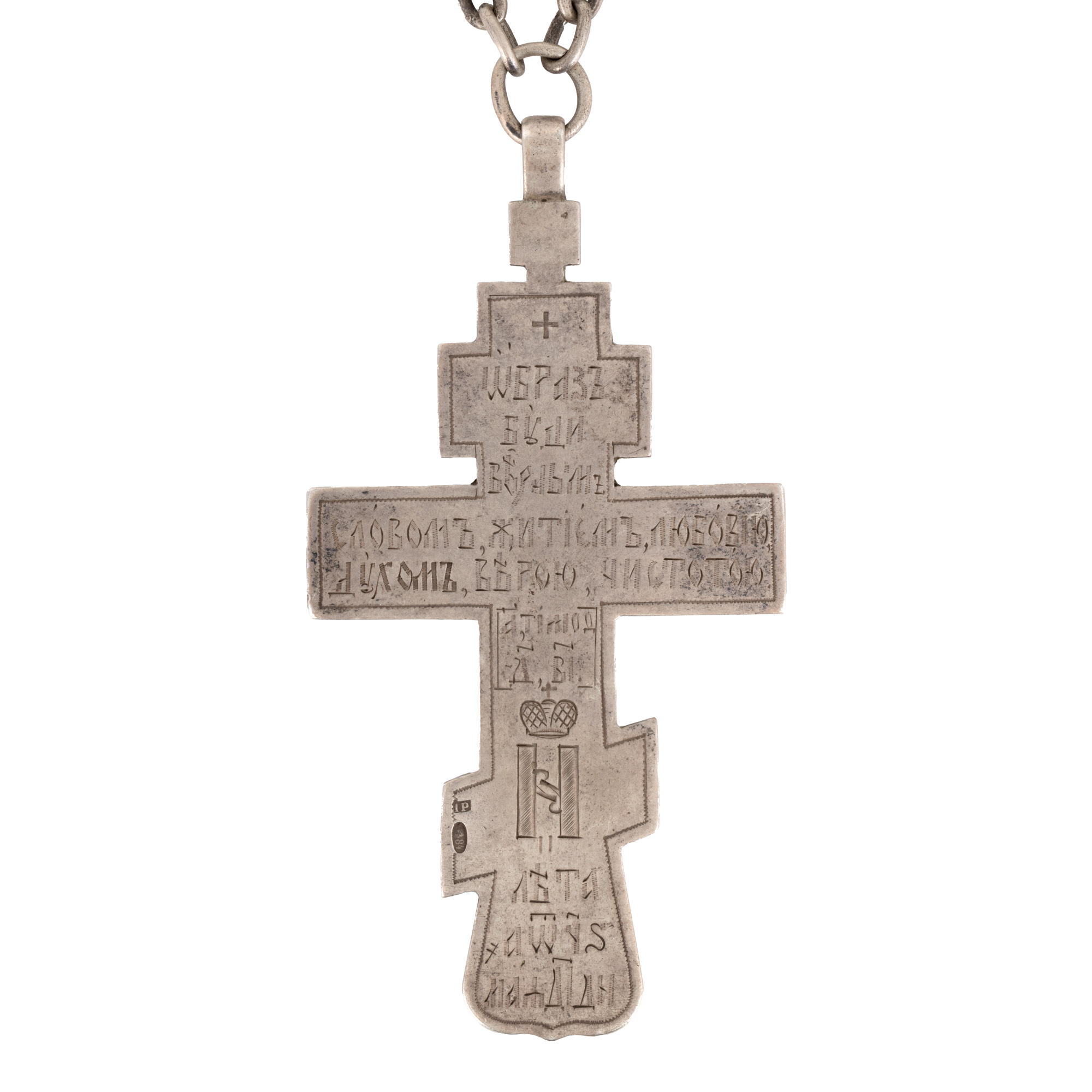
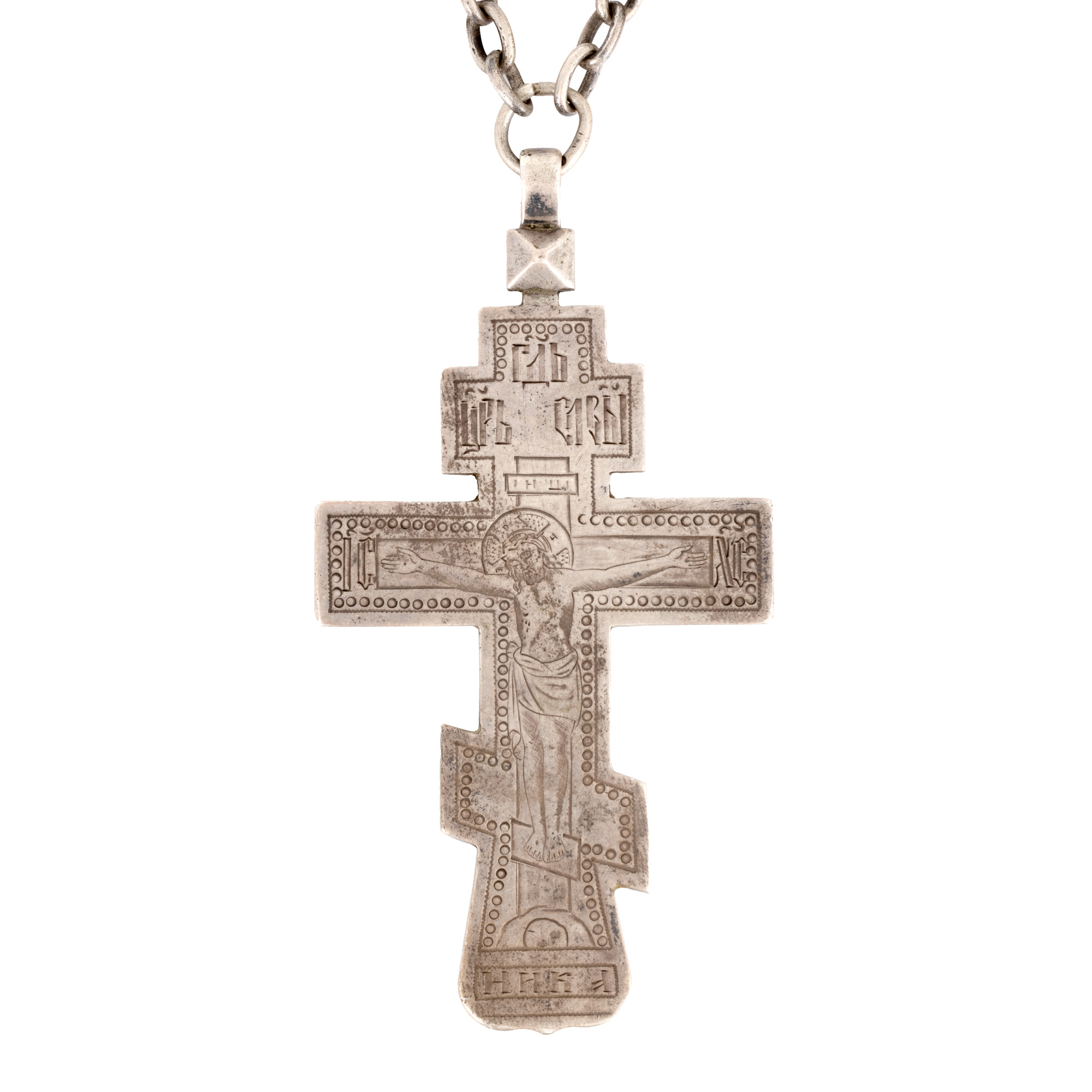
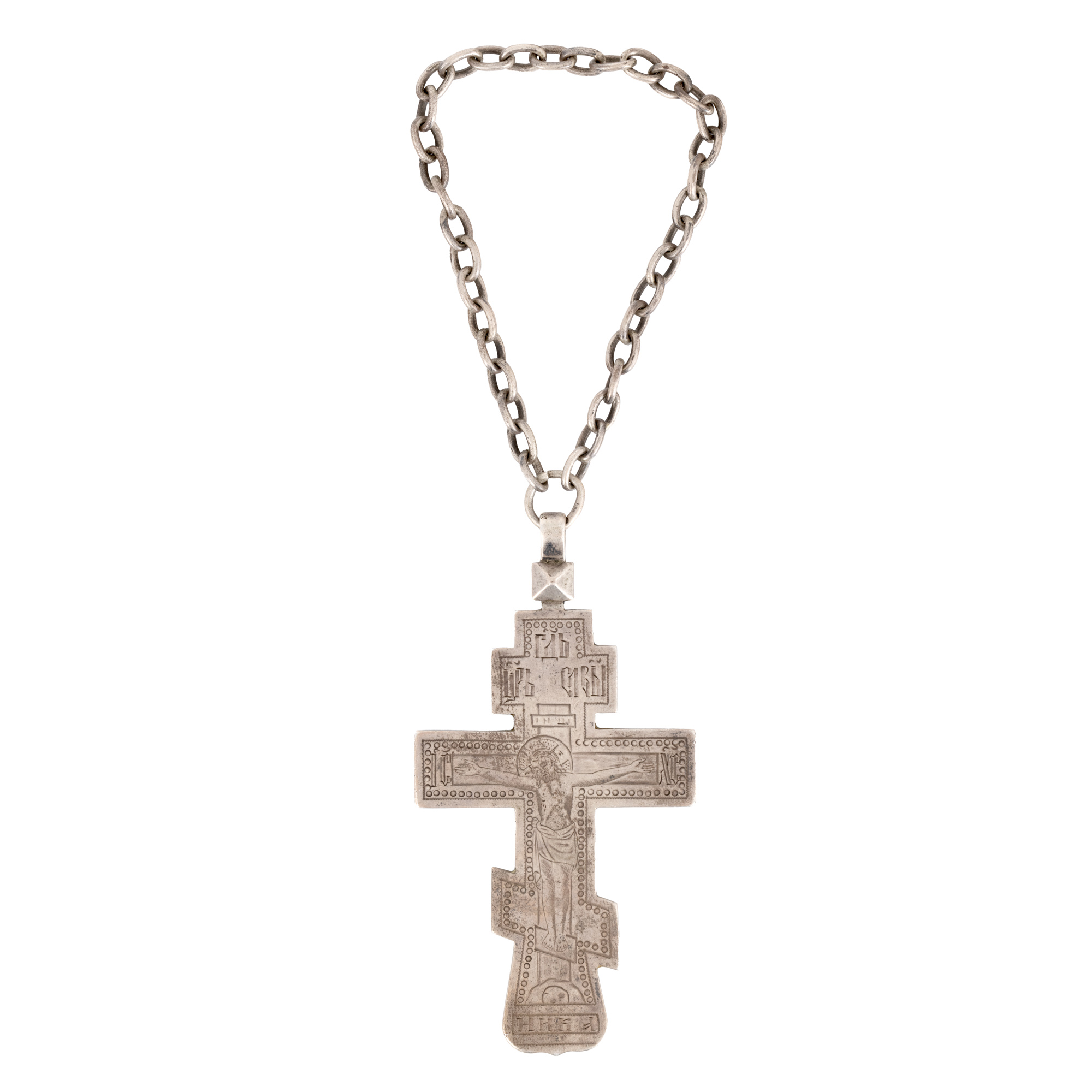
47. Silver cross, by a monk, decorated with the "Crucifixion" scene and with the monogram of Tsar Nicholas II of Russia, May 14th, 1896, very rare, collectible piece
The photos of the lot are informative and indicative, and cannot provide a highly detailed view of the object from all angles. We recommend a careful physical inspection of the lot before bidding.
47. Silver cross, by a monk, decorated with the "Crucifixion" scene and with the monogram of Tsar Nicholas II of Russia, May 14th, 1896, very rare, collectible piece
Not sold
Selling price
EUR 2.160
References
A similar piece is published in the Collection of Old Religious Art from Romania (15th–19th centuries), Bucharest, 2020.
840 silver, master "I.P.", 12 x 6 cm, 102.3 g
Research information
Nicholas II became czar in November 1894, and his coronation only took place in the spring of 1896, followed by a large popular festivity on the Khodynka field (near Moscow), where, due to poor organization, thousands of people were trampled on. At that time, 1389 people died. Although he was deeply affected by the tragedy, the Tsar was persuaded not to cancel the rest of the festivities and hesitated to punish those directly responsible, including his uncle, Grand Duke Serge. Eventually, only a few lower-ranking officials were dismissed, and the victims' families received compensation from the state.
The cross was made on the occasion of the official coronation of Nicholas II as Tsar of Russia and, most likely, it was given as a gift to the monks who attended the event.
For clarifications regarding the bidding procedure, hammer price costs, guarantee, payment, and collection terms for the winning lot, we recommend carefully reading/re-reading the Bidding Regulations.
For additional information regarding the lot and the auction, please contact the Art Consultants Department.
SESSION
Brought to you by
Similar lots
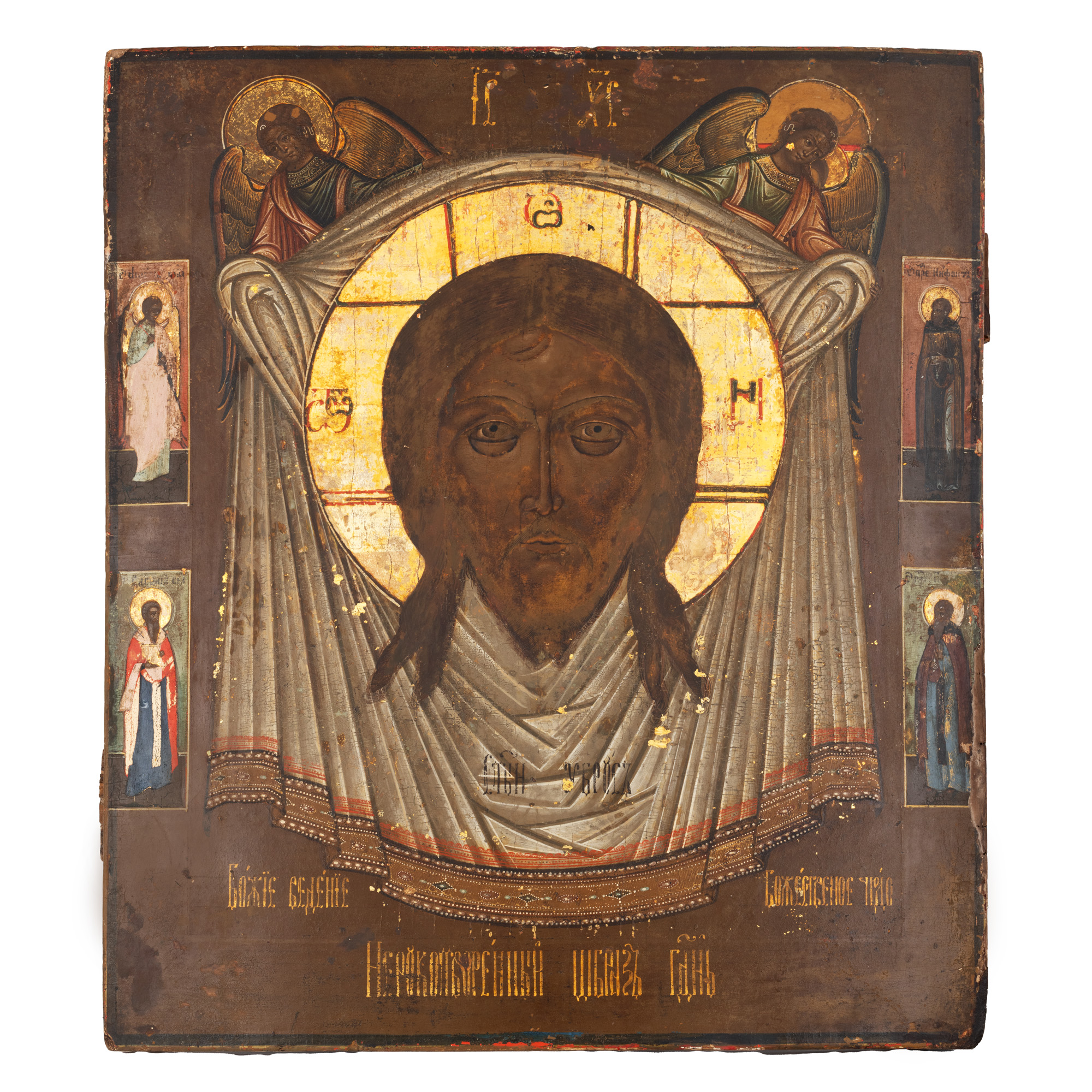
165. Icon on wood, "Saint Mandylion", Russian school, end of 18th century
Starting price:
EUR 1.000
Sold
EUR 2.000
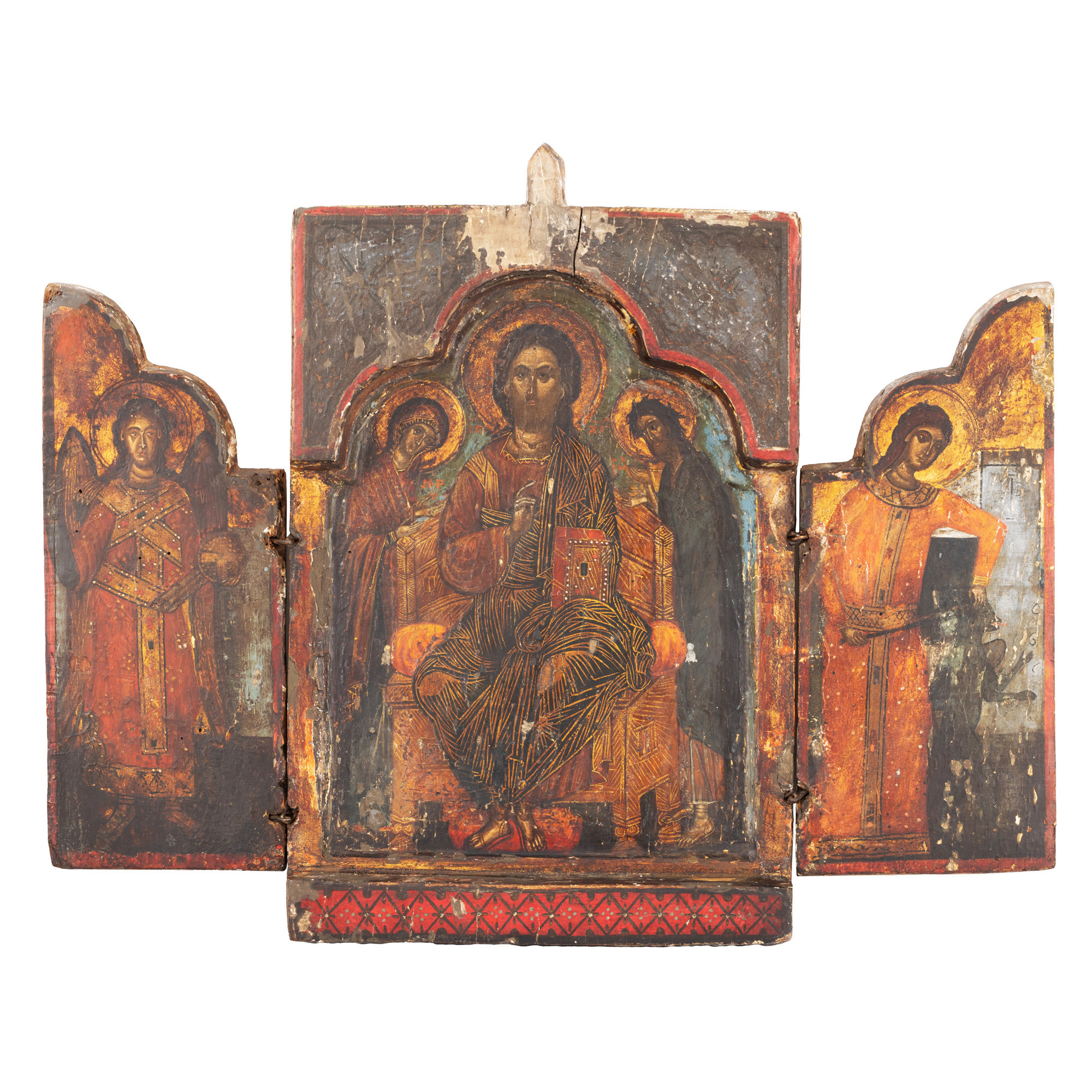
106F. Triptych, "Deisis, Saint Archangel Michael and Saint Marina", Moldavian school, 17th century, rare, collectible piece
Starting price:
EUR 800
Sold
EUR 1.900