

32. Kanesada Katana, Muromachi period, 1532, with Oshigata
The photos of the lot are informative and indicative, and cannot provide a highly detailed view of the object from all angles. We recommend a careful physical inspection of the lot before bidding.
32. Kanesada Katana, Muromachi period, 1532, with Oshigata
Starting price:
EUR 3.800
Sold
EUR 7.500
steel, L=68 cm
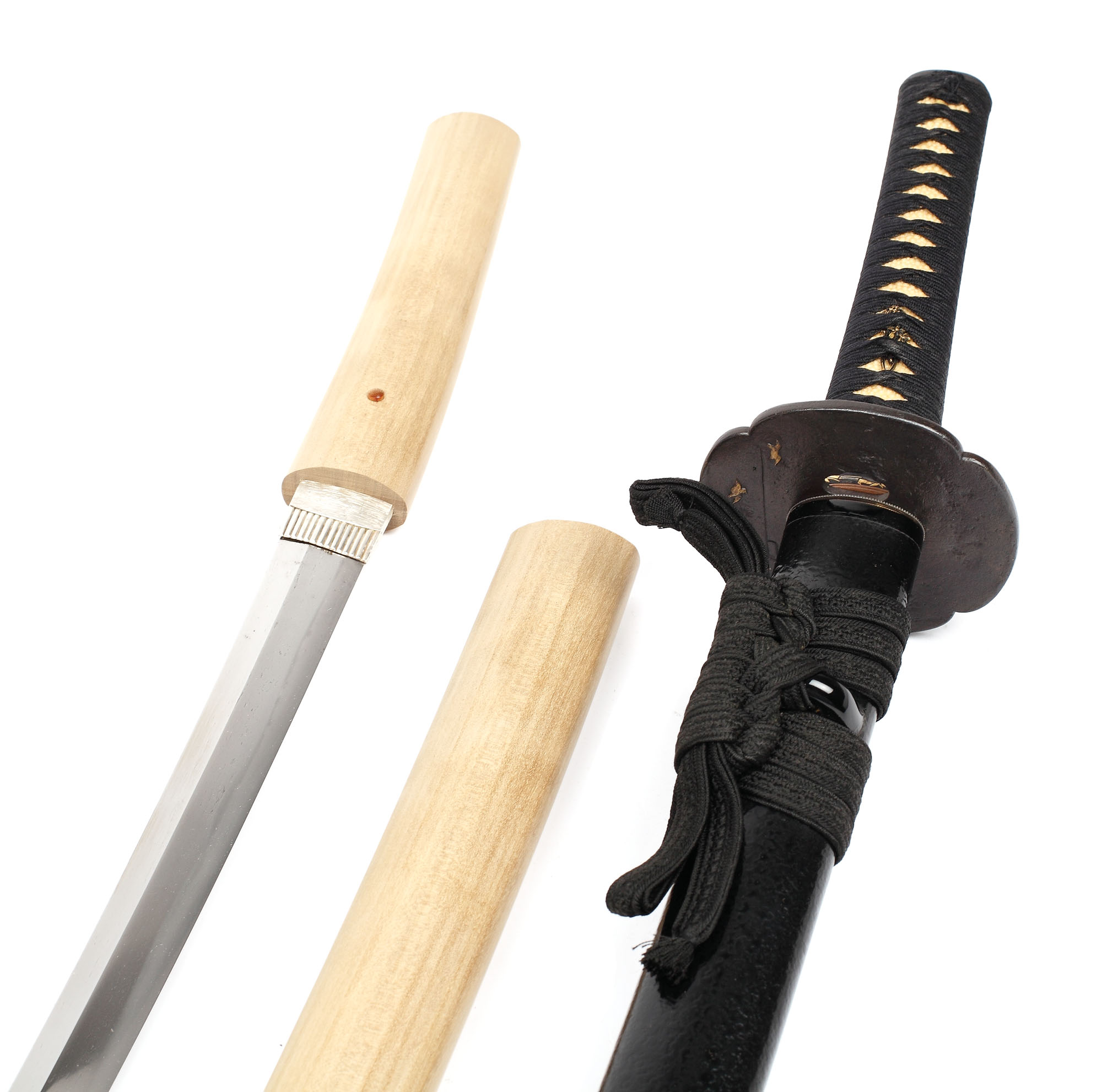
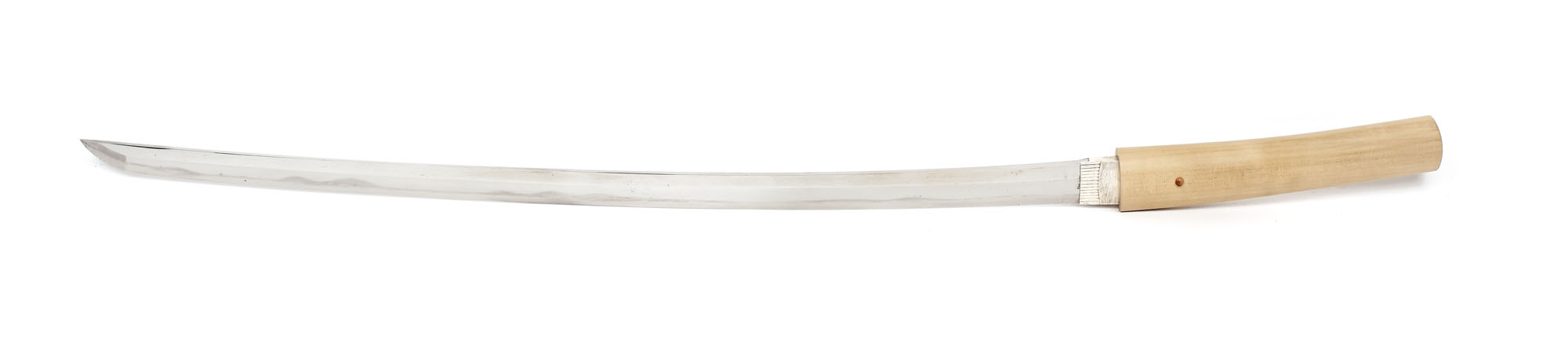
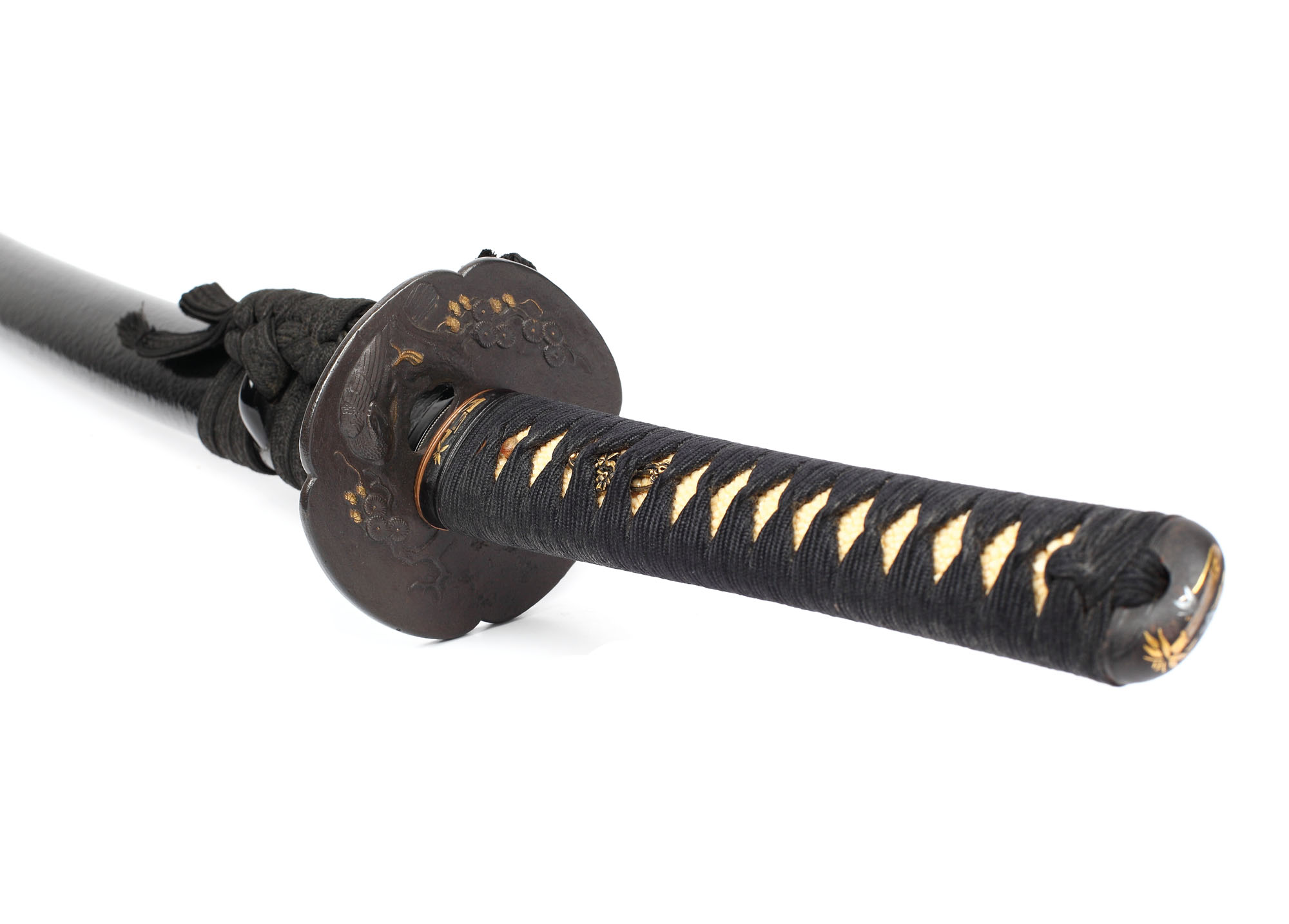
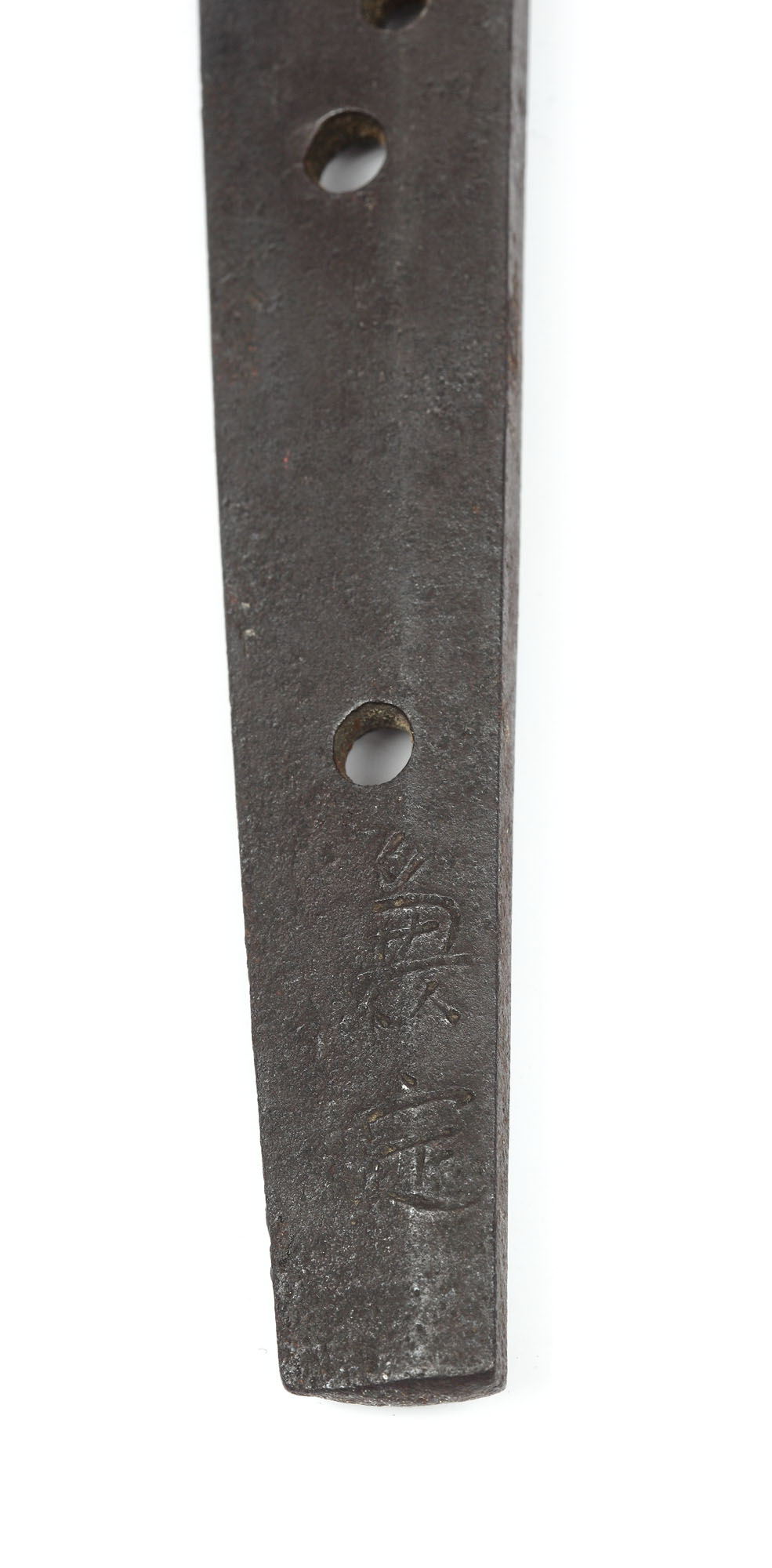
Japanese katana, dating back to 1532, late Muromachi period (1336-1573), made by Kanesada, signed "Kanesada". Katana swords are an evolution of Tachi swords, signed as such by ironsmith masters since the Muromachi period (1336-1573). The introduction of the katana coincided with the change in the samurai's fighting style, in the early Muromachi period, as the name of "katana" actually means "cutting edge up". Made by Kanesada approximately in the tumultuous Sengoku period, this sword was crafted before the rise to power of the shogun Tokugawa Ieyasu and the founding of the Tokugawa Shogunate in the early Edo period, its rarity being all the greater. Kanesada is a famous family of masters belonging to the sue-Seki school, active in the Mino province during the Muromachi period. The signature on the blade, as well as its characteristics, show us that it was made by a third generation of the Kanesada family, active during the Tenmon era. The active edge of the blade is marked by an elegant nie deki hamon, a result of the differential tempering process. The elongated tip (o-kissaki) is also impressively forged, almost reaching perfection, due to the long hammering process. Slightly curved, with a tori-sori curvature a little wider in the middle, the blade is mounted between two silver foils called habaki. The blade is kept in the shirasaya, the wooden mounting where it was stored when it was not used by the noble samurai in combat. When the samurai left for war, the blade was moved into the koshirae, which included a handle (tsuka) and a scabbard (saya). This blade is complemented by an authentic koshirae of the Edo period. Like any koshirae, this one contains several distinctive elements: the handle is covered with shagreen, then wrapped in a beige silk band (tsuka-ito), binding at the middle a small ornamental piece called menuki, which depicts chrysanthemums in our case; the guard (tsuba) is made of perforated iron and decorated with birds of prey and pine trees; the scabbard (saya) is of the ishime-ji type, decorated with an elaborately knotted sageo.
For clarifications regarding the bidding procedure, hammer price costs, guarantee, payment, and collection terms for the winning lot, we recommend carefully reading/re-reading the Bidding Regulations.
For additional information regarding the lot and the auction, please contact the Art Consultants Department.
SESSION
Similar lots
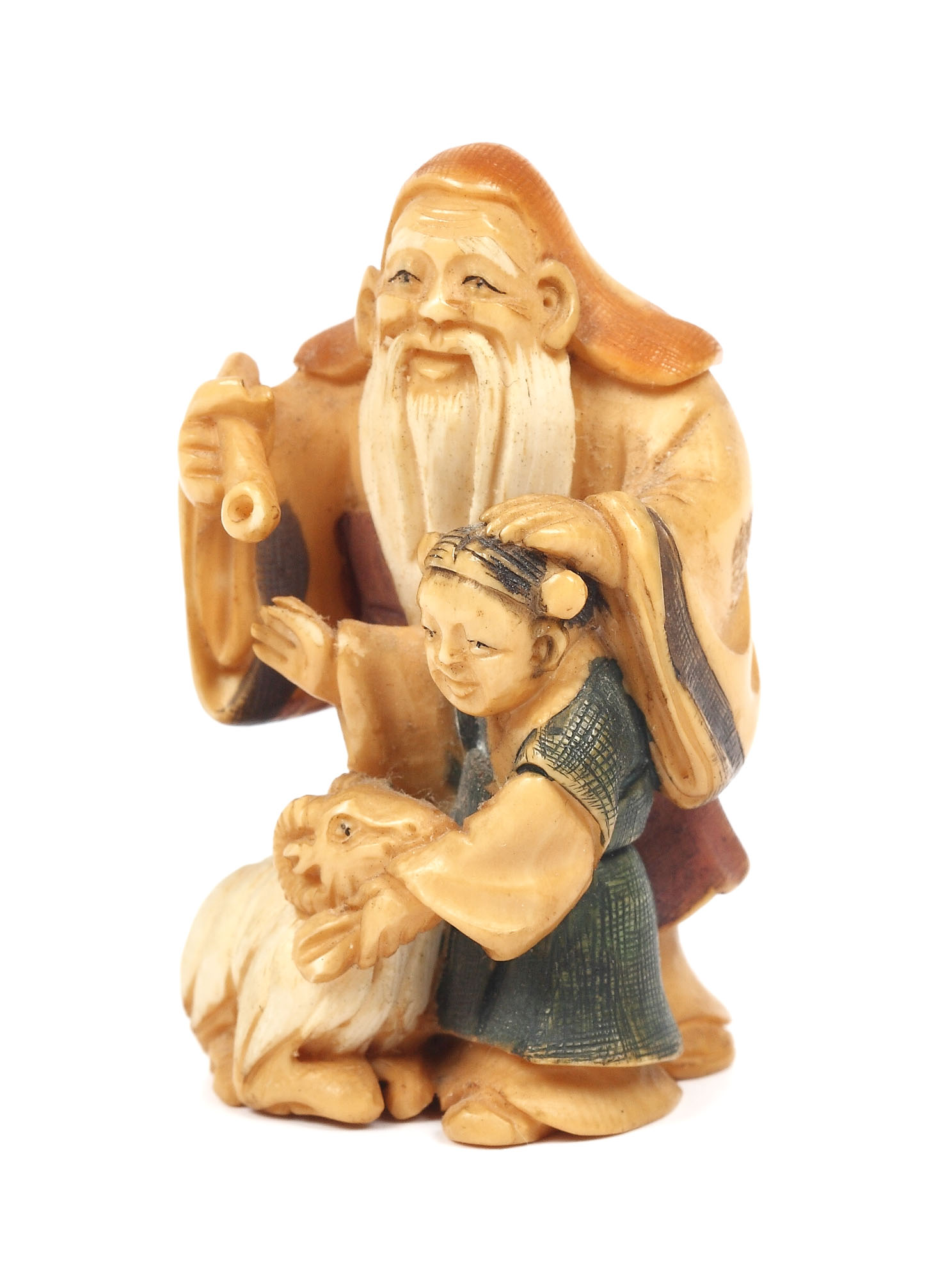
44. Coloured ivory Netsuke of a shepherd and his family, signed by a Japanese sculptor of the Meiji period
Starting price:
EUR 500
Sold
EUR 600