
Meniu

English
Gifts

Rare Books, Documents, Photography & Posters

Collectible Religious Art

Asian Art, Technical Objects, Taxidermy, Curiosities & Antiques

Jewelry & Watches

Numismatics, Medals, Maps, Arms & Decorations

Luxury, Elegance, Collectible Cars & Beverages

Collectible Folk Art

Sneakers & Toys


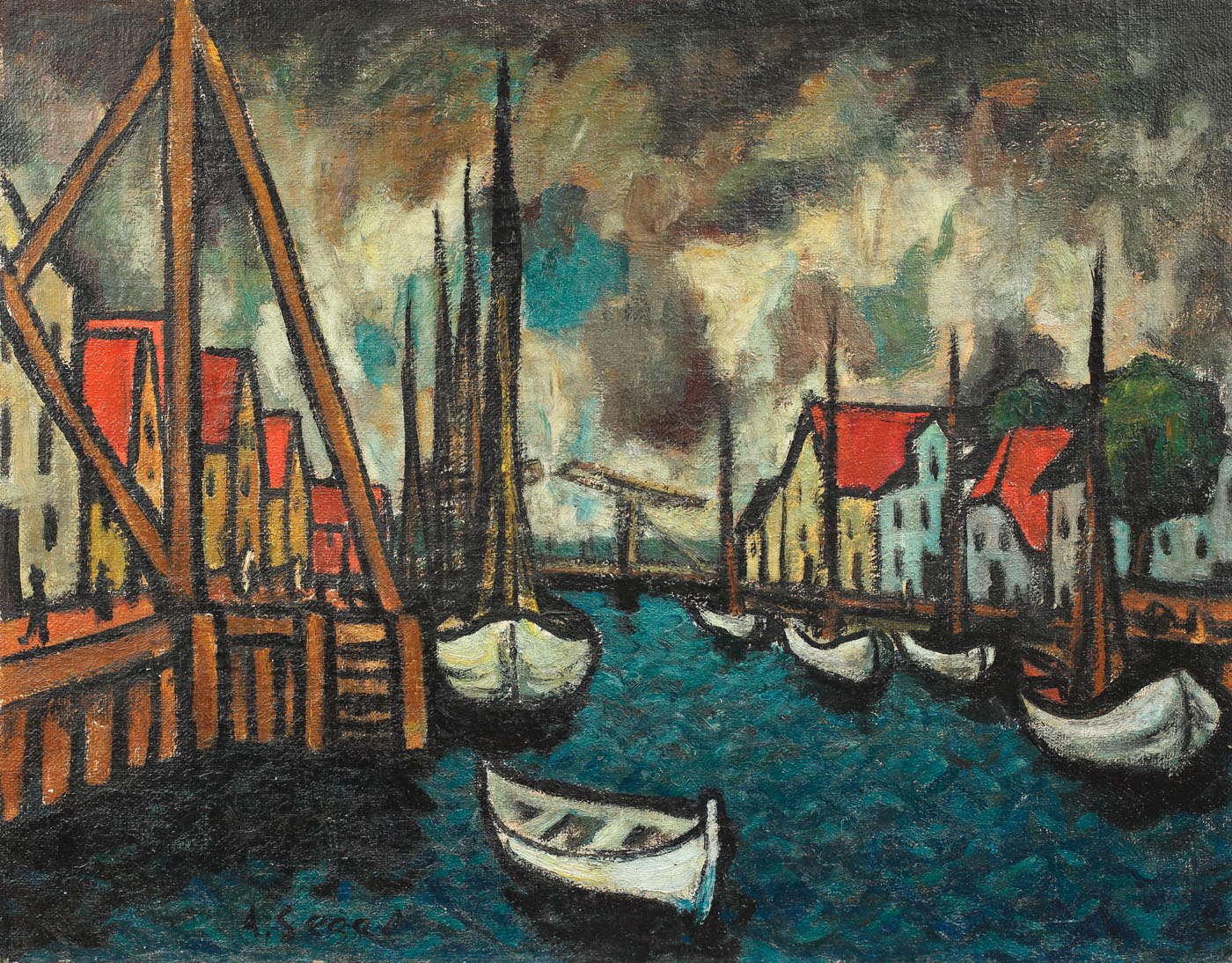
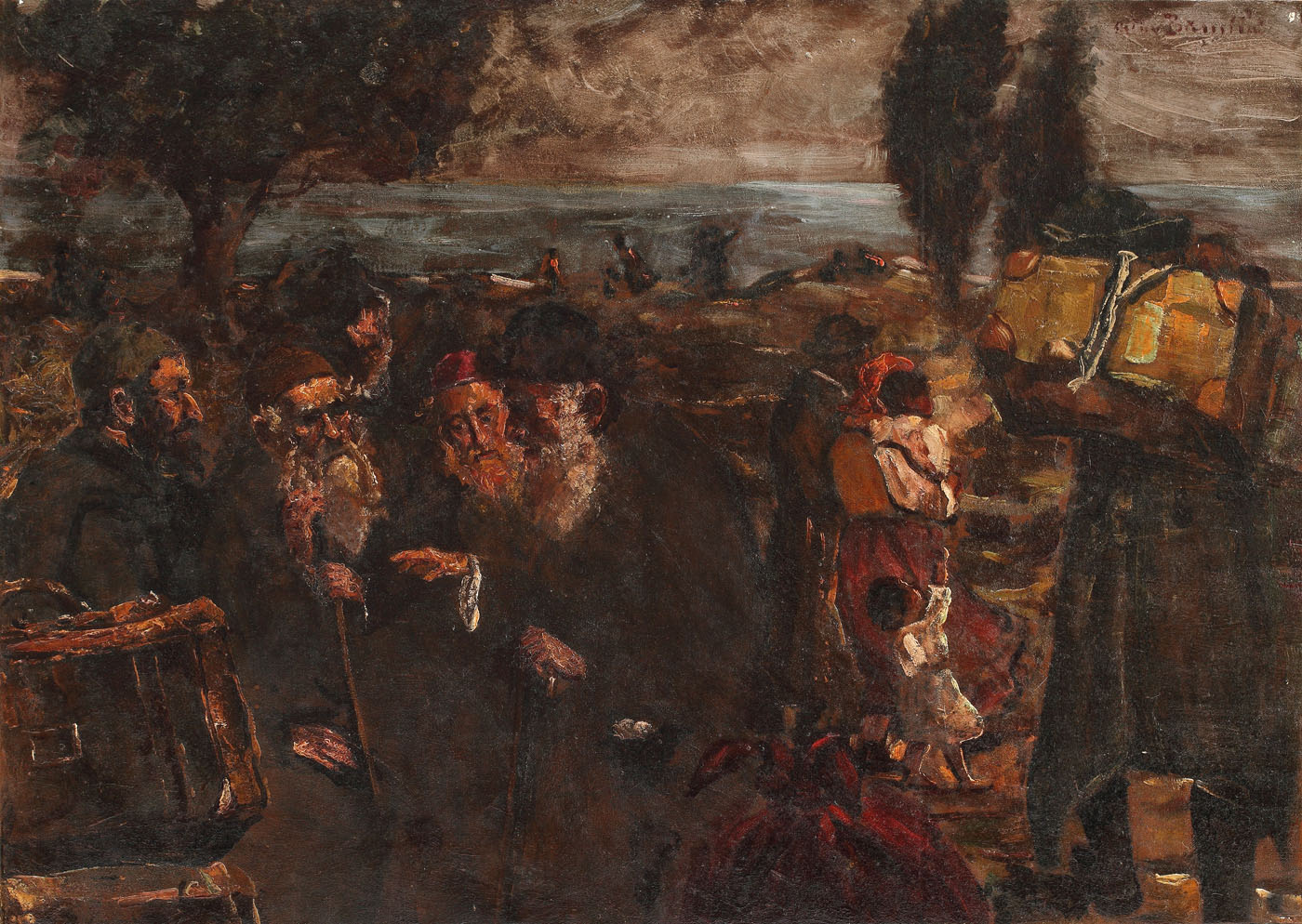
31. Harbour in Bonholm Island [1911]
The photos of the lot are informative and indicative, and cannot provide a highly detailed view of the object from all angles. We recommend a careful physical inspection of the lot before bidding.

31. Harbour in Bonholm Island [1911]

1875, Iaşi - 1944, Londra

Estimate:
EUR 15.000 - 25.000
Sold
EUR 20.000

References

"Arthur Segal, 1875-1944" (catalog), Argon Verlag, Berlin, 1987

oil on canvas, 70 x 88.5 cm, 88,5x70, signed lower left "A. Segal", in black

Arthur Segal is undoubtedly one of the forefathers of modern European painting, as a contemporary and an active participant in the great artistic changes of the early 20th century. The artistic world of Berlin became for Segal the main drive for innovation as early as the end of the 19th century. In 1982, the young painter started classes at the Berlin Art Academy, in the class of Eugen Bracht, and in the following years he specialised both in Paris and in Munich. Thus, in the artist that became a founder of avant-garde movements and one of the engines of the development of Romanian avant-garde in the 20s we can see, at the beginning of his career, an artist lodged in Post-Impressionist and Neo-Impressionist experiments. The strongest example in shaping Segal's specific style in his first stage of creation was his coming closer to the works of the Swiss painter Giovanni Segantini, with whom he had been in contact since 1896, when he started studying at the Munich Art Academy. At a technical level, he took his Pointillist manner from this artist, transposing it into a more temperate style, as opposed to its great theoretician Georges Seurat. Pointillism persisted in Segal's composition in the period 1902-1914. His closeness to German expressionists, particularly after his return to Berlin (1904), introduced him into the group Der Sturm and, above all, among the artists who organised the New Secession (Die Neue Secession) - Pechstein, Ernst Ludwig Kirchner or Tappert - and he became a founding member himself. A follower of Fauvism, painting in the Pointillist manner, using elements of Expressionism (both in oil and in engraving), Segal was in 1911 (the year when he painted this canvas) an illustrious member of German modernism. This subject can be found in the plate of typical images for Neo-Impressionists, the marine motif (of the harbour) being seen often in Seurat, Signac or Van Gogh.

For clarifications regarding the bidding procedure, hammer price costs, guarantee, payment, and collection terms for the winning lot, we recommend carefully reading/re-reading the Bidding Regulations.

For additional information regarding the lot and the auction, please contact the Art Consultants Department.
SESSION
Thu, 2 November 2017 19:30

Similar lots

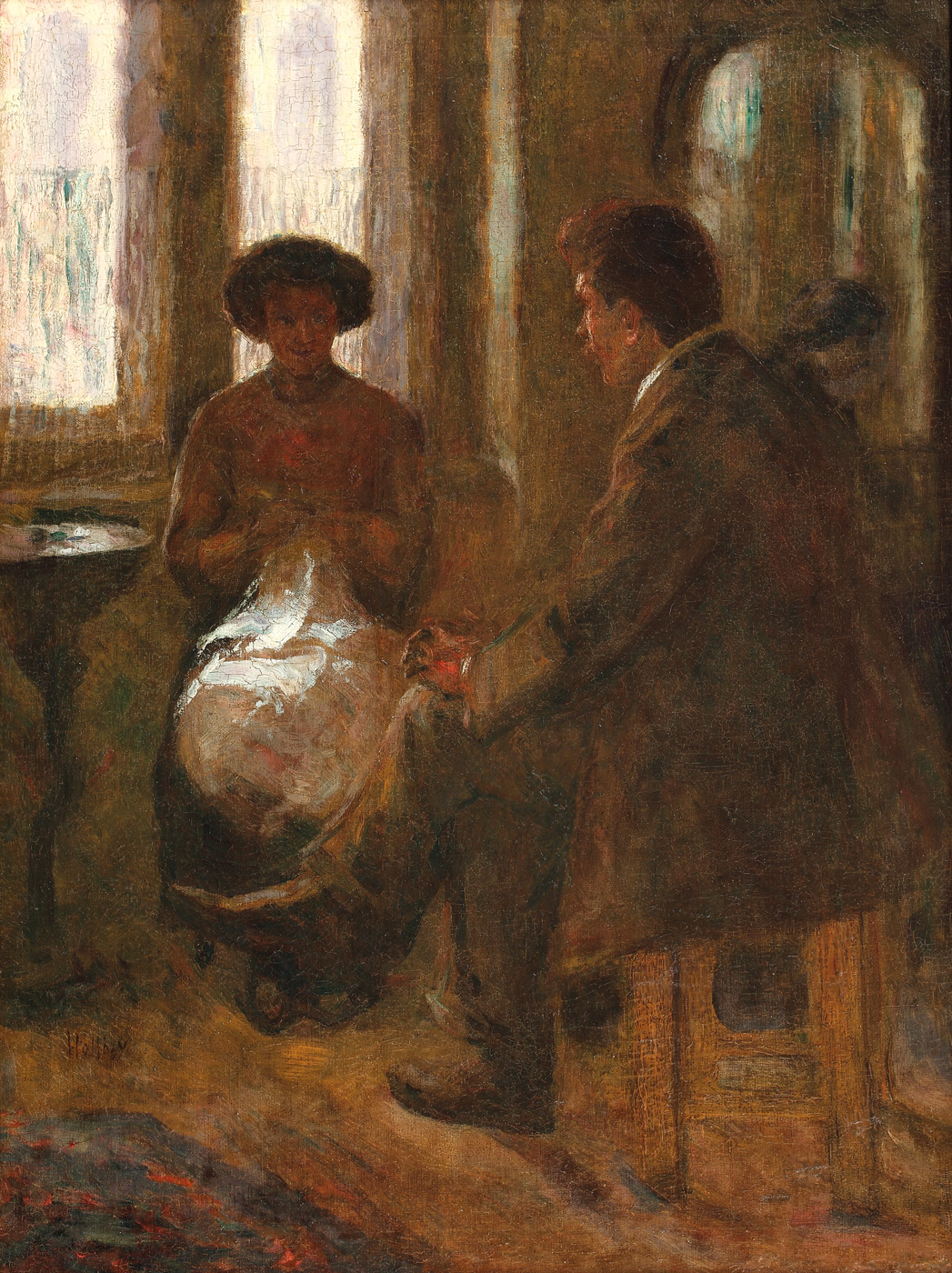
At the Window

98. At the Window

Simon Hollósy

Simon Hollósy

    Estimate: EUR 9.000 - 16.000
    Sold EUR 15.000
The Emigrants

11. The Emigrants

Octav Băncilă

Octav Băncilă

    Estimate: EUR 6.000 - 9.000
    Sold EUR 7.000