


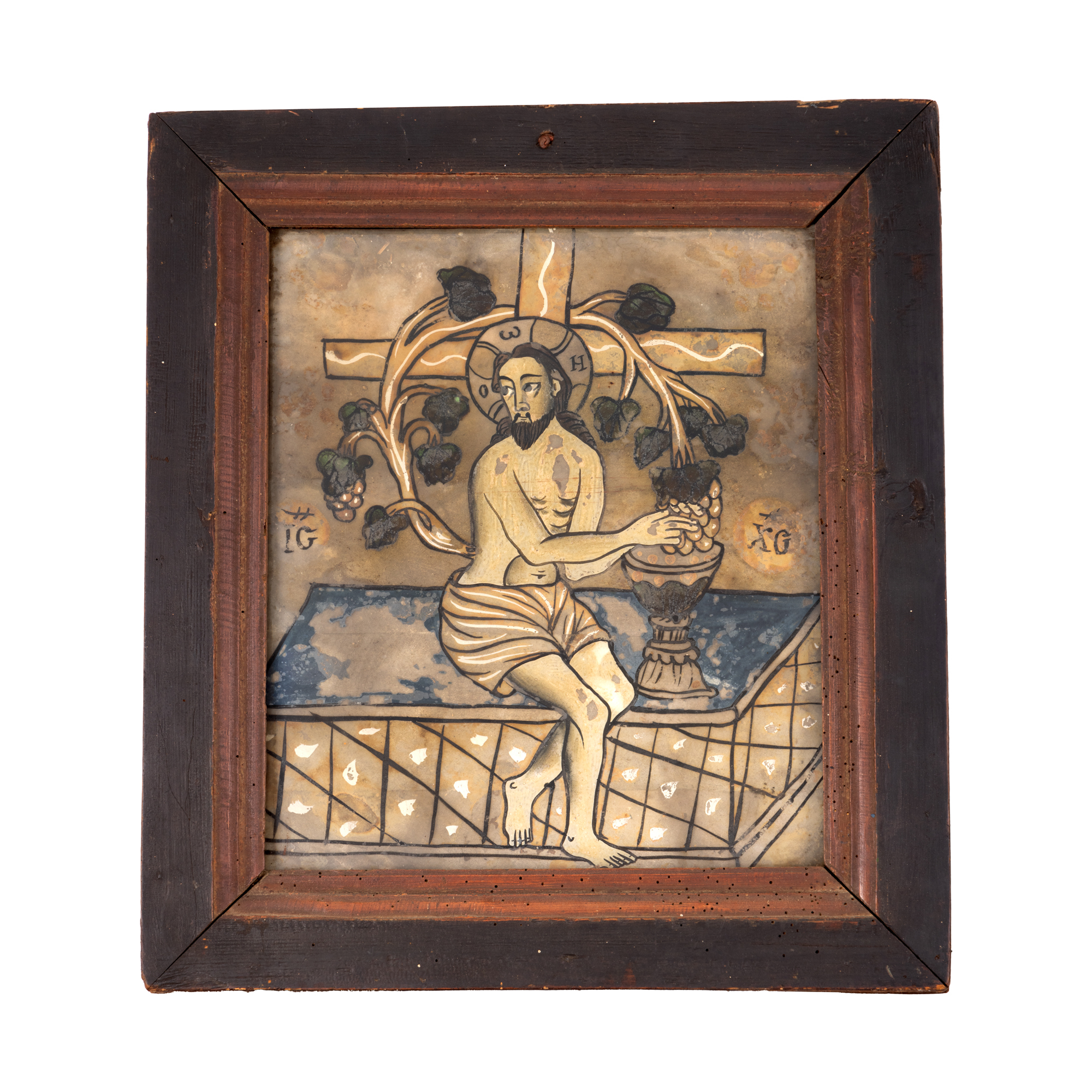
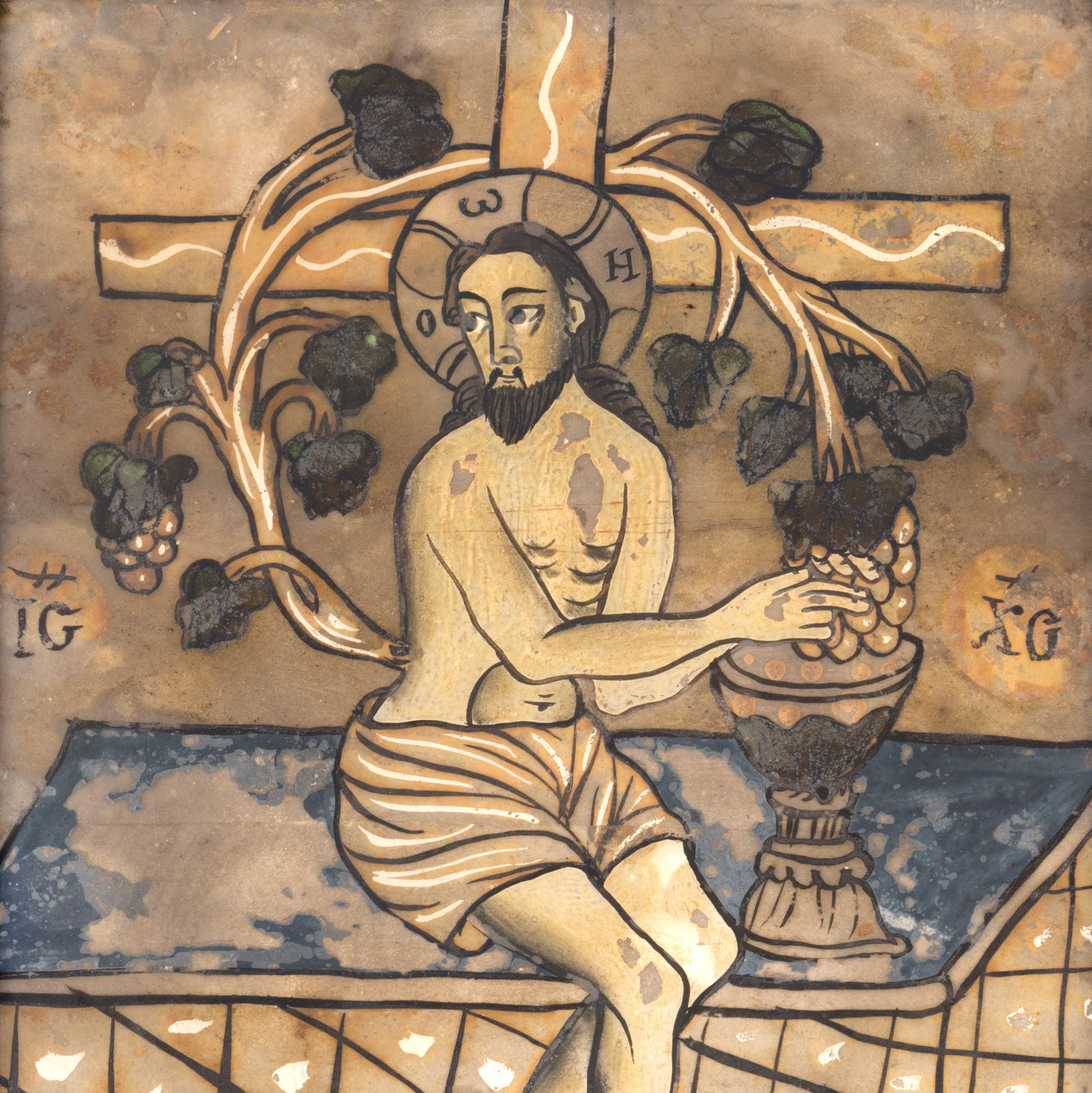
40. Icon on glass, "Jesus the True Vine", painter Ioan Pop, Făgăraș, first half of the 19th century, rarity, comes from the collection of lawyer Constantin Vișinescu
The photos of the lot are informative and indicative, and cannot provide a highly detailed view of the object from all angles. We recommend a careful physical inspection of the lot before bidding.
40. Icon on glass, "Jesus the True Vine", painter Ioan Pop, Făgăraș, first half of the 19th century, rarity, comes from the collection of lawyer Constantin Vișinescu
Starting price:
EUR 500
Sold
EUR 1.000
tempera and gold and silver foil on glaze, patinated and painted frame, with hooks, 46 x 41 cm
PROVENANCE
Constantin Vișinescu was born in 1920 in Constanţa. Between 1930-1937 he attended the courses of the "Gheorghe Lazăr" College in Bucharest, and in 1938 he was admitted to two faculties: Law, Letters and Philosophy. At the end of 1940 he was sent to the eastern front against the USSR, where he took part in the battles for the liberation of Bessarabia. In 1943 he was wounded and declared a war invalid. Despite this, he continues on the front. In 1944 he was captured and sent to the Wosnesensk camp on the Bug, from where, along with three other comrades, he escaped and arrived back in the country where he was arrested by Soviet occupation troops for desertion. Yet, the military prosecutor's office found no legal basis for his trial and he was released. As a trainee lawyer he worked in the office of Istrate Micescu and then in the office of Ion Valjan. In 1951, being a defense lawyer in the trial of the Zionists from Bucharest, he was arrested by the Security of the regime. After a long investigation, he was sent to the labor camp at the Danube-Black Sea Canal, from where he was released in 1954. After his release, he resumed his legal activity and in 1972 he received from the government of the Federal Republic of Germany the decoration "Das Verdist Kreuz" for legal merits. In 1990 he founded the Cultural Association of Friendship Romania-Israel. In 1996, the Presidency of Romania awarded him the "Commemorative Cross of the Second World War" for military services brought to the Romanian state.
Seated on a decorated box, in the lower part with rhombuses, Jesus squeezes, into a chalice, the grapes of the vine grown from His rib. In the silvery background, the Cross of Crucifixion stands out.
For clarifications regarding the bidding procedure, hammer price costs, guarantee, payment, and collection terms for the winning lot, we recommend carefully reading/re-reading the Bidding Regulations.
For additional information regarding the lot and the auction, please contact the Art Consultants Department.
SESSION
Brought to you by
Similar lots
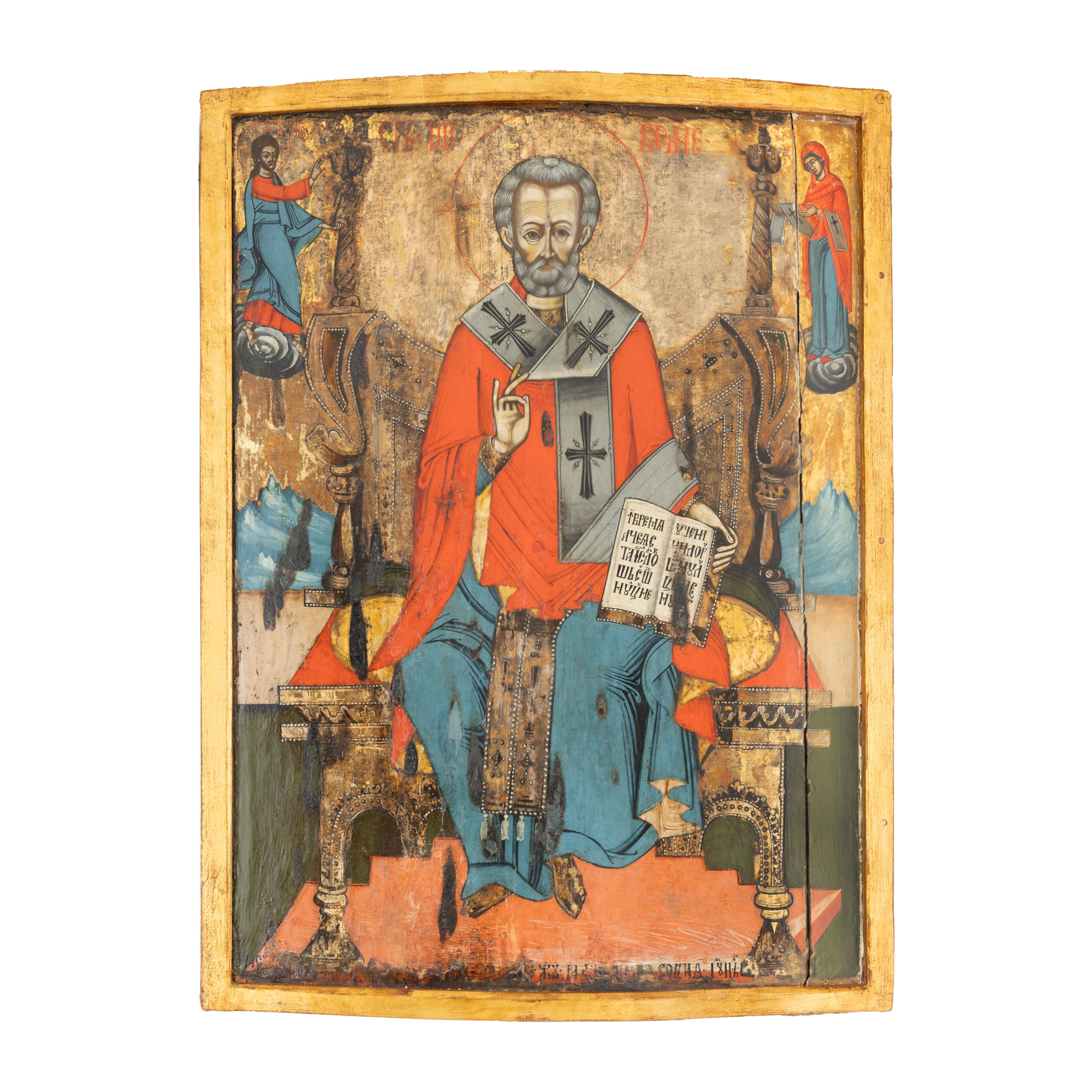
102. Imperial icon on wood, "Saint Hierarch Nicholas enthroned", post-Brancovan school (probably painter Ioan from Turcheș known as Ioan of Brașov), last decades of the 18th century, collectible piece
Starting price:
EUR 3.000
Sold post auction
EUR 4.500