

42. Hypothecary Ticket (banknote) 500 Lei 1877, extremely rare piece
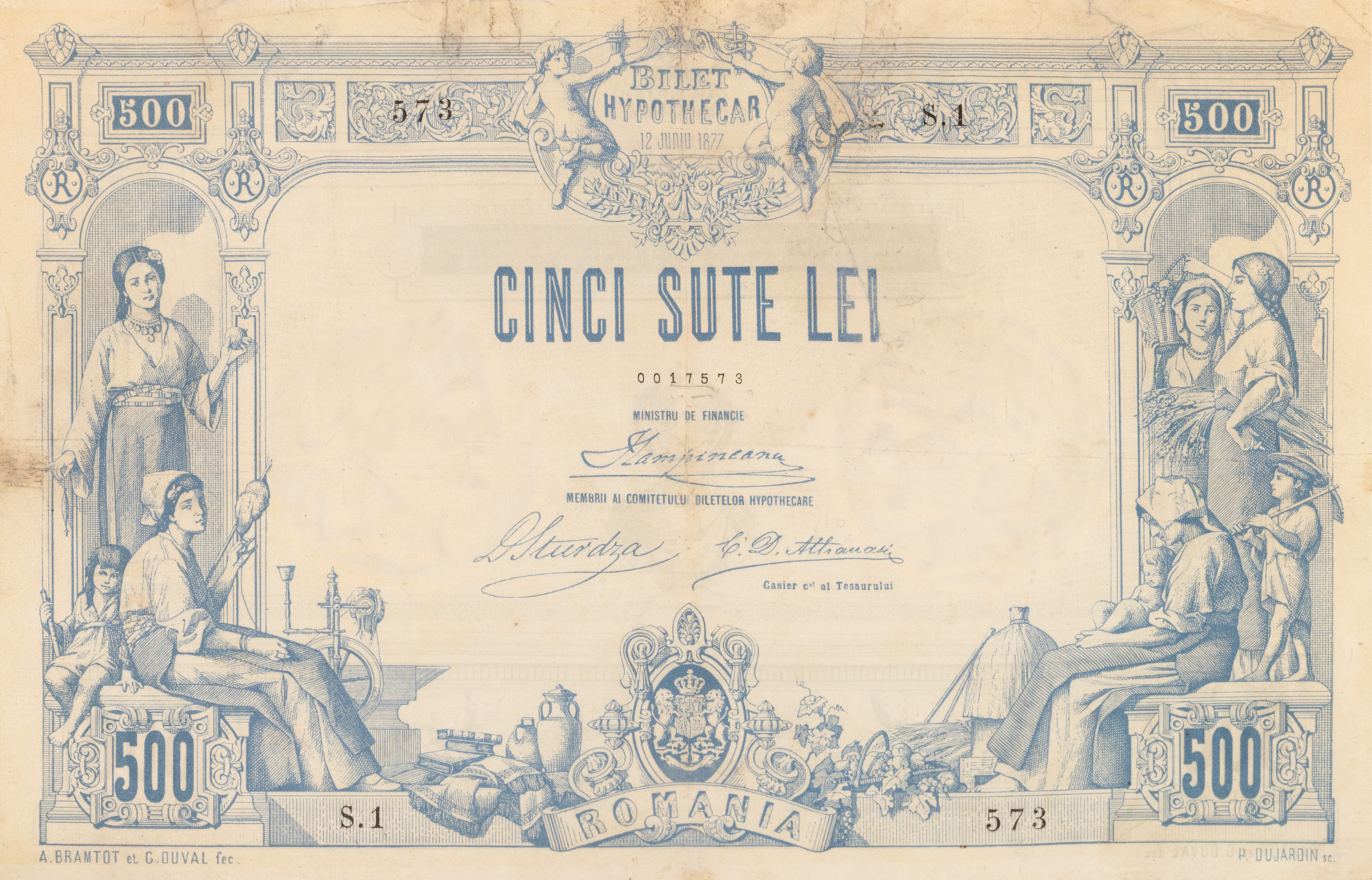
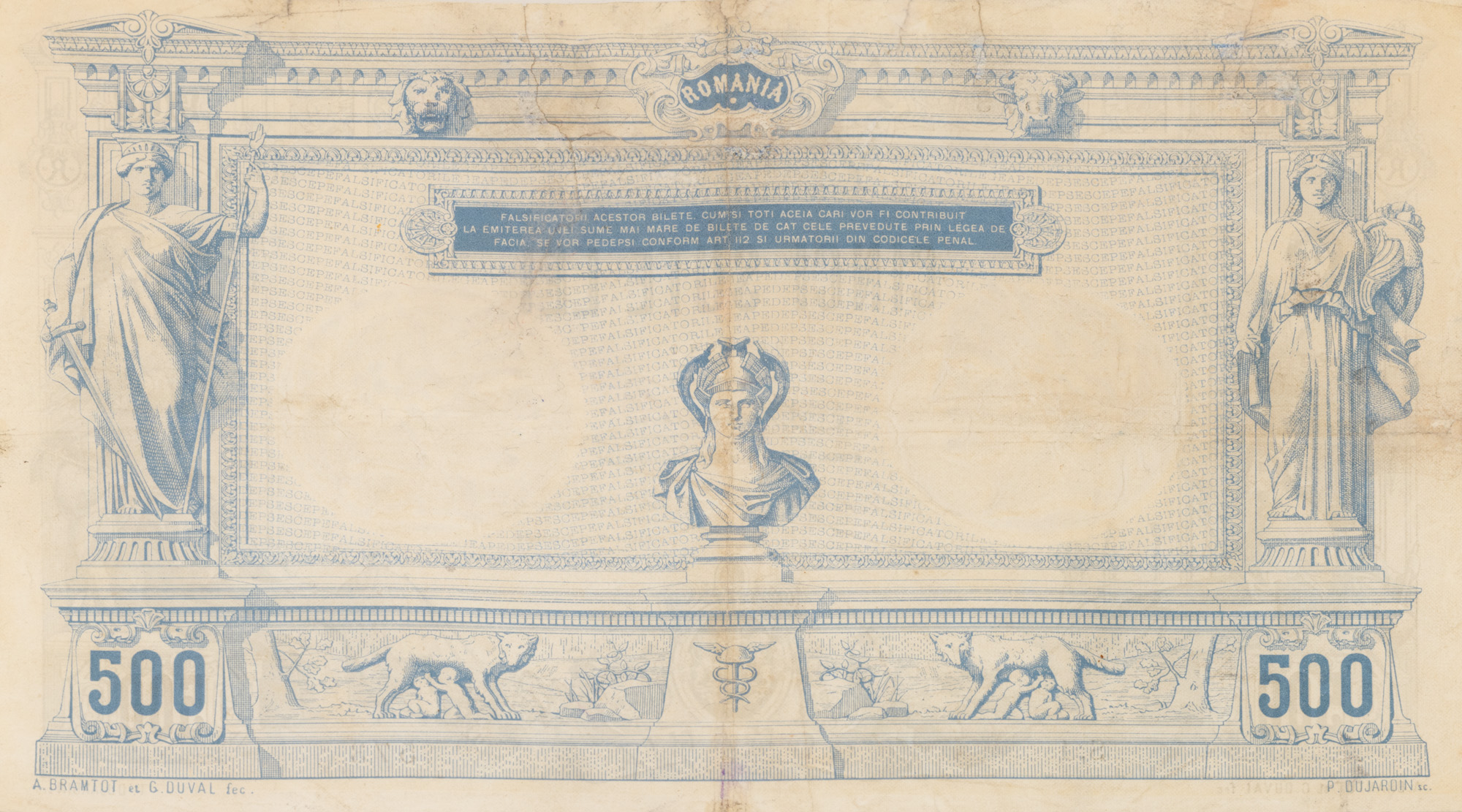
The photos of the lot are informative and indicative, and cannot provide a highly detailed view of the object from all angles. We recommend a careful physical inspection of the lot before bidding.
42. Hypothecary Ticket (banknote) 500 Lei 1877, extremely rare piece
Not sold
Selling price
EUR 17.550
20,5 x 13,5 cm
The first Romanian paper money tokens were mortgage notes, with face values of 5 lei, 10 lei, 20 lei, 50 lei, 100 lei and 500 lei.
After the first years of King Carol I's reign, the Romanian economy began to recover after the crisis of 1866 but with the outbreak of the Russo-Turkish war, in which Romania also participated, the Brătianu government ordered the issuance of mortgage notes up to a total sum of 30 million lei.
On June 4, 1877, the bill for the issuance of mortgage notes was voted in the Senate, and three days later, in the House of Deputies, with the following formula:
"The Ministry of Finance is authorized to issue mortgage notes up to the amount of 30 million lei. These notes will be bearer, they will have mandatory circulation and will be accepted in payment by all public houses at their face value. They will be withdrawn from circulation in a fixed time, when they will be counted ten percent above their nominal value".
Mortgage notes were issued in pieces of 5, 10, 20, 50, 100 and 500 lei, being made under the same conditions as banknotes, under the control of the Ministry of Finance. Although devoid of a liquid real guarantee and were not convertible into gold, these good papers printed in Paris, in the Bank of France workshops, had the character of money and are considered the first Romanian banknotes.
For clarifications regarding the bidding procedure, hammer price costs, guarantee, payment, and collection terms for the winning lot, we recommend carefully reading/re-reading the Bidding Regulations.
For additional information regarding the lot and the auction, please contact the Art Consultants Department.
SESSION
Similar lots
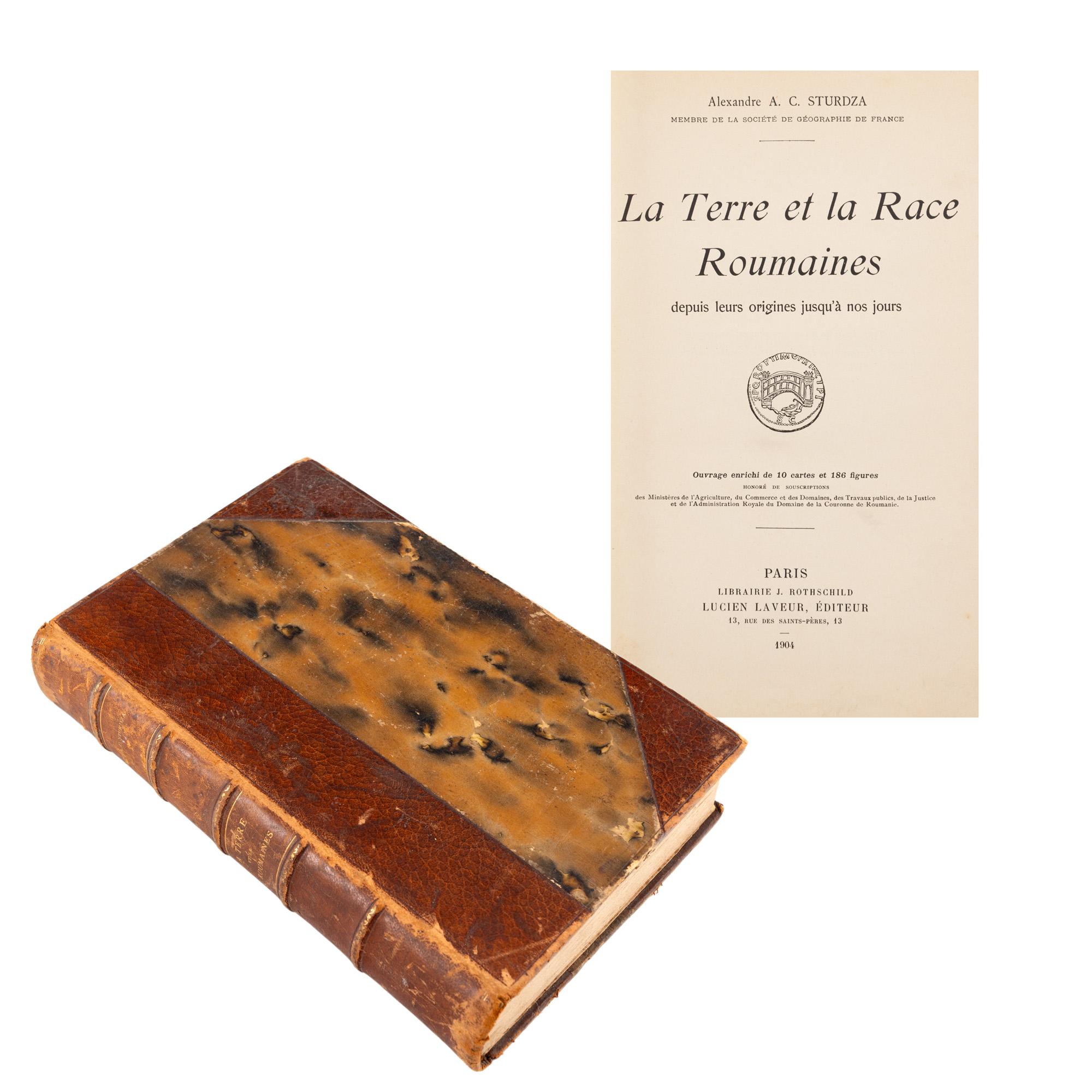
215. "The Earth and the Romanian Race", by Alexandru A.C. Sturdza, French, Paris, 1904
Starting price:
EUR 100
Sold post auction
EUR 125


192. "Sign of the Order '23 August 1944', Class I, During King Mihai's Reign, Project, Rare Piece"
Starting price:
EUR 1.000
Not sold