


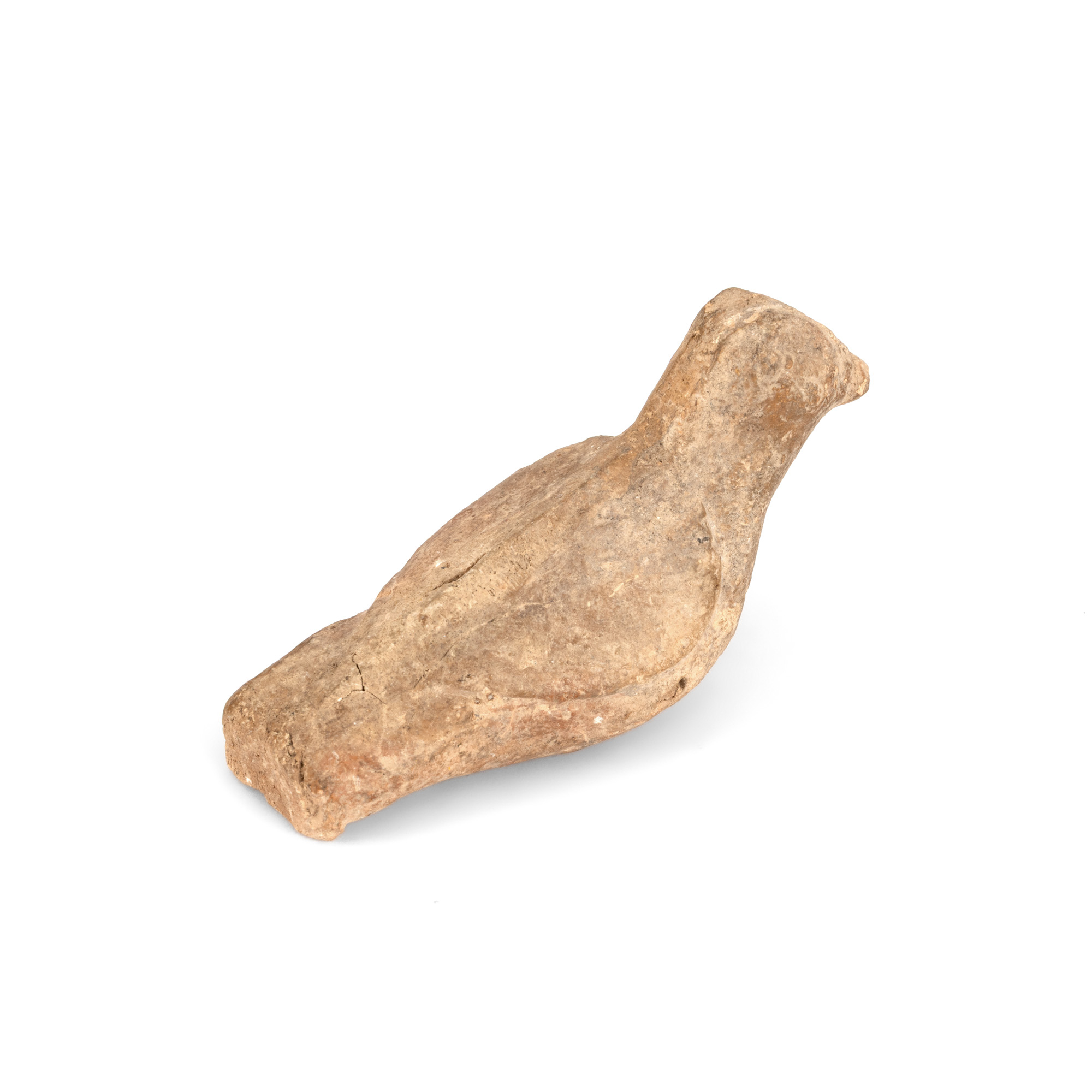
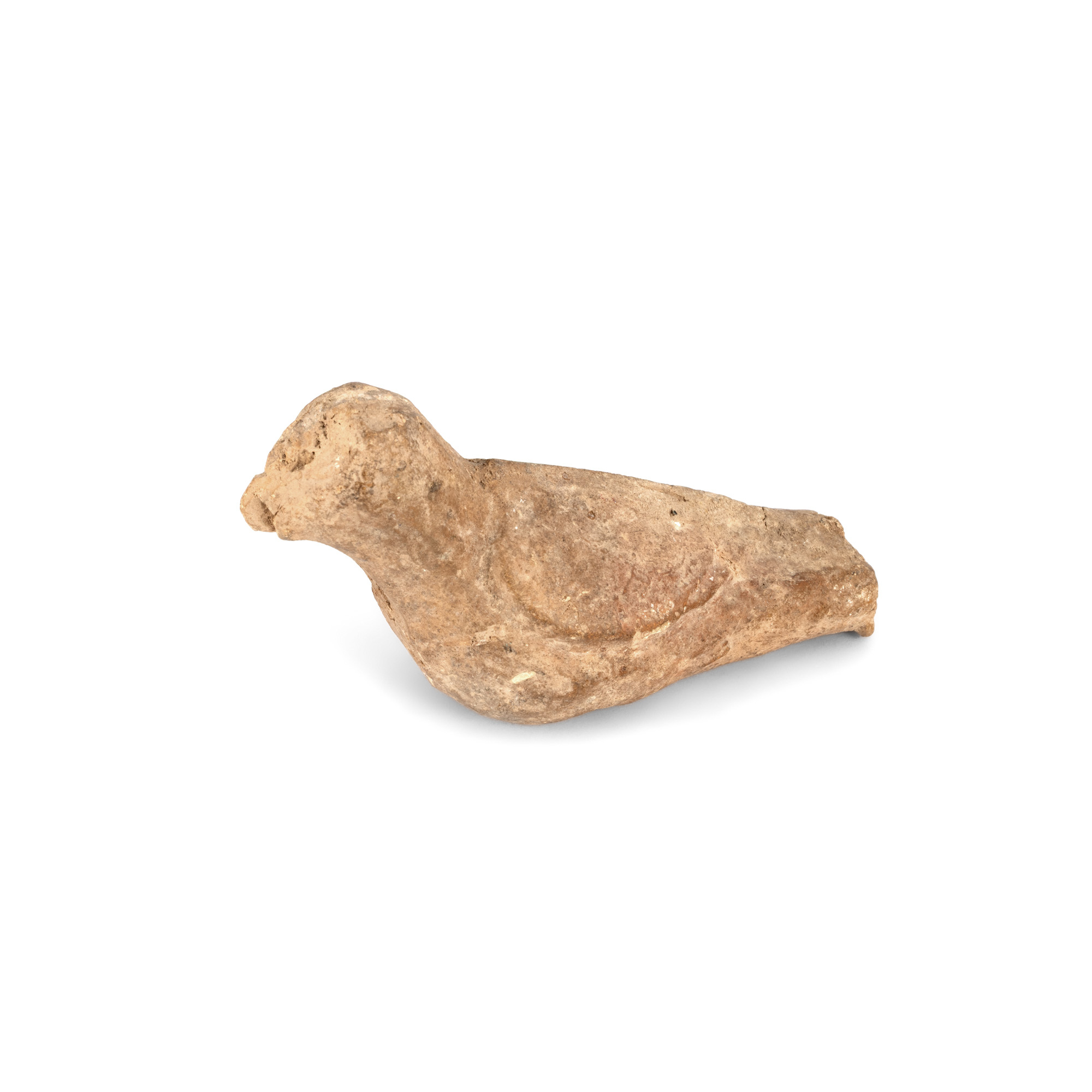
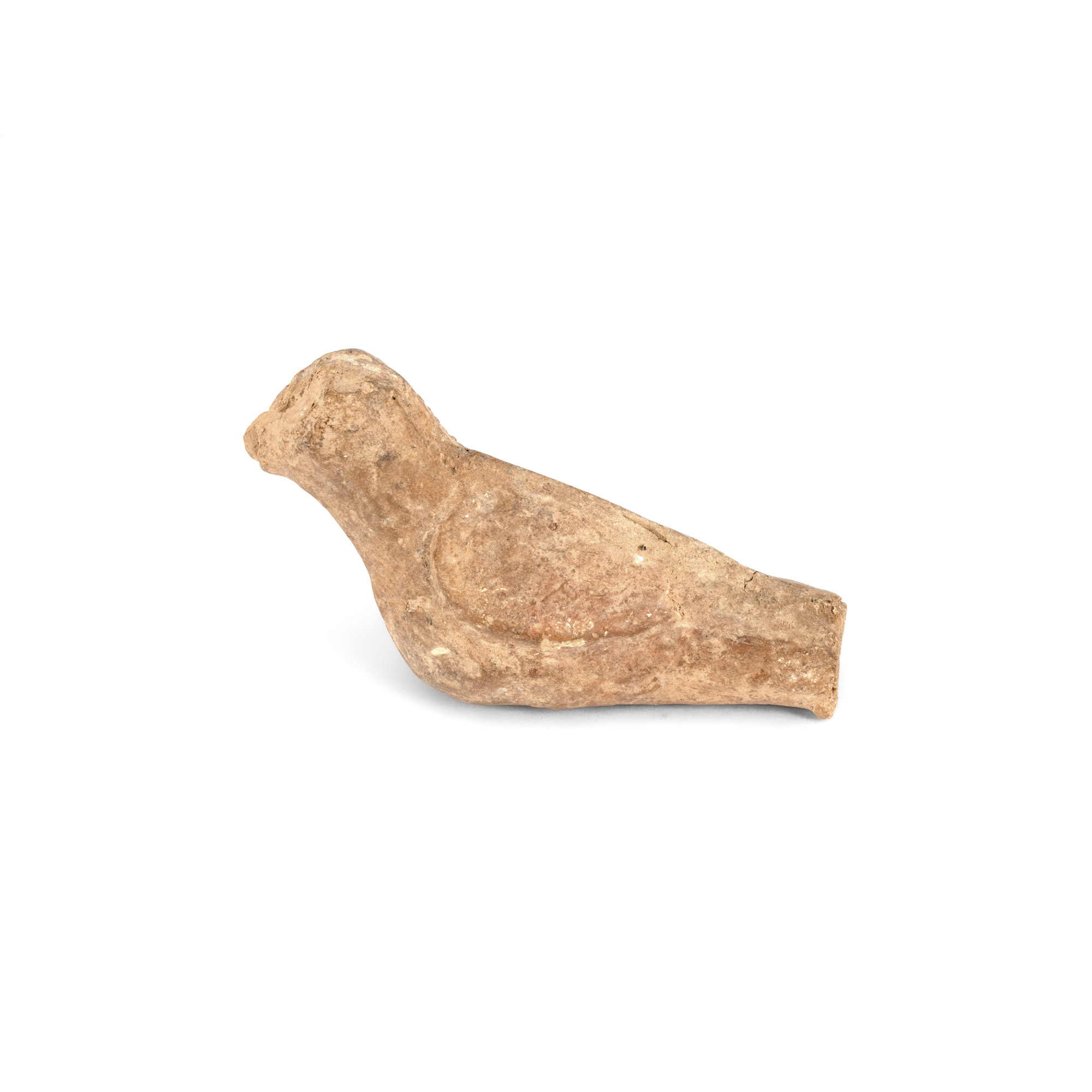
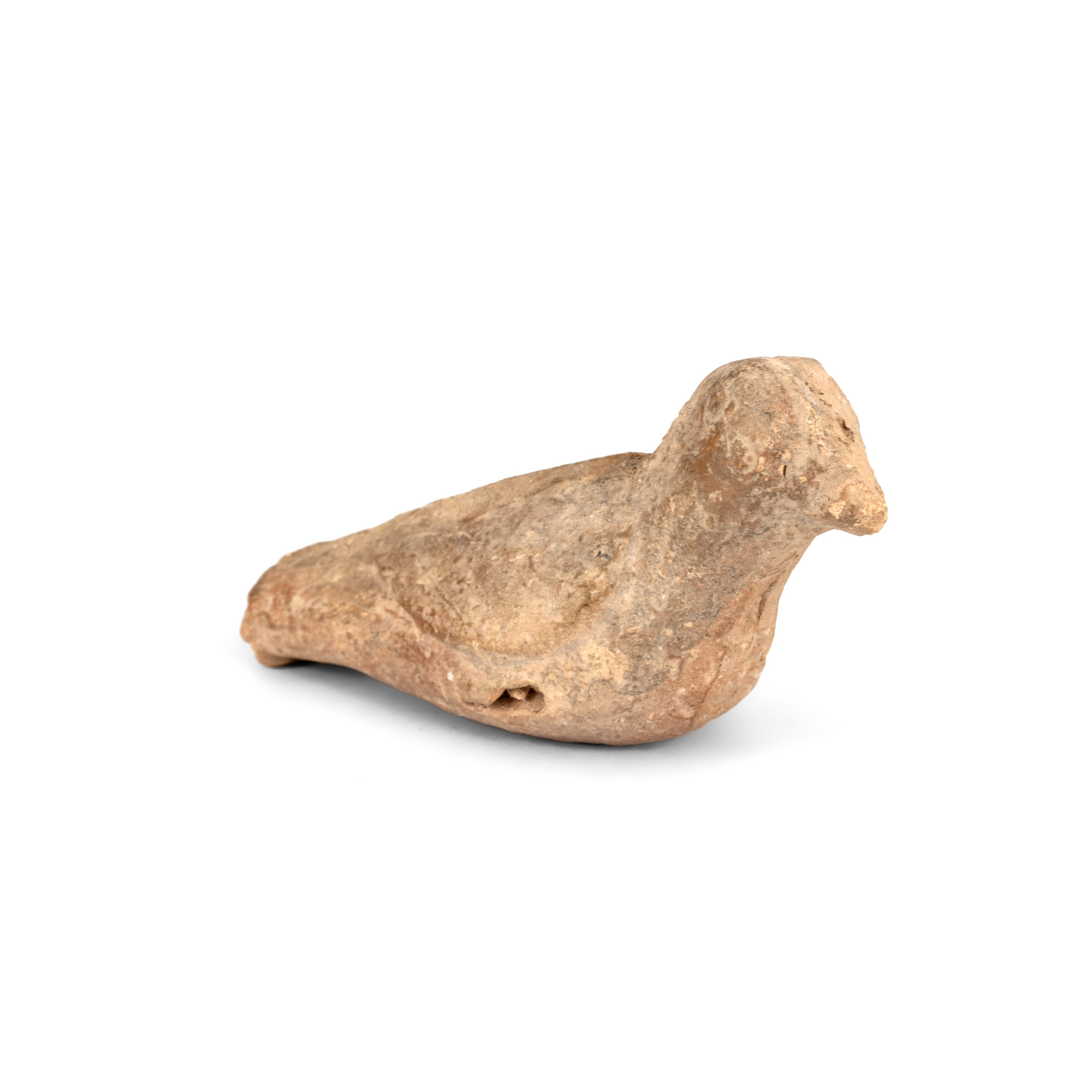
1C. Clay bird, possibly Cucuteni (or Vučedol) culture, likely 3rd millennium BC.
The photos of the lot are informative and indicative, and cannot provide a highly detailed view of the object from all angles. We recommend a careful physical inspection of the lot before bidding.
1C. Clay bird, possibly Cucuteni (or Vučedol) culture, likely 3rd millennium BC.
ceramics, hand molding, varnish, brown-yellowish color paste, with fine mineral inclusions, 5.5 x 9 cm
Research information
The piece features an elongated, fusiform shape, with a wider flattened upper end, followed by a bulging median section with an almost oval cross-section, in the form of a bird. The lower end progressively thins out, ending in a rounded tip. On the lateral faces, superficial longitudinal grooves are visible, likely results of manual modeling or a smoothing technique with a tool, probably suggesting the wings. On one of the surfaces, an alveolus can be observed, possibly a firing defect or the area where a modeling paste element came off. The surface is partially covered with a thin varnish, uniformly applied, with a shiny aspect on certain areas; in other portions, it is visibly worn or exfoliated. The piece seems complete but shows pronounced abrasions on edges; micro-cracks; small chips at the ends. The clay seems well kneaded, with fine degreasers, compatible with ancient production. The varnish, defined as a thin, shiny layer, applied to the outer surfaces, suggests either a evolved surface treatment technique unknown in pre-antiquity periods. The overall shape, symmetry, and treatment suggest rather a symbolic/ritual function artifact, not a utilitarian one. The dimensions and execution technique are compatible with ritual objects or figurines from the ancient period, but for a sure cultural attribution, the context of discovery and paste analysis would be necessary.
Areal de circulație: teritoriile culturii Cucuteni, din România, Republica Moldova și Ucraina.
Loc posibil de descoperire: România, Republica Moldova și Ucraina.
For clarifications regarding the bidding procedure, hammer price costs, guarantee, payment, and collection terms for the winning lot, we recommend carefully reading/re-reading the Bidding Regulations.
For additional information regarding the lot and the auction, please contact the Art Consultants Department.
SESSION
Brought to you by
Similar lots
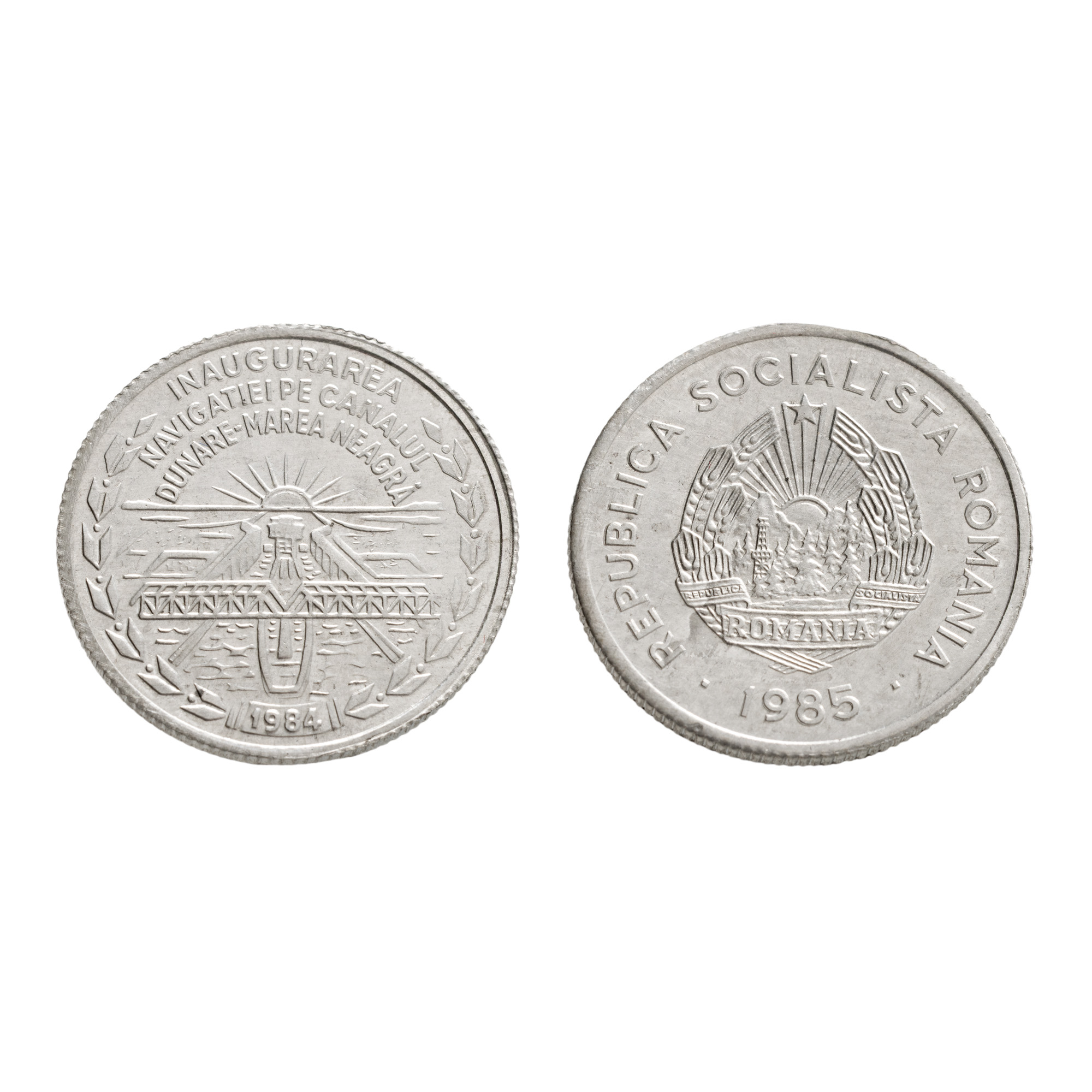
44. Probă monetară, cu eroare de batere, ”Inaugurarea canalului Dunăre-Marea Neagră”, 100 lei, 1984, piesă foarte rară
Starting price:
EUR 1.000
Not sold
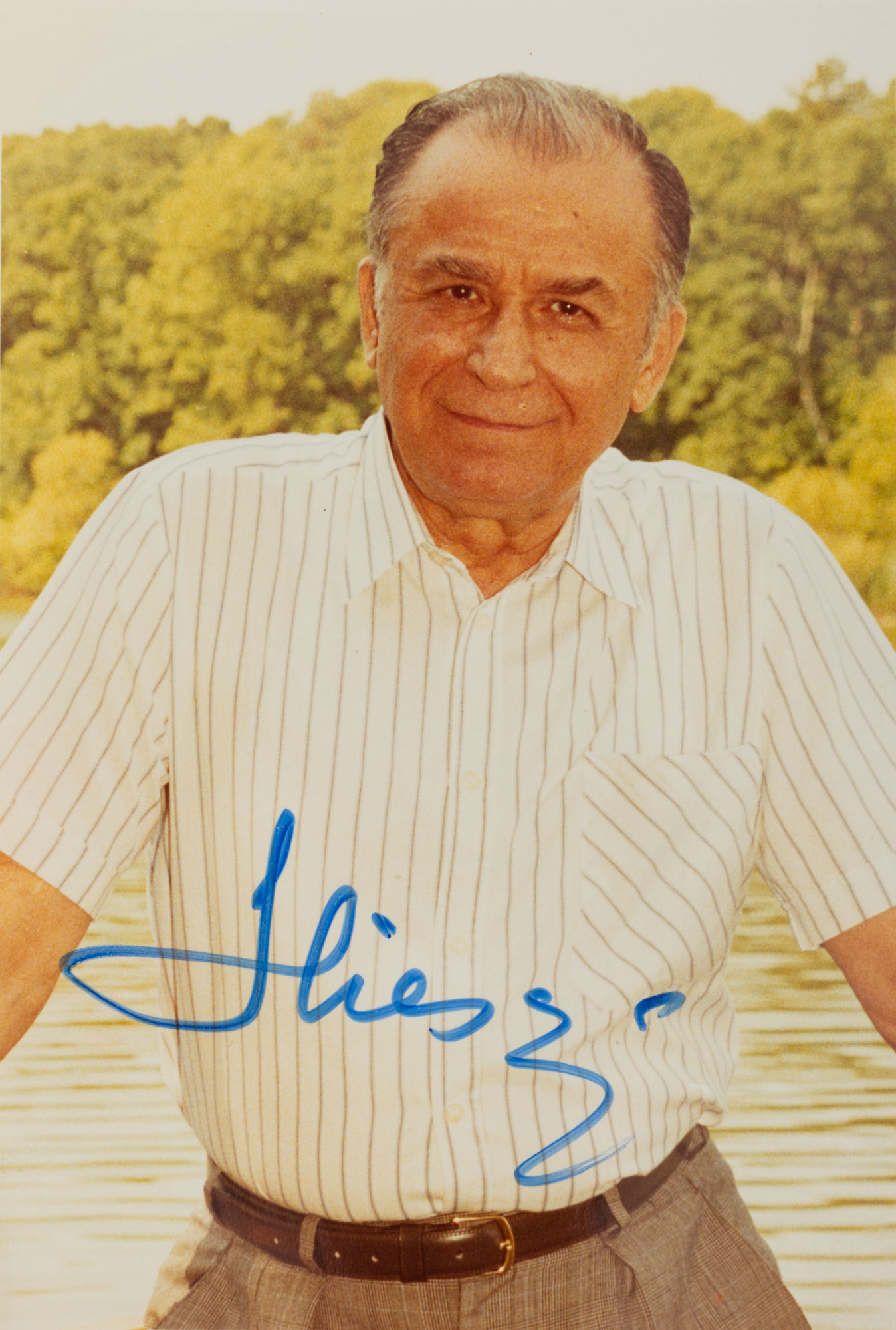
236. Fotografie ilustrându-l pe primul Președinte al României postdecembriste, Ion Iliescu, anii '90, cu semnătura olografă a acestuia
Starting price:
EUR 50
Sold
EUR 75
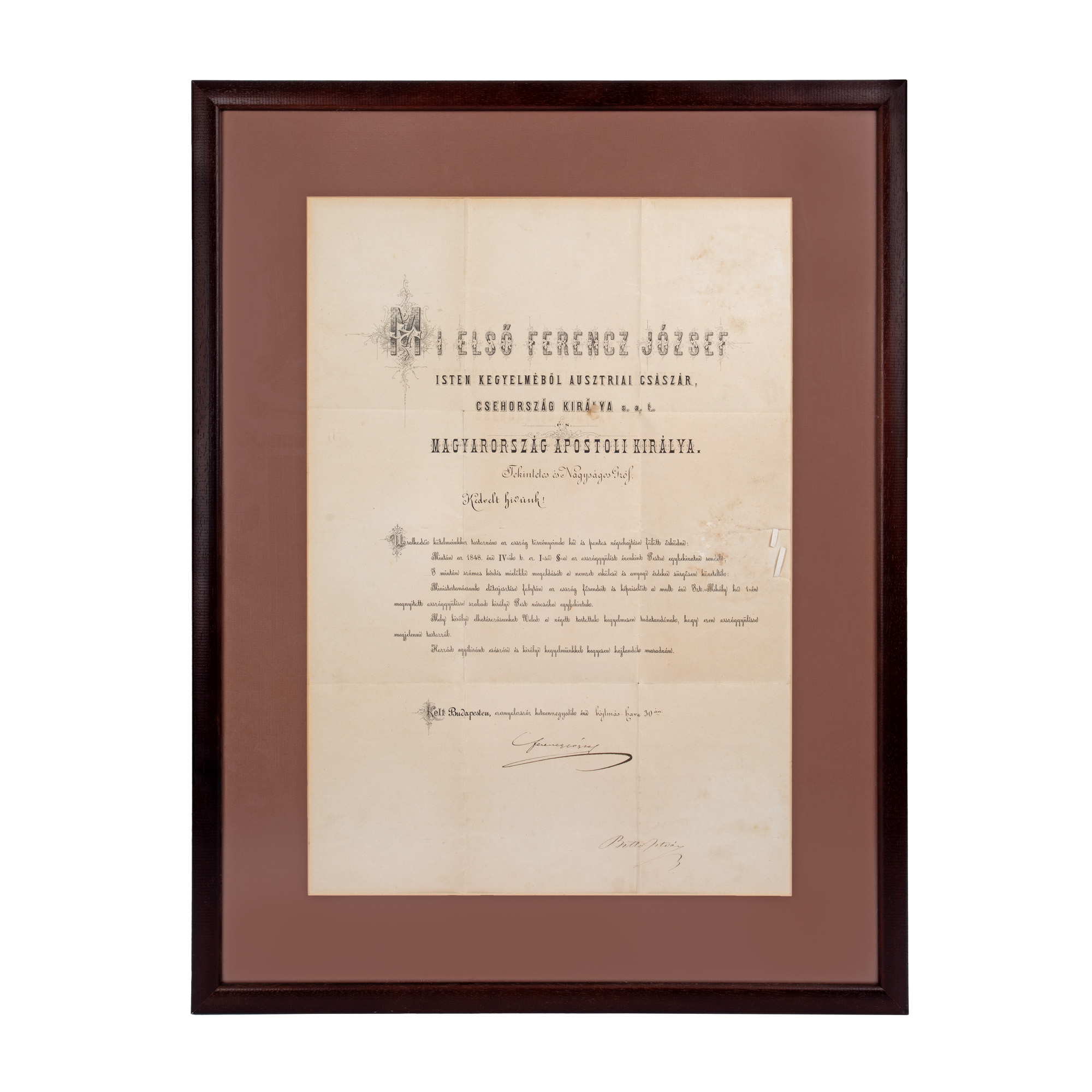
150. Diplomă imperială de convocare la deschiderea lucrărilor Parlamentului, 30 martie 1874, cu semnătura olografă a împăratului Franz Joseph
Starting price:
EUR 250
Sold
EUR 250