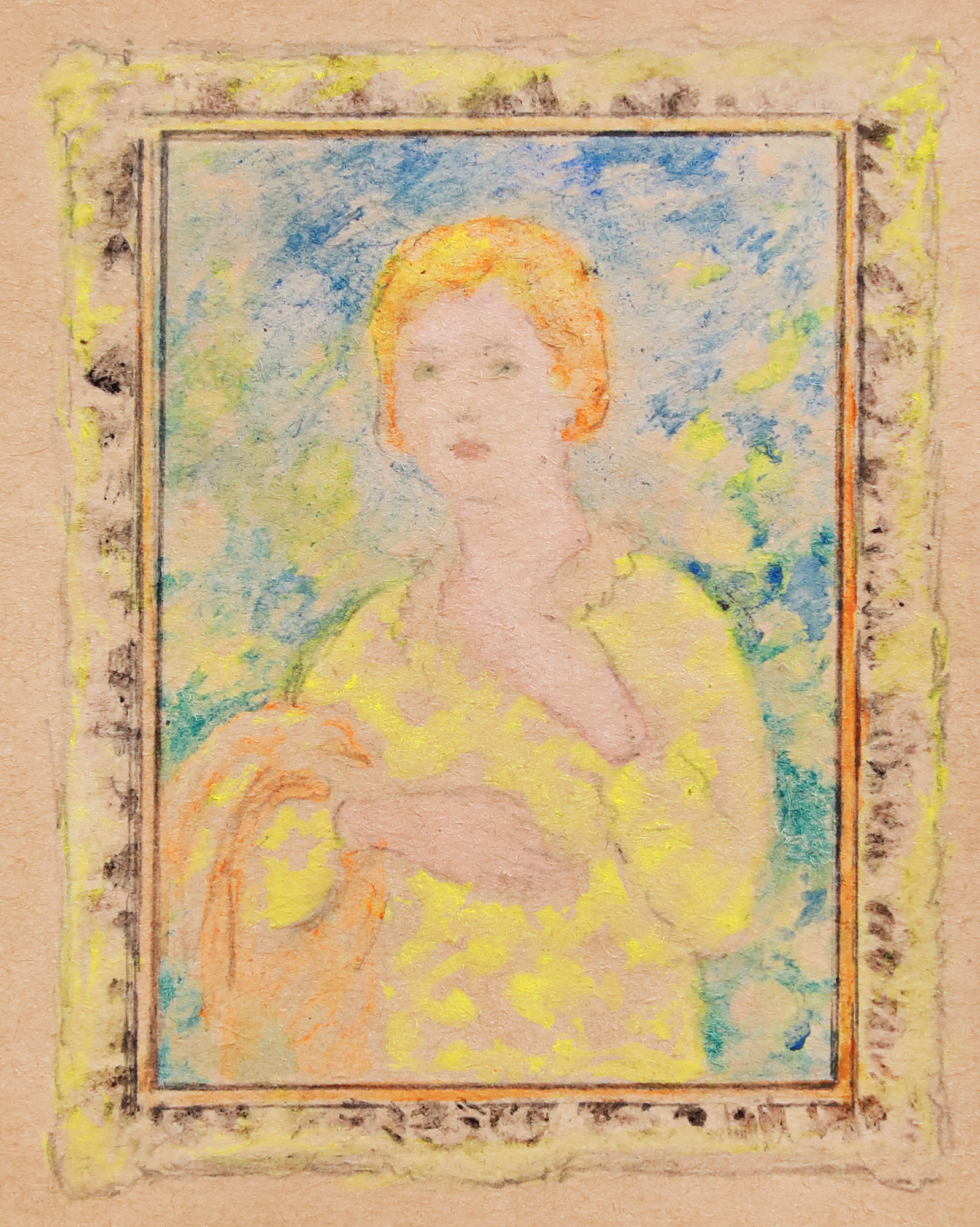
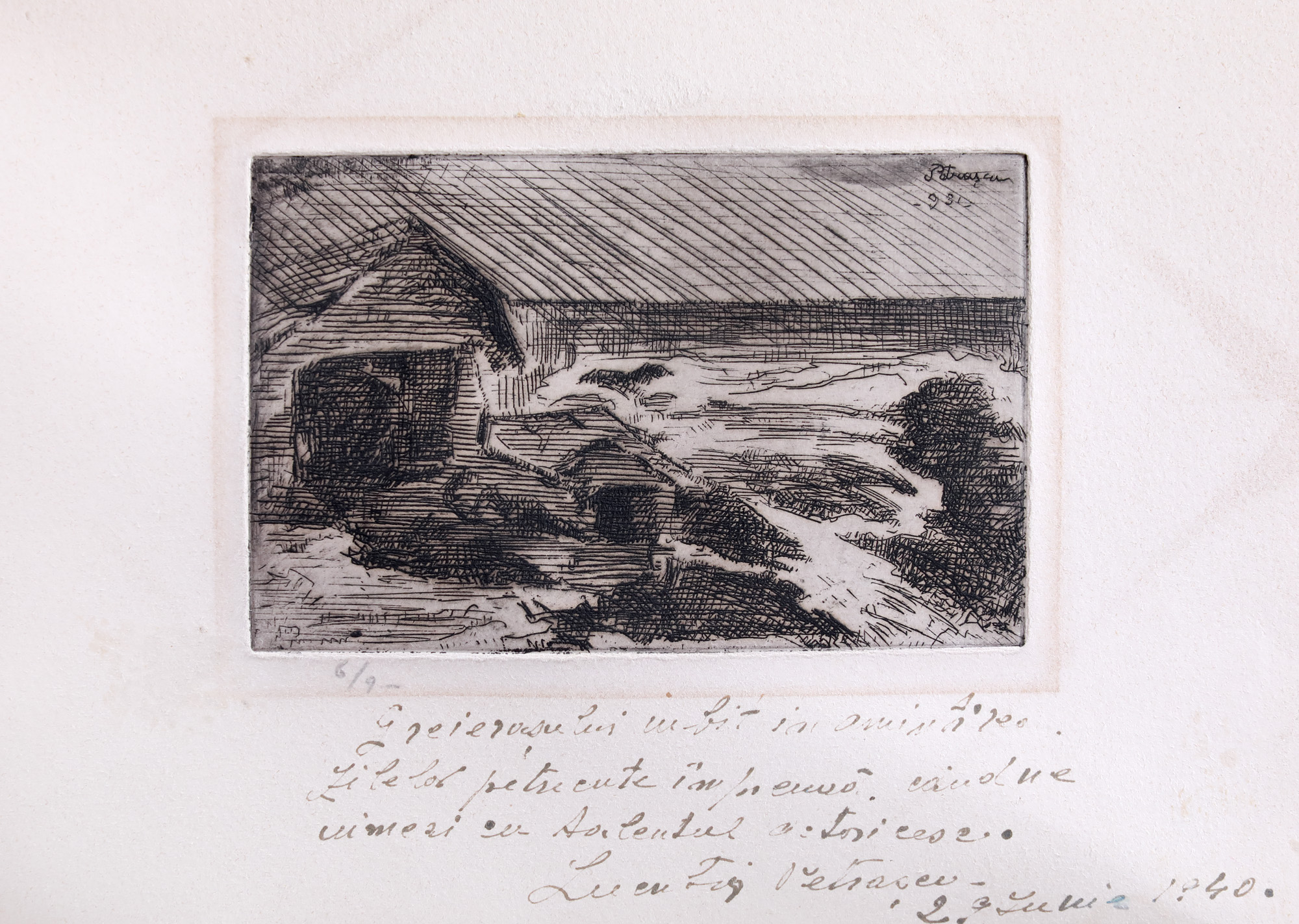
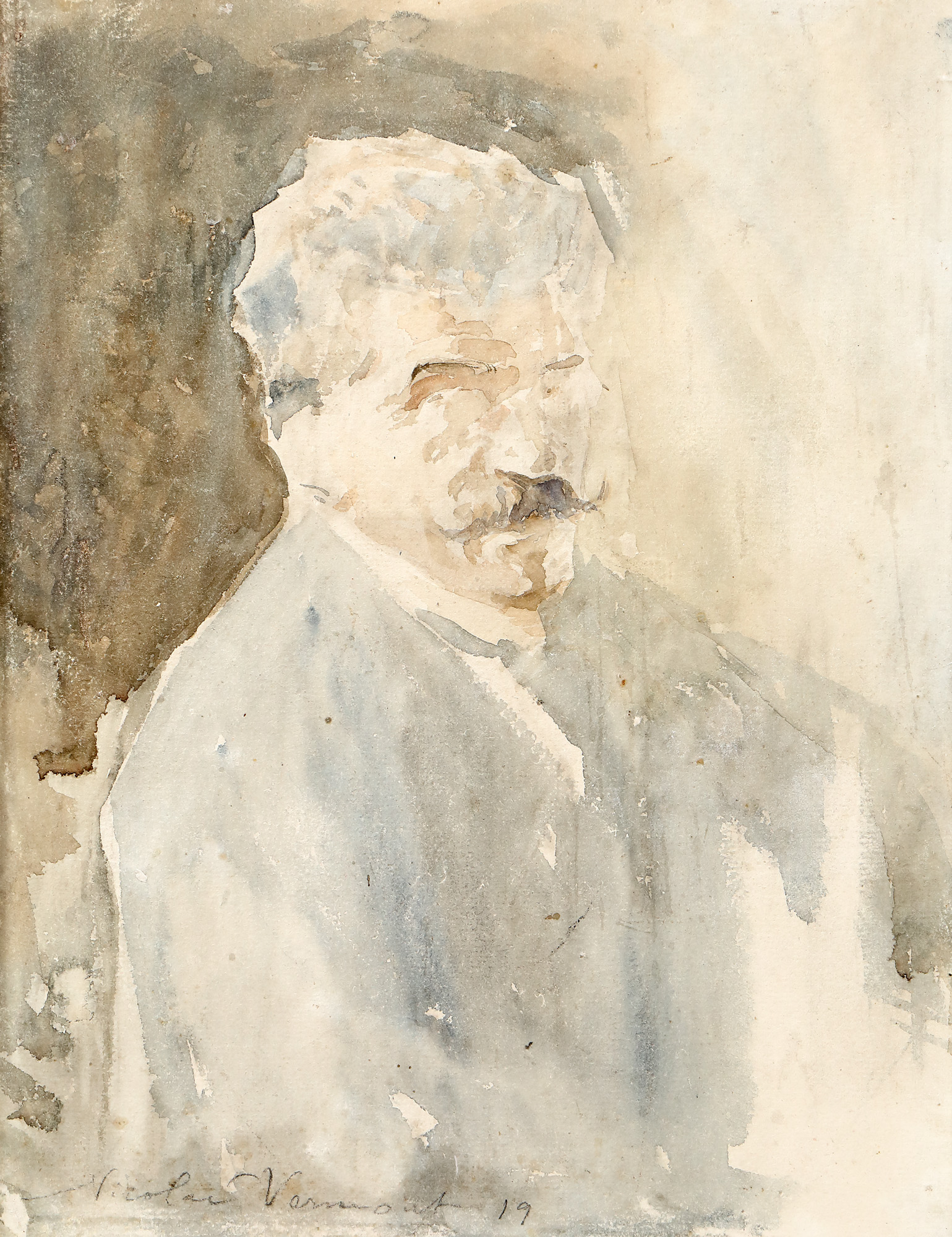
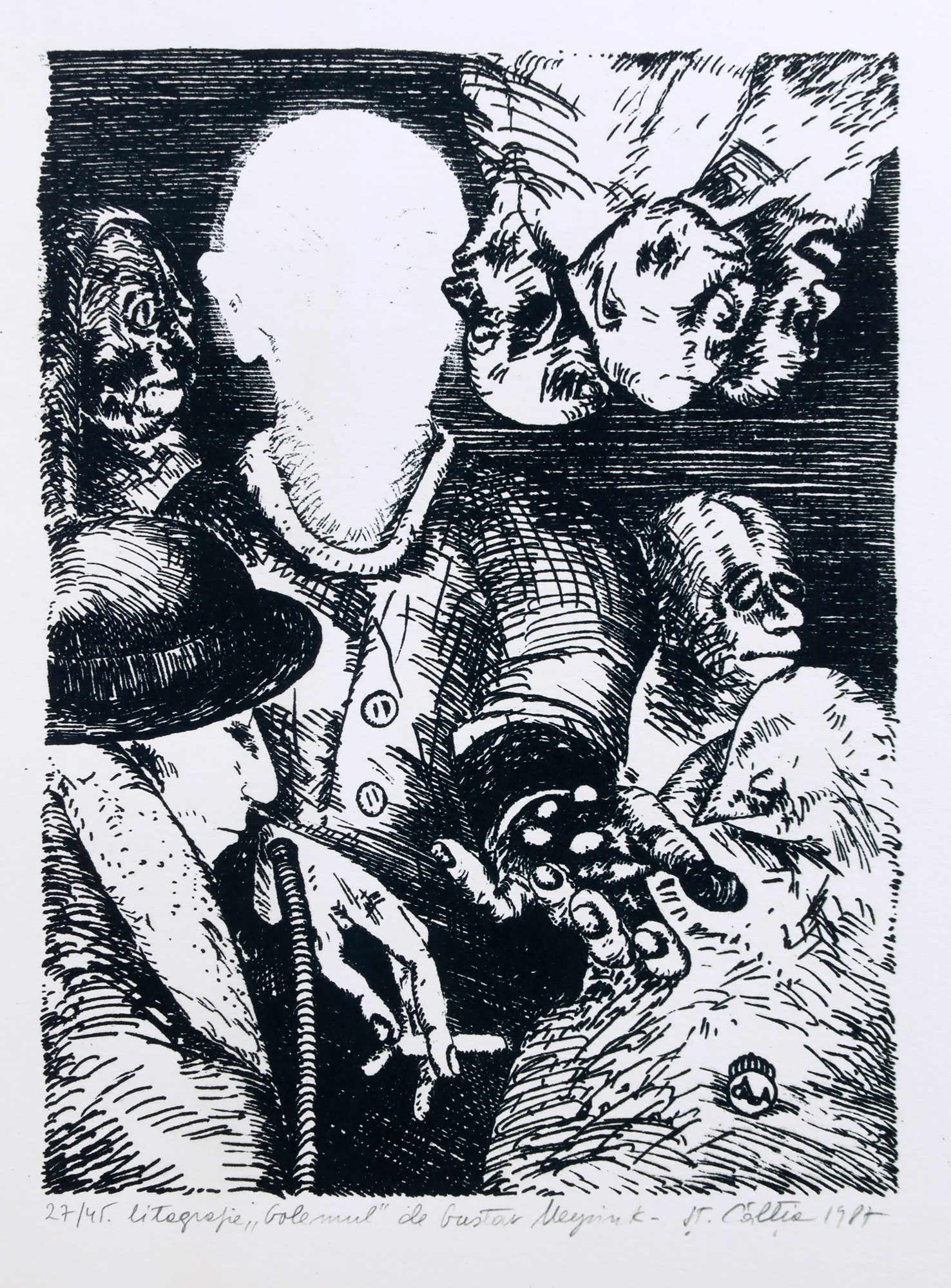
The photos of the lot are informative and indicative, and cannot provide a highly detailed view of the object from all angles. We recommend a careful physical inspection of the lot before bidding.
OCTAVIAN, Tudor, "Sever Burada", Pro Publishing and Typography, 2010.
cărbune, acuarelă și creioane colorate pe hârtie, 15.5 x 11 cm, inscribed upper right, in pencil, ''Saturday 1.Sept.1962.''
At just 14 years old, Sever Burada was exhibiting drawings in the window of David Felber's frame store in Craiova. He would be noticed by the painter Eustațiu Stoenescu, who would invite him to paint landscapes, en plein-air, alongside him and Gheorghe Baba, father of the painter Corneliu Baba. On Stoenescu's recommendation, Sever Burada would end up in the workshop of G.D. Mirea, who would also support the young man's artistic endeavors. The moment that should have marked his initiation into student life would unfortunately have been overshadowed by the outbreak of the First World War, so instead of delving into the mysteries of art, he was sent to the army. In 1914 he was thus assigned to the 1st Infantry Regiment Dolj. In addition to training in the reserve officer training school, Sever Burada continued his artistic manifestations and made several drawings, particularly portraits of his comrades. In 1916 he was held prisoner in the camp in Haskova, Bulgaria and would be released in 1918. Upon returning home, he studied Fine Arts in Bucharest, participated in numerous exhibitions and received a scholarship that facilitated his move to Paris, where he studied, sold some of his paintings and undertook several journeys. However, the outbreak of the Second World War coincided with the beginning of his exile from the national social-artistic life. In 1943, Sever Burada was sent as a guard to the Vapniarka gulag in Transnistria, a fact that, in 1945, would lead to the condemnation and arrest of the artist for war crimes. He managed to send a last letter to his brother Aurel and his sister Cornelia in which he expressed his innocence and declared that all of it "is a set-up and a revenge": the initial death penalty that was attributed to him will later turn into life imprisonment, and eventually be reduced to 15 years of imprisonment and 3 years of forced domicile. But this release would coincide with his exclusion from the Unions and Syndicates of Artists and implicitly with the deprivation of his pension right, a punishment that would also include the prohibition of citing his name and his creation. Sever Burada would therefore have to lead a precarious life, marked by shortcomings. He would not be able to move to the capital - due to a lack of accommodation and identity papers - so he would be assigned a "mandatory domicile" in Valea Călmățuiului - where he would experience moments of "deep peace", as he would later confess to his daughter. A deeply internalized painter, he recorded his daily experiences during his forced domicile in Bărăgan, in the form of journals. He drew his memories in watercolor frames, on school waste paper and often drew directly on the journal's text page. The artist's precarious living conditions and lack of materials would be felt through the maximum use of the potential of every piece of paper that passed through his hands, so that his sketches and drawings would appear on letters or scraps of paper. The period of his release would coincide with the acquisition of themes such as divinity or maternity, which the artist would constantly reiterate in different guises, taking advantage of the technical media he had at his disposal. In a work dedicated to the image of his daughter in early infancy we find, for example, an original technique: the artist becomes a connoisseur of botany and uses plant pigments and a mixture of dust to obtain a unique chromaticity. However this cannot be considered an experiment per se, but rather an acute lack of raw material and a pressing need to continue his artistic manifestations. In this portrait, we identify the features of Liliana, his daughter, who has been closely involved with the research and inventory of her father's work after his death. Born on July 27, 1926, Liliana will continue the difficult life initiated by her father. She will lose her mother, the painter Maria Sofletea, at only 13 years old, and will enjoy her father's presence only for short periods of time. In 1945, while incarcerated, the artist sends one last missive to his family, in which he asks his siblings to take care of his daughter left "alone in the world". He will see her again only in 1960, when he was already 64 years old, at the end of his "long voyage", as he himself called the course after imprisonment. He will enjoy only eight years of freedom, burdened by worries and hardships, but often infused with the joy of seeing relatives who remained alive and beneficent neighbors who were willing to help him. Sever Burada remains, therefore, in the consciousness of his work's admirers as a painter who, despite the difficulties encountered, managed to leave behind him a valuable cultural heritage.
For clarifications regarding the bidding procedure, hammer price costs, guarantee, payment, and collection terms for the winning lot, we recommend carefully reading/re-reading the Bidding Regulations.
For additional information regarding the lot and the auction, please contact the Art Consultants Department.