The photos of the lot are informative and indicative, and cannot provide a highly detailed view of the object from all angles. We recommend a careful physical inspection of the lot before bidding.
The photos of the lot are informative and indicative, and cannot provide a highly detailed view of the object from all angles. We recommend a careful physical inspection of the lot before bidding.
75. Medal dedicated to the appointment of the Ad-Hoc Divans in Wallachia and Moldavia, 1857, silver, extreme rarity
Starting price
Pretul de pornire si cel estimat nu sunt preturi de vanzare efective
EUR 1.400
Sold
Pretul de pornire si cel estimat nu sunt preturi de vanzare efective
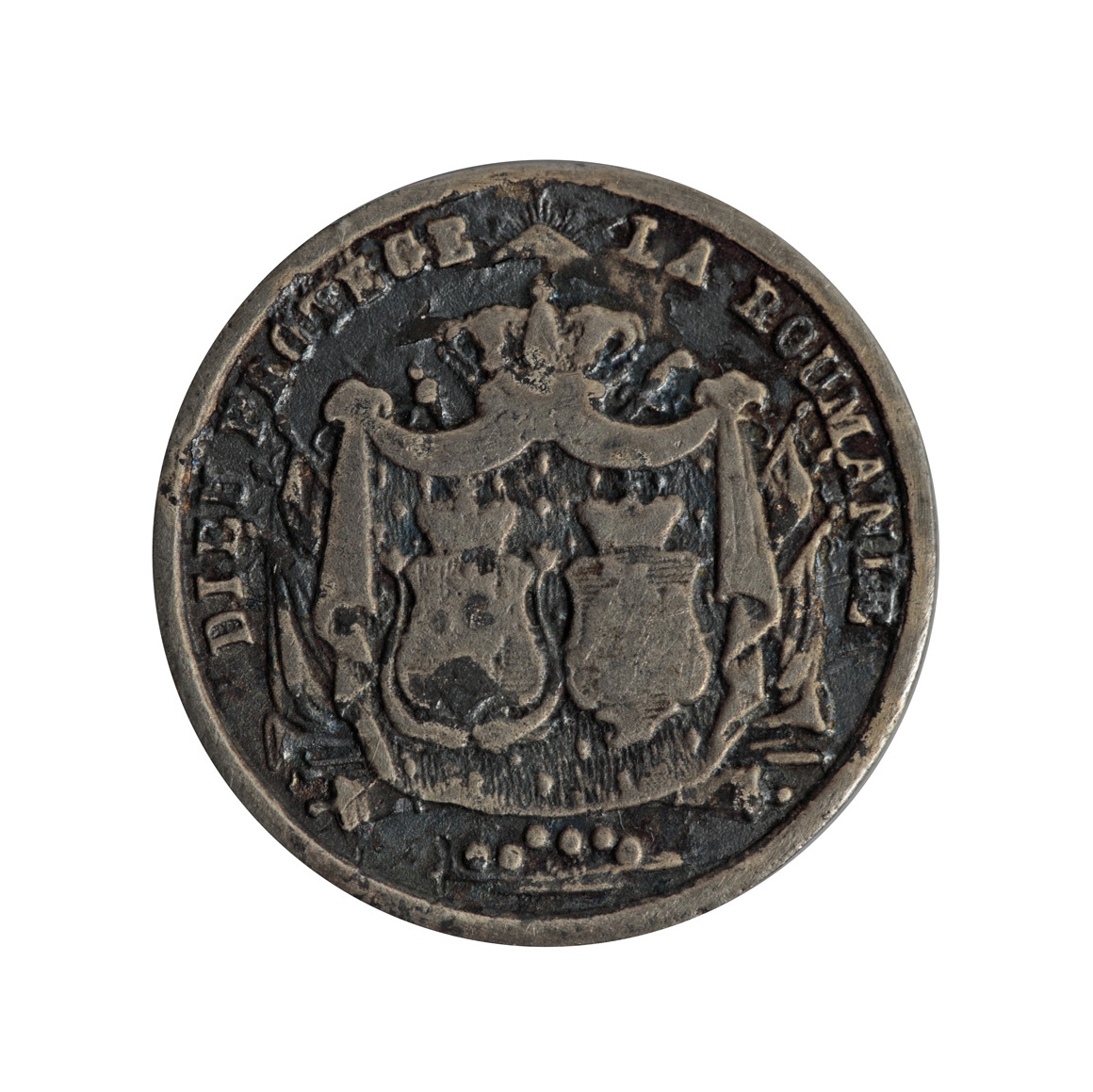
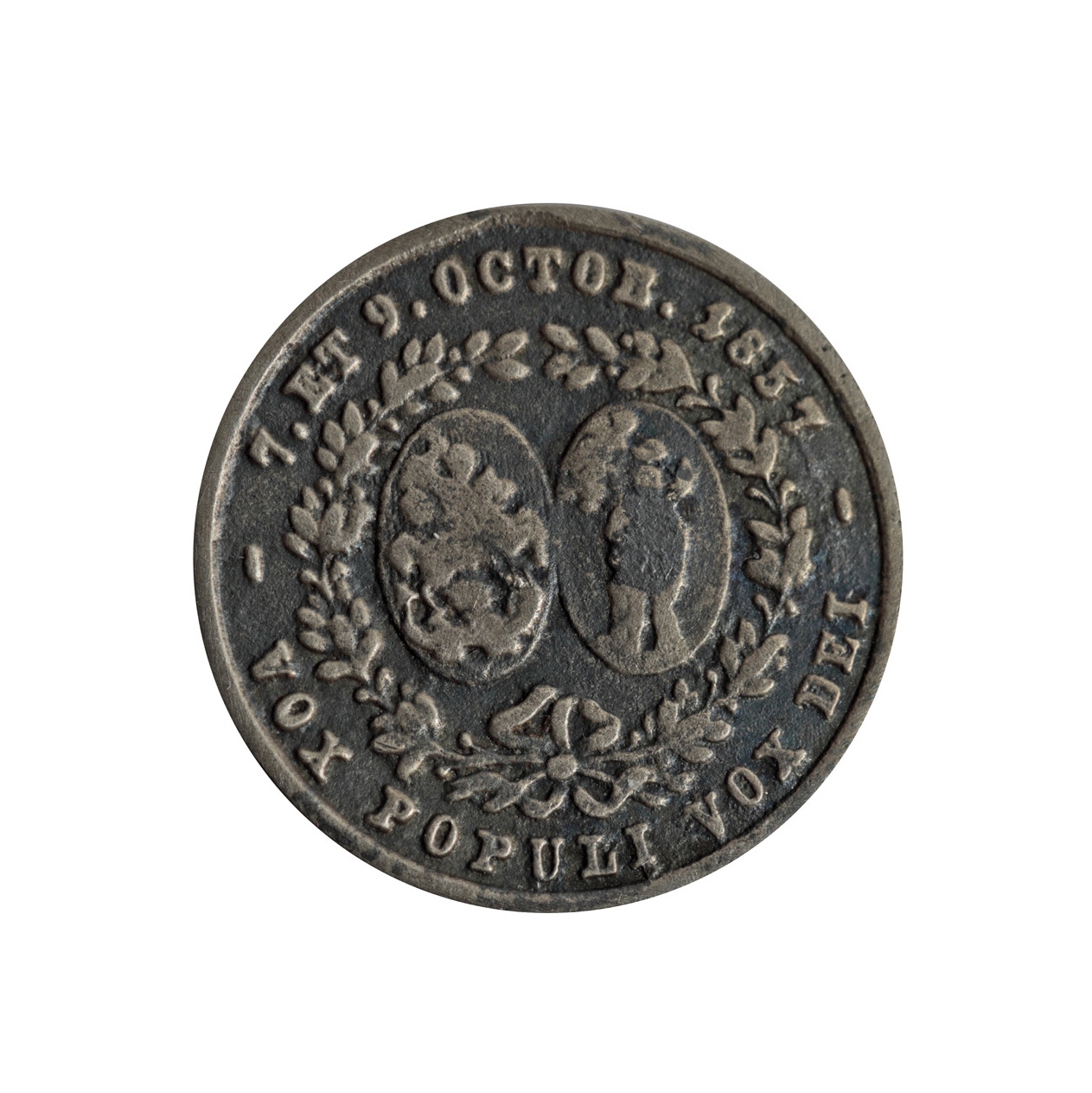
The medal was offered to the participants of the Ad-Hoc Councils of Moldavia and Wallachia in October 1857.
On the obverse, the motto DIEU PROTÉGÉ LA ROUMANIE (God protects Romania), the coats of arms of the two Principalities, Moldavia and Wallachia, and on the upper part one can see a representation of the eye of God.
On the reverse, the motto VOX POPVLI VOX DEI (Voice of the people, voice of God), and in the central position amid a laurel crown, there are two shields, the one on the right side has the central figure of St. Demetrius, and the one on the left side, the one of St. George, the patron saints of the capital cities of the two Romanian Principalities.
Historical context:
Once the Crimea war was over, and Russia was defeated by an alliance of the great European powers, which included England, France, Turkey and the Kingdom of Sardinia, the Peace Congress of Paris took place (13th/25th of February - 18th/30th of March 1856), where a series of important decisions were made also for the future of the Romanian Principalities and the Romanian nation.
Article 24 of the Peace Treaty stipulated: "His Majesty the Sultan promises to summon, in each of the two Principalities, an Ad-Hoc Divan, organised such as to represent the interests of all social classes as accurately as possible. These Divans are summoned to express the people's will concerning the definite organisation of the Principalities."
On the 7th of October 1857 and the 8th of October 1857, in Wallachia, consultative assemblies were organised with the purpose of expressing the population's will regarding the definite organisation of the Principalities, according to the conditions of the 1856 Treaty of Paris, the Ad-Hoc Divans consisting of representatives of the clergy, the upper boyar class, the bourgeoisie and the rural workforce.
On the 7th and 9th of October 1857, the Resolutions of the two Ad-Hoc Assemblies are elaborated. The decisions of the two assemblies had generally common requests, amongst which the most important ones were to respect the previous capitulations between the Romanian territories and the Ottoman Porte, stipulating that the Romanian Principalities were unoccupied and independent territories. Moreover, it was decided that the Principalities would unite under a single state, by the name of Romania, and the ruler would be a foreign prince with a hereditary throne, elected from a domineering Western European dynasty, whose descendants should be raised into the country's religion;
A commission of the Warranting Powers, amongst which Russia, France and England, analysed the decisions made by the two Divans. The commission gathered in Paris and the requests of the two Ad-Hoc Divans were discussed (10th/22nd of May - 7th/19th of August 1858), the European powers adopting the Paris Convention:
Article 1 - stipulated the partial unification of the Principalities of Moldavia and Wallachia under the name of "The United Principalities of Moldavia and Wallachia", remaining under the suzerainty of "His Majesty the Sultan" and under the protection of the seven powers;
Article 2 - guaranteed the autonomy of the Principalities.
Article 3 - stipulated the election of two separate rulers for each of the two Principalities.
Articles 4, 5 and 6 - explained the method of exerting of executive power by the Hospodar, as well as their cooperation with the separate election assemblies and with the Focșani Central Commission.
Article 8 - established the value of the tribute owed to the Ottoman Porte, namely 1,500,000 Piastres for Moldavia and 2,500,000 Piastres for Wallachia.
Articles 10 -14 - stipulated the method of election of the Hospodars, as well as their rights and obligations.
Article 27 - established the organisation of a "Central Commission" in Focșani, consisting of 8 members for each Principality.
Article 38 - established the creation of a common High Court of Justice and Appeal for both Principalities, with headquarters in Focșani.
Articles 42 - 44 - established the creation of a common (armed) Police force, whose Commander was due to be appointed alternatively by the rulers of each Principality.
Dimensions
custom d=18 mm
Description
silver
ADDITIONAL INFORMATION
For clarifications regarding the bidding procedure, hammer price costs, guarantee, payment, and collection terms for the winning lot, we recommend carefully reading/re-reading the Bidding Regulations.
For additional information regarding the lot and the auction, please contact the Art Consultants Department.
Detalii
The medal was offered to the participants of the Ad-Hoc Councils of Moldavia and Wallachia in October 1857.
On the obverse, the motto DIEU PROTÉGÉ LA ROUMANIE (God protects Romania), the coats of arms of the two Principalities, Moldavia and Wallachia, and on the upper part one can see a representation of the eye of God.
On the reverse, the motto VOX POPVLI VOX DEI (Voice of the people, voice of God), and in the central position amid a laurel crown, there are two shields, the one on the right side has the central figure of St. Demetrius, and the one on the left side, the one of St. George, the patron saints of the capital cities of the two Romanian Principalities.
Historical context:
Once the Crimea war was over, and Russia was defeated by an alliance of the great European powers, which included England, France, Turkey and the Kingdom of Sardinia, the Peace Congress of Paris took place (13th/25th of February - 18th/30th of March 1856), where a series of important decisions were made also for the future of the Romanian Principalities and the Romanian nation.
Article 24 of the Peace Treaty stipulated: "His Majesty the Sultan promises to summon, in each of the two Principalities, an Ad-Hoc Divan, organised such as to represent the interests of all social classes as accurately as possible. These Divans are summoned to express the people's will concerning the definite organisation of the Principalities."
On the 7th of October 1857 and the 8th of October 1857, in Wallachia, consultative assemblies were organised with the purpose of expressing the population's will regarding the definite organisation of the Principalities, according to the conditions of the 1856 Treaty of Paris, the Ad-Hoc Divans consisting of representatives of the clergy, the upper boyar class, the bourgeoisie and the rural workforce.
On the 7th and 9th of October 1857, the Resolutions of the two Ad-Hoc Assemblies are elaborated. The decisions of the two assemblies had generally common requests, amongst which the most important ones were to respect the previous capitulations between the Romanian territories and the Ottoman Porte, stipulating that the Romanian Principalities were unoccupied and independent territories. Moreover, it was decided that the Principalities would unite under a single state, by the name of Romania, and the ruler would be a foreign prince with a hereditary throne, elected from a domineering Western European dynasty, whose descendants should be raised into the country's religion;
A commission of the Warranting Powers, amongst which Russia, France and England, analysed the decisions made by the two Divans. The commission gathered in Paris and the requests of the two Ad-Hoc Divans were discussed (10th/22nd of May - 7th/19th of August 1858), the European powers adopting the Paris Convention:
Article 1 - stipulated the partial unification of the Principalities of Moldavia and Wallachia under the name of "The United Principalities of Moldavia and Wallachia", remaining under the suzerainty of "His Majesty the Sultan" and under the protection of the seven powers;
Article 2 - guaranteed the autonomy of the Principalities.
Article 3 - stipulated the election of two separate rulers for each of the two Principalities.
Articles 4, 5 and 6 - explained the method of exerting of executive power by the Hospodar, as well as their cooperation with the separate election assemblies and with the Focșani Central Commission.
Article 8 - established the value of the tribute owed to the Ottoman Porte, namely 1,500,000 Piastres for Moldavia and 2,500,000 Piastres for Wallachia.
Articles 10 -14 - stipulated the method of election of the Hospodars, as well as their rights and obligations.
Article 27 - established the organisation of a "Central Commission" in Focșani, consisting of 8 members for each Principality.
Article 38 - established the creation of a common High Court of Justice and Appeal for both Principalities, with headquarters in Focșani.
Articles 42 - 44 - established the creation of a common (armed) Police force, whose Commander was due to be appointed alternatively by the rulers of each Principality.
ADDITIONAL INFORMATION
For clarifications regarding the bidding procedure, hammer price costs, guarantee, payment, and collection terms for the winning lot, we recommend carefully reading/re-reading the Bidding Regulations.
For additional information regarding the lot and the auction, please contact the Art Consultants Department.