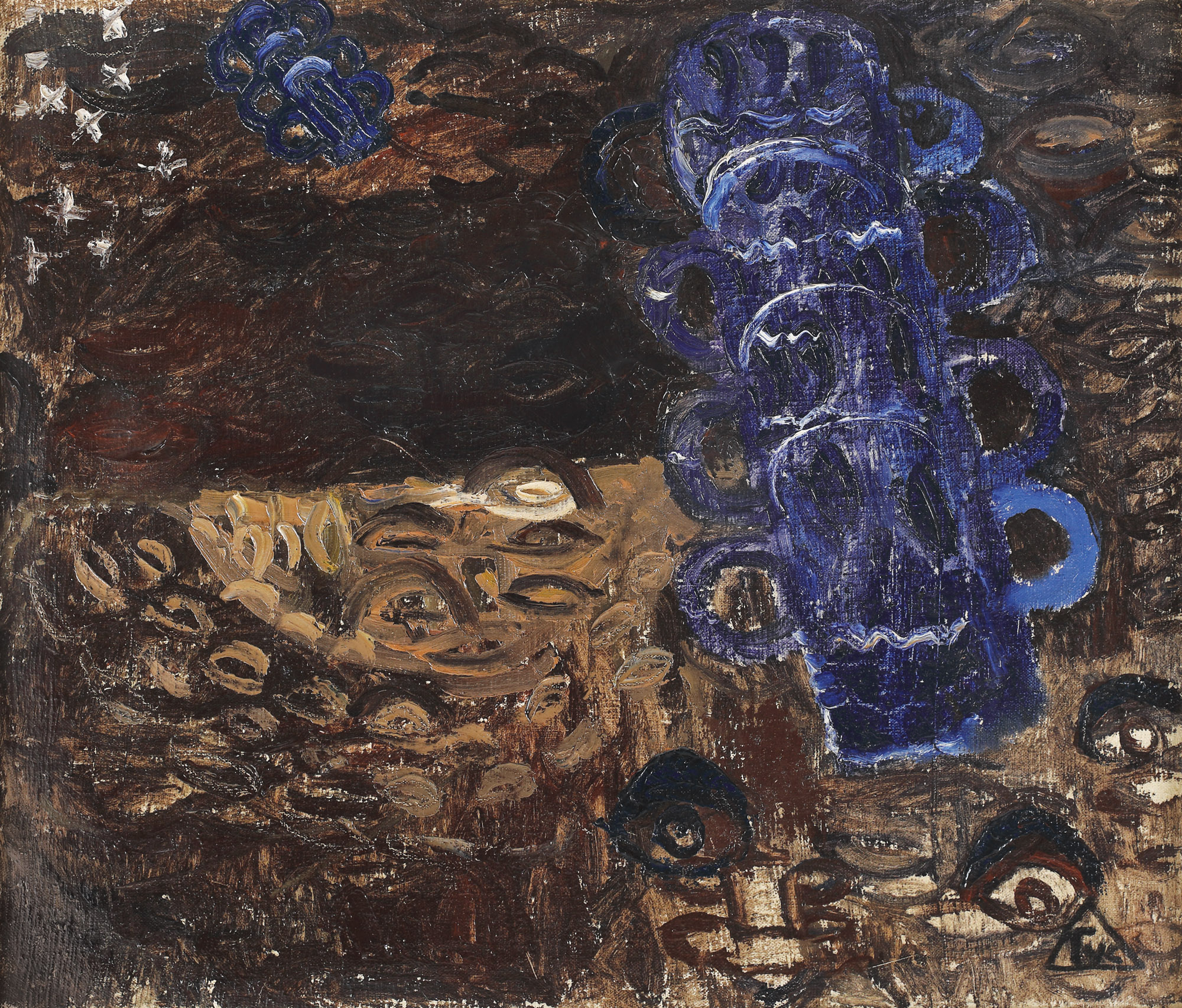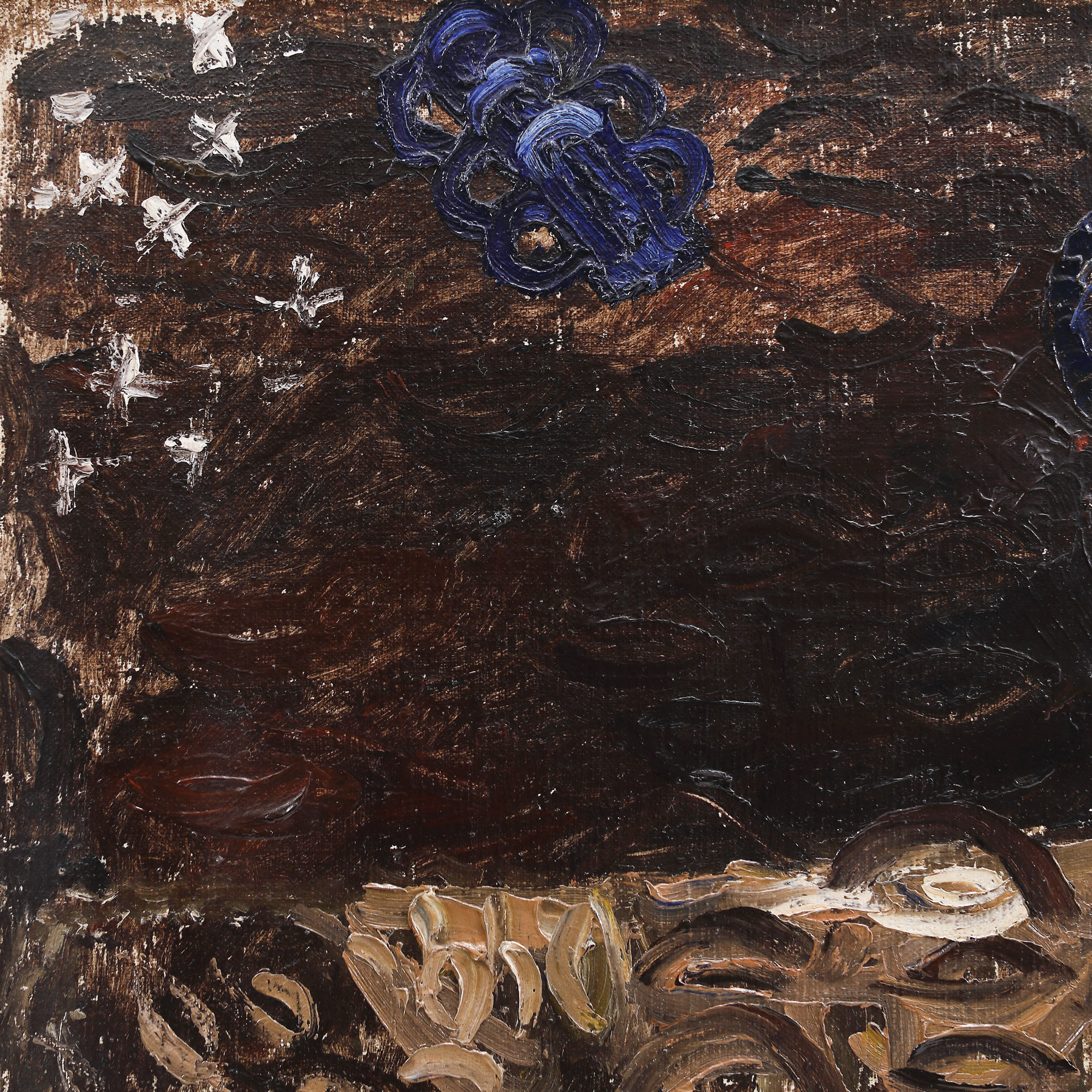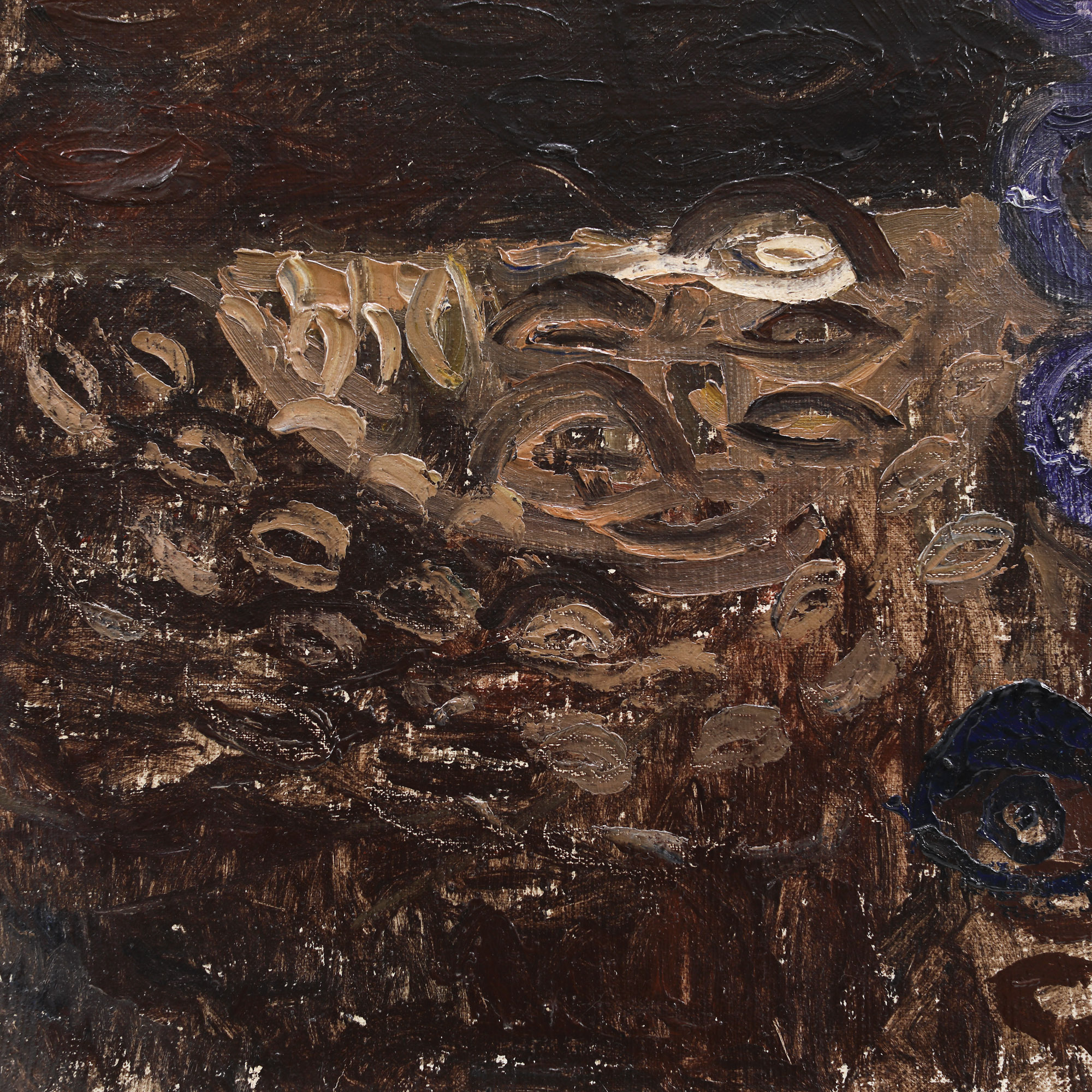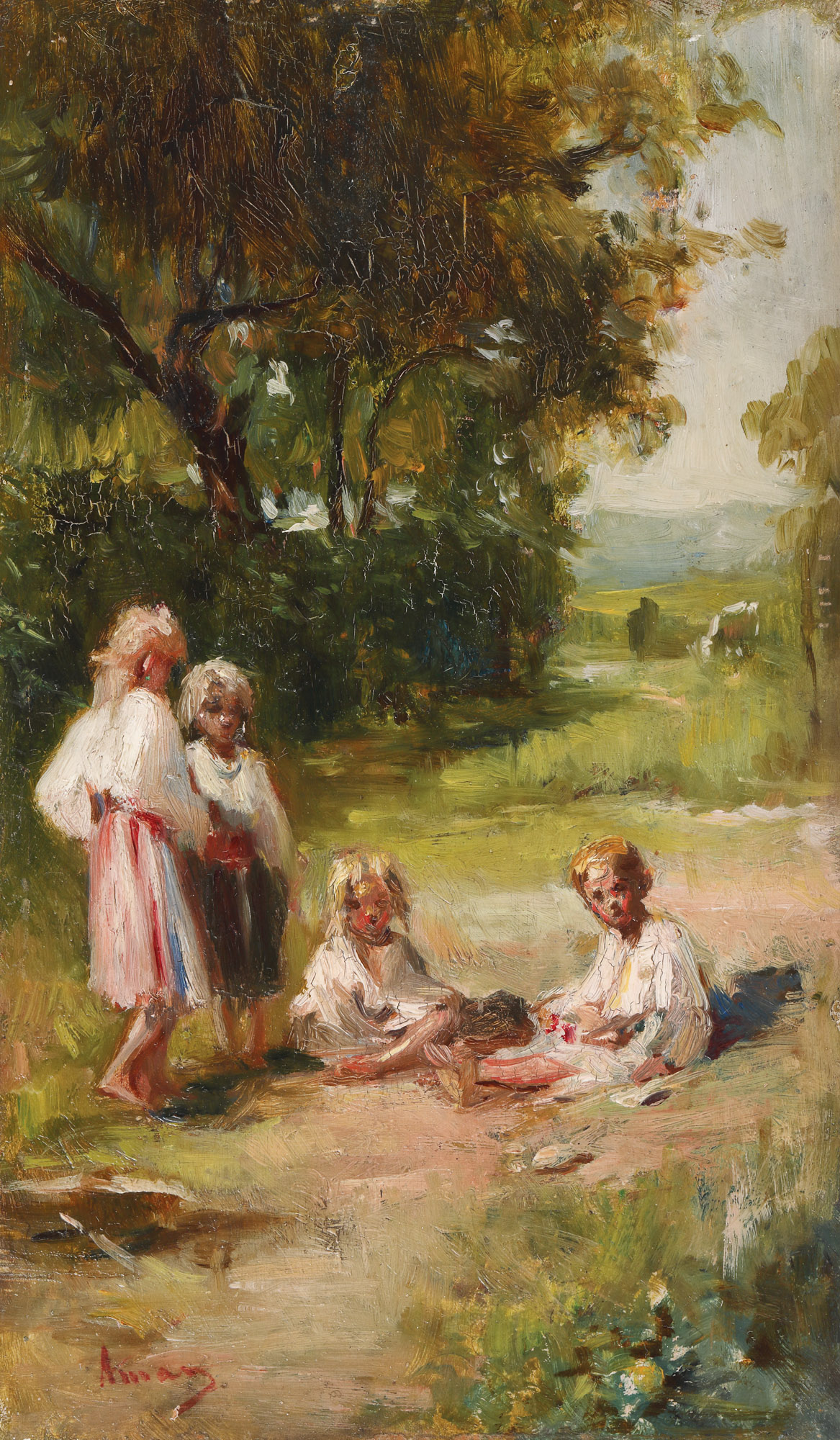

84. Brown Ocean [1959]

1910, Craiova - 1962, Bucureşti

Estimate

EUR 30.000 - 45.000

Sold

EUR 50.000

Session

Tue, 21 December 2021 19:00

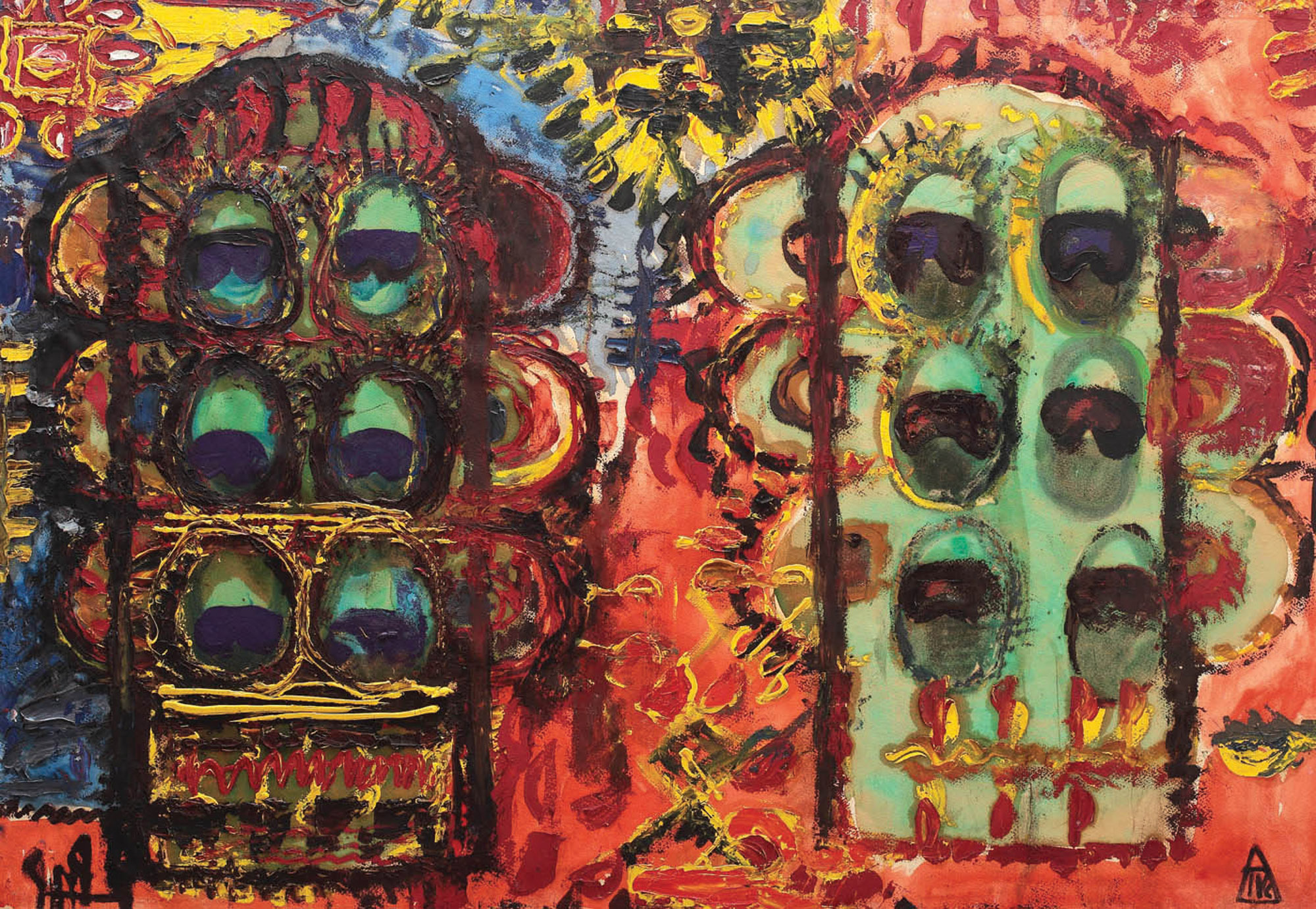
As a modern thinker of the post-war years, Ion Țuculescu participated with his works of art in the great movements of universal artistic creation, with a focus on landmarks such as the primitive of the Romanian folk art, that he would integrate and reformulate in new forms and new orders, subject to his own personality. The luring primitive resonates in the history of peoples, the artist being a very good connoisseur of the ancient arts, the Roman, Greek, Egyptian or Indian art. In addition to the primitive, Țuculescu would pay great attention to reality as a landmark capturing it in the immediate visual space; later this space would be populated with the folk ethos, hence the artist turning into the creator of a new, simplified reality, directed towards the cosmic mystery, which the painter dreamed of within himself, as he confessed. The Romanian folk art, to which he will turn from the start, would attract Țuculescu through the modernity he proposed, through geometrization and colour enhancement specific procedures, the features of this contemporary art being the decorativeness and vitality, that the artist also would follow, responding thus to the contemporary taste. In the context of contemporary art, his chromaticism appears subtle at first, but with certain tendencies towards severe, and later his visions of the surrounding world would be crossed by gloom and shrillness, expressed by the artist through harsh to violent colouring, instead of nuances predominating strong contrasts, with exaltations of tonalities, formulated by the artist Țuculescu in an expressionist sense. Throughout his creation, Țuculescu would go through several periods, a first stage was the folkloric period, between 1947 and 1955, when the artist would get inspired by the vision and stylization of the Oltenian kilims and where we often notice wavy, eye-shaped strings of leaves. The folkloric period was followed by the totemic period, from 1955 to 1956, and then by the last period of creation, of symbols and signs, which a very strong impact on the artist's work between 1960 and 1962, featuring abstraction, strong colouring, and a rhythm of shapes and outlines that became more and more vital Manifested towards the end of the 1950s, when great interest was paid to abstract art, with a strong diversity of formulas, Țuculescu's art managed to stir people's spirits by the novelty of his chromatic combinations and the proposed forms, which suggested new expressions, never seen before in the Romanian art. Thus, Țuculescu destroyed the vanishing point and the horizon line, releasing the perception of rational control of the perspective, an emblem of the repressive type of image, and conferring a new, emotional type of force to the perceived object, through new forms building the idea of depth. The images saturated in an ostentatious bidimensionality are evidence of an uninhibited transposition, making room for the space, entirely escaping perspective. This time, the new visual impulse that has been noted contains a spiritual charge of the self, which the painter reveals through warm gestures, limiting it to the state of matter. In the representation of the totem, an element present during his second creative period, the artist gives us details of the old tradition, of the primitive past of the ancestors, when such an item was venerated and appreciated for its abilities to protect; in his art, it seems to bear the same peculiarities and meanings. Present in the painting "Brown Ocean", the totem finds its place in an environment of swirling browns, in an attempt at tempering it through the complementary presence. As part of a creative period characterized by artistic vision abstraction, the totemic element is joined by a repetition of previously evoked symbols that become archetypes. His work, of a certain artistic value, would participate in numerous retrospective exhibitions of the artist, starting in 1965 at the Dalles Hall, and in many other international exhibitions, such as the Venice Biennale, organized in 1966, after his death with a number of 80 works, followed by other exhibitions organized in Copenhagen, Washington in 1967, and in the retrospective exhibition of 1999, held at the Romanian Museum of Art. (G.M.)

References

Comarnescu, Petru, Țuculescu, Ed. Meridiane, București, 1974. Catalogul Expoziției retrospective „Ion Țuculescu”, MNAR, București, 1999. Davidescu, Cătălin, Țuculescu, Ed. Scrisul Românesc, Craiova, 1988.

Dimensions

width 60 cm, height 52 cm, custom 52 × 60 cm

Description

oil on canvas, signed bottom right, with black, in monogram, "TUC"

Research information

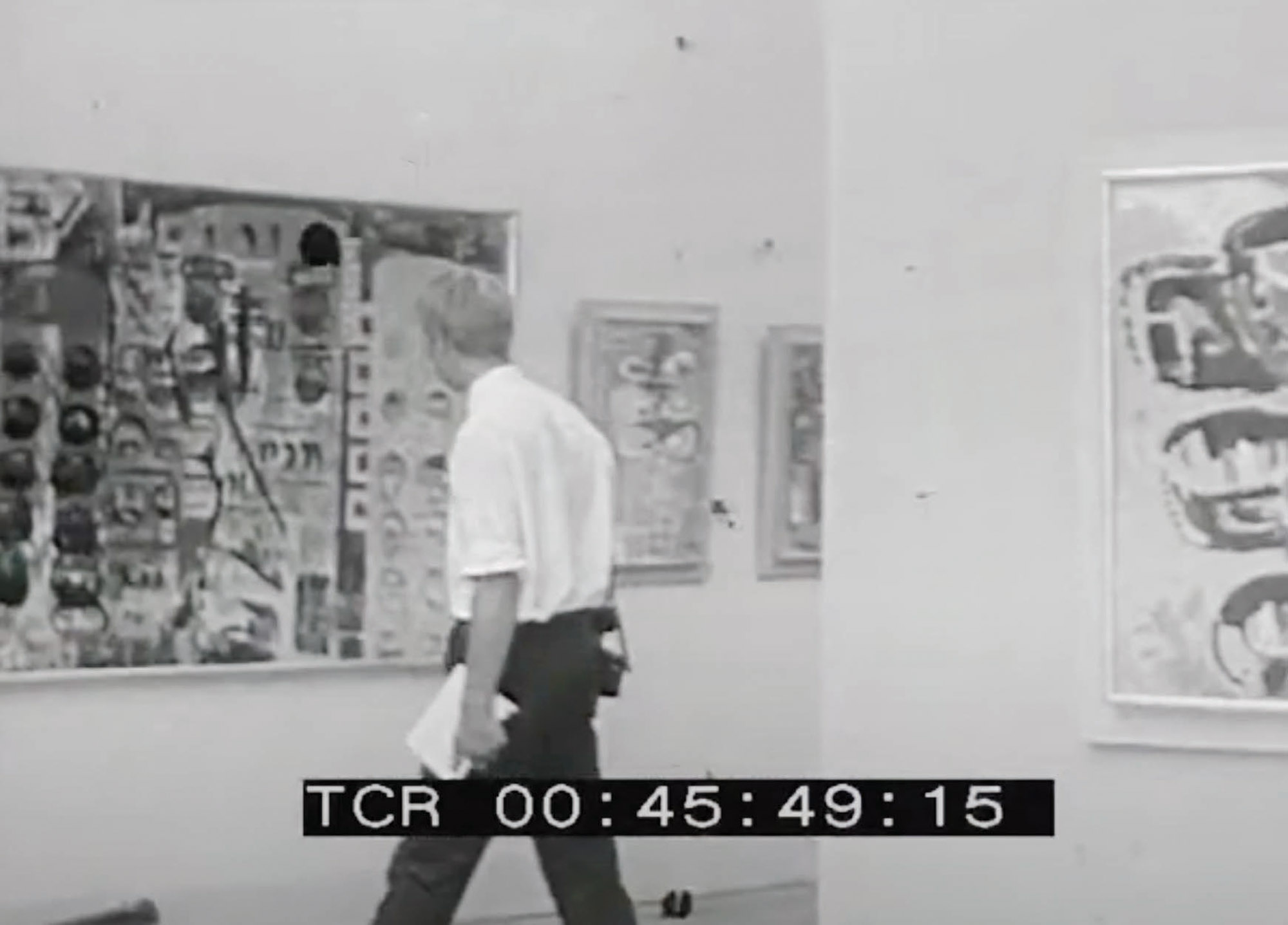
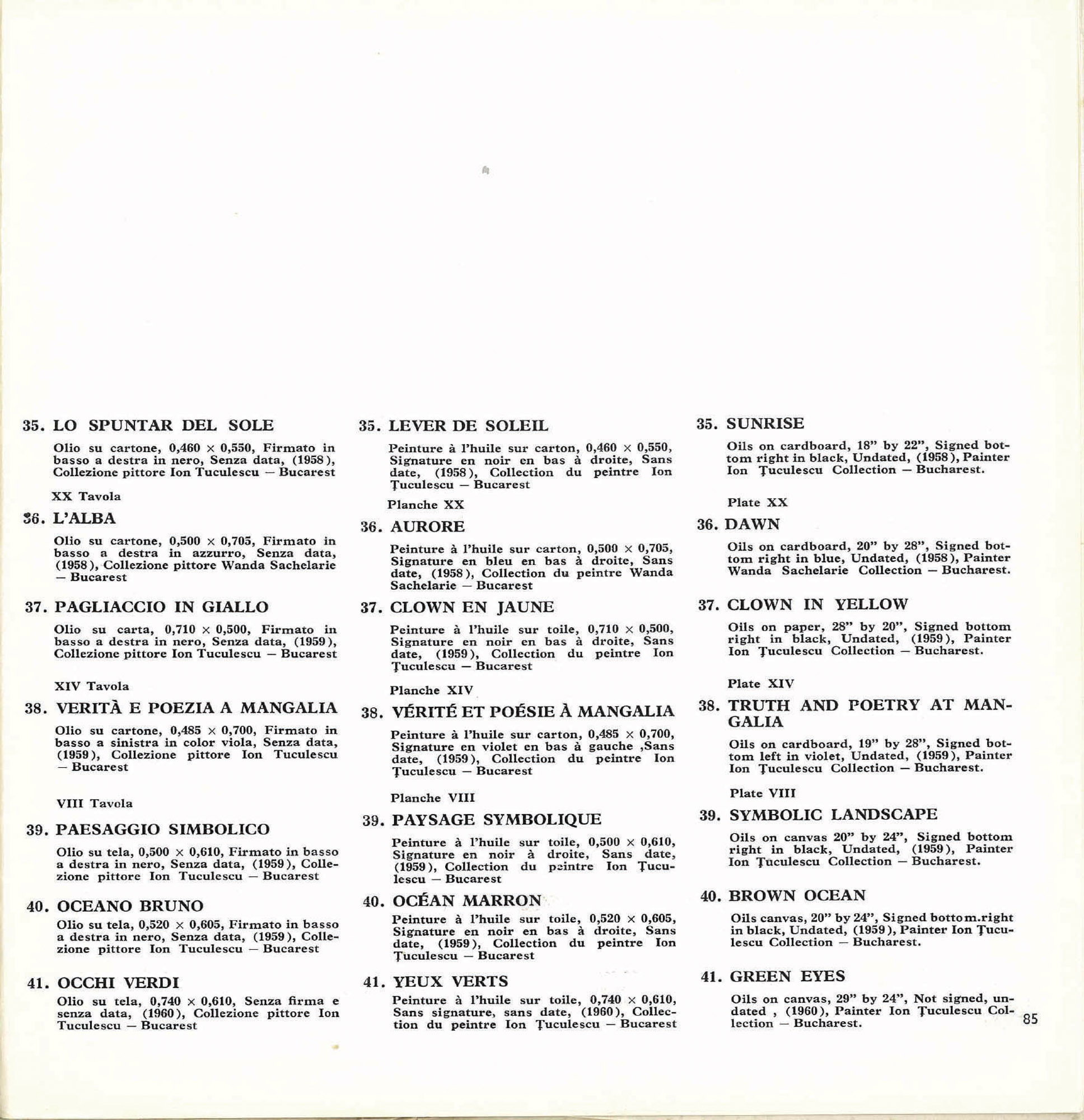
The artwork was part of "Ion Țuculescu" retrospective exhibition, Dalles Room, 1965, under cat. 110. The artwork was part of the 23rd edition of the Venice Biennale, 1966, under cat. 40 and is mentioned in the exhibition catalogue at p. 85. The artwork was part of Ion Țuculescu Exhibition, Paris, 1967. The artwork was part of "Ion Țuculescu" Exhibition, Kunstforeningen, September 30 – October 22, 1967, Copenhagen, under cat. 33. The artwork was part of "Ion Țuculescu" Exhibition, Washington, 1967, under cat. 35. The artwork was part of "Ion Țuculescu" retrospective exhibition, Art Museum of Romania, February-May 1999 and is mentioned in the exhibition catalogue under cat. 322, p. 62.

Dating

1959

ADDITIONAL INFORMATION

For clarifications regarding the bidding procedure, hammer price costs, guarantee, payment, and collection terms for the winning lot, we recommend carefully reading/re-reading the Bidding Regulations.

For additional information regarding the lot and the auction, please contact the Art Consultants Department.

Similar lots
Jug with Carnations

134. Jug with Carnations

Alexis Macedonski

    Estimate EUR 1.000 - 1.800
    Sold EUR 800
Dance

20. Dance

Theodor Aman

    Estimate EUR 600 - 900
    Sold EUR 3.250
Talking (Old Synagogue of Iași)

115. Talking (Old Synagogue of Iași)

Ştefan Dimitrescu

    Estimate EUR 3.000 - 4.500
    Sold EUR 3.500
Respiro (La Closerie des Lilas)

51. Respiro (La Closerie des Lilas)

Francisc Gall

    Estimate EUR 1.500 - 2.500
    Sold EUR 3.250