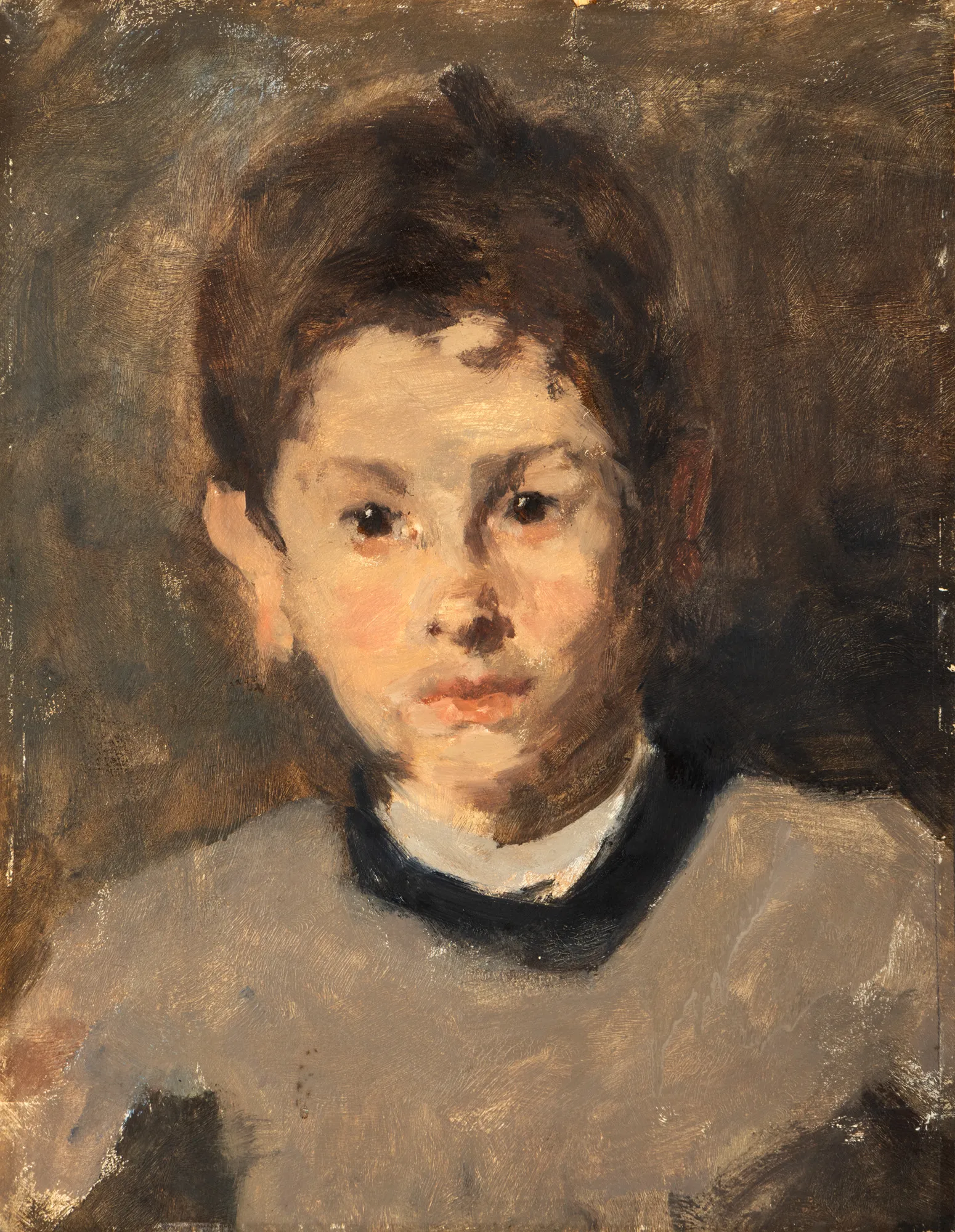
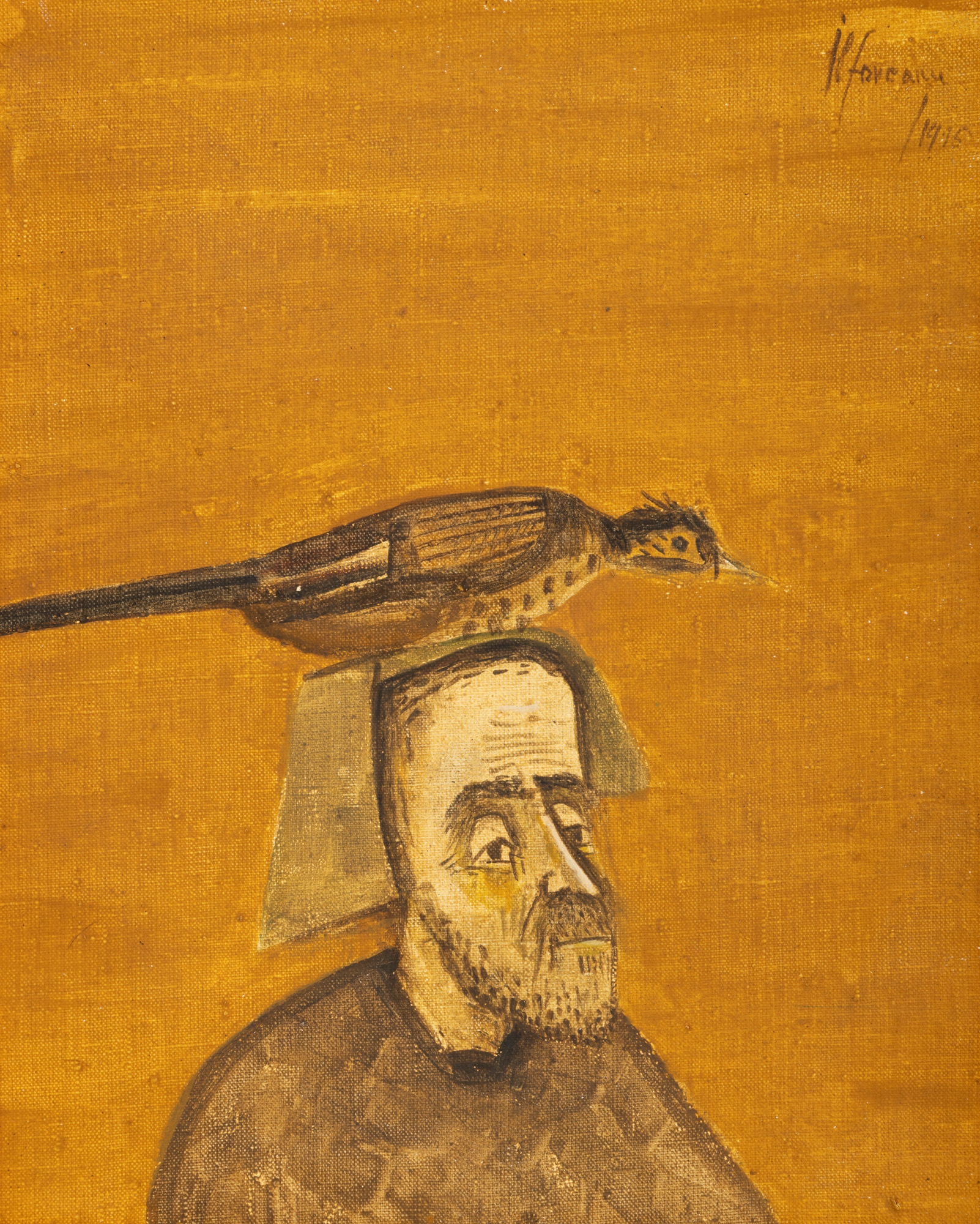
The photos of the lot are informative and indicative, and cannot provide a highly detailed view of the object from all angles. We recommend a careful physical inspection of the lot before bidding.
IONESCU, Adrian-Silvan, "Centenary. Theodor Aman", Venus Publishing House Bucharest, 1991
ȘUTEU, Greta, "Aman - The Painter", Museum of the Municipality of Bucharest Publishing House, 2017
RĂDUESCU, Mihaela, "Politics and exegesis of Theodor Aman's work" in Adrian-Silvan Ionescu (coordinator), Theodor Aman Centenary, 1991
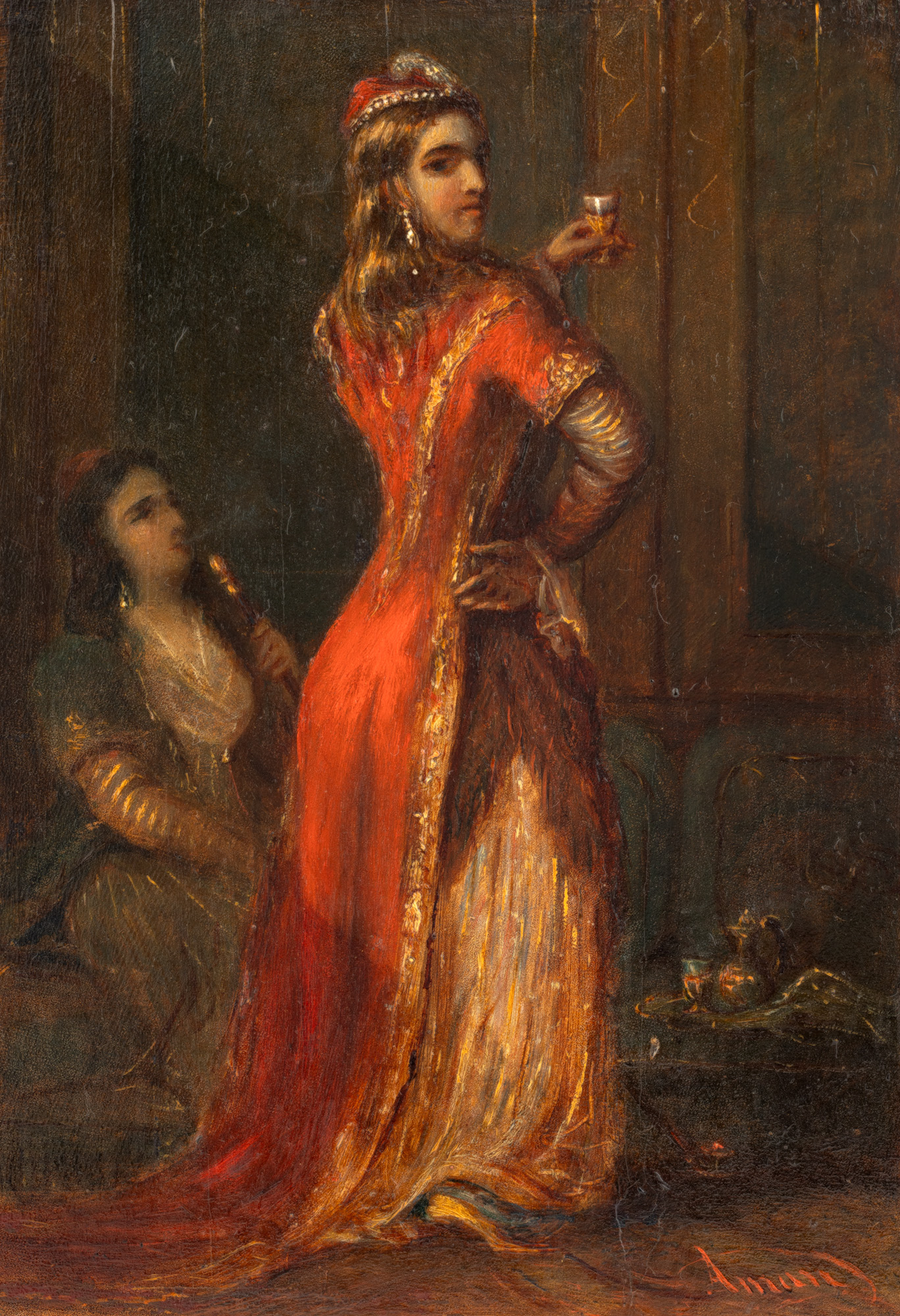
oil on wood, 22.5 x 16.5 cm, signed at the bottom right, in red, "Aman"
The life and career of Theodor Aman have been a continuous interest for historians, chroniclers, monographers, and art historians since the early years following the artist's passing. Having lived through multiple epochs and generations, Aman remains the inaugural figure of modern Romanian painting, an artist who contributed decisively to the modernization of national painting.
Thus, returning to his paintings, we discover an artist who shifts his focus (or foci). In 1850, while in Paris for studies, Theodor Aman witnessed a romantic current emerging as a response to the aesthetic constraints of the time. This artistic movement brings to the forefront the fascination for mysteries, myths, and symbols, for unknown worlds, for exoticism. Thus, the oriental strand, influenced by a romantic aesthetic and the stereotypes of Orientalism seen from a European perspective, asserts itself as a recurring theme in Aman's oeuvre.
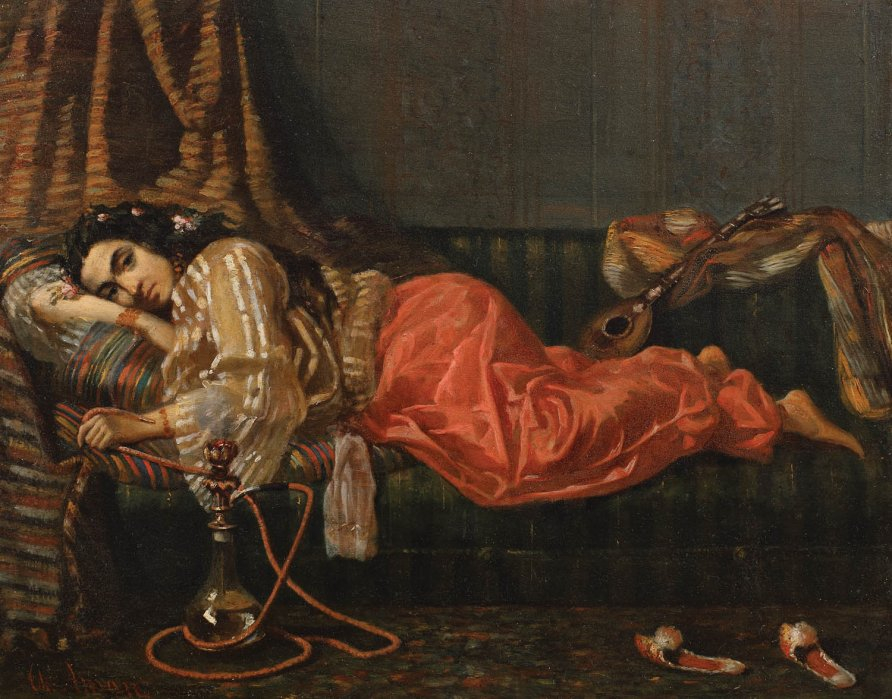
The artist became familiar with the East in his youth when he visited Constantinople and Crimea immediately after completing his studies. Dominated by his dynamic side and romantic fervor, his encounters with Greek and Turkish places left a significant impression. While in "a place in Asia called Sweet Waters," as we learn from his correspondences to his brother, Aman observes women "in their picturesque costumes and distinguished sharp colors, which in the sun make an admirable effect, [and] who lie sprawled on carpets with hookahs in their mouths and shoes before them". This sequence seems to anticipate the leitmotif of the oriental woman in his later works, from the period after 1850.
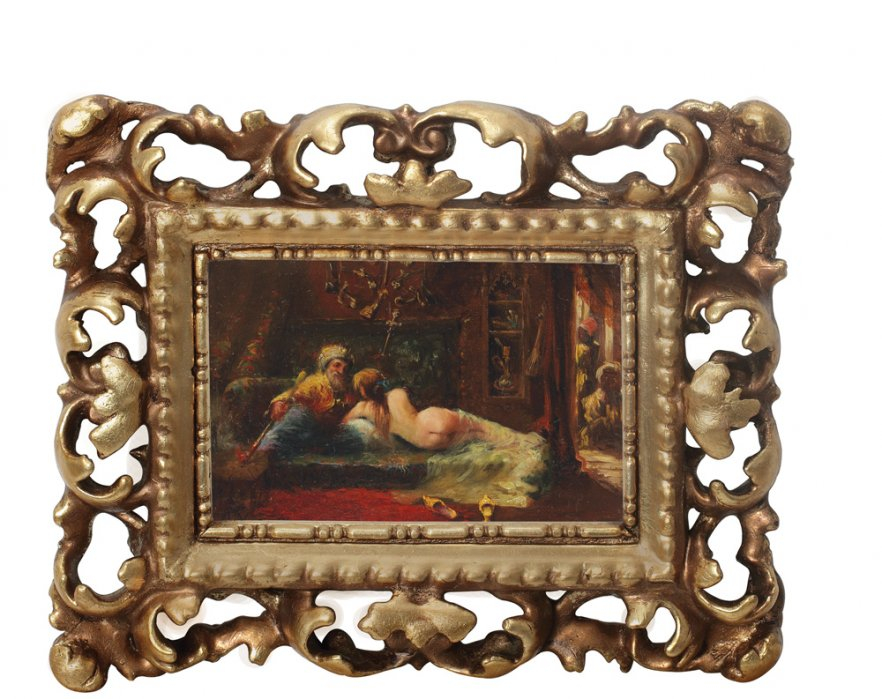
This artistic cycle is marked by numerous compositions that include harem women - singers, lounging or smoking hookah. The artist doesn't paint these scenes from life, as some of his contemporaries did. Most of the scenes are artificially elaborated, composed in the studio. Aman offers us an idealized Orient, almost choreographically reconstructed. Pieces from his oriental collection are repeatedly found among the props of the compositions from this period: the hookah, the coffee table, the Turkish draperies, and cushions. Their presence insinuates a nostalgic note for the authentic oriental ambiance. We recall works such as "Harem Woman Reading", "Odalisque with Hookah", "Odalisque with Mandolin", "Serai Interior", and "Harem Woman".
The present composition is representative of this Orientalist cycle, fascinating through its play of shadows and lights, which accentuates the charm and mystery of this carefully elaborated universe. Through Aman's vision, the Oriental world emanates serenity, lyricism, and sensuality. (L.M.)
For clarifications regarding the bidding procedure, hammer price costs, guarantee, payment, and collection terms for the winning lot, we recommend carefully reading/re-reading the Bidding Regulations.
For additional information regarding the lot and the auction, please contact the Art Consultants Department.
By choosing "Accept all cookies" you agree to the use of cookies to help us provide you with a better user experience and to analyse website usage. By clicking "Adjust your preferences" you can choose which cookies to allow. Only the essential cookies are necessary for the proper functioning of our website and cannot be refused
Cookie settings
Our website stores four types of cookies. At any time you can choose which cookies you accept and which you refuse. You can read more about what cookies are and what types of cookies we store in our Confidentiality Policy.
are necessary for technical reasons. Without them, this website may not function properly.
are necessary for specific functionality on the website. Without them, some features may be disabled.
allow us to analyse website use and to improve the visitor's experience.
allow us to personalise your experience and to send you relevant content and offers, on this website and other websites.