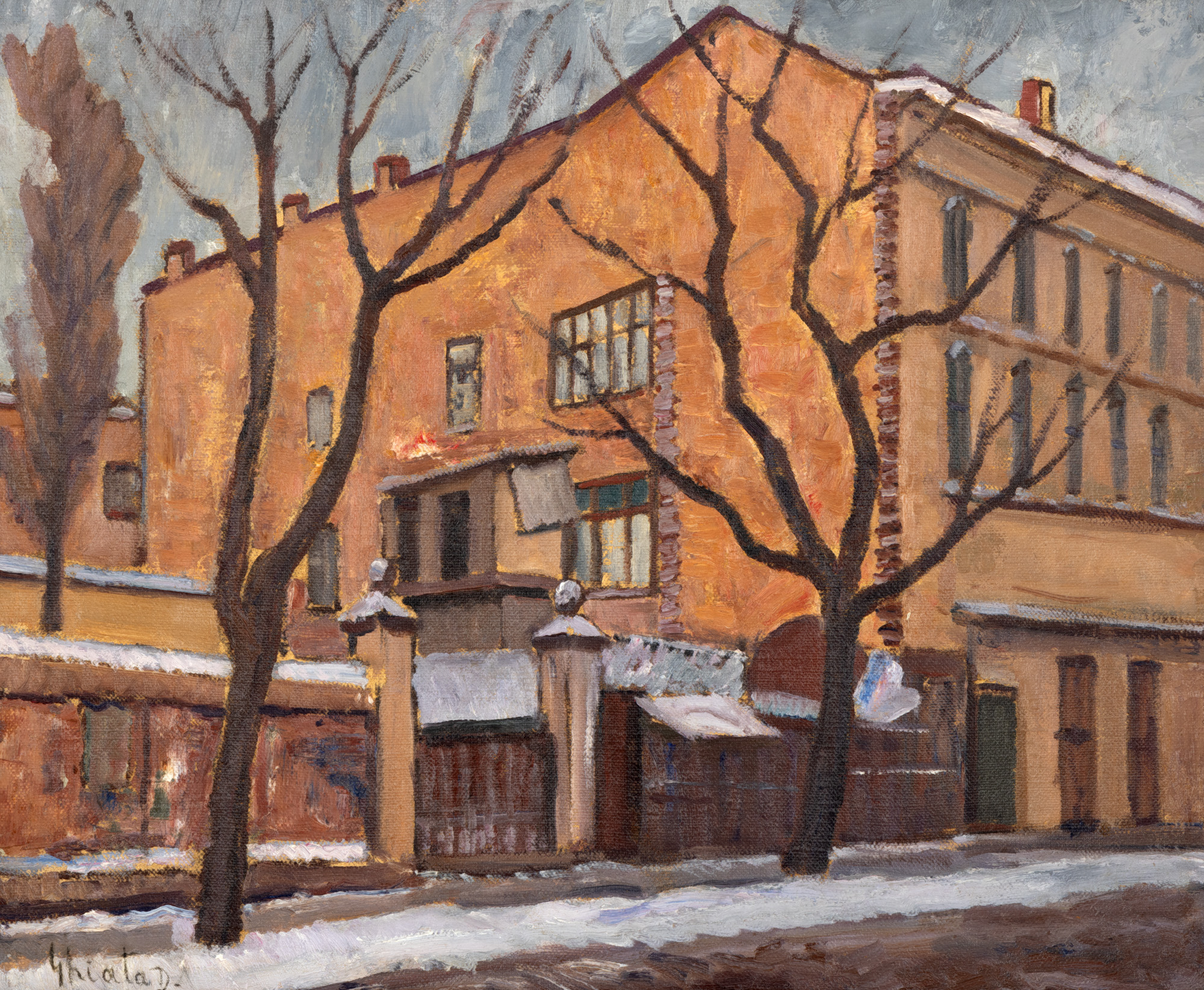
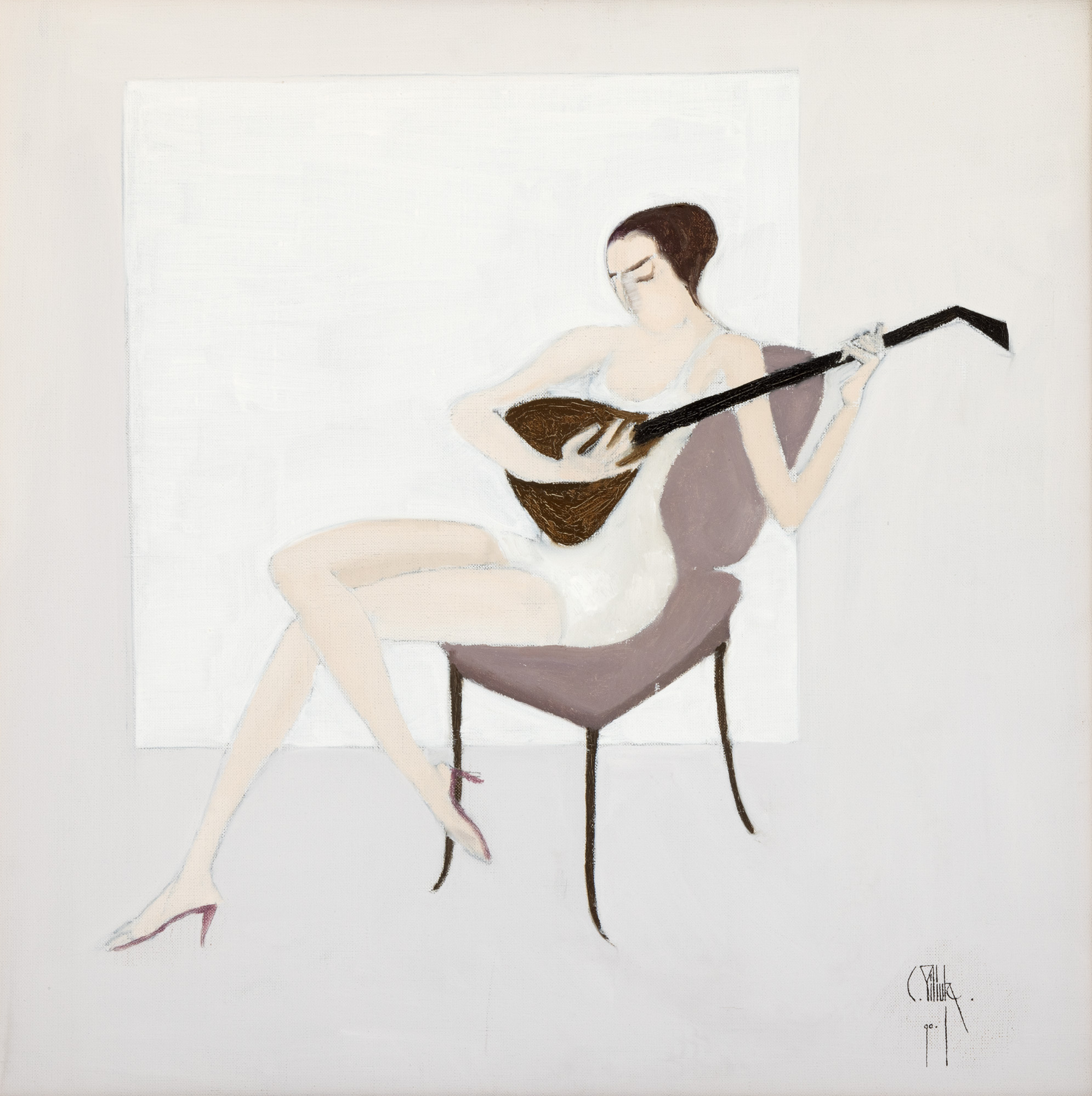
The photos of the lot are informative and indicative, and cannot provide a highly detailed view of the object from all angles. We recommend a careful physical inspection of the lot before bidding.
COSMA, Gheorghe, "Camil Ressu", Meridiane Publishing House Bucharest, 1967
TEODORU, Rada, "Camil Ressu", Meridiane Publishing House Bucharest
BUCHHOLZ, Eike Linda, "Art. An Illustrated History", Litera, 2017
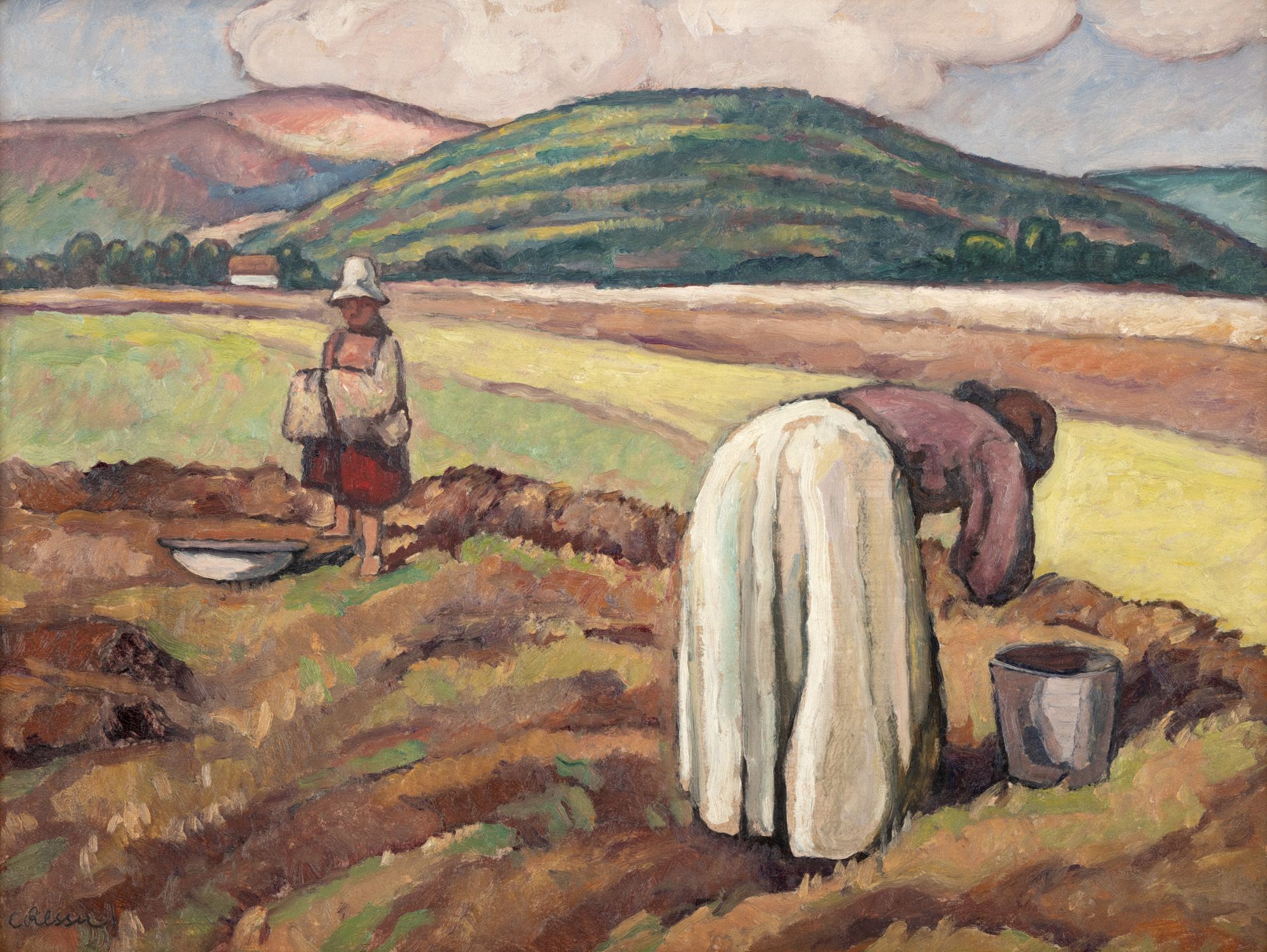
oil on cardboard, 50 x 65 cm, signed bottom left, in pencil, "C. Ressu"
Camil Ressu returned from his studies in 1908, when the echoes of the Peasant Uprising of 1907 were still felt in the country. At that time, Sămănătorism appeared in Romanian art as a form of idealization of peasant life. From the very beginning, Ressu's work on this theme is under the sign of realism, distinguishing itself from this trend. Thus, Ressu's evocations from the world of villages are totally different from those of his predecessors, such as Grigorescu or Luchian, and are closer to those of the French artist Jean-François Millet.
Both artists capture the dignity and moral strength of the peasant, not just his social condition, marked by a deep ethical conviction that art must reflect contemporary social reality. Millet developed a realistic style focused on rural life and peasant work, which he knew from his own experience, being born into a family of farmers in Normandy. He portrayed the peasant with a monumentality and dignity that transformed humble figures into heroic subjects, a style also adopted by Ressu, who approaches the same theme with social realism, dedicating himself to the representation of Romanian peasants with empathy and respect for agricultural work. Thus, both Ressu and Millet sketch a realistic perspective and a simple composition, focused on the gestures and rhythms of daily work, in order to render the authenticity and humanity of the village world.
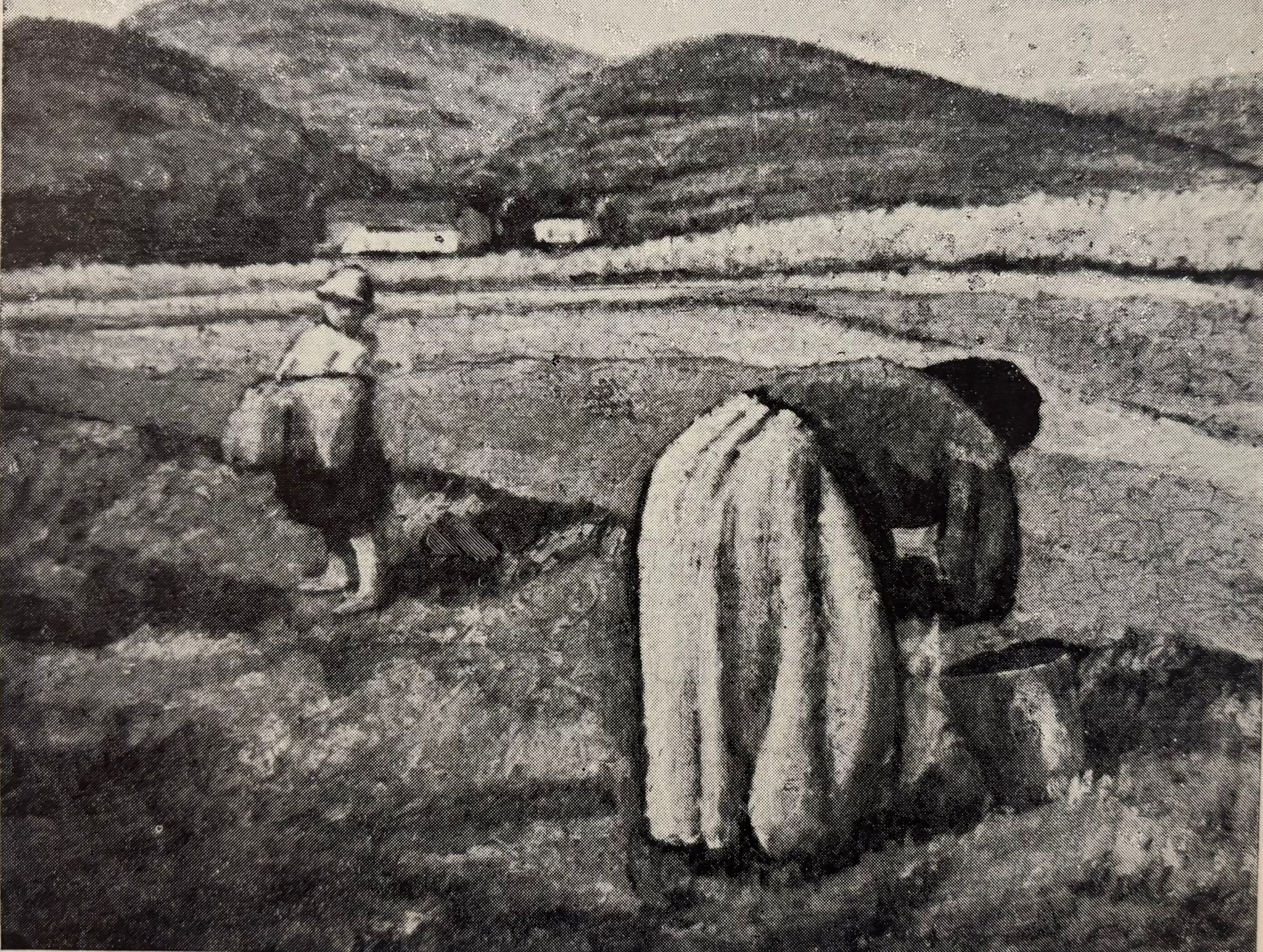
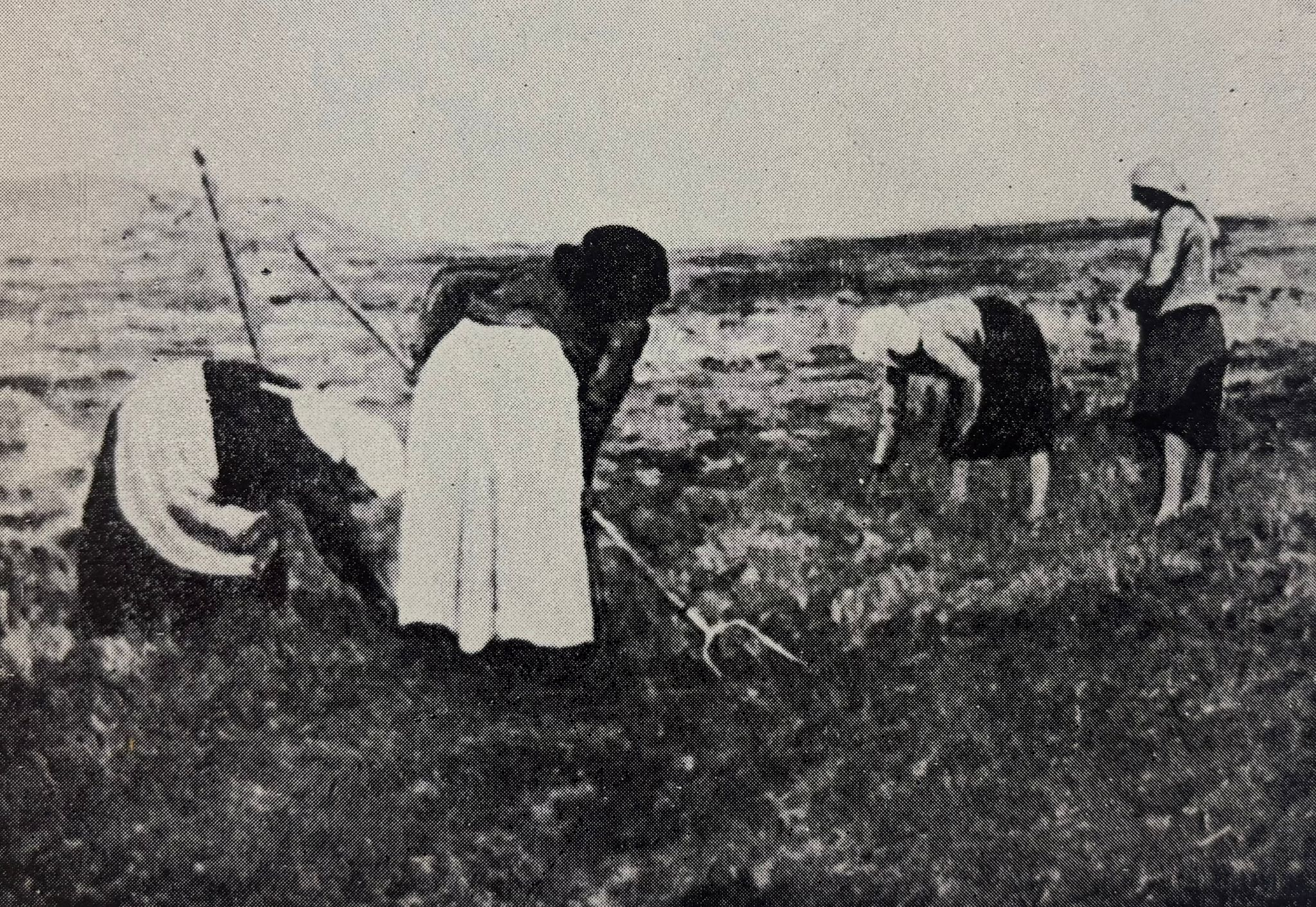
From 1909, Ressu spends every summer working in the village of Vlaici-Olt, where he starts his first series of compositions and portraits on rural themes. Later, after 1920, he returns to this theme, creating from the communes of Țara Bârsei, or at Ilovâț-Mehedinți. Thus, spending a lot of time in the countryside, Ressu comes into contact with the life of toil, with the simple existence and customs of the peasants from different regions. From the series of works from the summers spent at Vlaici, Ressu's vision is more clearly outlined in the studies for "The Sowers", where the figures of the peasants acquire symbolic values. From the suite of paintings after 1920, "Potato Harvest" stands out.
In his works with rural themes, the artist puts emphasis on the essential features and the robust relief of the figures. For Ressu, in the man-nature relationship, the landscape fulfills more of a decorative function, rather suggesting the rustic living environment, the beauty and, at the same time, the austerity of nature. The artist's attention is focused on increasing the expressiveness of the figures, so that the human is brought to the foreground and decisively occupies the canvas, dominating nature.
This work is part of the second cycle of works in which Ressu approaches the theme of the village, after 1920. Here we see reflected the idea of the artist who avoids the idealization of rural life in favor of underlining the essence of the life of toil, faced with dignity by people. Thus, Ressu outlines a severe and solemn image of rural life, with a note of spontaneity conveyed through the freedom of the line that suggests movement.
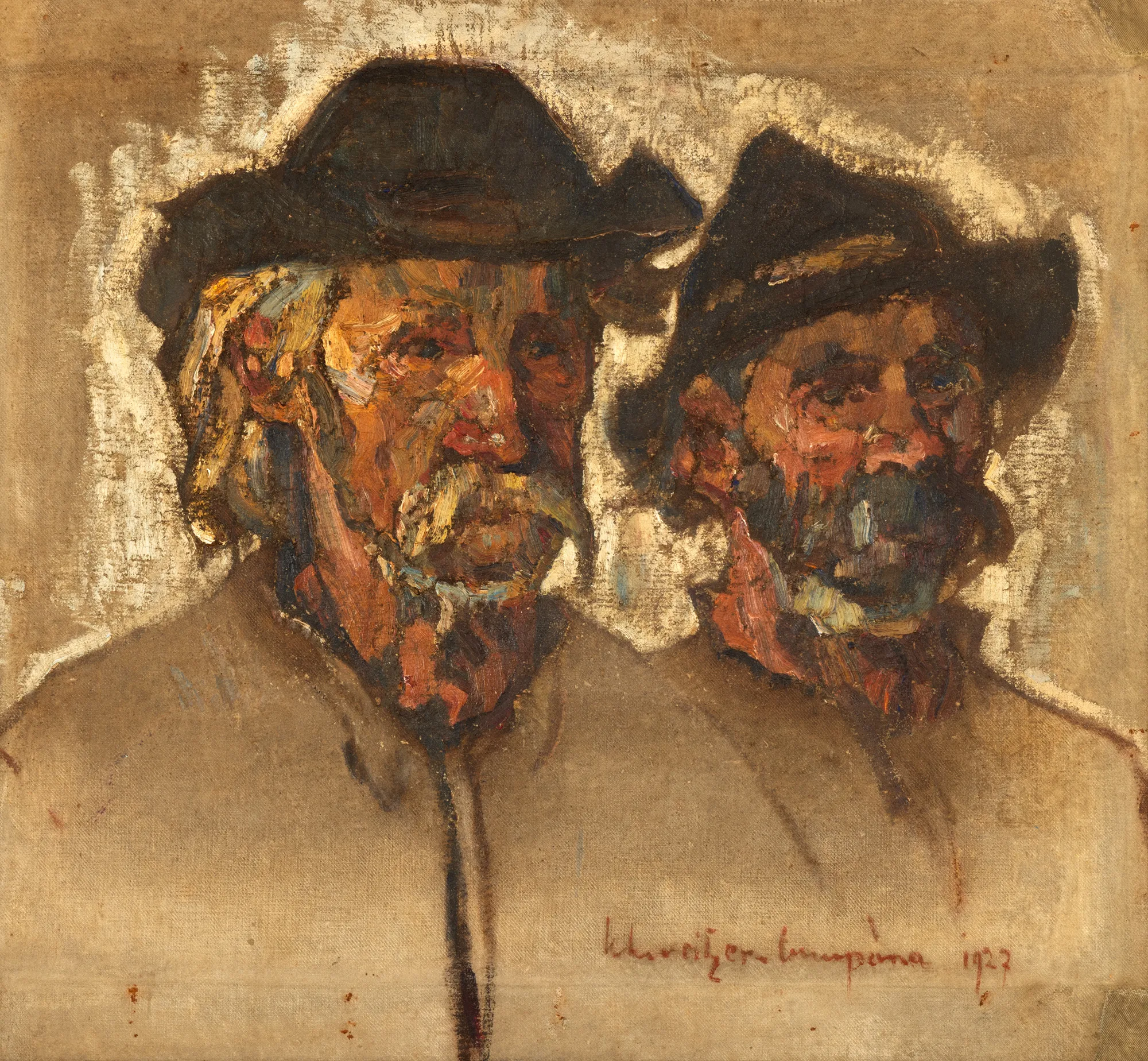
The artist himself best condenses the essence of his approach to the rural theme in an interview for Flacăra magazine in 1951: "If my past paintings inspired by the lives of peasants are successful, this is due to the fact that I chose the most interesting types that I studied and deepened over many posing sessions, until I managed to penetrate what was characteristic and essential. I talked to them, striving to know them, to follow their existence and to get a real image of the aspects of country life". (L.M.)
For clarifications regarding the bidding procedure, hammer price costs, guarantee, payment, and collection terms for the winning lot, we recommend carefully reading/re-reading the Bidding Regulations.
For additional information regarding the lot and the auction, please contact the Art Consultants Department.
By choosing "Accept all cookies" you agree to the use of cookies to help us provide you with a better user experience and to analyse website usage. By clicking "Adjust your preferences" you can choose which cookies to allow. Only the essential cookies are necessary for the proper functioning of our website and cannot be refused
Cookie settings
Our website stores four types of cookies. At any time you can choose which cookies you accept and which you refuse. You can read more about what cookies are and what types of cookies we store in our Confidentiality Policy.
are necessary for technical reasons. Without them, this website may not function properly.
are necessary for specific functionality on the website. Without them, some features may be disabled.
allow us to analyse website use and to improve the visitor's experience.
allow us to personalise your experience and to send you relevant content and offers, on this website and other websites.