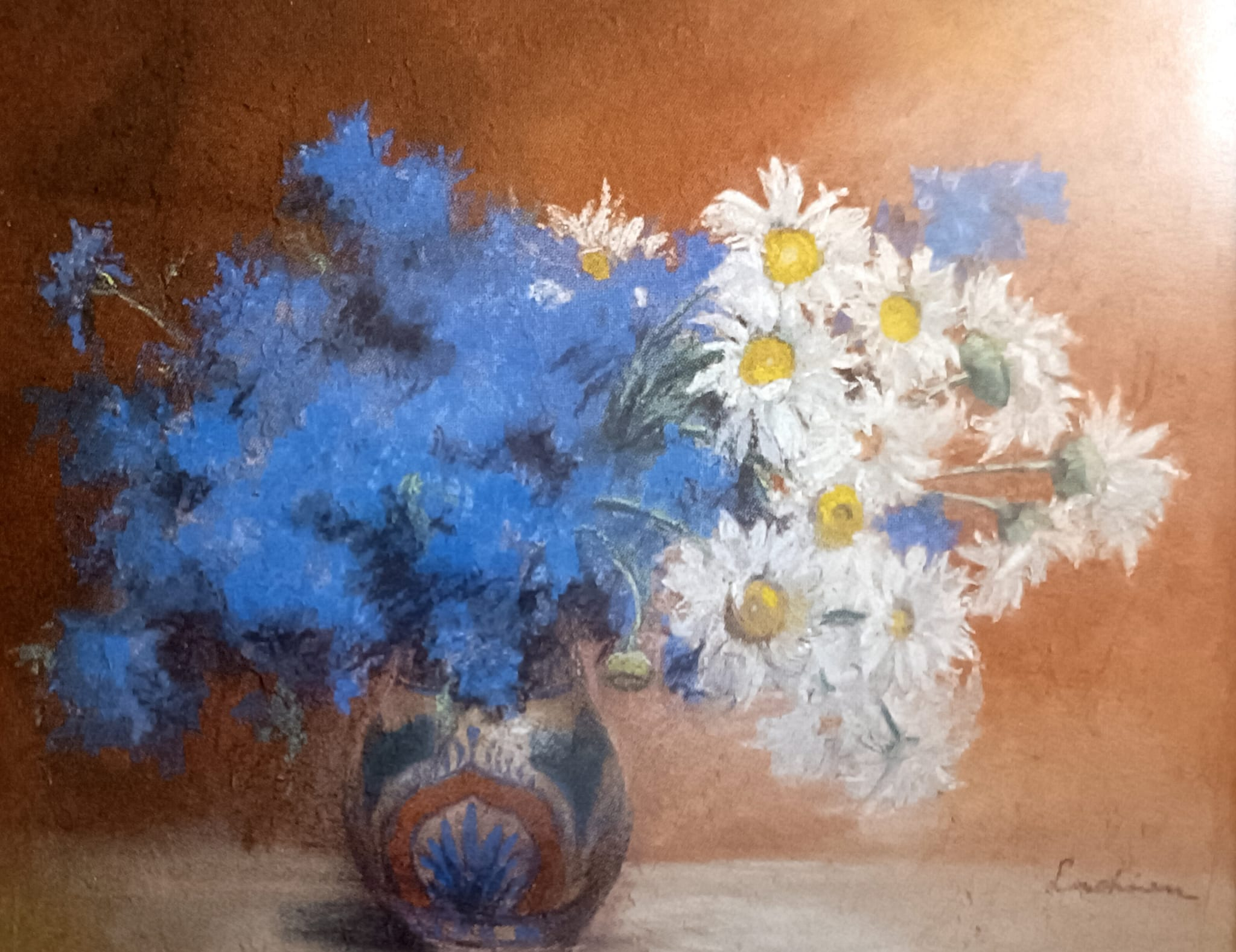

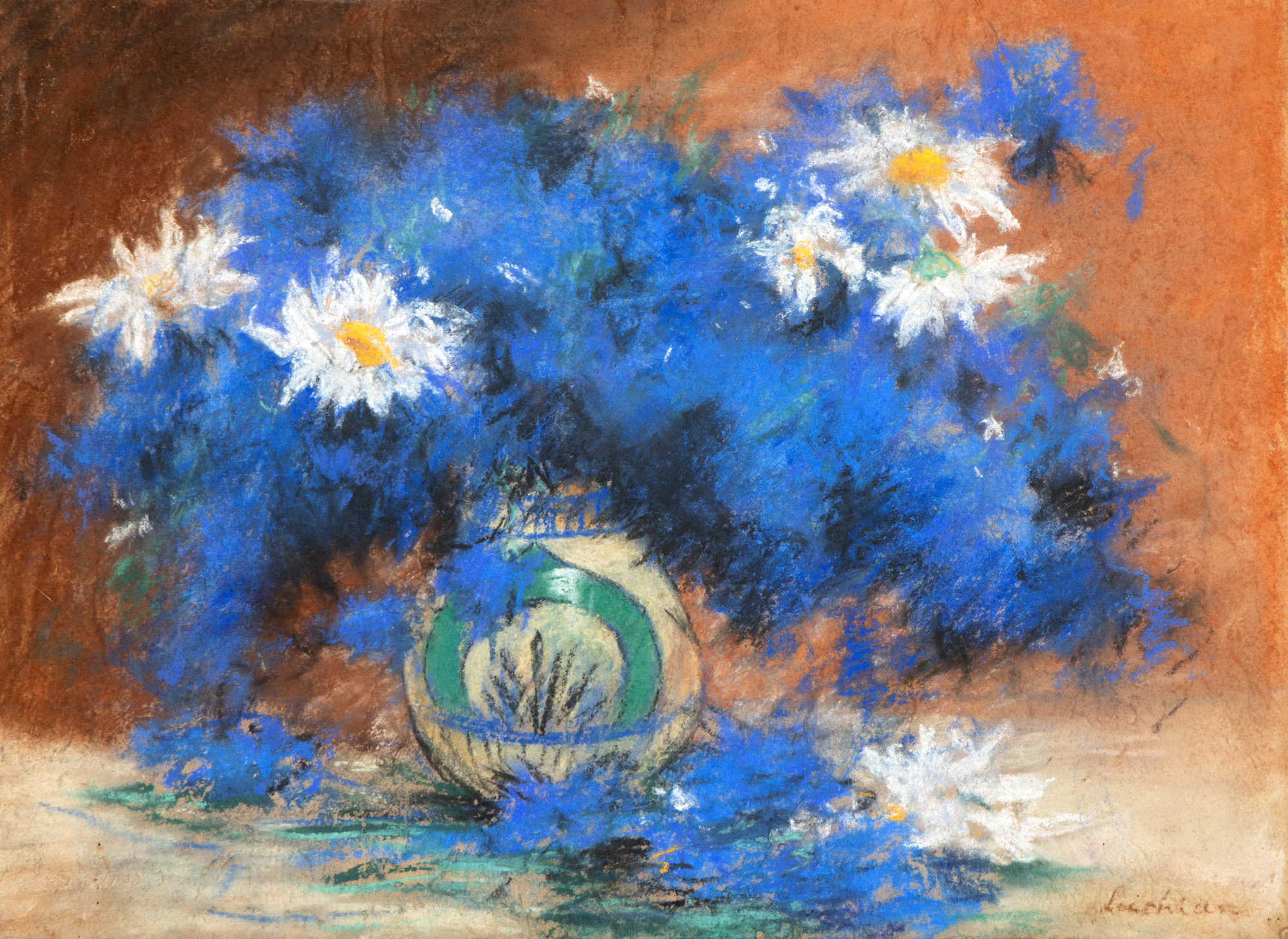
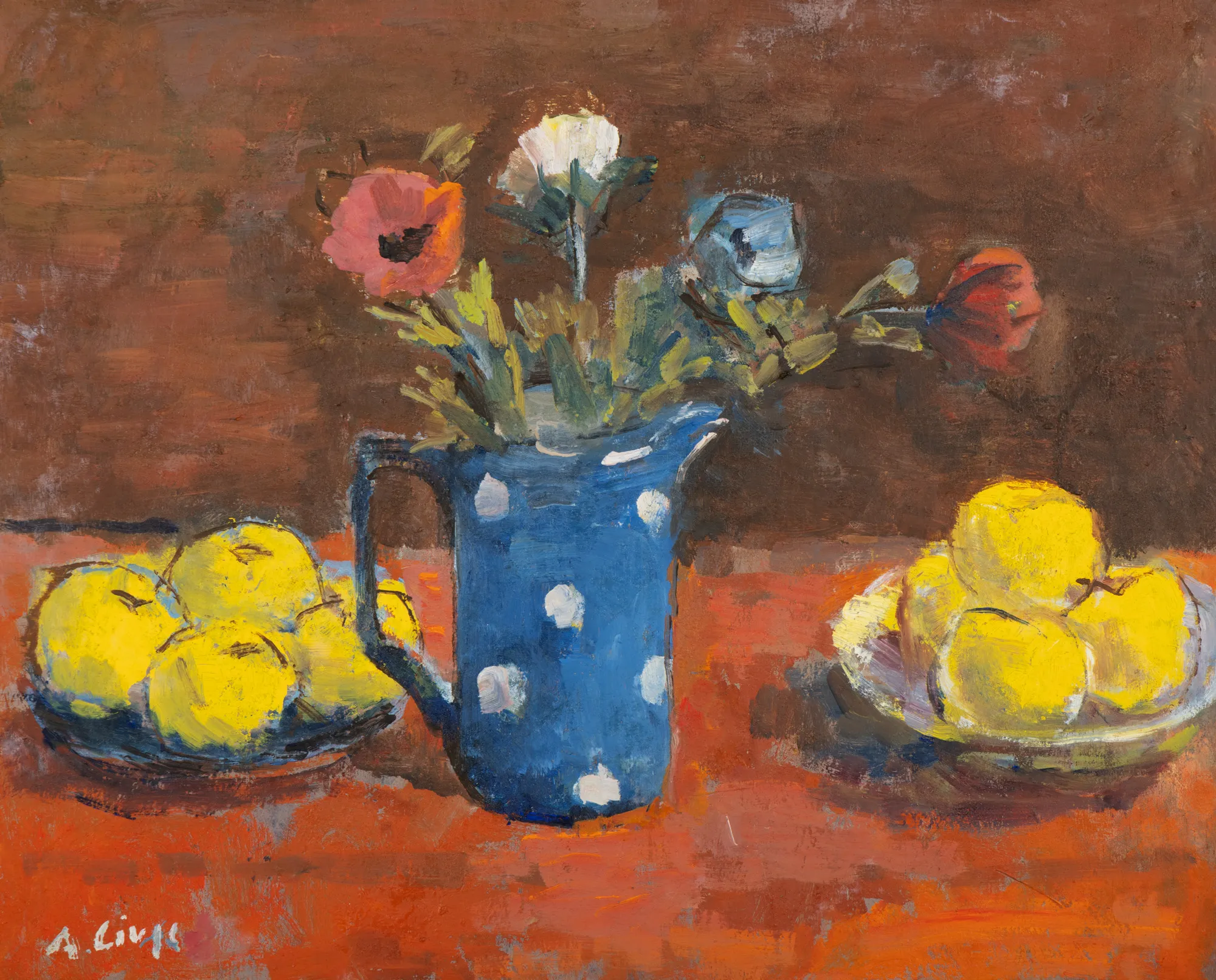
28. Jug with Cornflowers and Daisies [1910-1915]
1868, Ştefăneşti - 1916, Bucureşti

Estimate

EUR 12.000 - 18.000

Sold

EUR 19.000

Session

Tue, 16 December 2025 17:00

The work dates from the last years of Luchian's career, specifically 1910-1916 when the artist began to focus more on still nature with flowers. Luchian painted flowers since his period of artistic maturity, but his true period dedicated to flowers begins after the year 1900, and the apogee of his floral art is reached between 1910-1916. Beginning with the first decades of the 20th century, Stefan Luchian is approaching this theme more and more. Because of his state of health, his mobility decreases, and flower painting becomes his favorite theme. He would primarily paint peonies, anemones, cornflowers, roses, wildflowers, poppies or pansies. The still nature with flowers presents a series of characteristics of his style, becoming true stereotypes: flat and dusty color, with a minimum of contour lines or composing forms from color. The decline of his health forces him to work more indoors. Flowers allow him to explore light, color, and vibration intensely. He becomes recognized precisely for the sensitivity with which he paints them. The most famous flower works appear in this period, up to his death, where a few examples are: "Jug with Cornflowers", "Chrysanthemums" or "Roses". He painted slowly, with patience, holding the brush tied to his hand when the disease no longer allowed him to grasp it. Flowers were not just objects of study for him, but sensitive beings, which he painted with tenderness and passion. Often evoked, either in vases or jugs, Luchian's flowers often bring visually and signs of the traditional through decorations and enamel shines. The clay vessel thus became Luchian's author's signature, leaving its mark on the entire artistic creation of the 20th century. The work in question captures a popular ceramic vessel with a large bouquet of cornflowers and daisies, on a brown background. The dominant chromatic is blue and green, along with shades of brown and white. As for the model he uses for the flower vase, it is similar to the ceramics used in Muntenia and Oltenia. The shapes of the vessels within his works are simple, specific to households. They have a narrow or larger neck, with a decorative pattern or with different shades. Thus, through his works, Luchian tried to integrate peasant life, the atmosphere of Romanian houses, rural traditions and the simplicity of people. The work fits into Luchian's period of artistic maturity and is considered one of his most famous masterpieces.

References

CIOFLEC, Virgil, "Luchian", National Culture Publishing House, Bucharest, 1924. LASSAIGNE, Jacques, "Stefan Luchian", Meridians Publishing House, Bucharest, 1972.

Dimensions

width 41 cm, height 30 cm

Description

pastel and charcoal on cardboard, signed lower right, in brown, "Luchian"

Dating

1910-1915

ADDITIONAL INFORMATION

For clarifications regarding the bidding procedure, hammer price costs, guarantee, payment, and collection terms for the winning lot, we recommend carefully reading/re-reading the Bidding Regulations.

For additional information regarding the lot and the auction, please contact the Art Consultants Department.

Similar lots
Mândria gâștelor

179. Mândria gâștelor

Georges Mazilu

    Estimate EUR 4.000 - 6.000
    Sold EUR 4.000
Birch Forest

147. Birch Forest [2025]

Felix Aftene

    Estimate EUR 5.000 - 8.000
    Sold EUR 13.500