


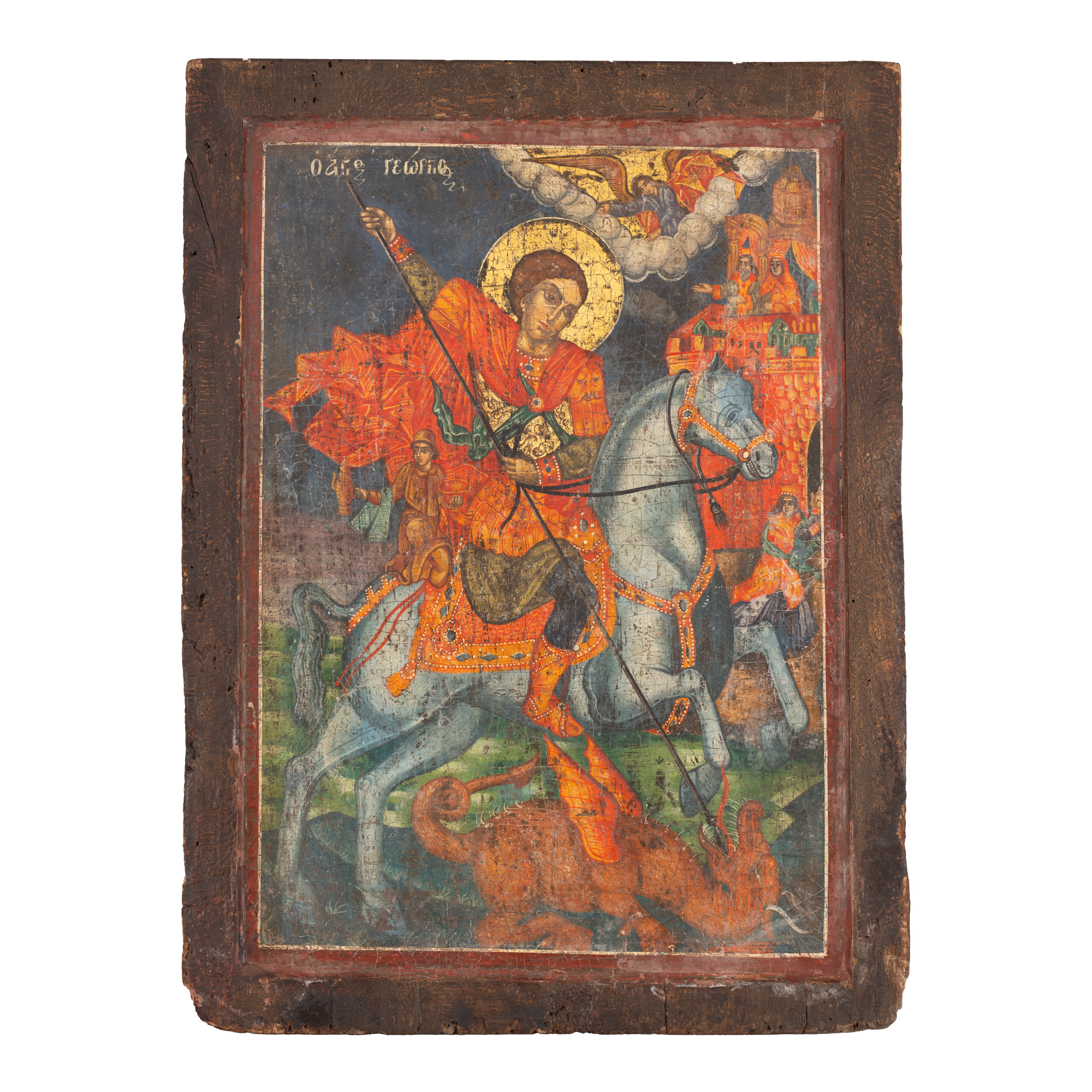
46. Icon on wood, "Saint George killing the dragon", Greek school, end of the 17th century-beginning of the 18th century
The photos of the lot are informative and indicative, and cannot provide a highly detailed view of the object from all angles. We recommend a careful physical inspection of the lot before bidding.
46. Icon on wood, "Saint George killing the dragon", Greek school, end of the 17th century-beginning of the 18th century
Starting price:
EUR 1.800
Sold
EUR 2.750
tempera and gold foil on wood, 58 x 43 cm
Iconographic and stylistic identification elements: On the blue background of the icon at the top and with a landscape at the bottom, the painter depicts the consecrated scene: "Saint George killing the dragon." At the center of the composition, Saint George, riding a white horse (modeled in shades of bluish gray), with a forward movement, pierces the winged dragon at his horse's feet. In front of him appears the fortress with the Emperor and Empress, who witness the scene, and next to the fortress is their daughter - the princess, who was to be sacrificed, terrified at the appearance of the dragon and saved from death by Saint George, symbolizing that good always overcomes evil. Above, in the open sky, appears the angel of the Lord, with his hands stretched towards Saint George (in other representations he crowns him, illustrating this gesture his quality of "bearer of victory"). The episode of saving from slavery a young man, depicted on horseback, behind Saint George and portrayed as he was serving at that moment at the table (in hand with a carafe and a napkin), also fits among the miracles in which Saint George defeats evil. The vibrant color, with red and blue dominance, in several shades, the typology of the character and the characters of the inscription are specific features of Greek icons from this period.
Technical identification elements: The icon is made on a wooden panel, painted in tempera, according to traditional techniques. Decorative details, such as the background and inscriptions, were applied with gold foil, respecting the iconographic norms of the period.
Conclusions: The narrative accent and some minor compositional awkwardness indicate that the icon painting falls towards the end of the 17th century and the beginning of the 18th century, a time when the influence of Greek painting penetrated in Wallachia (Brâncovenesc period), reflecting a syncretism between oriental tradition and western elements (A.D.).
For clarifications regarding the bidding procedure, hammer price costs, guarantee, payment, and collection terms for the winning lot, we recommend carefully reading/re-reading the Bidding Regulations.
For additional information regarding the lot and the auction, please contact the Art Consultants Department.
SESSION
Brought to you by
Similar lots
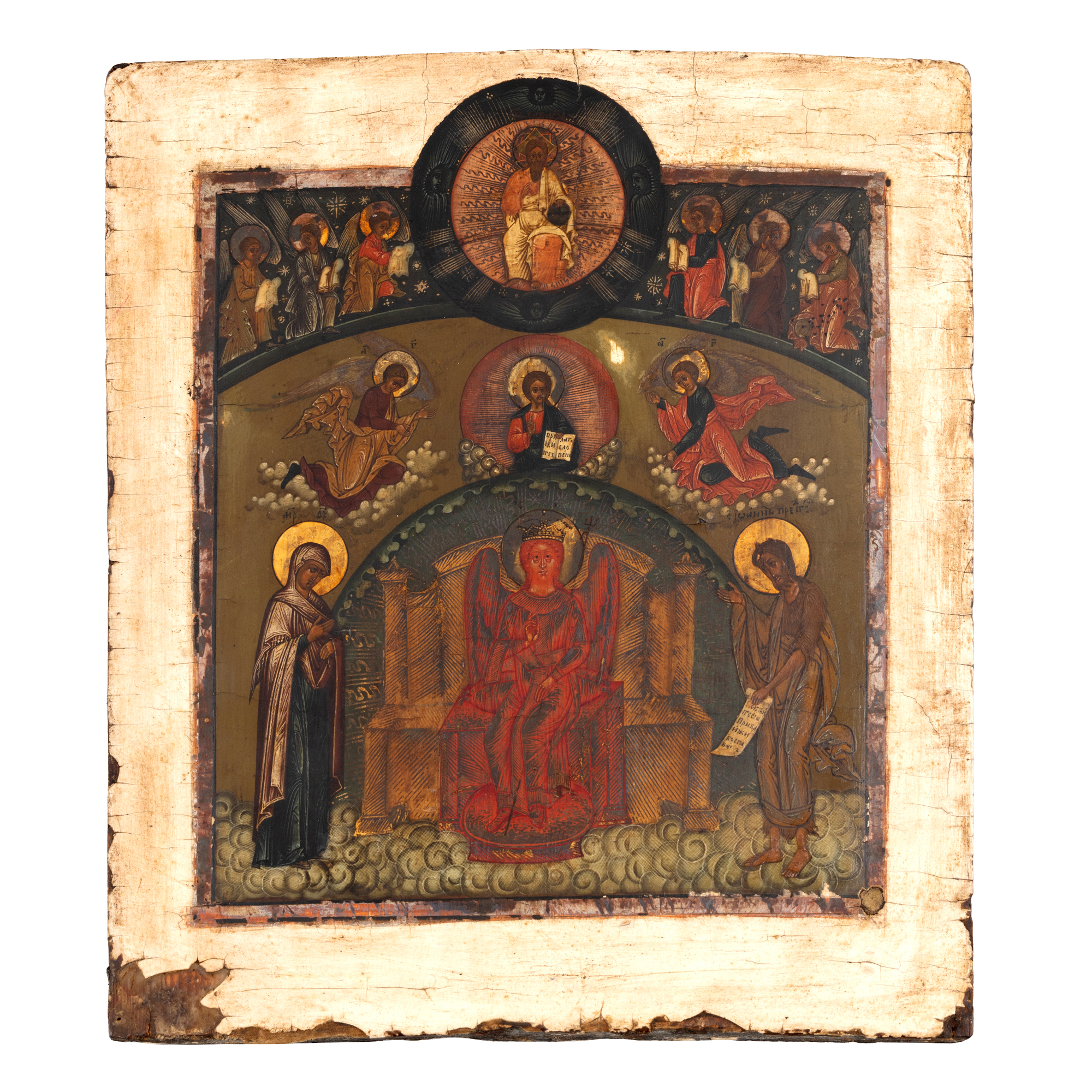
131. Icon on wood, "Saint Sophia - The Wisdom of the Lord", Russian school, mid 19th century, very rare collection piece
Starting price:
EUR 2.500
Not sold
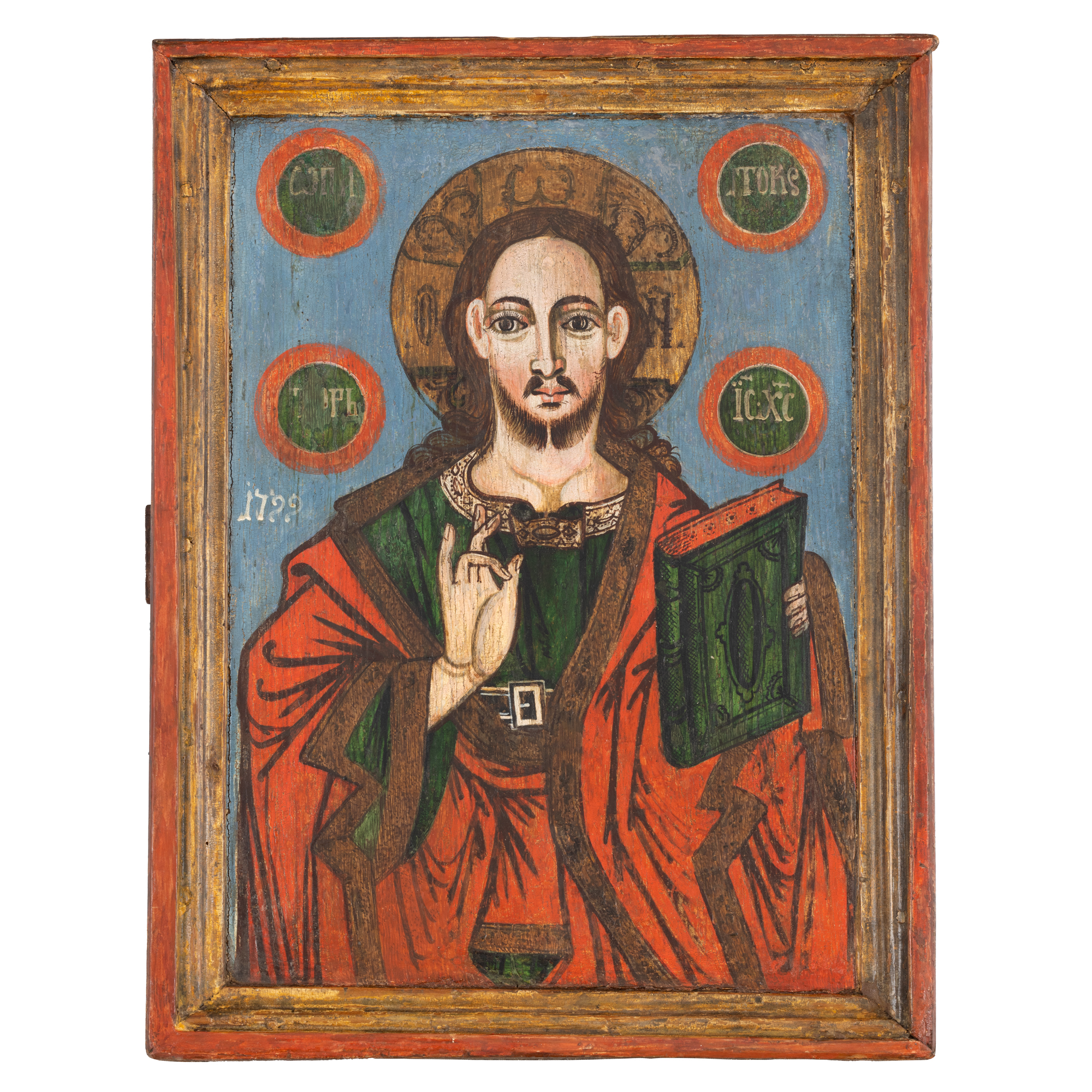
30. Icon on wood, "Jesus Christ Pantocrator", post-Brâncovenesc school, 1799
Starting price:
EUR 1.500
Not sold
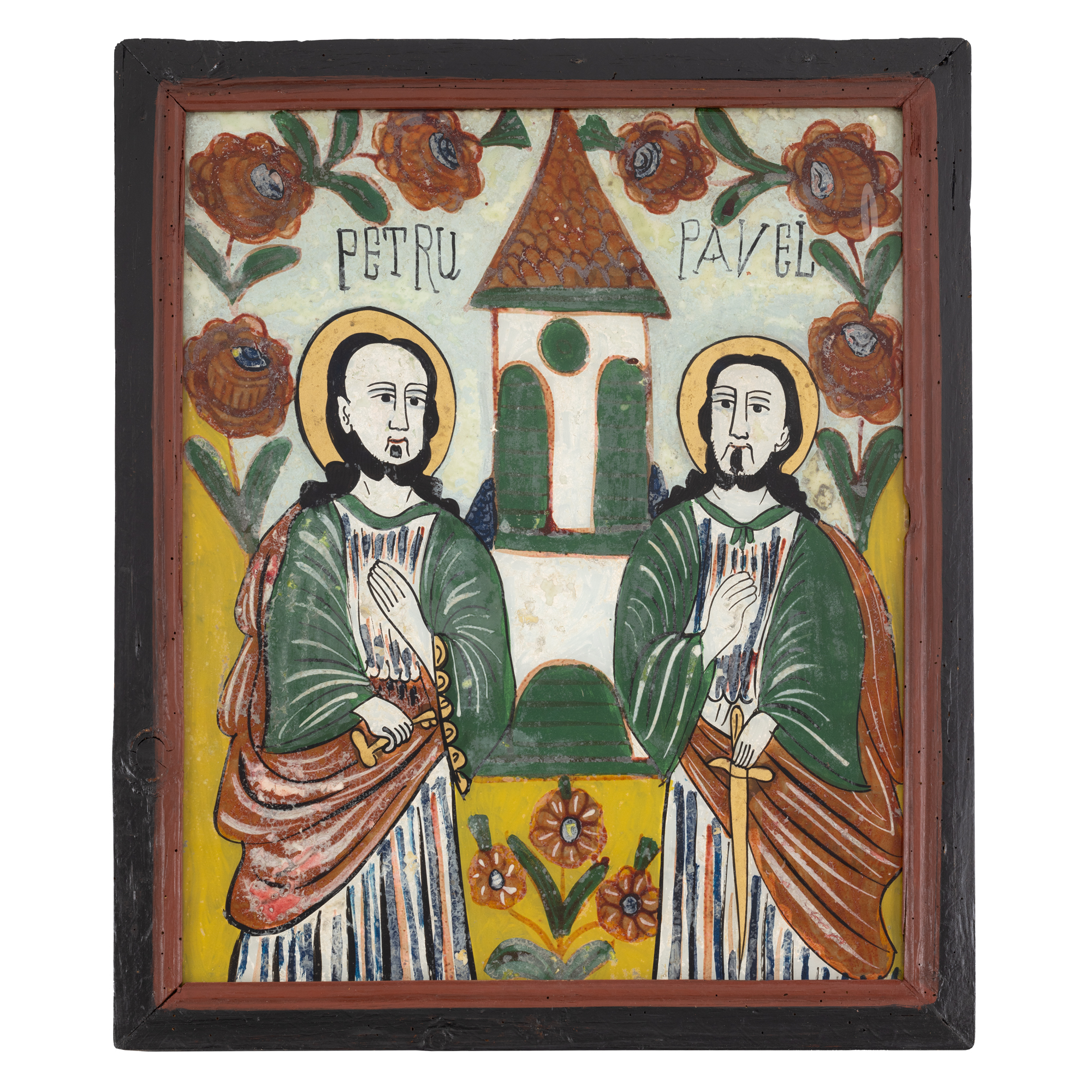
92. Icon on glass, "Saints Apostles Peter and Paul", workshop from Gherla, end of the 19th century.
Starting price:
EUR 250
Sold
EUR 300