

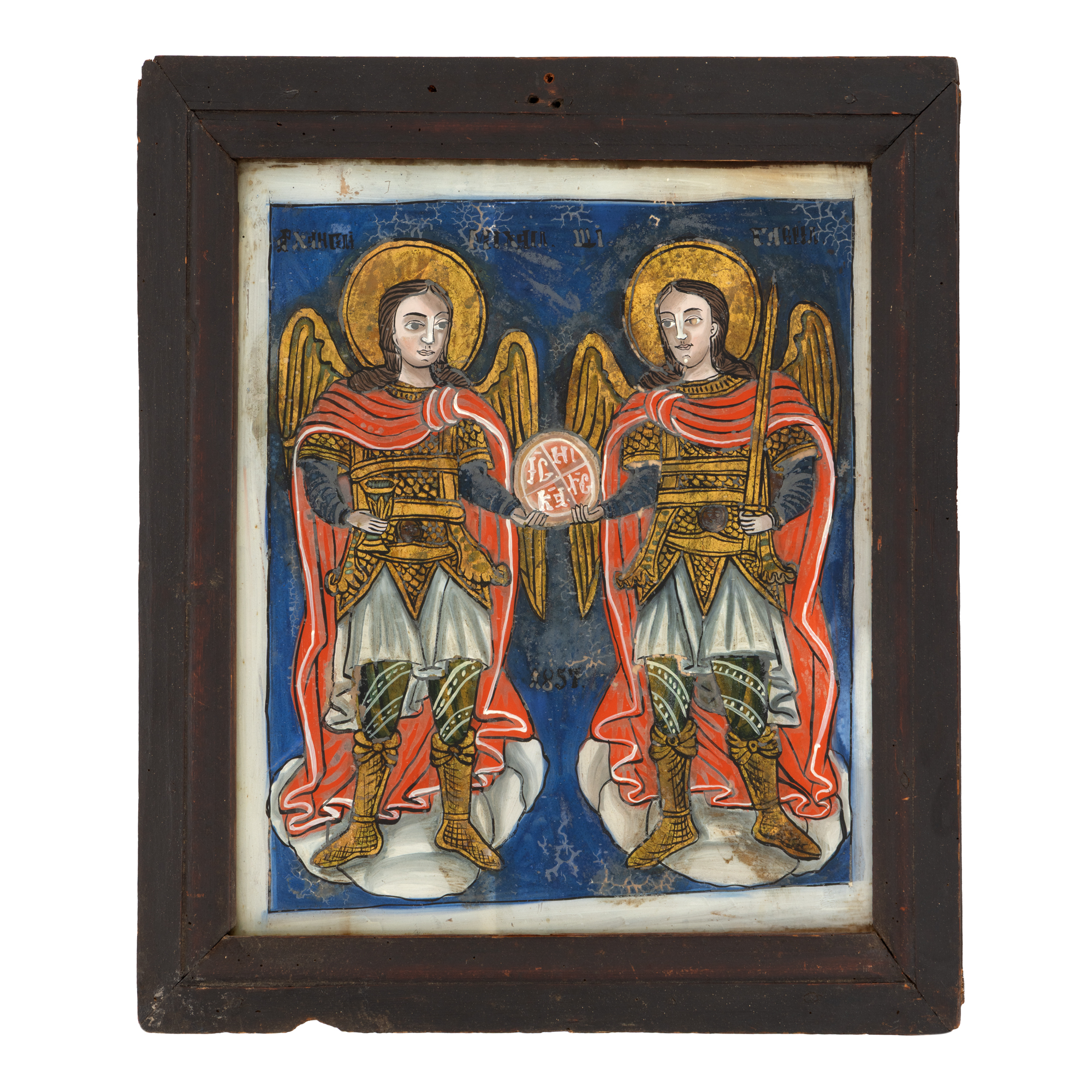
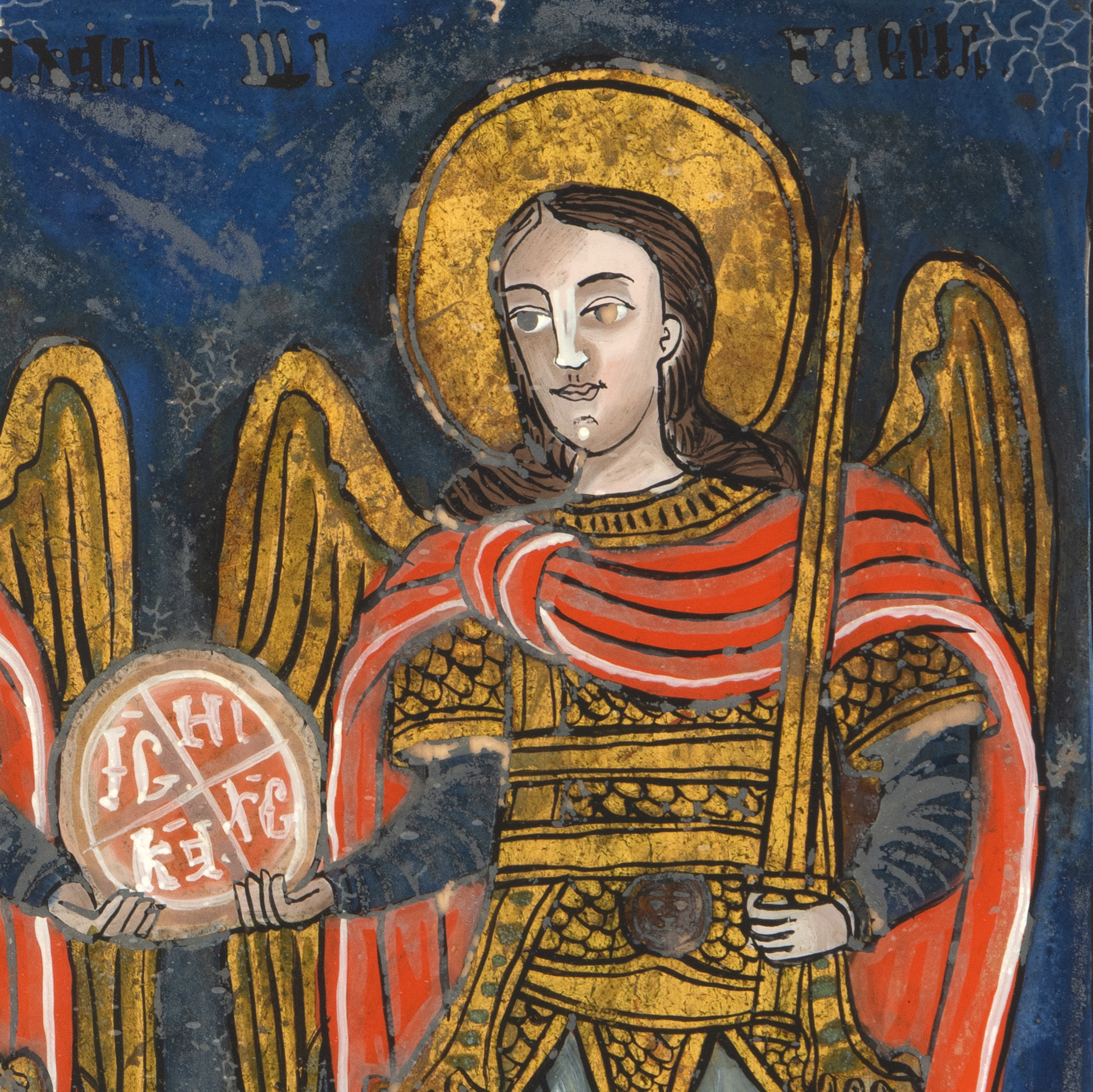
12. Icon on glass, "The Holy Archangels Michael and Gabriel", attributed to painter Simion Poienaru, Laz, 1857, very rare piece, collection item
The photos of the lot are informative and indicative, and cannot provide a highly detailed view of the object from all angles. We recommend a careful physical inspection of the lot before bidding.
12. Icon on glass, "The Holy Archangels Michael and Gabriel", attributed to painter Simion Poienaru, Laz, 1857, very rare piece, collection item
Starting price:
EUR 350
Sold
EUR 1.400
tempera and gold foil on enamel, distressed frame, with effort, 52.5 x 45 cm
Research information
A similar icon is published in "A Spiritual Geography of the Transylvanian Glass Icon," by Ana Dumitran, Bucharest, 2018, page 73. The Feast of the Holy Archangels originates in an annual anniversary of the consecration of a church dedicated to the Holy Archangel Michael, erected at the baths of Emperor Arcadius in Constantinople. In the oldest calendar texts, it appears as a celebration dedicated exclusively to Archangel Michael, but over time it became a common feast for all Angels. The name Michael originates from the Hebrew language meaning "Who is like God?". In biblical tradition, Archangel Michael is associated with defending divine justice. He appears in numerous biblical episodes: he saves the three young men from the fiery furnace of Babylon, supports Gedeon in battle, rebukes the sorcerer Valaam and frees Saint Peter from prison. According to Christian tradition, at the sound of Archangel Michael's trumpet, the dead will rise from their graves at the end of times. Archangel Gabriel, whose name means in Hebrew "God is my power" or "man of God", is the messenger of the major divine annunciations. He announces to Saints Joachim and Anna the birth of the Mother of the Lord, reveals to Zechariah the birth of Saint John the Baptist and brings the shepherds the news of the birth of Christ. He also reassures Joseph, Mary's fiancé, guides him in the flight to Egypt and brings the myrrh-bearing women the news of the Lord's Resurrection. In Christian tradition, Archangel Gabriel is considered the angel of kindness and divine mercy.
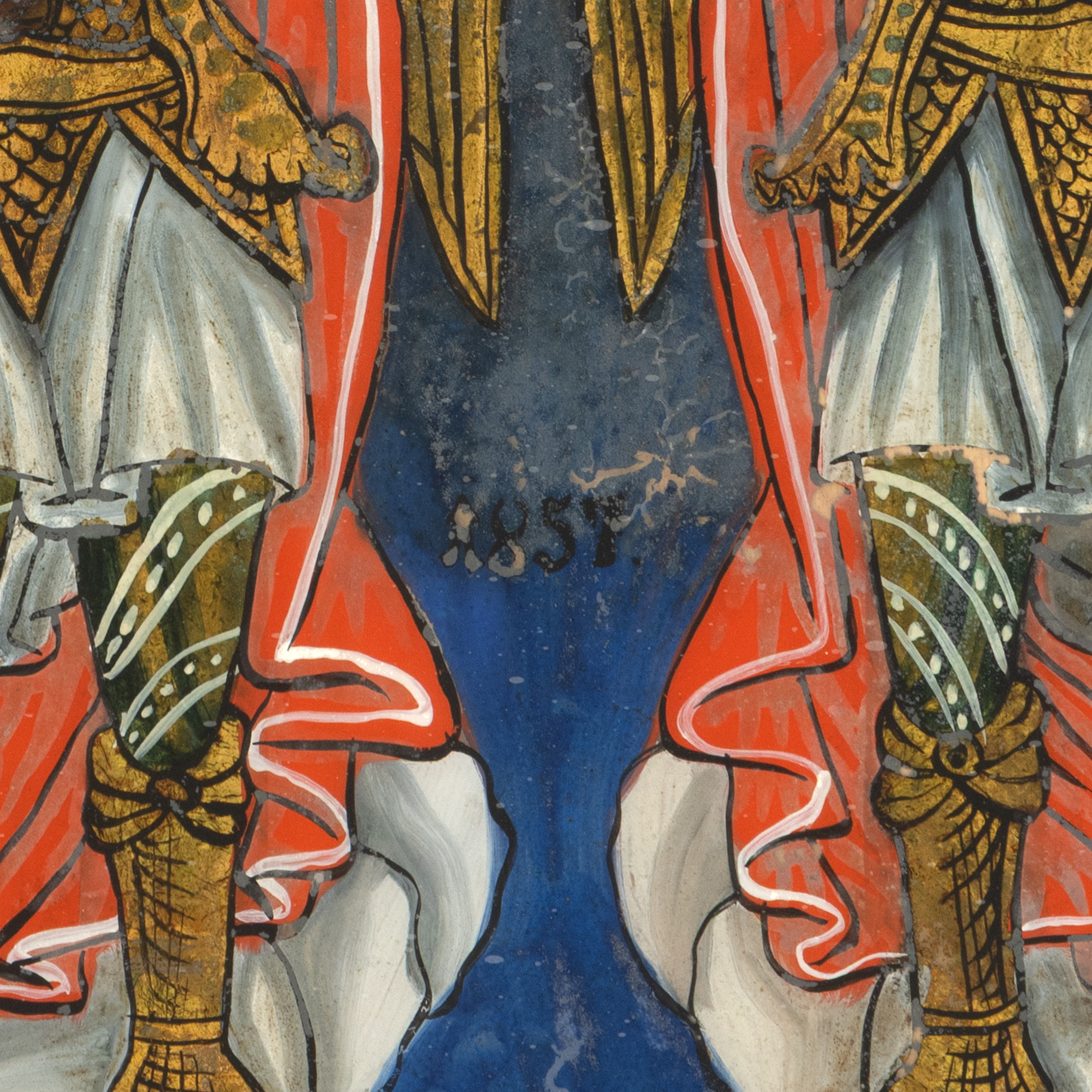
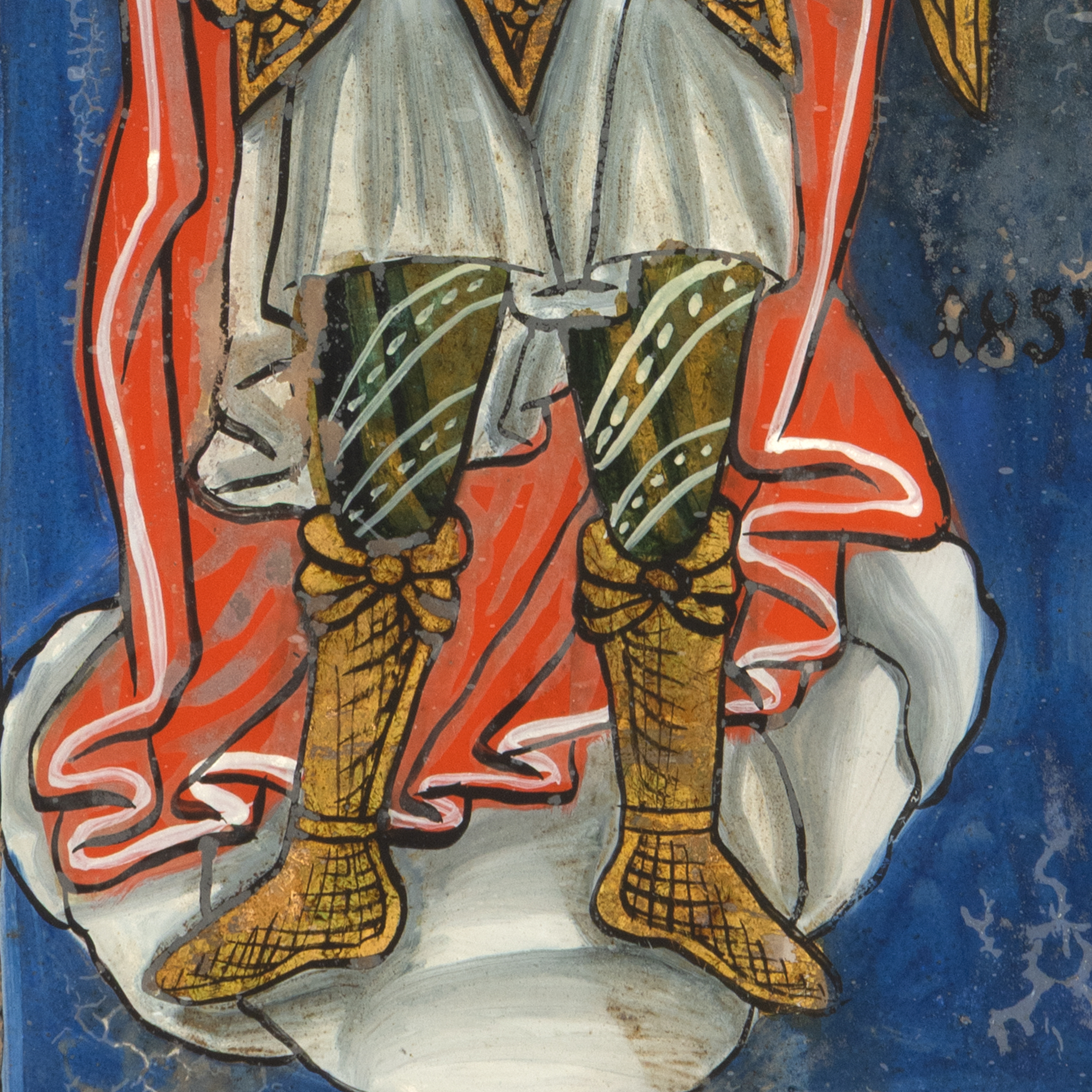
The icon represents the Holy Archangels Michael and Gabriel, in the heavens, standing on clouds. Both are dressed in Roman soldier attire. Archangel Michael has a chalice in his left hand, while Archangel Gabriel has a sword in his right hand, both holding the Globe of Power. The composition is framed by a white border. Centrally, under the globe, the year "1857" is written. This icon stands out from the series of representations with the Holy Archangels Michael and Gabriel, due to the expressiveness of the line and the accuracy with which the costume details are rendered.
For clarifications regarding the bidding procedure, hammer price costs, guarantee, payment, and collection terms for the winning lot, we recommend carefully reading/re-reading the Bidding Regulations.
For additional information regarding the lot and the auction, please contact the Art Consultants Department.
SESSION
Brought to you by
Similar lots
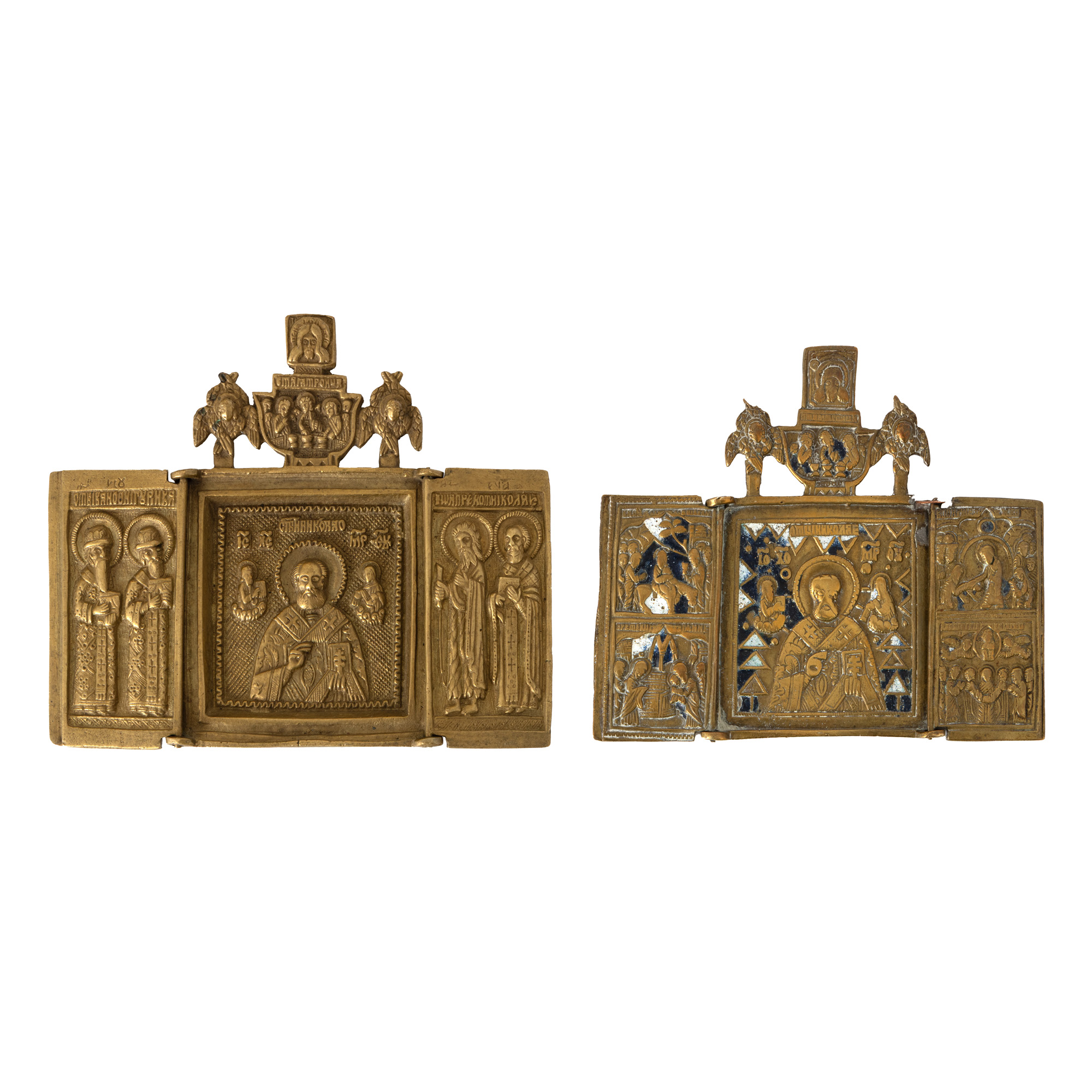
98. Lot consisting of two brass triptychs, "Saint Hierarch Nicholas", Russian school, 19th century
Starting price:
EUR 100
Sold
EUR 200
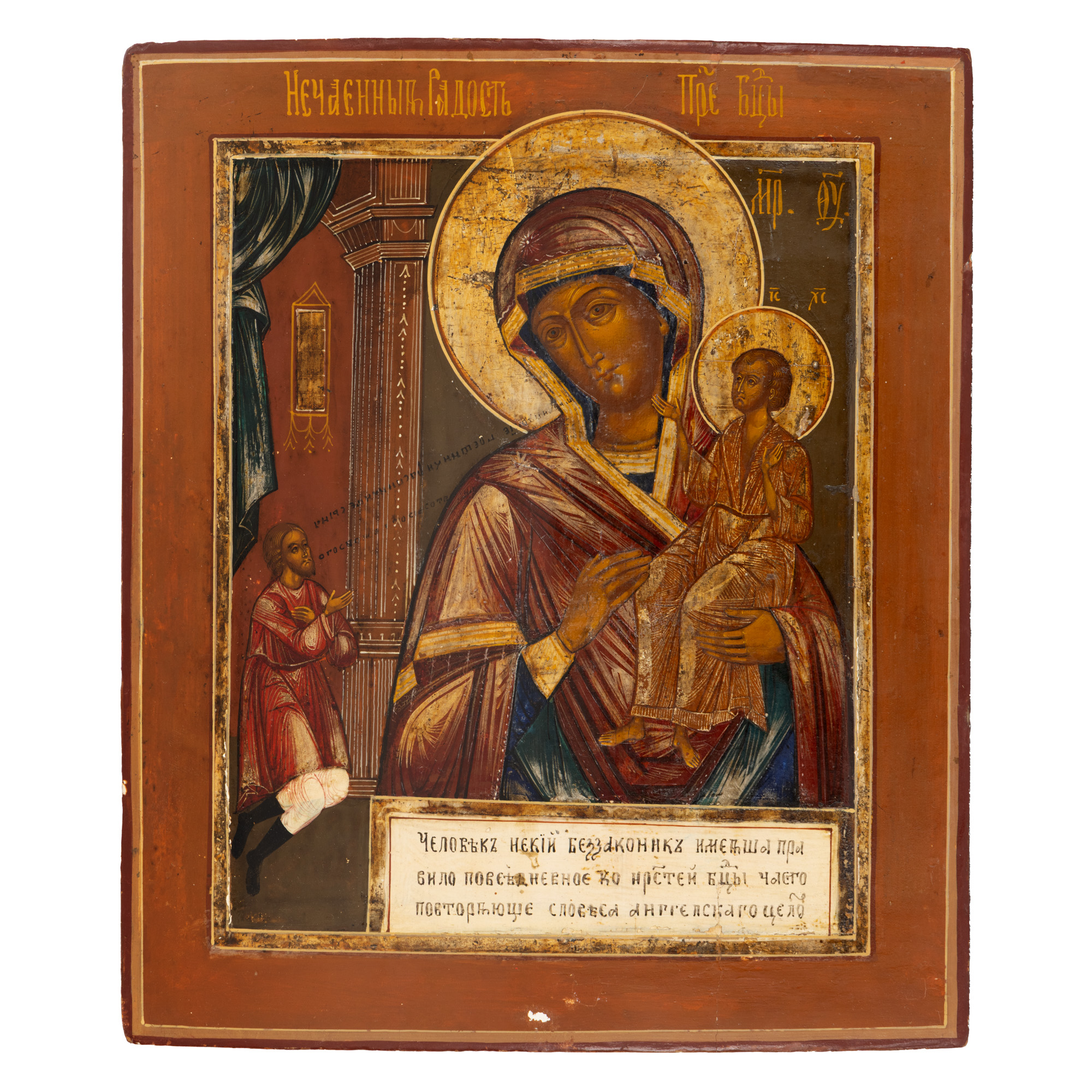
152. Icon on wood, "Mother of God with Child - Unexpected Joy", Russian school, mid 19th century, from collection
Starting price:
EUR 500
Sold
EUR 700
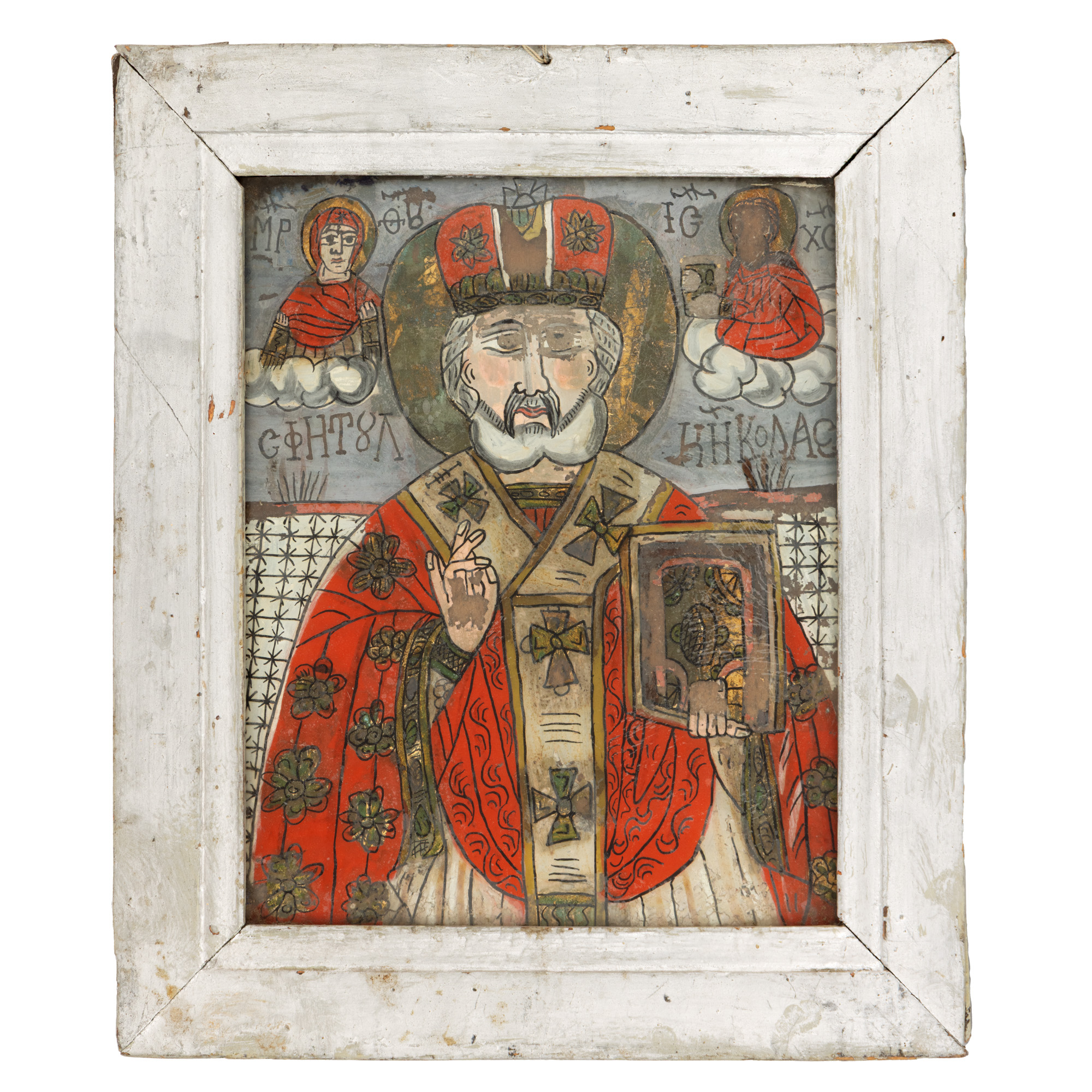
26. Icon on glass, "Saint Nicholas", workshop from Scheii Brasovului, second half of the 19th century
Starting price:
EUR 250
Sold
EUR 300