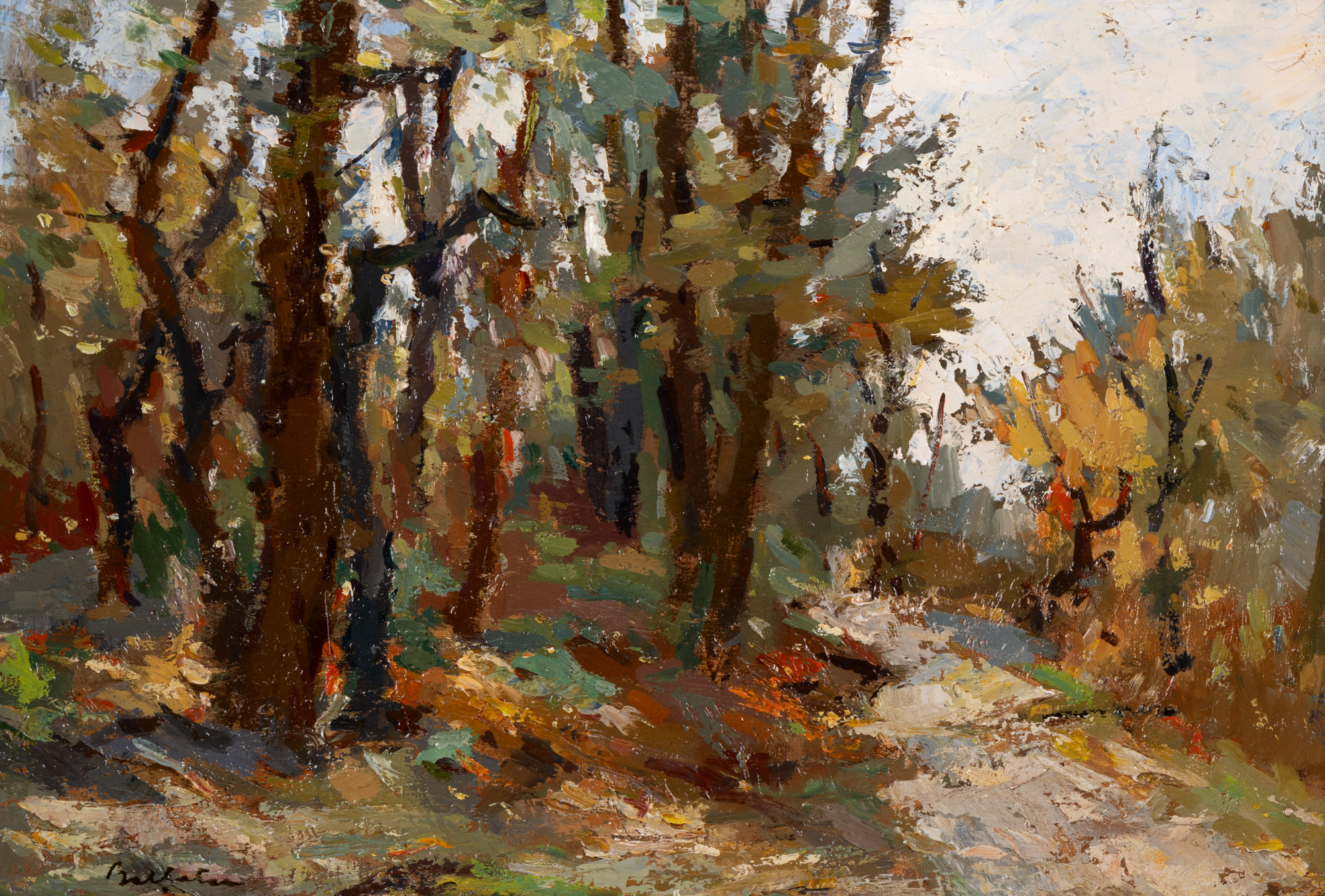
The photos of the lot are informative and indicative, and cannot provide a highly detailed view of the object from all angles. We recommend a careful physical inspection of the lot before bidding.
CEBUC, Alexandru, "Pallady", Official Monitor Publishing House R. A., Bucharest, 2008.
ȘORBAN, Raoul, "Theodor Pallady", Meridiane Publishing House, Bucharest, 1975.
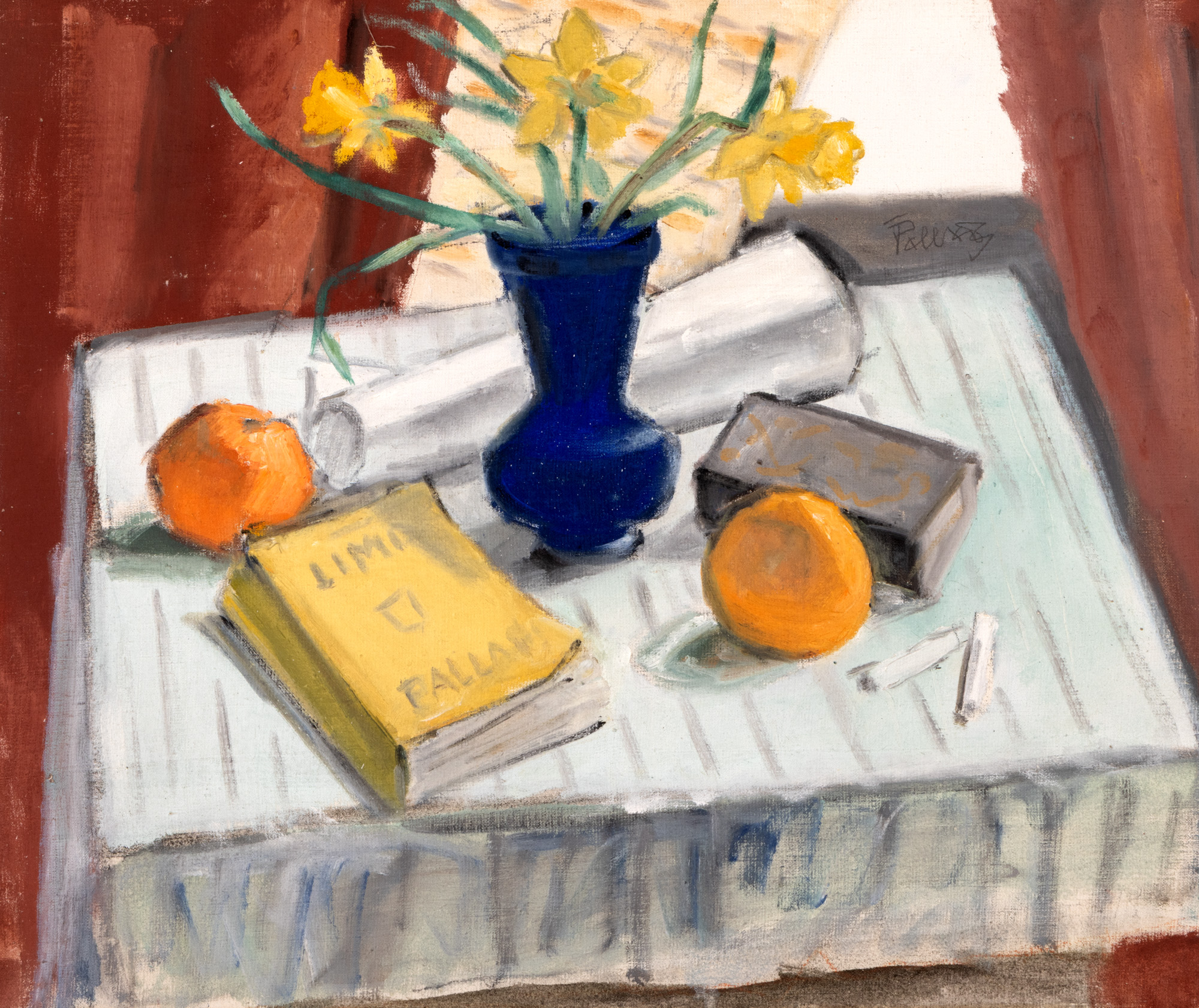
oil on canvas glued on cardboard, 50 x 61 cm
Research information
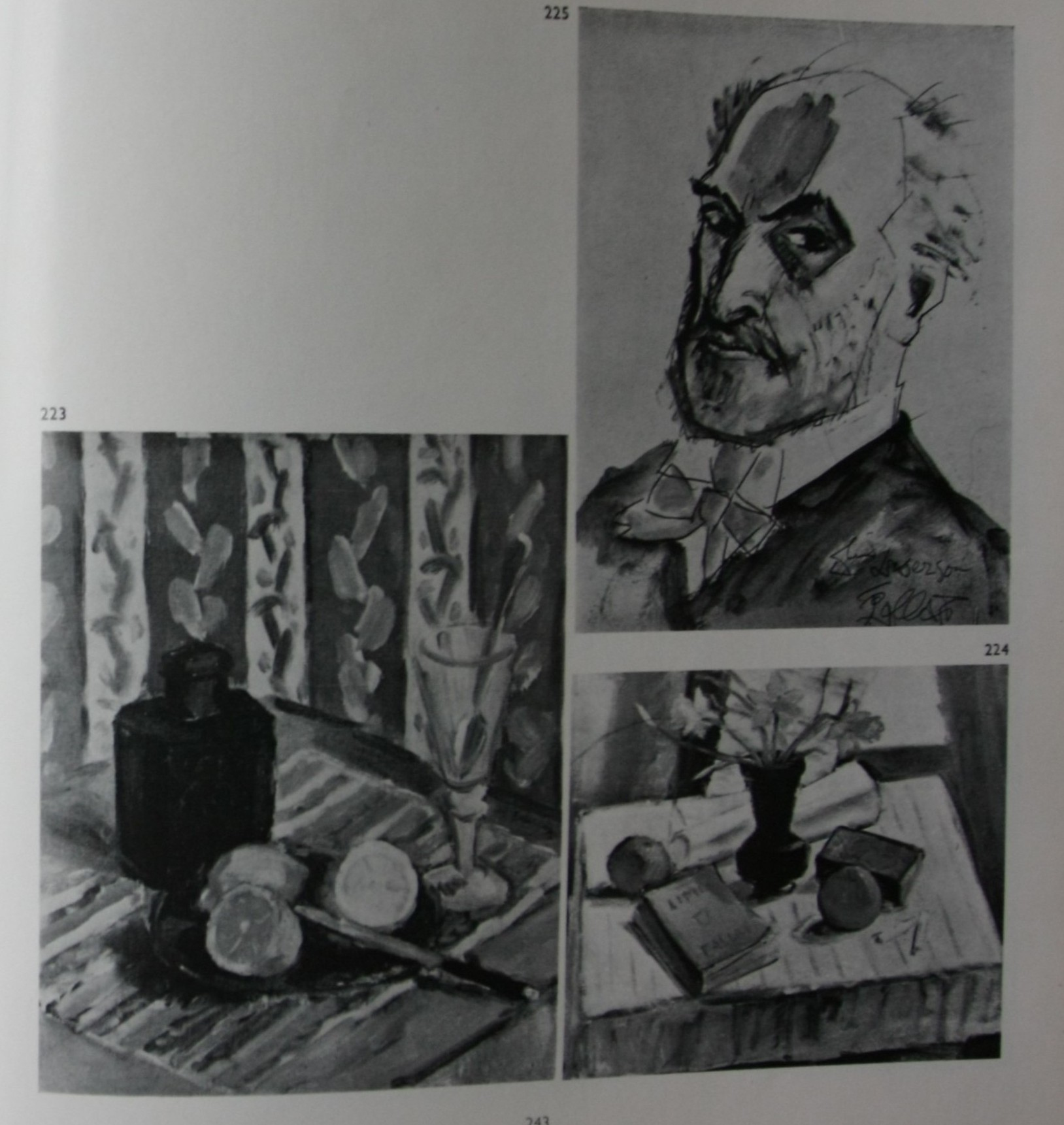
The work is reproduced in "Tribute to Theodor Pallady," Stefan Dițescu, Bucharest, 1971-1972, page 243.
Pallady turned to still life in the mature period of his life, referencing important artists such as Baudelaire, Proust or Nietzsche, as seen in some of his works like "Still Life with Red Flowers" (1940-1947), "Still Life with Newspaper and Daisies" (1930s), "Interior with Poppies" (1925-1928), or "Interior with Salvia Vase" (1930-1935). His still lifes are generally associated with his artistic maturity within the years 1910 - 1930. By this stage, his style is fully formed, increasingly imbued with the influences of post-impressionism and Cézanne. His paintings become more balanced, thoughtful, with significant emphasis on structure and colour.
The centrepiece of his work is a still life with daffodils, fruit, and books from the years 1910 - 1930. This illustrates a clear balance in form and chromatics. More than just a still life, every object in the painting carries a meaning. The combination and the warm colours chosen by Pallady create a feeling of melancholy, escape, and dreaming that the artist wishes to convey. This includes the idea of the passage of time and life: the daffodils may suggest youth due to their natural and fresh colour. The parchment-like paper may suggest a newspaper, bringing thoughts of news and updates to always know what is happening in society and the world. All of these elements create an ordinary day, but also absolute balance carefully crafted by the artist.
Books represented on tables in his compositions often refer to volumes forming the literary core of the painter: Baudelaire, Proust or Nietzsche. The artist does not seek to reproduce elements with photographic detail but strives to capture their atmosphere and essence through colour tricks, light refractions, and line undulation. His daffodils are yellow and arranged in a blue footed vase on a table, next to which are two oranges, two books, and a tightly rolled piece of paper that looks like parchment behind the flower vase.
The daffodils symbolise rebirth and new beginnings since they are among the first flowers that appear in spring. At the same time, they have roots in Greek mythology. They are named after Narcissus, a beautiful young man who fell in love with his own reflection in the water and died of sorrow when he realized that his love was unrequited. Thus, Pallady's still life transcends the simple representation of everyday objects, transforming into a subtle meditation on time, existence, and the artist's identity. The daffodils, symbols of youth and rebirth, alongside the books and fragments of paper, become landmarks in an inner universe dominated by reflection, culture, and sensitivity. The chromatic balance and compositional refinement do not seek to faithfully reproduce the form, but to reveal the essence of things, inviting the viewer to contemplation and dreaming. (S.S)
For clarifications regarding the bidding procedure, hammer price costs, guarantee, payment, and collection terms for the winning lot, we recommend carefully reading/re-reading the Bidding Regulations.
For additional information regarding the lot and the auction, please contact the Art Consultants Department.
By choosing "Accept all cookies" you agree to the use of cookies to help us provide you with a better user experience and to analyse website usage. By clicking "Adjust your preferences" you can choose which cookies to allow. Only the essential cookies are necessary for the proper functioning of our website and cannot be refused
Cookie settings
Our website stores four types of cookies. At any time you can choose which cookies you accept and which you refuse. You can read more about what cookies are and what types of cookies we store in our Confidentiality Policy.
are necessary for technical reasons. Without them, this website may not function properly.
are necessary for specific functionality on the website. Without them, some features may be disabled.
allow us to analyse website use and to improve the visitor's experience.
allow us to personalise your experience and to send you relevant content and offers, on this website and other websites.