
27. From the Source [1930-1940]
1906, Balcic, Bulgaria - 1982, Bucureşti

Selling price

EUR 2.171

Session

Tue, 24 March 2026 18:00

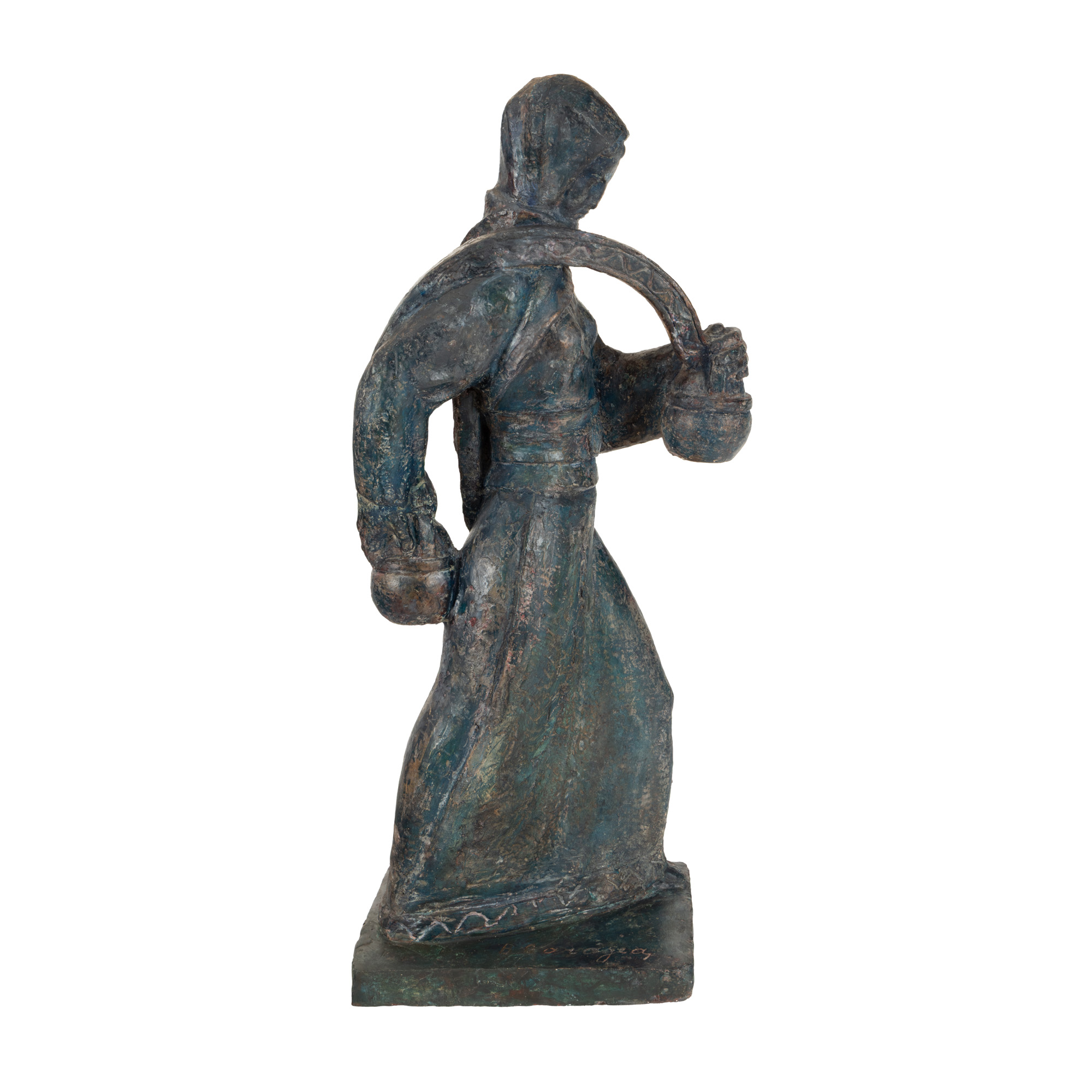
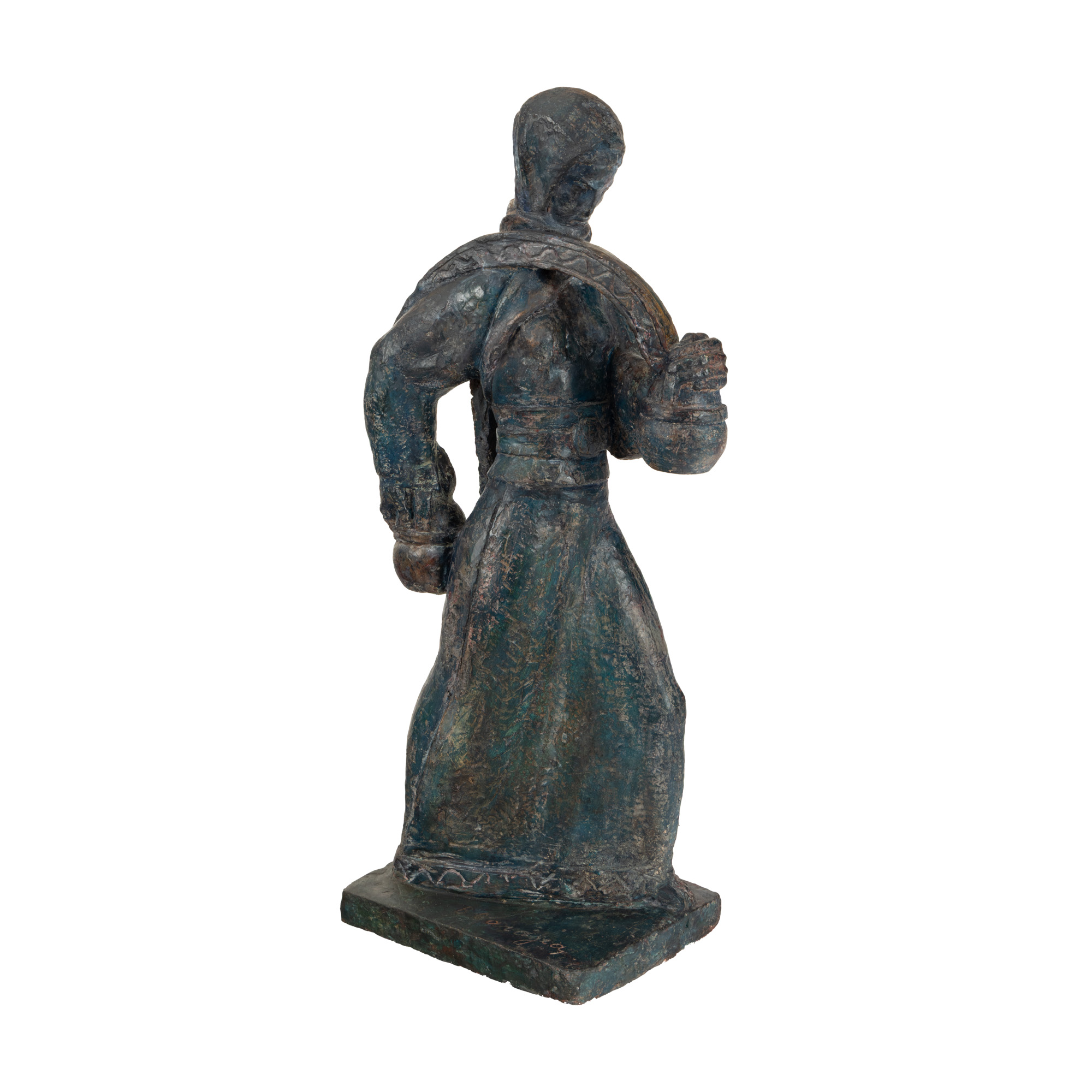
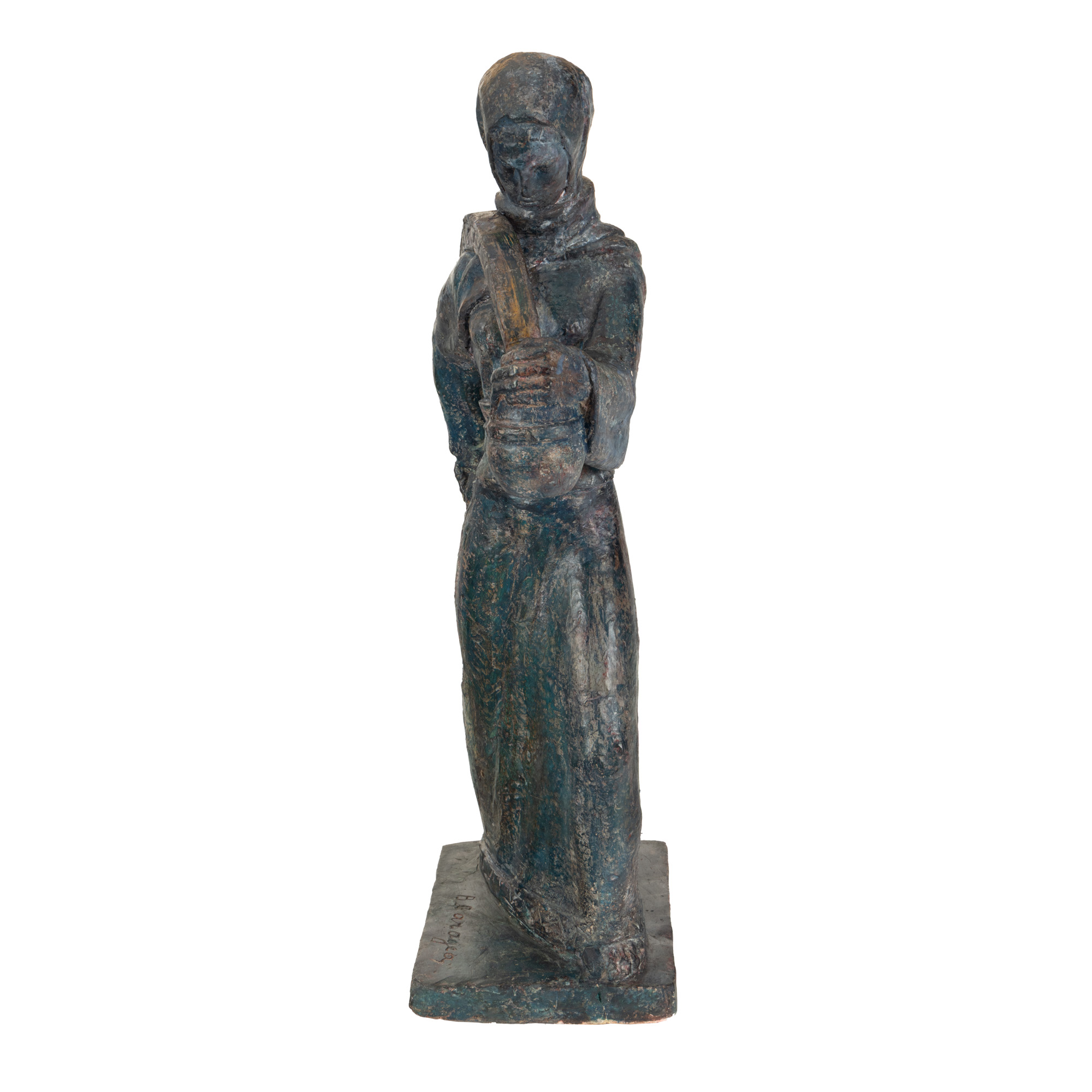
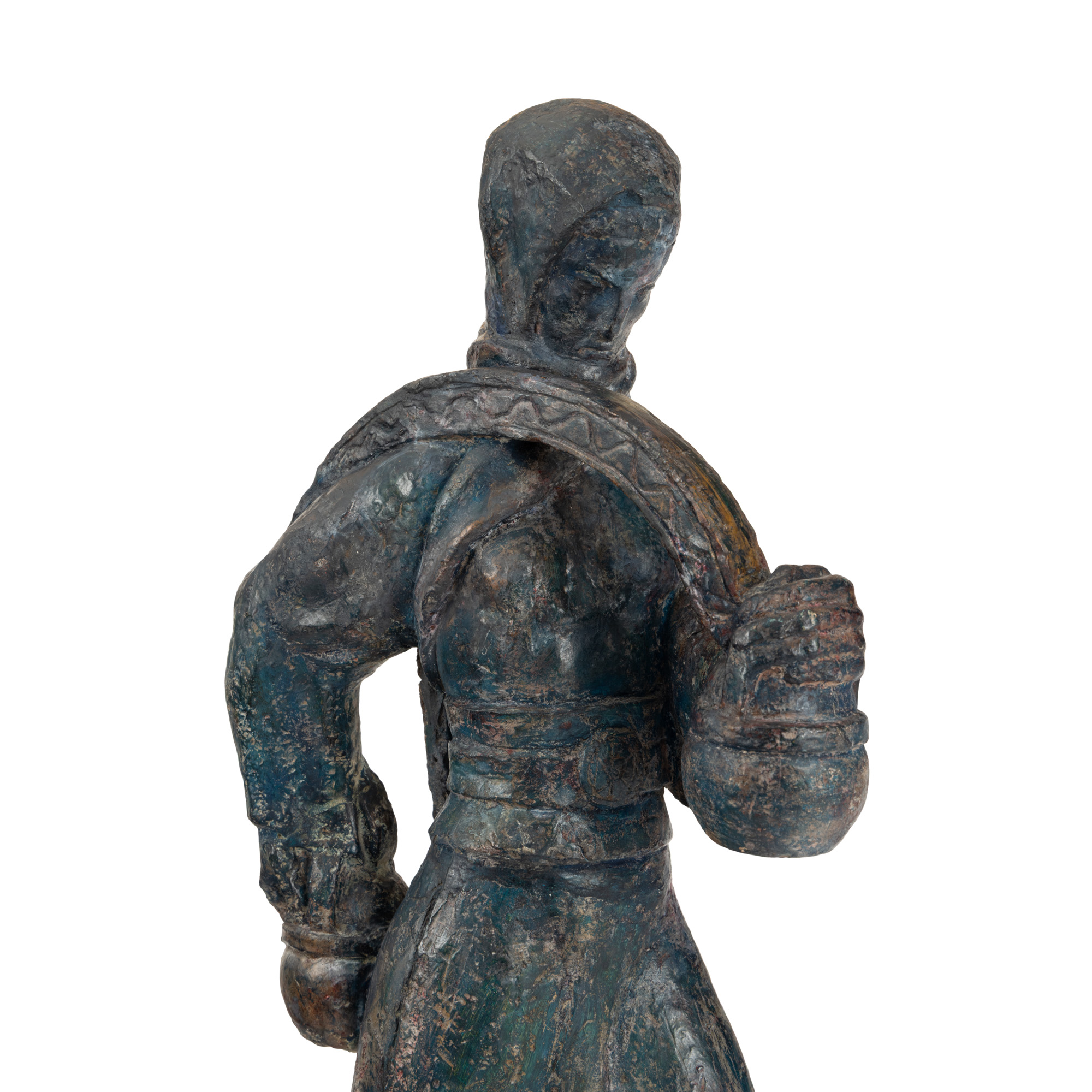
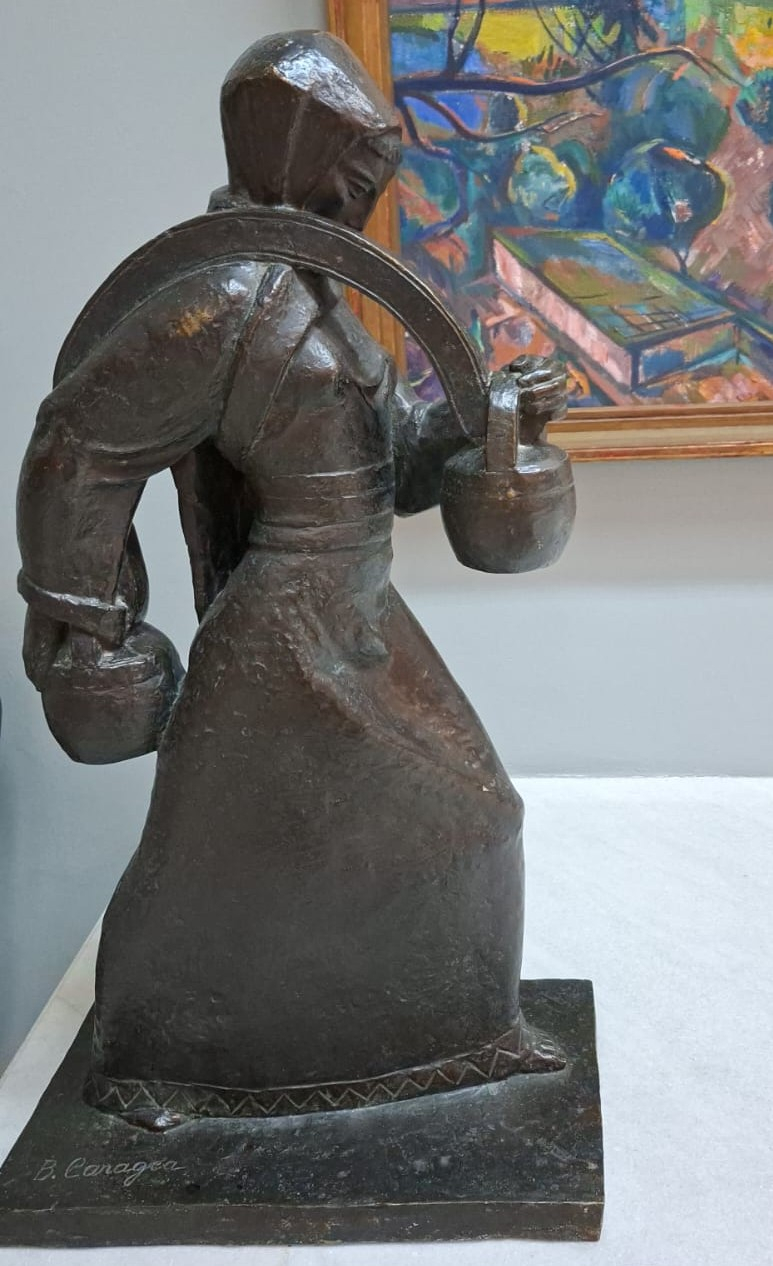
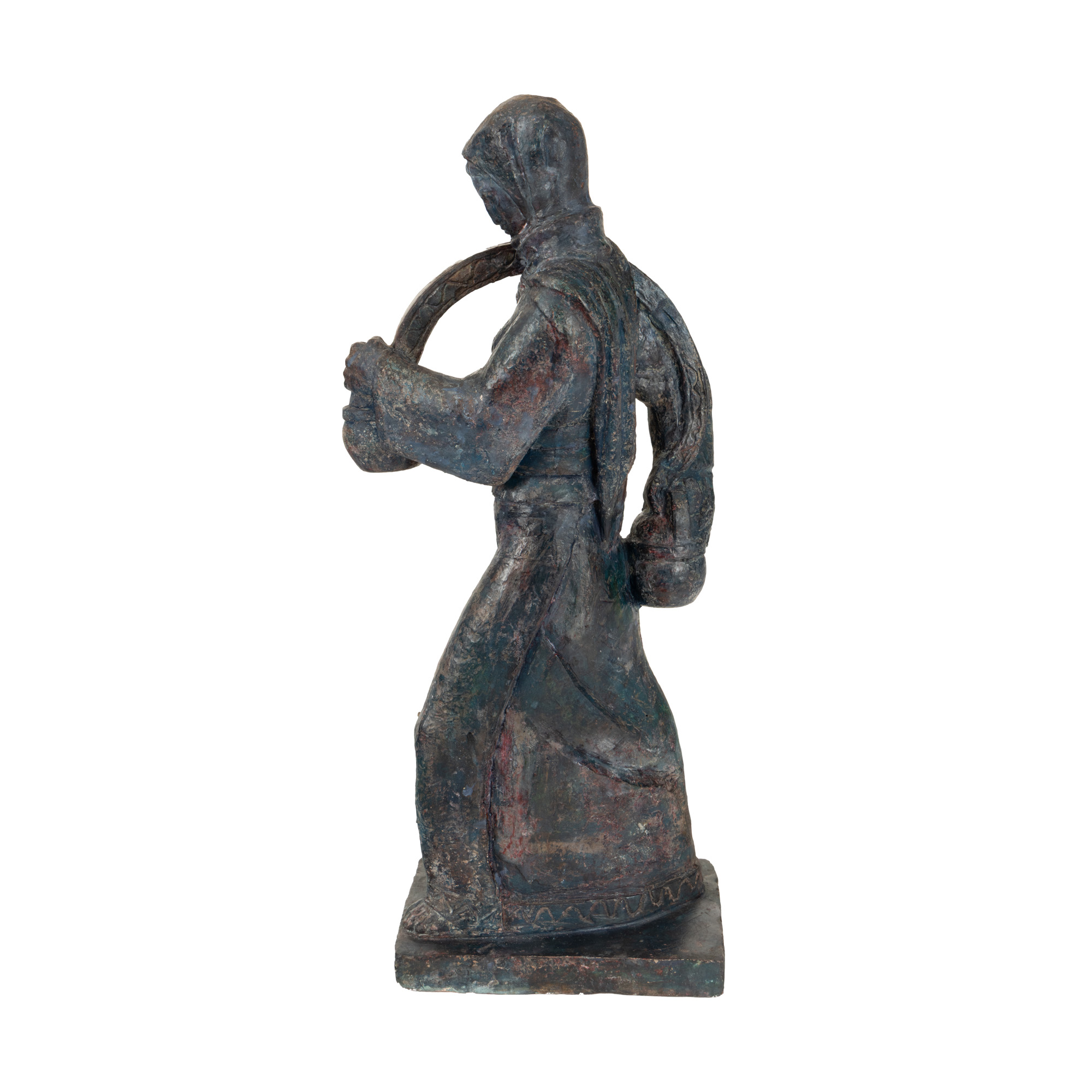
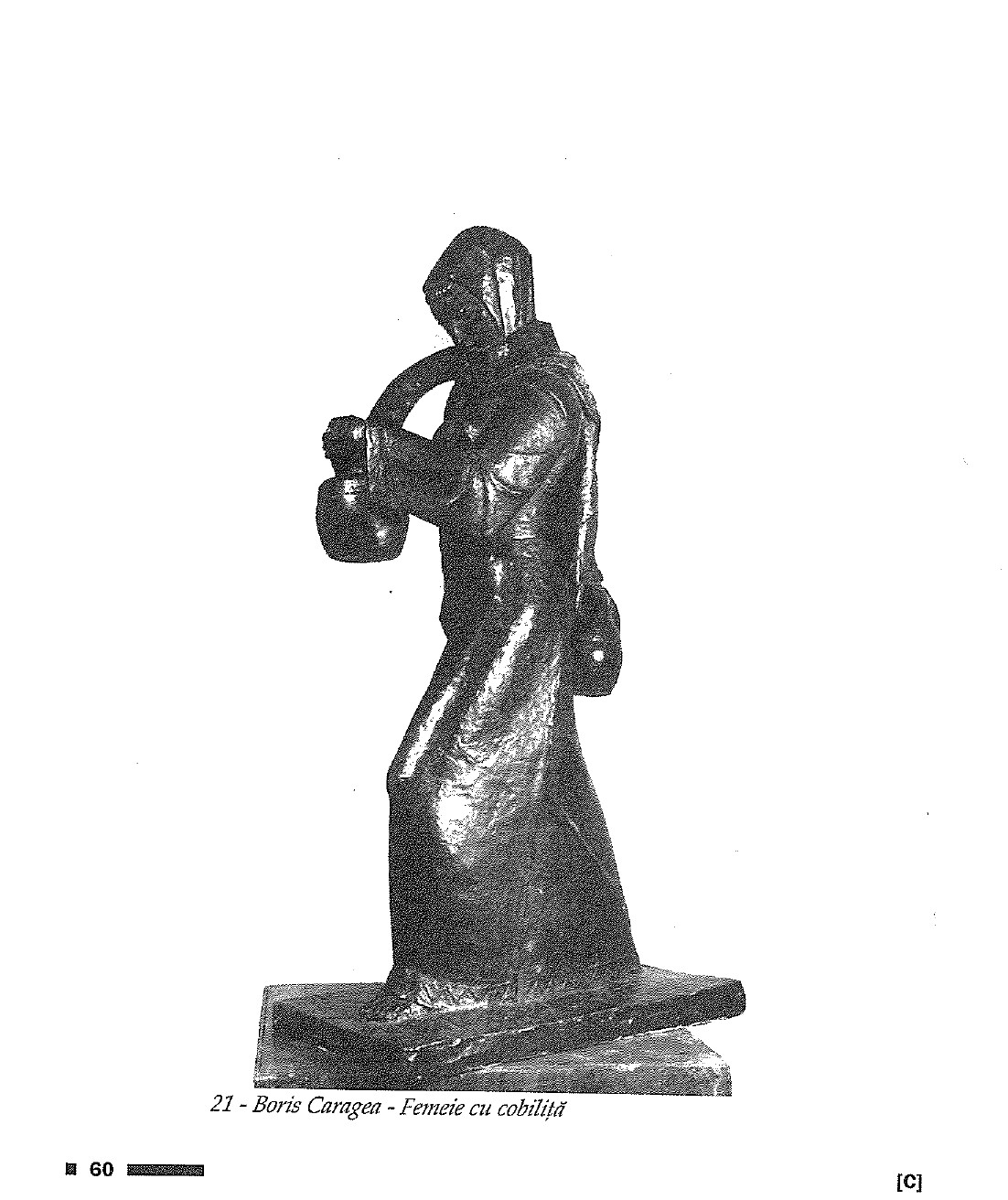
Influenced by the work of Bourdelle and Ivan Meštrović, Boris Caragea established himself in Romanian sculpture with his creations in a realistic-romantic style, drawing near to the conceptions proposed by Bourdelle. The artist displays an imposing physical force, but also the ability to channel his spiritual energy into a series of statues, monuments, or portraits. The presented representation, made during the 1930-1940 period, depicts a robust female figure, caught in motion, carrying water buckets using a yoke. The sculpture leverages compact volumes and archaic expression, suggesting the dignity of daily work, stability, and strength. Movement is conveyed through the dynamics of the body and the position of the arms, an essential element in the artistic language of the sculptor. The woman is not represented as delicate or idealized, but as a strong, balanced presence, a symbol of resistance and responsibility. The work may convey the idea of physical strength, her role in supporting the family and community, where it becomes a symbolic image of a Romanian village's work. Starting from the 1930s, he began creating works inspired by rural life and the world of ordinary people, approached in a realistic-romantic manner. The body is rendered through compact and well-balanced volumes. The attitude is a sober one, and the facial expression suggests concentration and dignity. The arms and shoulders bear the weight, highlighting physical strength and stability. The form is simplified, but strong, with no decorative details, and the emphasis is on massiveness and balance, suggesting the solidity and permanence of the rural world, where a few examples are: "Maternity" (1935), "Carafă" (1968), "Tatara Woman" or "Dobrogean Dance". The work conveys more than an ordinary scene from village life. The sculptor transforms a daily gesture like carrying water into a monumental image. Physical labor is not presented as a burden, but as a natural, dignified and essential act for the community, where the female character represents and supports the pillar of the family along with the household. By emphasizing massiveness, stability, and the absence of decorative details, the work conveys the idea of solidity and permanence of the rural world. Work is not portrayed as a burden, but as a natural and essential act for the community, and the female figure becomes a symbol of continuity, responsibility, and family and household support. (S.S.)

References

BARBOSA, Octavian, "Dictionary of Contemporary Romanian Artists", Meridiane Publishing House, Bucharest, 1976. PAVEL, Amelia, "Boris Caragea", Meridiane Publishing House, Bucharest, 1970.

Dimensions

depth 16 cm, width 21 cm, height 56.5 cm

Description

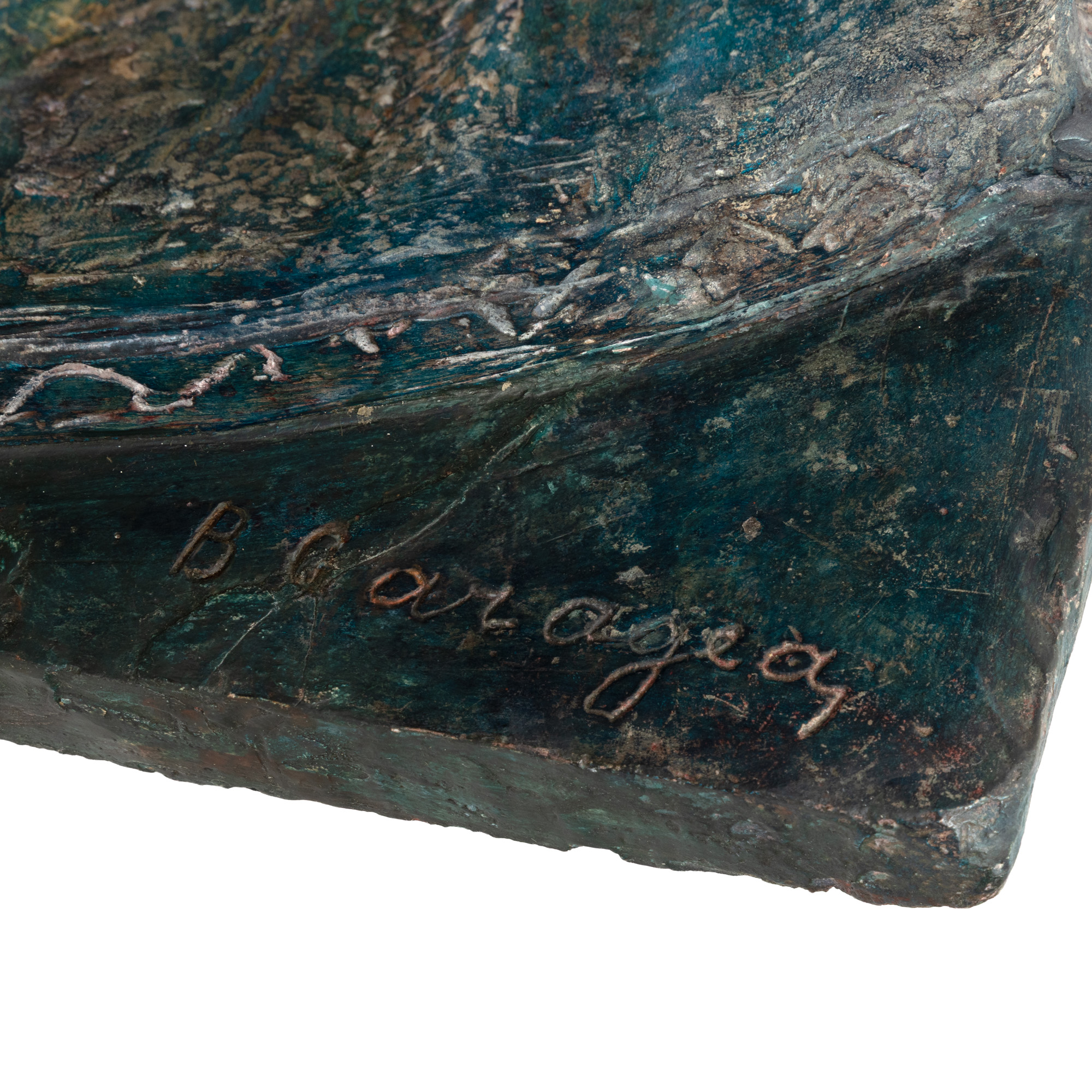
patinated plaster, signed on the base, "B. Caragea"

Research information

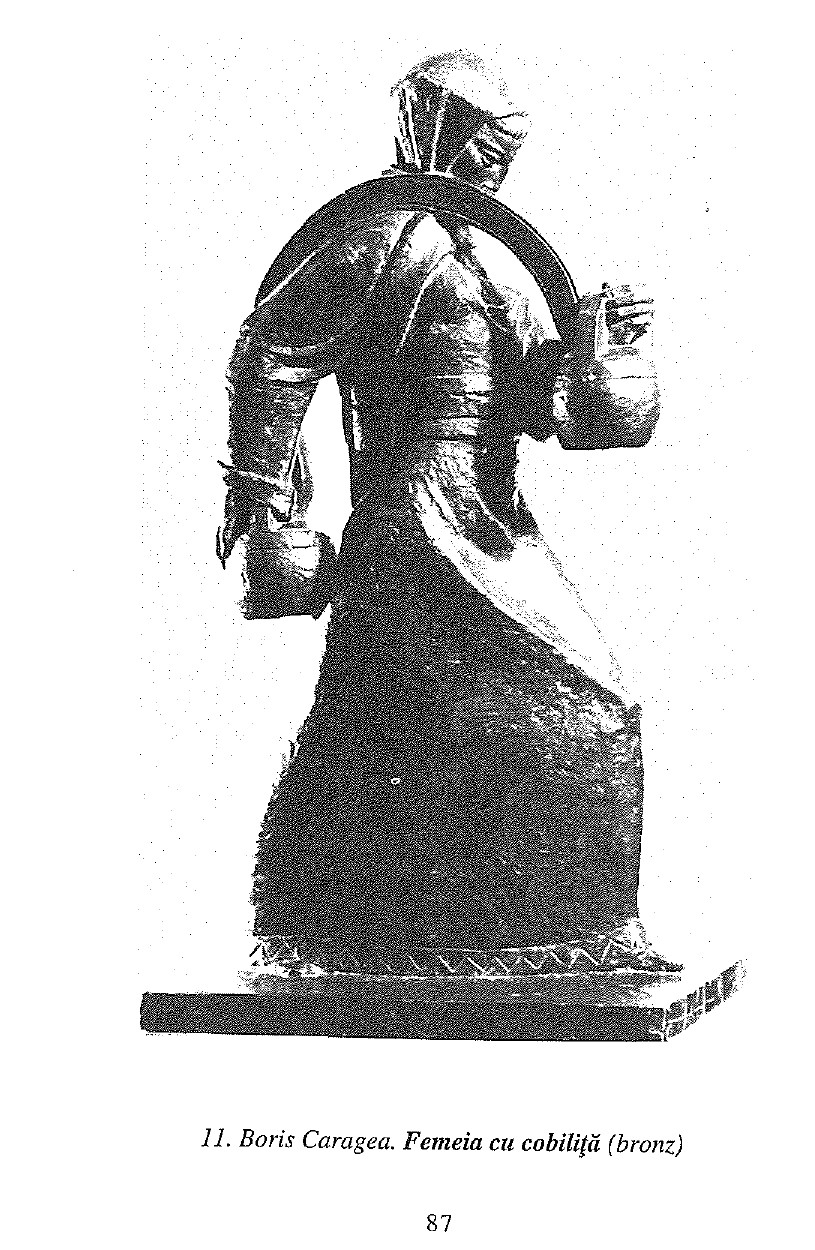
A version of the artwork is exhibited in the permanent collection at the National Museum of Art of Romania. A version of the artwork is reproduced in "Mircea Deac, 50 years of sculpture, The Dictionary of Sculptors from Romania (1890-1940)", Bucharest, 2000, on page 87. A version of the artwork is reproduced in "Mircea Deac, Sculpture in Romania 19th-20th centuries", Medro Publishing House, Bucharest, 2005, on page 60.

Dating

1930-1940

ADDITIONAL INFORMATION

For clarifications regarding the bidding procedure, hammer price costs, guarantee, payment, and collection terms for the winning lot, we recommend carefully reading/re-reading the Bidding Regulations.

For additional information regarding the lot and the auction, please contact the Art Consultants Department.

Similar lots
Silence

57. Silence [1978]

Sabin Bălaşa

    Estimate EUR 5.000 - 8.000
    Sold EUR 9.000
Sailing into the Open

31. Sailing into the Open [1892]

Eugen Voinescu

    Estimate EUR 2.500 - 3.500
    Sold EUR 3.000
Scarecrows

121. Scarecrows

Miliţa Petraşcu

    Estimate EUR 300 - 500
    Sold EUR 1.400