The photos of the lot are informative and indicative, and cannot provide a highly detailed view of the object from all angles. We recommend a careful physical inspection of the lot before bidding.
VLAHUTA, Alexandru, "Painter N. I. Grigorescu. His life and work", Bucharest, Edition of the Schools' House, 1910
OPRESCU, George, "Nicolae Grigorescu", Meridiane Pub., Bucharest, 1963
CEBUC, Alexandru, "Grigorescu", Official Gazette, 2007
MACOVEI, Catalina, "Nicolae Grigorescu", Parkstone Press, 1999
VIDA, Mariana, "Grigorescu painter of nature", National Museum of Art of Romania Pub., Bucharest, 2007
DEAC, Mircea, "Portrait painters", Official Gazette, 2013
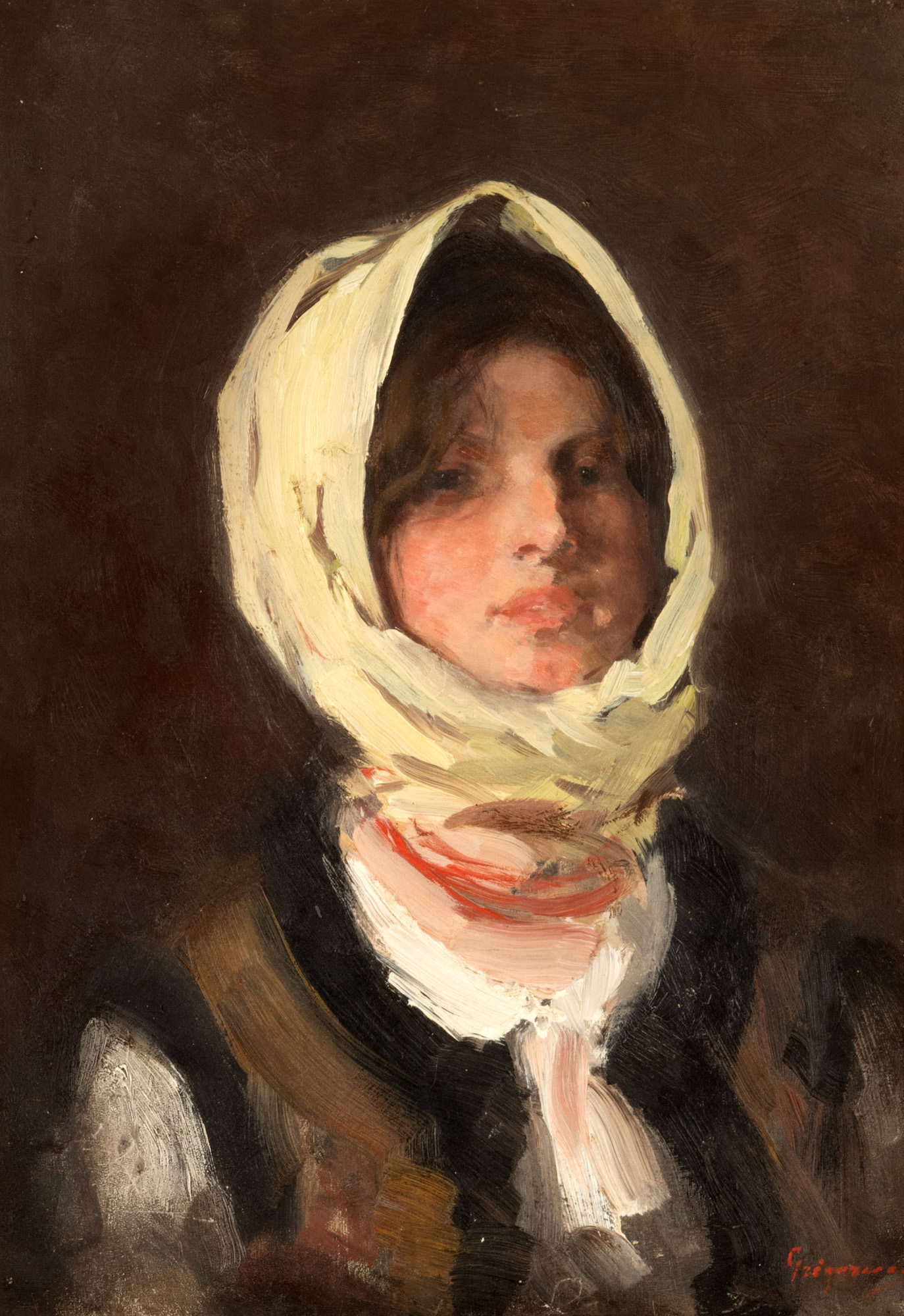
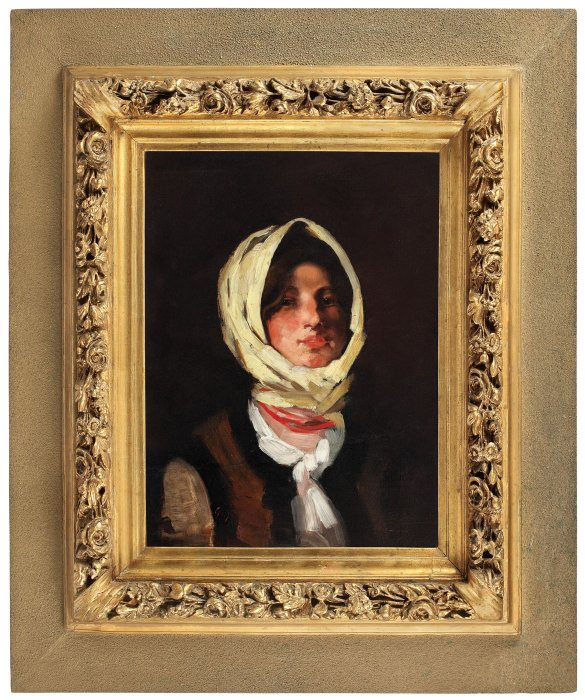
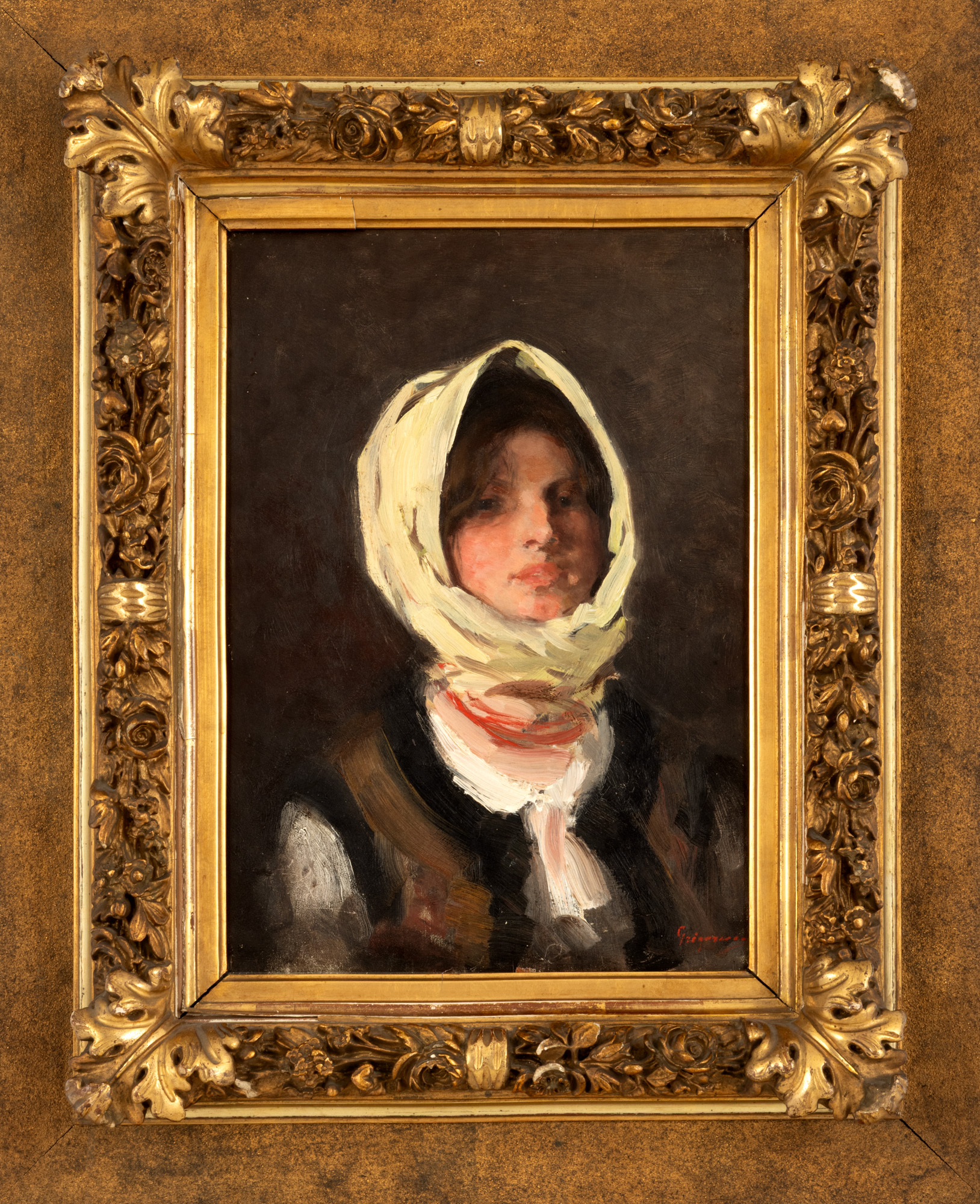
oil on wood, 32 x 23 cm, signed lower right, in red, "Grigorescu"
Research information
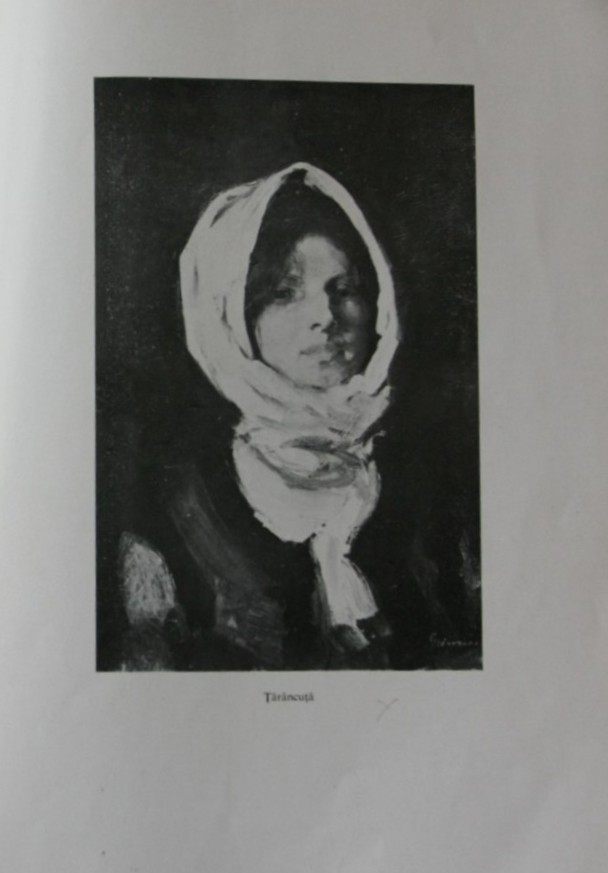
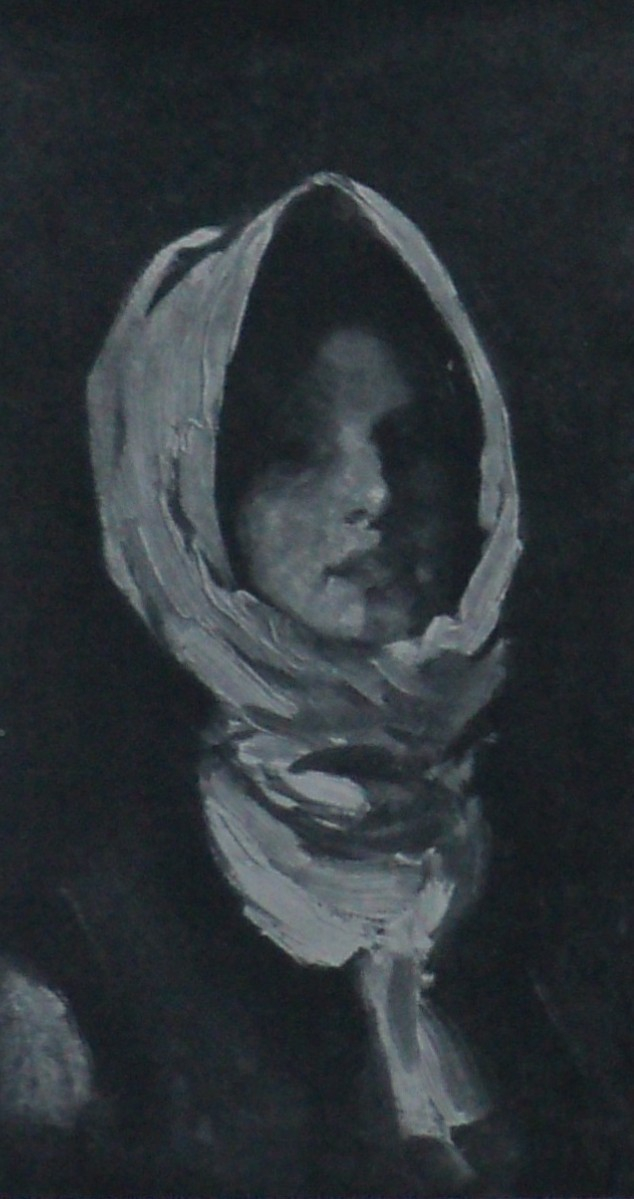
The artwork is reproduced in "The Painter Grigorescu. His Life and Work" by Alexandru Vlahuță, Bucharest, 1910, page 234, with the title, "Susana".
The artwork participated in the Centenary Exhibition of the Painter Nicolae Grigorescu, June 12-30, 1938, Bucharest, and is reproduced in the exhibition catalogue at cat. 60, with the title "Țărăncuță”.
PROVENANCE
Historical collection of engineer Eugen Ştefănescu
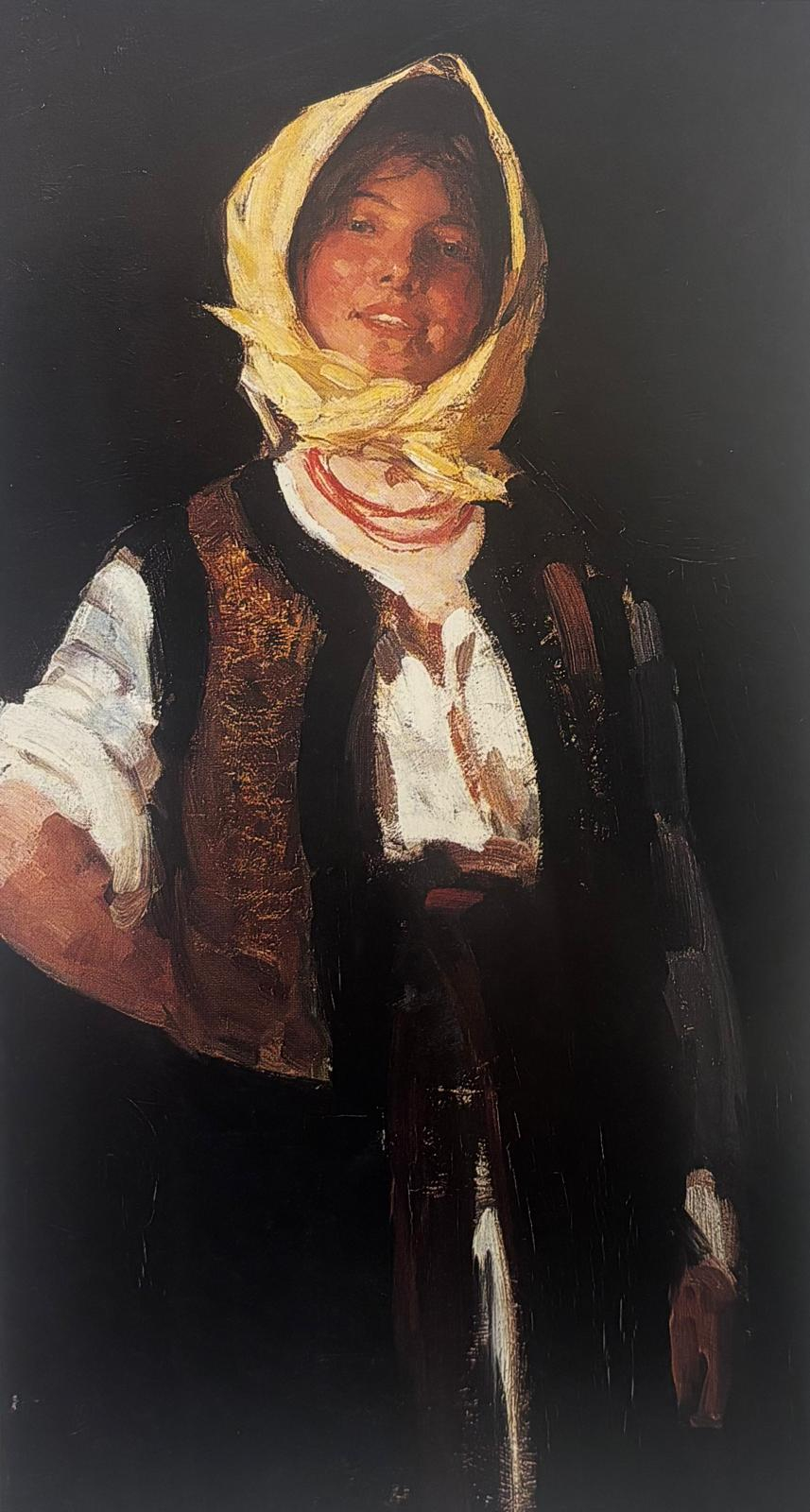
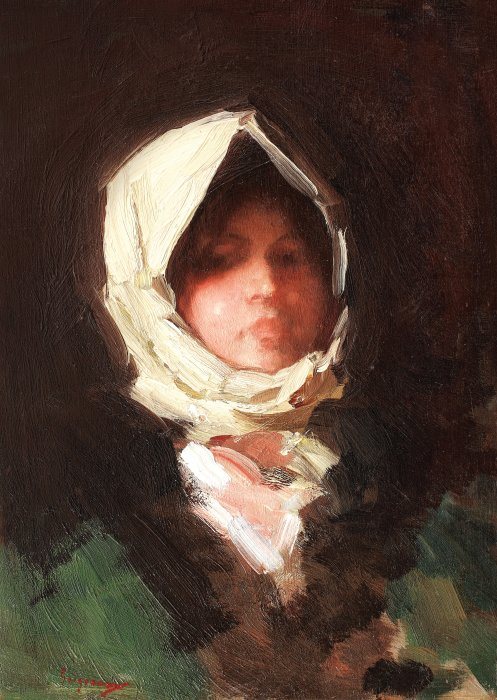
"Nicolae Grigorescu was concerned with “national subjects” from his artistic formation period, when, during his studies in Paris and his decisive experience in Barbizon, he came into direct contact with the tendencies of 19th-century European painting, oriented towards representing simple and authentic life. Having returned to his country after 1864 and 1867, the artist integrated these influences into his own vision, adapting the realistic and lyrical themes of the Barbizon school to the Romanian specifics. Thus, his interest in the rural world became one of the defining directions of his creation, and the portrait of a peasant woman acquires the status of a true symbol of national identity, in which the simple beauty of the village is artistically transposed through sensitivity, direct observation, and poetic idealization. This interest in the figure of the peasant woman can also be interpreted as a native adaptation of the typology of the "Italian peasant woman", very widespread in the European painting of the time, cultivated by artists such as William Bouguereau, Jean-Léon Gérôme, Ernest Hébert, Camille Corot or Mariano Fortuny i Marsal. In search of emblematic images for the national specifics in Romanian painting, Nicolae Grigorescu reprocesses and adapts this theme, transposing it onto the Romanian background, building typologies recognizable by physiognomy, gestures, attitude, and costumes. Thus, the artist introduces the equivalent of our world into a composition scheme already established. Through this transfer, Nicolae Grigorescu aligns the Romanian school of painting with the thematic area of European painting, giving it a distinct identity dimension, in which the peasant, and especially the peasant woman, become carriers of traditional values. The present work is part of the extensive series of portraits of young peasant girls created in the second part of his creation, along with similar compositions such as "Peasant Girl", "Cheerful Peasant Girl", "Girl with a White Shawl" or "Head of a Girl with Beads". Although reiterated typologically, each figure brings different nuances through the physiognomy and psychology of the character, making up a catalog of types and human characters - some from the vicinity and intimacy of the artist, others that pursue the association of people with the social environment. Note that Nicolae Grigorescu is concerned with portraying character by studying physiognomy, being convinced - through the prism of his academic training - that the subject's appearance reflects aspects of the personality. Thus, the artist seeks to transpose onto the canvas the inner world of the model, appealing, beyond the visible reality in front of his easel, to the imagination in an attempt to highlight the first impression that suggests the essence of a human type. Thus, portraying villagers transcends simple ethnographic representation and becomes a tool for symbolically building a national image. Nicolae Grigorescu's young peasant girls represent archetypal figures. Always caught in dignified, cheerful, luminous postures, they embody the purity and permanence of the Romanian village world. This idealization is also found in the present work, both in the calm attitude of the subject and in the warm color scheme and the delicate treatment of light. The present work is reproduced in the monograph dedicated to the painter by Alexandru Vlahuță under the name of "Susana". Although we do not know the exact identity of Susana, her face served as inspiration for other works of the artist. The model is caught on a dark brown, neutral background, which focuses attention on the expression and costume elements. The headscarf, rendered in a bright yellowish white, becomes the compositional center and the main source of pictorial light, suggesting the modesty, decency, and social status of the rural woman. The way it frames the face enhances the model's proud expression. The red beads, frequently found in Grigorescu's peasant portraits, add a vibrant chromatic note and function as a symbolic element of femininity. The construction of the portrait, executed in broad, volume-modulating brushwork, points to the work's affiliation with the mature stage of the artist's creation, after 1890, when the rural theme is approached in a lyrical key and synthesized. Thus, through the harmony between face, dress, and chromatics, Nicolae Grigorescu constructs a poetic image of the Romanian village, full of warmth and charm, arising from direct observation but filtered through an artistic sensitivity that transforms reality into a visual ideal of national identity."
For clarifications regarding the bidding procedure, hammer price costs, guarantee, payment, and collection terms for the winning lot, we recommend carefully reading/re-reading the Bidding Regulations.
For additional information regarding the lot and the auction, please contact the Art Consultants Department.