The photos of the lot are informative and indicative, and cannot provide a highly detailed view of the object from all angles. We recommend a careful physical inspection of the lot before bidding.
BOGDAN, Radu, "Theodor Aman", State Publishing House for Literature and Art, Bucharest, 1955.
FLOREA, Vasile, Theodor Aman, Meridian Publishing House, Bucharest, 1972.
SUTEU Greta "Aman the Painter, the painting repertoire of the Theodor Aman Museum", the Museum of the Municipality of Bucharest Publishing House, 2017.
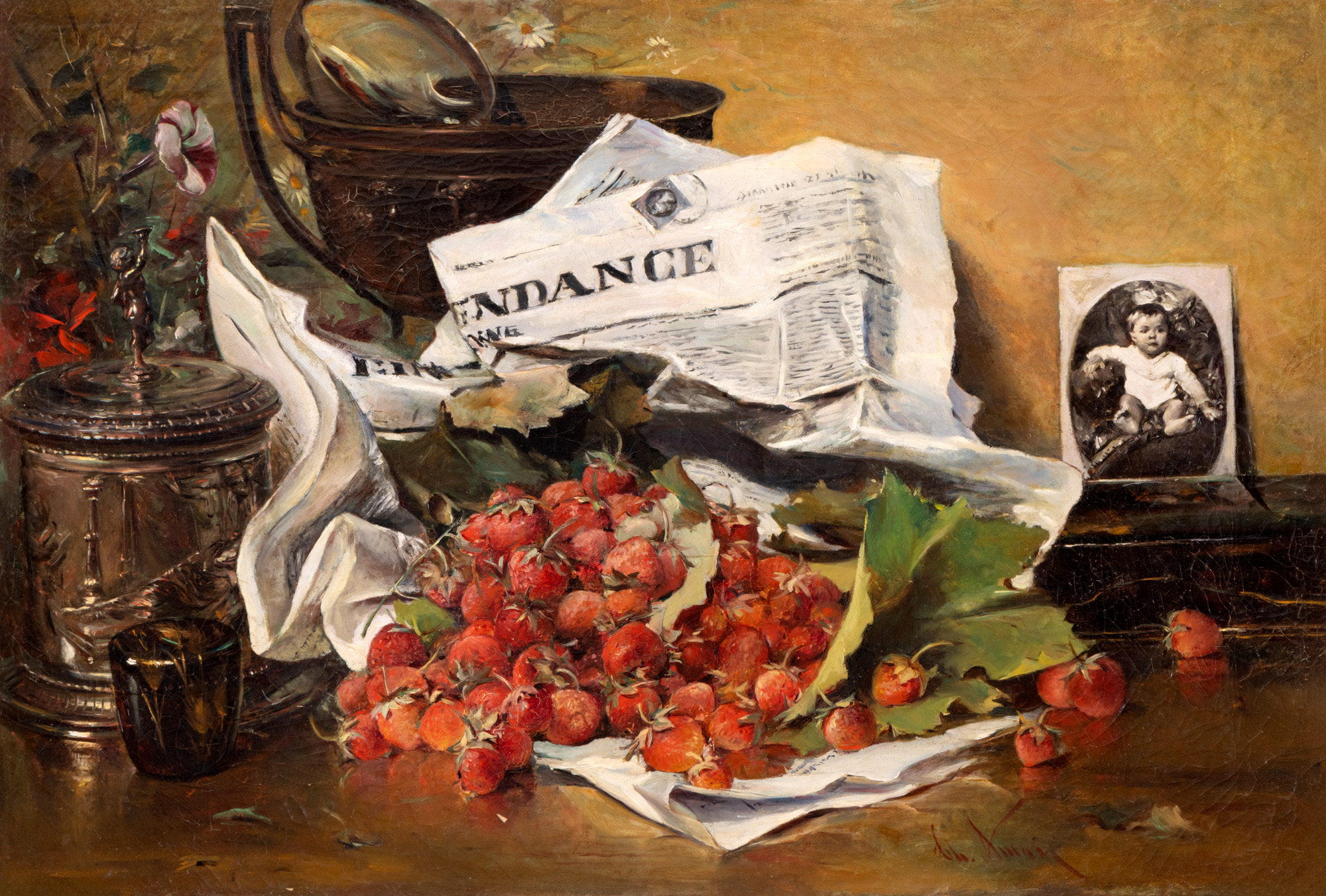
oil on canvas, 46 x 67 cm, signed lower right, in red, "Th. Aman"
Research information
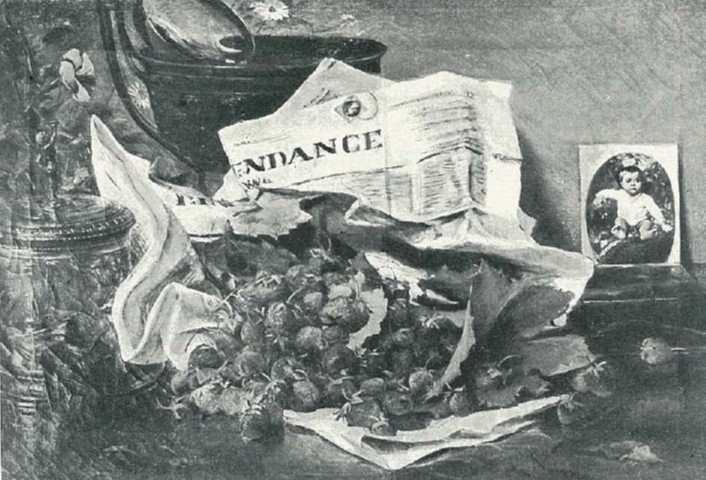
The artwork is reproduced and cataloged in the monograph "Theodor Aman", Radu Bogdan, E.S.P.L.A., Bucharest, 1955 on pages 108 and 135.
The artwork is mentioned in "Aman's Modernity", Adrian-Silvan Ionescu, S.C.I.A., 2011 on page 125.
The artwork participated in the Art Safari exhibition, "Theodor Aman - The first modern Romanian artist", Bucharest, May 12 - August 7, 2022 and is reproduced in the exhibition catalog, Bucharest City Museum Publishing House, 2023, on pages 128-129.
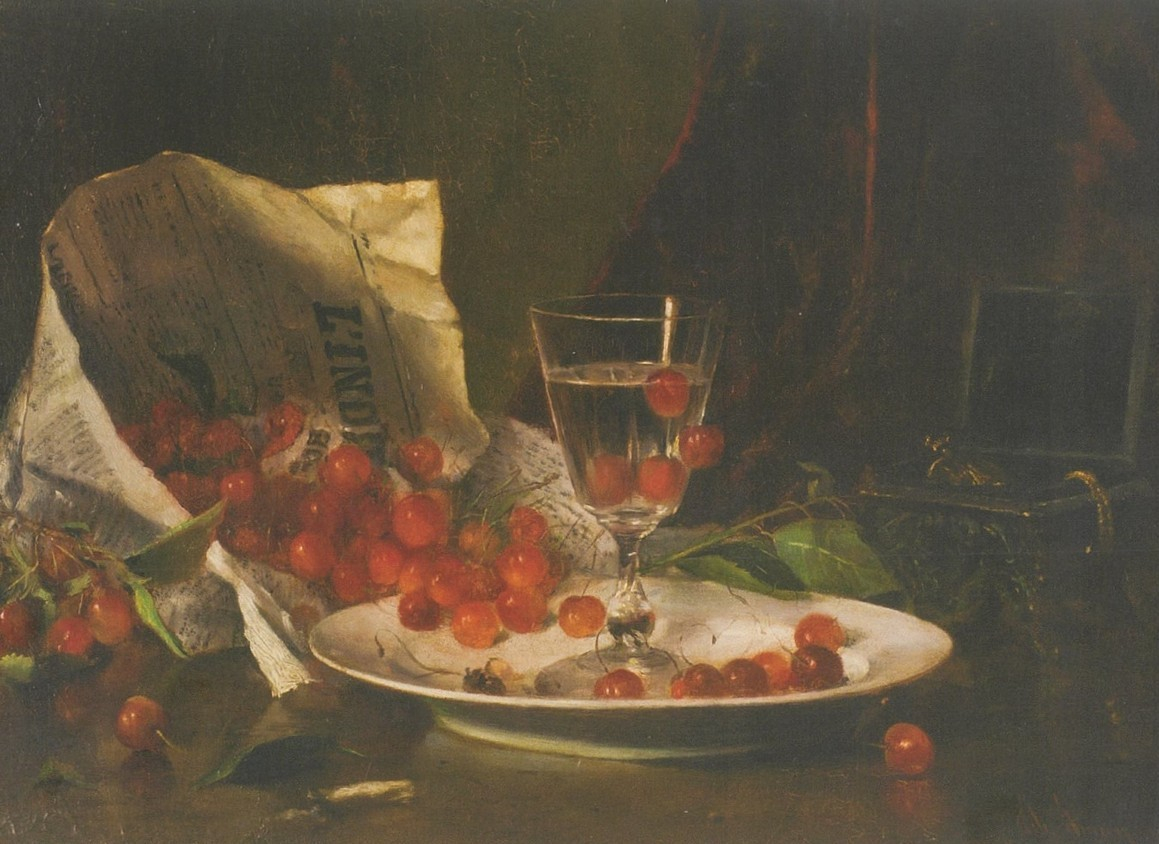
Still life is a genre that Aman consistently approaches in his artistic journey, standing out primarily through his compositions with flowers and fruits. Initially adherent to a descriptive style, the artist continually evolves, practicing various modes of expression, from exacerbated naturalism to Caravaggio's style of creation. Aman's still lifes are characterized by a very rigorous and confident drawing, with faithful representation of the model remaining an important factor. They also distinguish themselves through the precision of execution, the subtlety and meticulousness in visual perception. Aman approaches still life mainly in the second half of the 19th century, during his period of artistic maturity, after the 1860s, when his style evolves and stabilizes within the context of academic realism, with romantic and classic influences. Gradually, using primarily flowers and fruits, Aman creates increasingly coherent subjects on canvas and, from the mid-1870s, complex compositions emerge, defined by a preconceived scenography and coherence in compositional language. Another significant element of his creation is represented by his studies of great masters in Parisian museums and his own studies. These masters include Rubens, Velázquez, Caravaggio or Watteau, along with academic professors Constantin Lecca, Carol Wallenstein. Aman pays special attention to details and the materiality of objects, modeling immaculate surfaces and introducing symbols such as letters, books, clocks or jewelry. The first still life works with flowers appear in the early years after returning to Bucharest from his studies in Paris, when Aman experiments with colors, still under the influence of French academicism. Regarding the work in question, which we can frame in the period of 1880-1885, it focuses on capturing a still life with strawberries, where they are arranged on a table, in a room, along with other personal objects like a newspaper, a vase or a candy box. Aman's composition is carefully crafted and focuses on reflections and the study of light. The brushwork is wide, the color palette is harmonious and pleasant, composed of warm colors, with detailed attention to the props and the placement of objects within the scene. We can observe these details in several of his works over time, such as "Cherries", "Strawberries in a Basket", "Still Life with Cherries" - all excellently constructed and painted, with a high level of attention to detail and finish. Most of his works revolve around flowers or fruits, however, there's also a category in which we find, as with the current work, carefully crafted and eclectic props. Personal objects, tableware, newspapers, jars, statuettes and other small objects compose distinctive scenes that also create a sense of intimacy and personal space of the artist. In Aman's case, still life is never purely decorative. It becomes a space for reflecting on time, memory and modernity. The objects captured in the work are carefully chosen and placed to create a subtle dialogue between intimate life and the social reality of the era. Thus, another element that we can observe in his work, is the introduction of a photograph of a child's portrait, one of the most sensitive and enigmatic elements of the artist's composition, which can make us think about his desire to capture a generic image of childhood, not an individual portrait. Thus, the introduction of photography into the painting was, at that time (the beginning of the 1880s), a novelty for that period. This unique aspect of these still lifes opens an interesting discussion about Aman's passion for photography, these insertions being clear signs. The photograph can also symbolize innocence and fragility of life, in contrast with the perishable nature of the fruits. Aman suggests the relationship between past and present, between tradition and innovation, as well as an intimate and personal dimension within the work. In addition to the photograph, fruits, vase and candy box, we also identify the newspaper "L'Indépendance Roumaine", which can suggest the idea of freedom, ideals and values of the modern society of that era. Thus, these elements, such as the newspaper, the photograph and everyday objects, together build the image of an artist connected to the present, attentive to the changes in the modern world.
For clarifications regarding the bidding procedure, hammer price costs, guarantee, payment, and collection terms for the winning lot, we recommend carefully reading/re-reading the Bidding Regulations.
For additional information regarding the lot and the auction, please contact the Art Consultants Department.
By choosing "Accept all cookies" you agree to the use of cookies to help us provide you with a better user experience and to analyse website usage. By clicking "Adjust your preferences" you can choose which cookies to allow. Only the essential cookies are necessary for the proper functioning of our website and cannot be refused
Cookie settings
Our website stores four types of cookies. At any time you can choose which cookies you accept and which you refuse. You can read more about what cookies are and what types of cookies we store in our Confidentiality Policy.
are necessary for technical reasons. Without them, this website may not function properly.
are necessary for specific functionality on the website. Without them, some features may be disabled.
allow us to analyse website use and to improve the visitor's experience.
allow us to personalise your experience and to send you relevant content and offers, on this website and other websites.