The photos of the lot are informative and indicative, and cannot provide a highly detailed view of the object from all angles. We recommend a careful physical inspection of the lot before bidding.
DEAC, Mircea, "Nicolae Vermont", Meridiane Publishing House, Bucharest, 1973.
PAVEL, Amelia; IONESCU, Radu, "Nicolae Vermont", Academy of the RPR Publishing House, Bucharest, 1958.
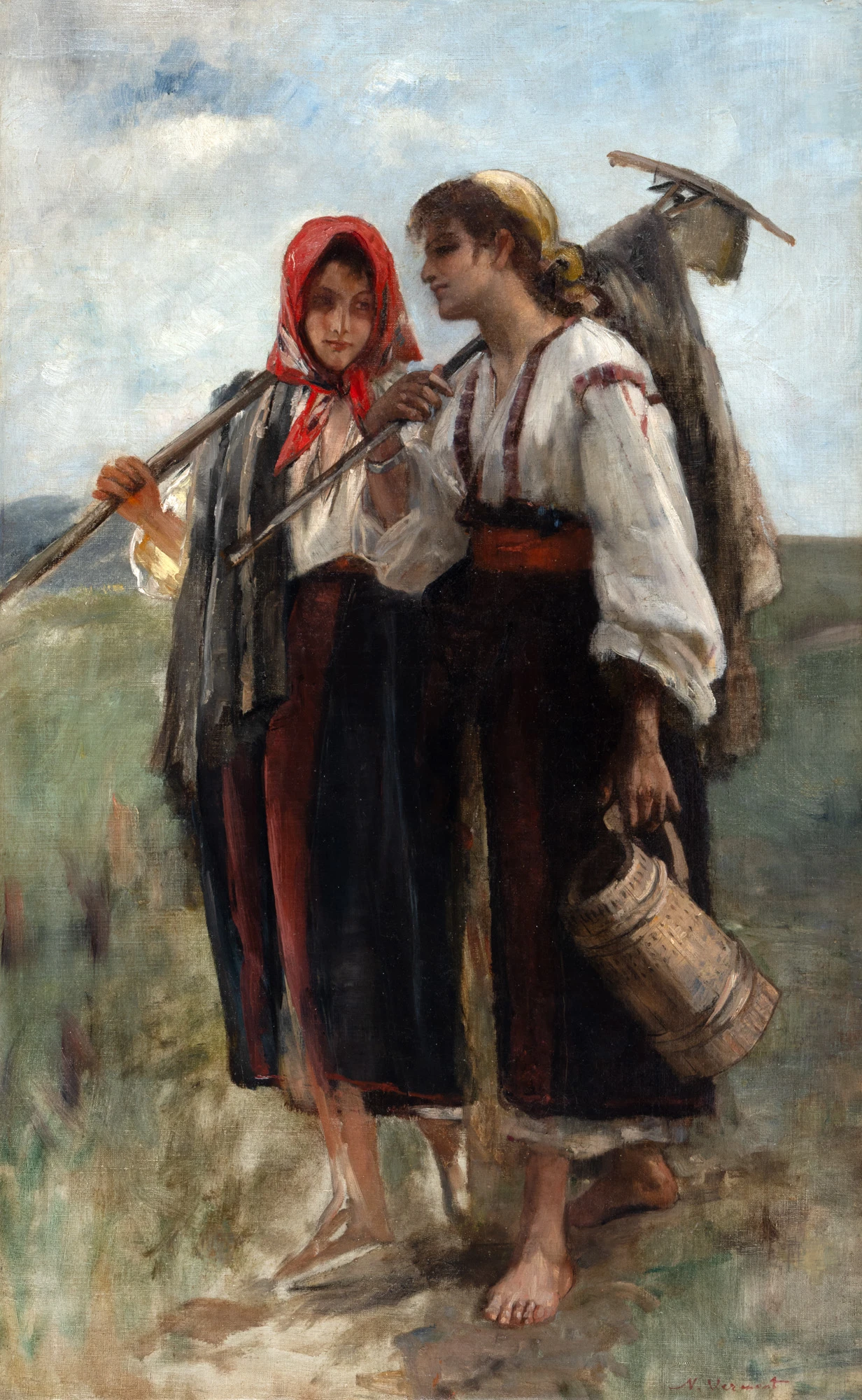
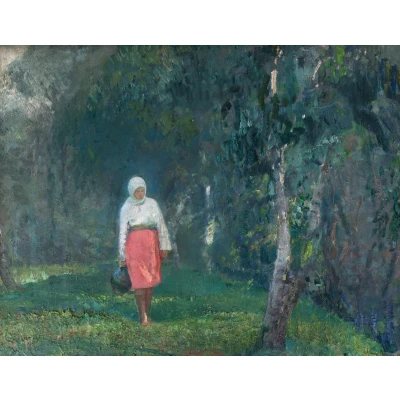
oil on canvas, 87 x 55 cm, signed lower right, in red, "N. Vermont"
During his period of artistic maturity, between 1915 and 1920, Nicolae Vermont pays special attention to the portrait, aiming not only to capture the physiognomic particulars of characters, but also their psychological and moral traits. The artist shows concern for the individuality of the one represented, attempting to portray, through expression and attitude, aspects relating to their character and condition. After 1905, this preoccupation extends also to the social dimension of characters, with Vermont capturing how their environment and activities impress upon their physical appearance and their universe. Rural themes appear in Vermont’s work since the 1890s and develop in the first decades of the 20th century, becoming one of the significant directions of his opus. The artist doesn't treat the countryside solely as a picturesque space, but presents it as an environment of everyday life, of work, and of simple existence. His characters are naturally integrated into activities specific to this universe, and their representation attains a significant social dimension, with the village becoming a space reflecting peoples' lives and their direct relationship with nature and agricultural activities. The work in question is representative of the artist's period of maturity, the 1920s, and his interest in the rural universe. The composition presents two female characters wearing traditional Romanian costume, who are captured on their way back from working in the fields. Vermont doesn't idealize this world or present it only in terms of landscape beauty, but insists on the connection between people, work and the environment they live in. An important role in identifying characters is also played by the traditional Romanian costume they wear which doesn't only represent a decorative detail, but offers information about the characters' origins and the environment they come from. Vermont didn’t paint traditional outfits from a single exclusive region, but showed recurring geographical interest, primarily focused on Muntenia, and with incursions into other regions of Romania. Most of his rural scenes and faces are captured in the Muntenia region. The characters are wearing elements characteristic to the traditional female outfit, such as the white blouse, "fota" and "brâu". The wide-sleeved shirts are combined with "fota" (a type of skirt) tightly wrapped around the body and red belts. Another significant element is the head cover. The two characters wear "basmale", different in colours and the way they're worn. These can be interpreted not only aesthetically but also in relation with the dress and social norms of the traditional rural environment. In specific ethnographic contexts, the way it is worn and certain features of the head cover could contribute to distinguishing a woman's marital or social status. In this case, the difference between the red "basma", tied under the chin, and the white one, could suggest a difference in status or age. Thus, the folk costume becomes an important instrument of visual characterization. Through it, Vermont does not just render the exterior appearance of the characters, but suggests their belonging to a certain rural area, a community and a traditional social universe. The clothing, the gestures and the characters' relationship with the landscape all contribute to creating an image of the Romanian village where work and everyday life hold a central place. Similar examples include: “Peasant girl with basket”, “Peasant girl with white scarf”, “Peasant girl with children” or "Cherry vendor", works that can be found in the collections of the Bucharest City Museum or the National Museum of Art of Romania, where they confirm yet again the artist's enduring interest in this theme and in capturing them in situations that highlight their social identity and daily activities.
For clarifications regarding the bidding procedure, hammer price costs, guarantee, payment, and collection terms for the winning lot, we recommend carefully reading/re-reading the Bidding Regulations.
For additional information regarding the lot and the auction, please contact the Art Consultants Department.
By choosing "Accept all cookies" you agree to the use of cookies to help us provide you with a better user experience and to analyse website usage. By clicking "Adjust your preferences" you can choose which cookies to allow. Only the essential cookies are necessary for the proper functioning of our website and cannot be refused
Cookie settings
Our website stores four types of cookies. At any time you can choose which cookies you accept and which you refuse. You can read more about what cookies are and what types of cookies we store in our Confidentiality Policy.
are necessary for technical reasons. Without them, this website may not function properly.
are necessary for specific functionality on the website. Without them, some features may be disabled.
allow us to analyse website use and to improve the visitor's experience.
allow us to personalise your experience and to send you relevant content and offers, on this website and other websites.