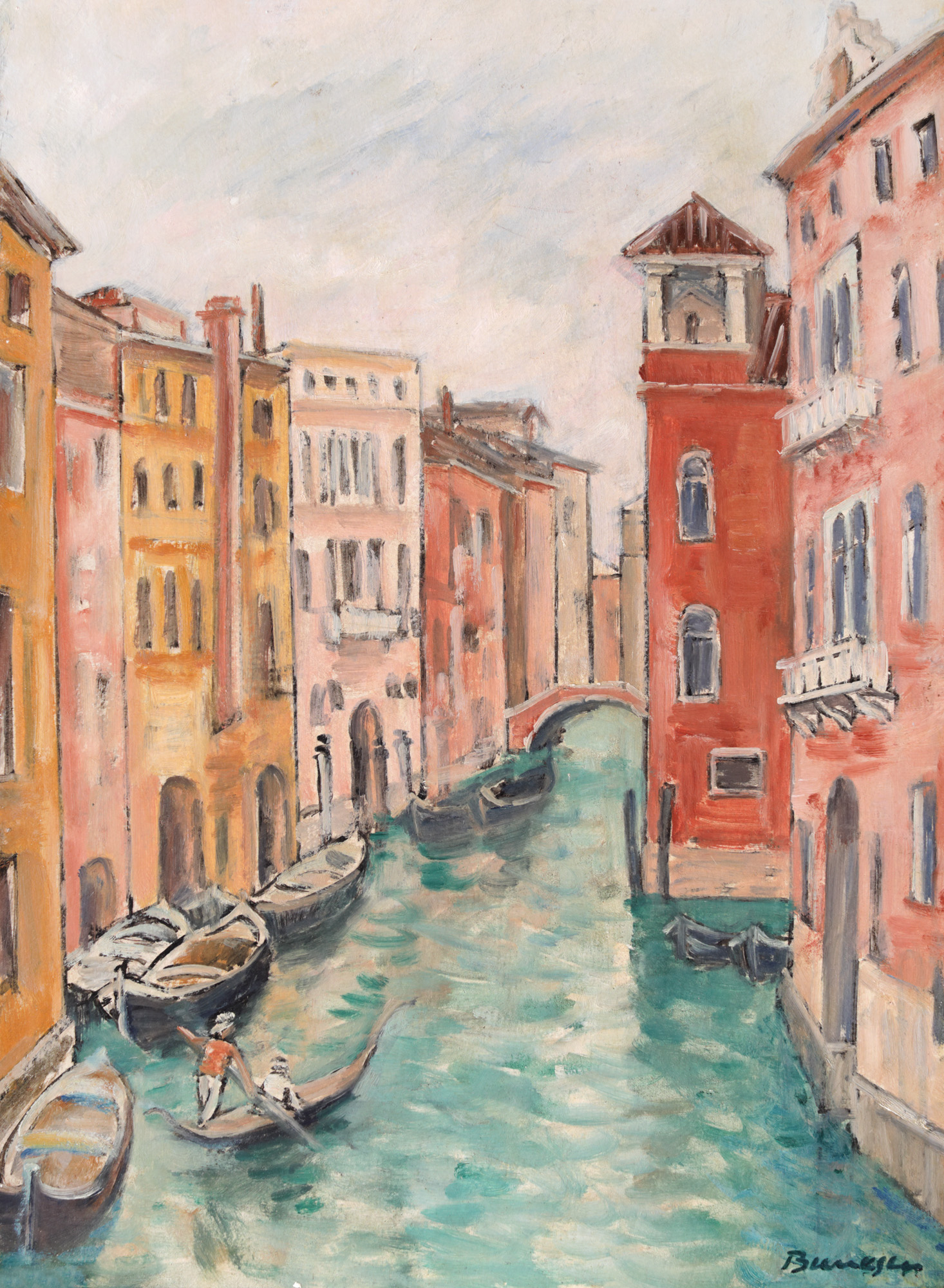
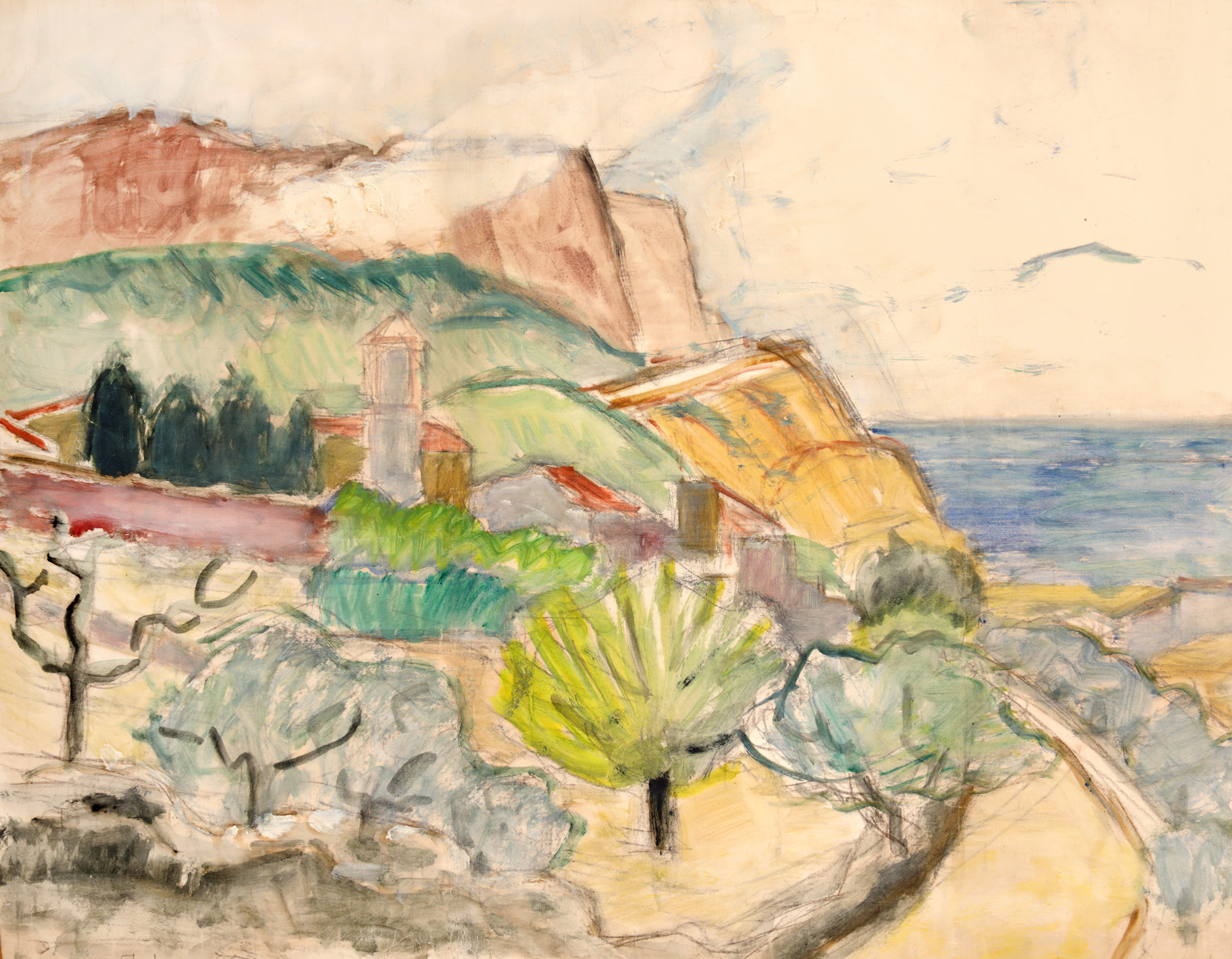
The photos of the lot are informative and indicative, and cannot provide a highly detailed view of the object from all angles. We recommend a careful physical inspection of the lot before bidding.
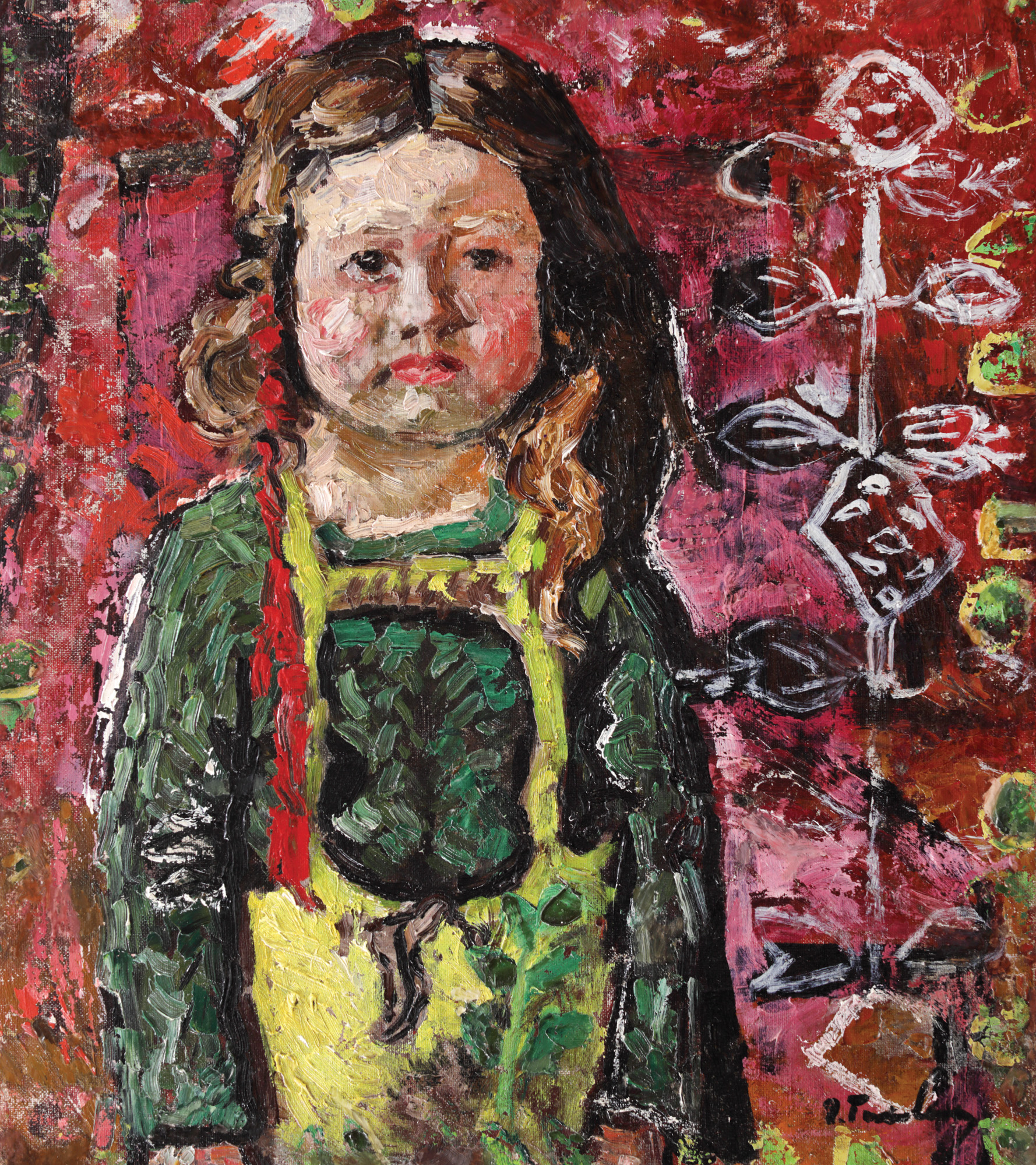
oil on canvas, 53.5 x 46.5 cm, signed bottom right, in black, "I. Țuculescu"
A wild, excessive temperament, circumscribed to the Dionysian model and oneiric fantasies, Ion Țuculescu presented himself as a painter in 1938, during a personal exhibition organized in the building of the Romanian Athenaeum. With the ambition of a self-taught person, he studied freely, "following nature and the masters", as he himself said. He made use of his double vocation, as a biologist and as a creator, to transpose on the canvas actual pages of nature, with the ingenuity of the scientist. He retraced the travels of his predecessors to the East of the Mediterranean and to important Western capitals and thus recovered the visual material necessary for future visual experiments. He was inspired by Petrașcu, Andreescu or Luchian, but he also stopped on an occasional Van Gogh or Gauguin. The basis of his creation was, unyieldingly, the Romanian folk. Țuculescu claimed to be an authentic interpreter of nature, and he excelled particularly in creating landscapes; however, the small cycle dedicated to portraits is also due to a recognition of his pictural qualities. The first such manifestations and attempts to enter the depths of human psychology can be found in the series of self-portraits, where the philosopher-painter discovers himself. Then follow the portraits dedicated to the persons from his inner circle: his grandfather, Dr Papilian, or Gala Galaction. The painter eventually stopped on studies of children’s faces, particularly that of his own daughter, particularly after the year 1940. Țuculescu already evinced a penchant for the expressionist portrait, with notably folkloric insertions. He used contrasting colour discharges and a variety of shades, managing, with his specific mastery, to update the obsolete style of folk art. His visual space, which is endless and having unusual materialisations, is crossed by an artificial luminosity and by a brutal colour scheme, which became a leitmotif. His ornamental concordances are set in accents of black, a nuance he assimilated from Petrașcu's work. He kept recognizable parts of the real space from where he got inspiration, but he changed them according to his own stimuli. Sketched against a pseudo-ornamental background, the small protagonist of this work allows glimpses into the traditional motifs and the fantastic aesthetics of Oltenia’s fairy tales. The floral ornaments preserve the local topography and leave room for hurried brush strokes, which does not prevent the artist from uniformly distributing his strokes over the entire surface of the canvas. The force of the mind is in the foreground, and it is fervently transcribed into the child portrait theme. Țuculescu did not imitatively take over the traits of his models; instead, he proposed a new aesthetic order and a different set of values, which he gradually transferred to his works. He reinterpreted folk elements in a profoundly modernized manner and transferred the biologist's analytic vision in feverish attempts at an exhaustive rendering of frescoes dedicated to man and nature. (D.C.)
For clarifications regarding the bidding procedure, hammer price costs, guarantee, payment, and collection terms for the winning lot, we recommend carefully reading/re-reading the Bidding Regulations.
For additional information regarding the lot and the auction, please contact the Art Consultants Department.