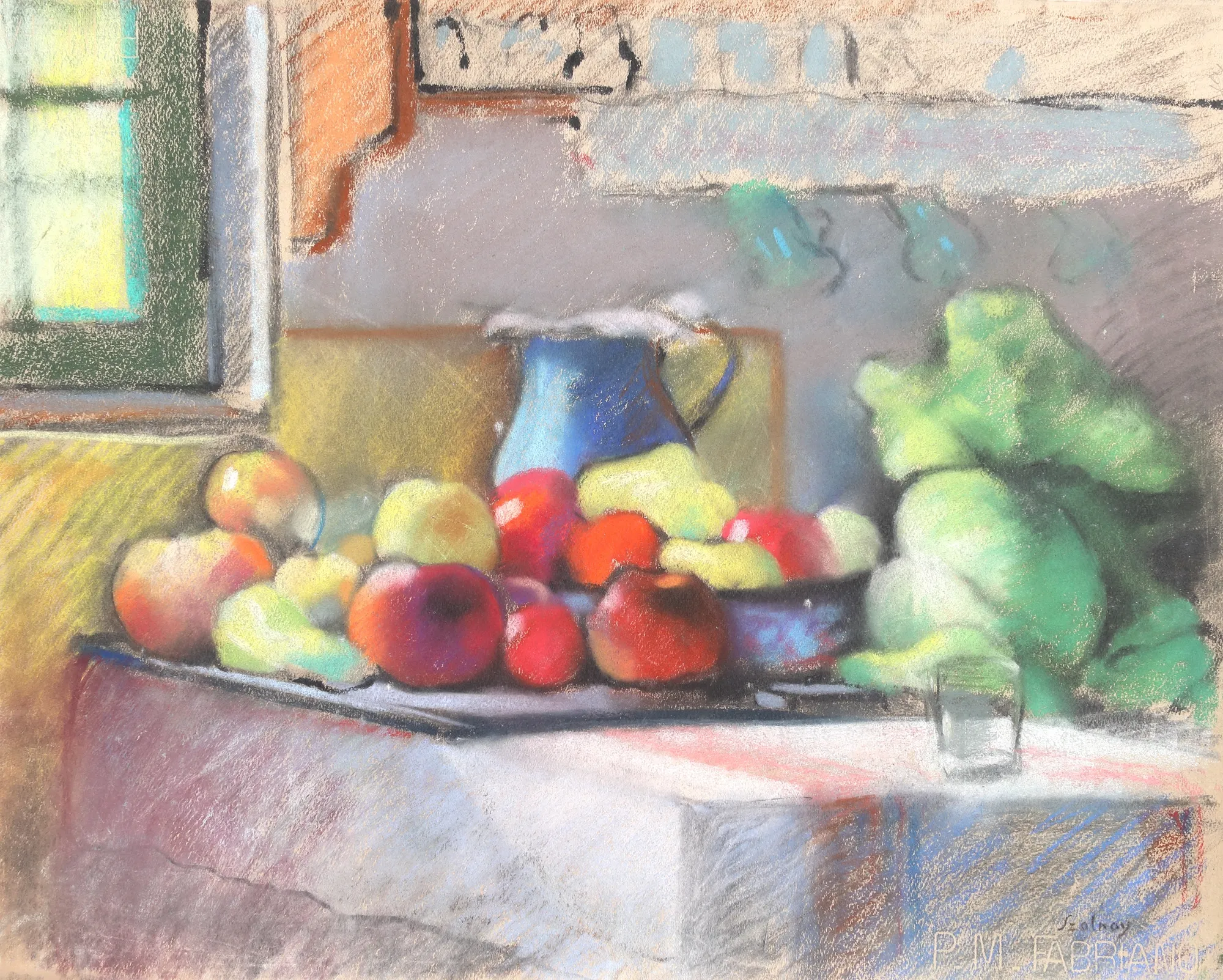
The photos of the lot are informative and indicative, and cannot provide a highly detailed view of the object from all angles. We recommend a careful physical inspection of the lot before bidding.
TONITZA, Nicolae, „Scrieri despre artă”, Ed. Meridiane, București, 1964.
BREZIANU, Barbu, „Tonitza”, Ed. Academiei Republicii Socialiste România, București, 1967.
ȘORBAN, Raoul, „Tonitza”, Ed. Meridiane, București, 1973.
oil on cardboard, 57 x 47.5 cm, 57 Ã 47,5 cm, signed upper right, with brown, "Tonitza"
From the grand theme of the humane, the theme of childhood is found in the repertoire of the artist Tonitza starting in the year 1912, when he created works such as: "Joc de copii" ("Children’s game"), "Cap de fetiță" ("Girl’s head"), "Ticuleana", "Bébé" et al. Later, in 1921, the time of his move to Vălenii de Munte, the childhood theme acquires profound meanings, as the presence of the children around him (Catrina, Petru, Irina, Ticuleana, Țuca, Nineta, Mohor’s Ionel) would give him the chance to perform a genuine exploration of the world of childhood. A new ingression occurs in the period 1925-1926, when he crossed the regions of Făgăraș, Năsăud, and Sâmbăta de Sus. A few years later, in 1934, he roamed the Bicaz Valley and the Neamț region, where he rendered children’s faces in a novel picturesque. In the period 1933-1937, as he travelled through Dobrogea, Tonitza created the cycle of the small Turkish girls, wearing head-dresses and baggy trousers, who he will hold very dear. Keeping the identity of his models secret, we often note on the picture rails of his exhibitions titles such as: "Fata pădurarului" ("Woodman’s daughter"), "Katiușa Lipoveanca", "Fetița olandeză" ("Dutch Girl"), "Copilul florăresei" ("The florist’s child"), "Prințul pribeag" ("Roaming Prince"), "Portret de băiat" ("Portrait of a boy"), "Studiu pentru un paj" ("Study for a footboy"), "Fetiță cu fundă" ("Girl with a bow"), where we can sometimes identify familiar faces. Against grey or carmine backgrounds, decorated with stylized flowers reminding of the old rural carpets, children’s faces have various states of mind; at times joy, at other times wistfulness, curiosity, or dismay, the small beings impress with their entire being and fascinating innocence. Having a propensity for contemplation, the artist removed the academic and the picturesque in favour of a suggestive simplification, giving up on exterior appearance in favour of the states of mind, enriching his artistic repertoire with subjects taken from the humane, to which he dedicated his entire creation. (G.M.)
For clarifications regarding the bidding procedure, hammer price costs, guarantee, payment, and collection terms for the winning lot, we recommend carefully reading/re-reading the Bidding Regulations.
For additional information regarding the lot and the auction, please contact the Art Consultants Department.
By choosing "Accept all cookies" you agree to the use of cookies to help us provide you with a better user experience and to analyse website usage. By clicking "Adjust your preferences" you can choose which cookies to allow. Only the essential cookies are necessary for the proper functioning of our website and cannot be refused
Cookie settings
Our website stores four types of cookies. At any time you can choose which cookies you accept and which you refuse. You can read more about what cookies are and what types of cookies we store in our Confidentiality Policy.
are necessary for technical reasons. Without them, this website may not function properly.
are necessary for specific functionality on the website. Without them, some features may be disabled.
allow us to analyse website use and to improve the visitor's experience.
allow us to personalise your experience and to send you relevant content and offers, on this website and other websites.