
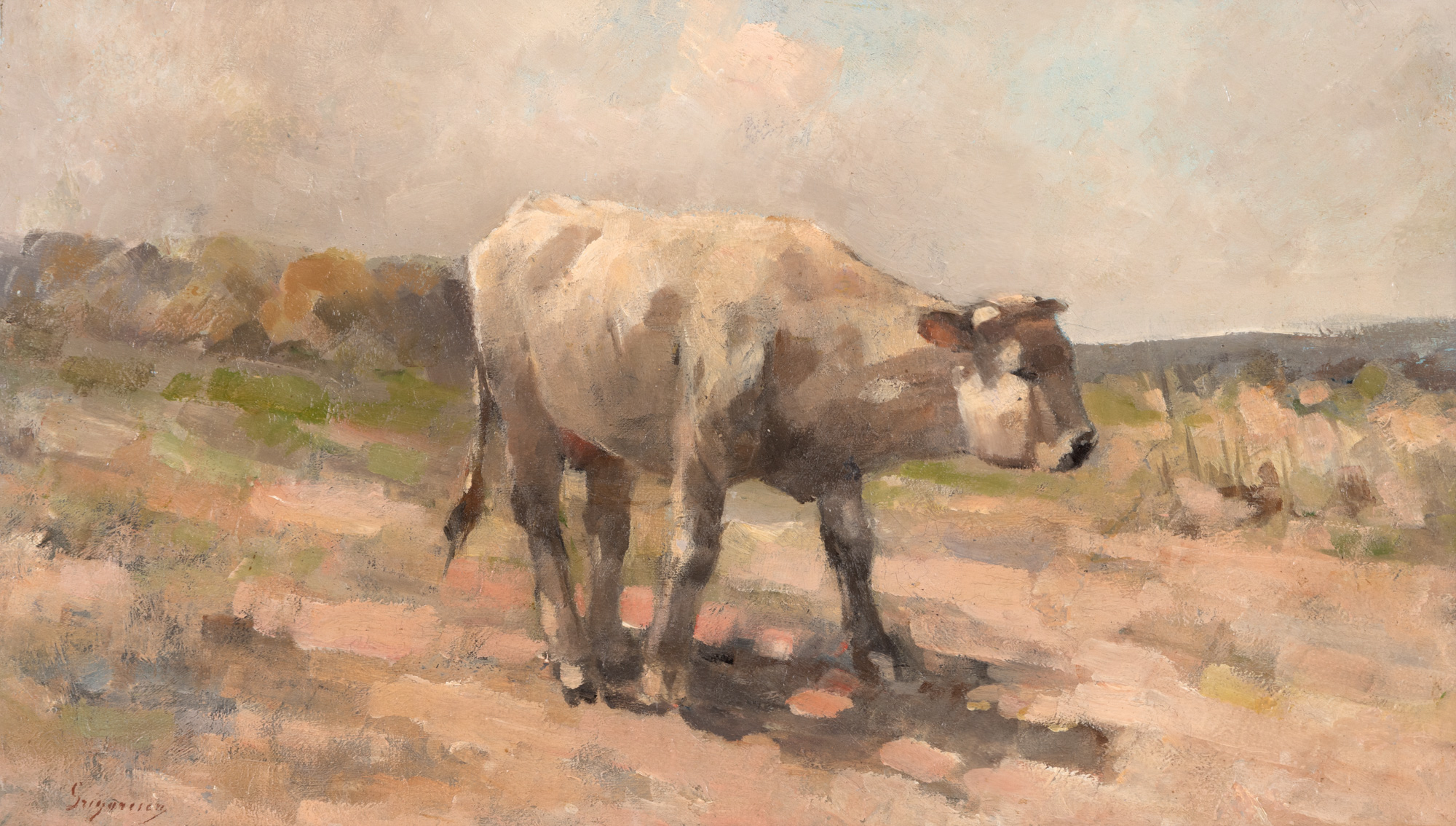
81. Boulean on the road (Snowdrop) [1895-1900]
Estimate
EUR 20.000 - 30.000
Session
Thu, 18 June 2026 19:00
References
Costina Anghel, Mariana Vida, GARM, Repertoire of Modern Romanian Painting. 19th Century, vol. II, letters F-H, second edition, National Art Museum of Romania, Bucharest, 2022. Barbu Brezianu, Nicolae Grigorescu, Ed. Tineretului, Bucharest, 1959. Chantal Georgel, The Forest of Fontainebleau. A natural size workshop [exhibition catalog], Musée d'Orsay, Paris, 2007. Ionel Jianu, V. Beneş, Testimonies about N. Grigorescu, critical anthology, State Publishing House for Literature and Art, Bucharest, 1957. Remus Niculescu, Nicolae Grigorescu, Catalog of, Art Museum of the RPR, Bucharest, 1957. G.Oprescu [- R.Niculescu], N.Grigorescu, vol.I, II, Meridiane Publishing, Bucharest, 1961,1962. Francisc Şirato, Grigoresco, Editions de la connaissance, Brussels, 1938. A.Vlahuţă, The painter N.I.Grigorescu. His life and work, edition of the Casa Şcoalelor, Socec & Co Workshops, Bucharest, 1910.
Dimensions
width 46 cm, height 27 cm
Description
oil on canvas, signed lower left, in red, "Grigorescu"
Dating
1895-1900
ADDITIONAL INFORMATION
For clarifications regarding the bidding procedure, hammer price costs, guarantee, payment, and collection terms for the winning lot, we recommend carefully reading/re-reading the Bidding Regulations.
For additional information regarding the lot and the auction, please contact the Art Consultants Department.
Detalii
ADDITIONAL INFORMATION
For clarifications regarding the bidding procedure, hammer price costs, guarantee, payment, and collection terms for the winning lot, we recommend carefully reading/re-reading the Bidding Regulations.
For additional information regarding the lot and the auction, please contact the Art Consultants Department.
References
Costina Anghel, Mariana Vida, GARM, Repertoire of Modern Romanian Painting. 19th Century, vol. II, letters F-H, second edition, National Art Museum of Romania, Bucharest, 2022. Barbu Brezianu, Nicolae Grigorescu, Ed. Tineretului, Bucharest, 1959. Chantal Georgel, The Forest of Fontainebleau. A natural size workshop [exhibition catalog], Musée d'Orsay, Paris, 2007. Ionel Jianu, V. Beneş, Testimonies about N. Grigorescu, critical anthology, State Publishing House for Literature and Art, Bucharest, 1957. Remus Niculescu, Nicolae Grigorescu, Catalog of, Art Museum of the RPR, Bucharest, 1957. G.Oprescu [- R.Niculescu], N.Grigorescu, vol.I, II, Meridiane Publishing, Bucharest, 1961,1962. Francisc Şirato, Grigoresco, Editions de la connaissance, Brussels, 1938. A.Vlahuţă, The painter N.I.Grigorescu. His life and work, edition of the Casa Şcoalelor, Socec & Co Workshops, Bucharest, 1910.
Dimensions
width 46 cm, height 27 cm
Description
oil on canvas, signed lower left, in red, "Grigorescu"
Dating
1895-1900
Similar lots