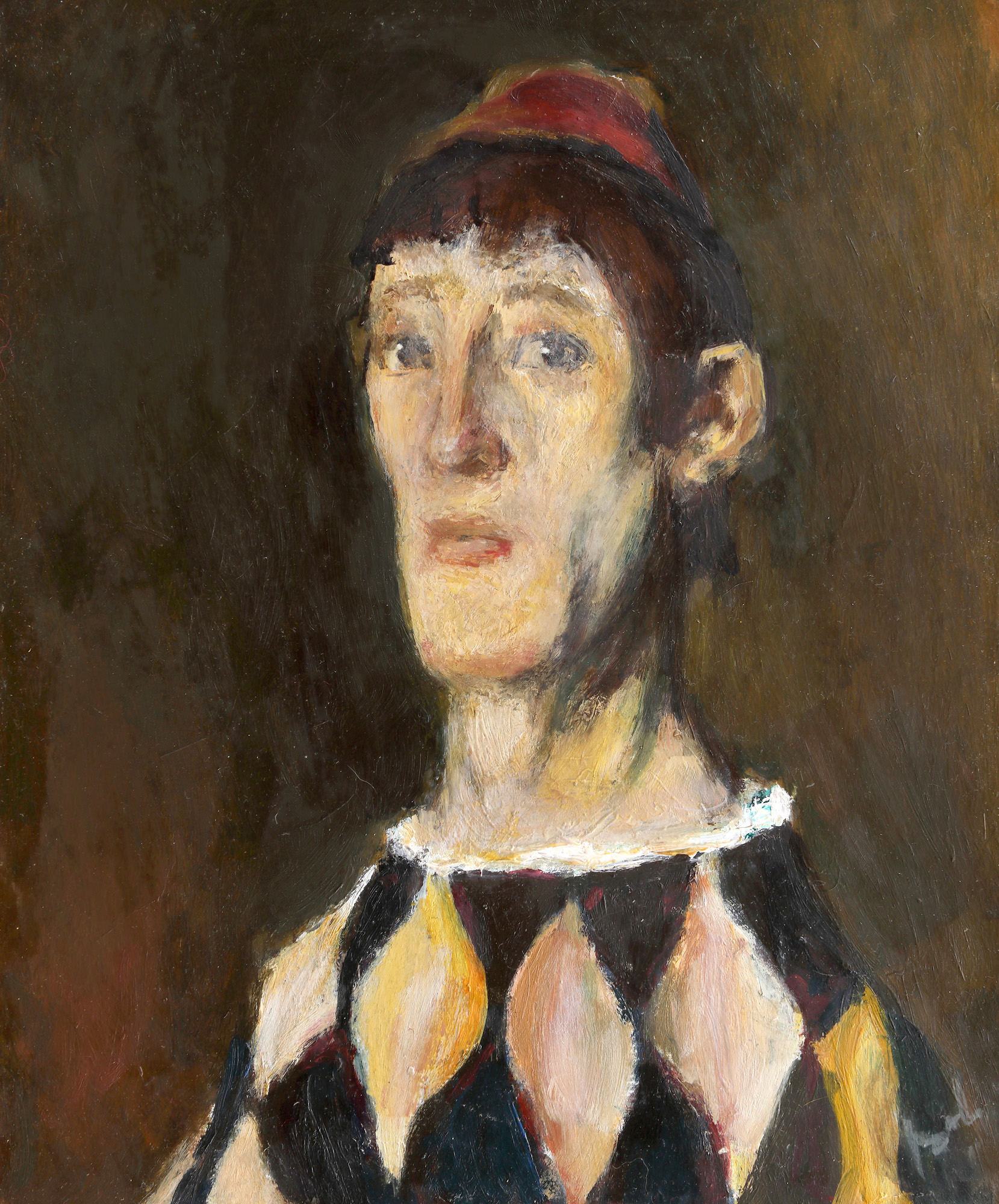

38. Harlequin [cca. 1970]

1906, Craiova - 1997, Bucureşti

Estimate

EUR 8.000 - 15.000

Sold

EUR 12.000

Session

Tue, 20 June 2023 19:00

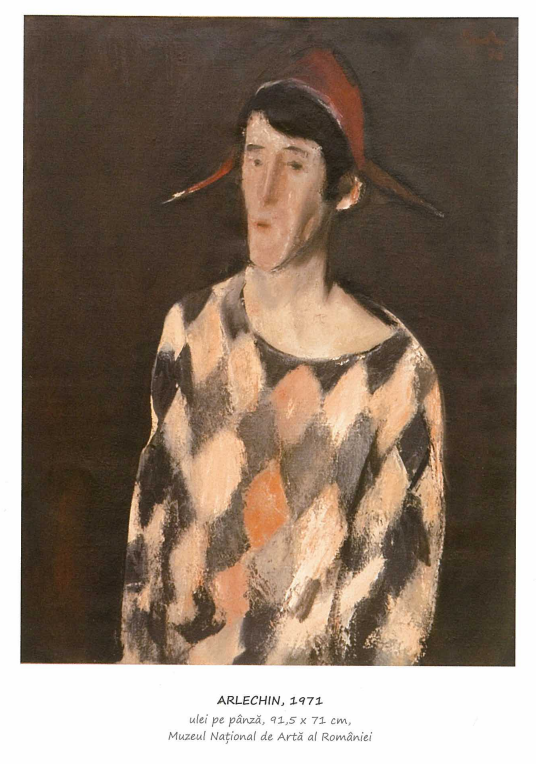
The childhood spent in his father's workshop, painter Gheorghe Baba, offers Corneliu Baba the precepts of academic training and the peculiarities of classical instruction, in which the student learns to proportion and value the subject by working directly after the model. He manifests an apparent interest for Iser's expressionist constructions and for the harshness in Pallady's drawings. The predilection for human figure acquires an unpredictable and spectacular dynamic, especially in portraits. The realism specific to the artist's temperament extends also in his work. The origins of the manifestations in the genre of portraiture are revealed early on: In high school, Corneliu Baba was known as "the city's portraitist": most of the notable personalities of Caransebeș posed for him. He gradually creates self-portraits, portraits of close friends or famous names such as: Tonitza, Enescu, Sadoveanu and Arghezi, or dwells on particular subjects: the mad king, peasants or the harlequin. The physiognomy, the face and inner features of the characters stand out in Baba as a vehicle of human psychology. The artist consecrates symbolical, archetypes such as the harlequin or the mad king. For Corneliu Baba, the notion of realism gets a much broader sense and has the artist's abilities to use imagination and the reserves of the psychic fund. He heads, thus, to the carnival figure, from the ranks of the Commedia dell'Arte. The harlequin got, over time, a central place in modern painting. We have followed his path in the works of Picasso, Tonitza, and now we see him as an "anonymous friend" of Corneliu Baba, as the artist himself presents him. The harlequin appears rather in the embodiment of a sad comedy, disguised as colourful transvestites. He is melancholic and crippled by catastrophe and deception, but gives the artist a wide range of chromatic interpretations and compositional alternations. The harlequin idea is not reduced anymore to a specific character, as with other portraits of the artist, but makes reference to whole typology. The model in the present work becomes, thus, a moral compass and a meditation upon human condition. Corneliu Baba depicts, by this theme, the ambiguity of existence, the dramatic dimension and the iconography of the cask which considerably mitigates the humanity of the characters.

References

ȘUȘARĂ, Pavel, "Corneliu Baba", Monitorul Oficial Publishing House, Bucharest, 2013.

Dimensions

width 30 cm, height 39 cm

Description

oil on cardboard, signed bottom right, in grey, "Baba"

Research information

A version of the work is reproduced in the "Corneliu Baba. A European Collection" catalogue, Artmark Galleries, 2018, at page 17. A version of the work is reproduced in "Confesiuni și Jurnale" ("Confessions and Journals"), 2nd volume: 1965 - 1977, Corneliu Baba, National Art Museum of Romania, Bucharest, 2020, on page 147.

Dating

cca. 1970

ADDITIONAL INFORMATION

For clarifications regarding the bidding procedure, hammer price costs, guarantee, payment, and collection terms for the winning lot, we recommend carefully reading/re-reading the Bidding Regulations.

For additional information regarding the lot and the auction, please contact the Art Consultants Department.
Similar lots