
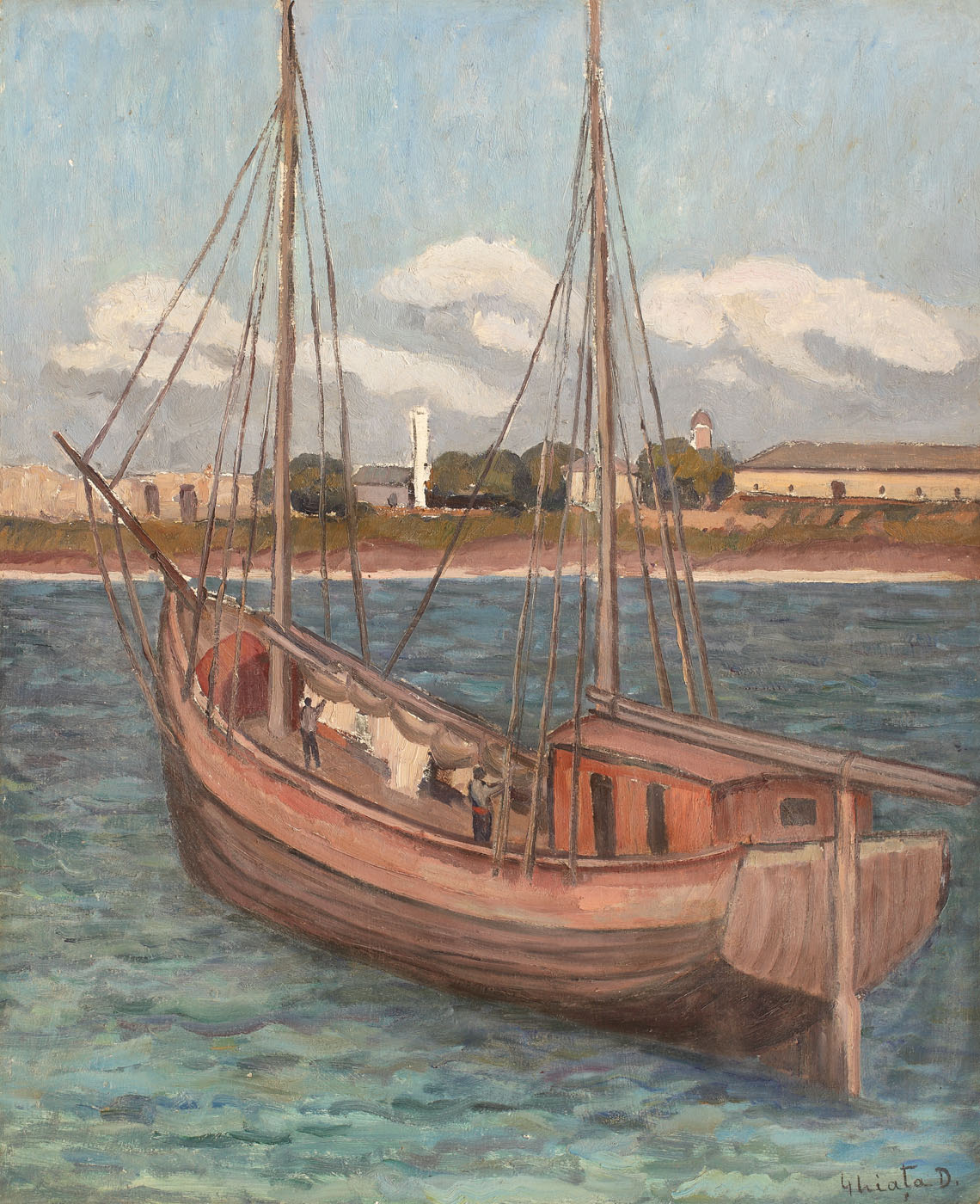

42. Surfboat in Mangalia [first half of the 20s]
Estimate
EUR 5.000 - 8.000
Session
Wed, 23 May 2018 19:30
References
BACONSKY, Anatol E., "Dumitru Ghiaţă", Ed. Meridiane, 1966
PREUTU, Marina, "Ghiață", Ed. Meridiane, București, 1977
Dimensions
width 49.5 cm, height 60.5 cm, custom 49,5x60,5
Description
oil on cardboard, signed lower right, in pencil, "Ghiaţă D."
Dating
first half of the 20s
ADDITIONAL INFORMATION
For clarifications regarding the bidding procedure, hammer price costs, guarantee, payment, and collection terms for the winning lot, we recommend carefully reading/re-reading the Bidding Regulations.
For additional information regarding the lot and the auction, please contact the Art Consultants Department.
Detalii
ADDITIONAL INFORMATION
For clarifications regarding the bidding procedure, hammer price costs, guarantee, payment, and collection terms for the winning lot, we recommend carefully reading/re-reading the Bidding Regulations.
For additional information regarding the lot and the auction, please contact the Art Consultants Department.
References
BACONSKY, Anatol E., "Dumitru Ghiaţă", Ed. Meridiane, 1966
PREUTU, Marina, "Ghiață", Ed. Meridiane, București, 1977
Dimensions
width 49.5 cm, height 60.5 cm, custom 49,5x60,5
Description
oil on cardboard, signed lower right, in pencil, "Ghiaţă D."
Dating
first half of the 20s
Similar lots