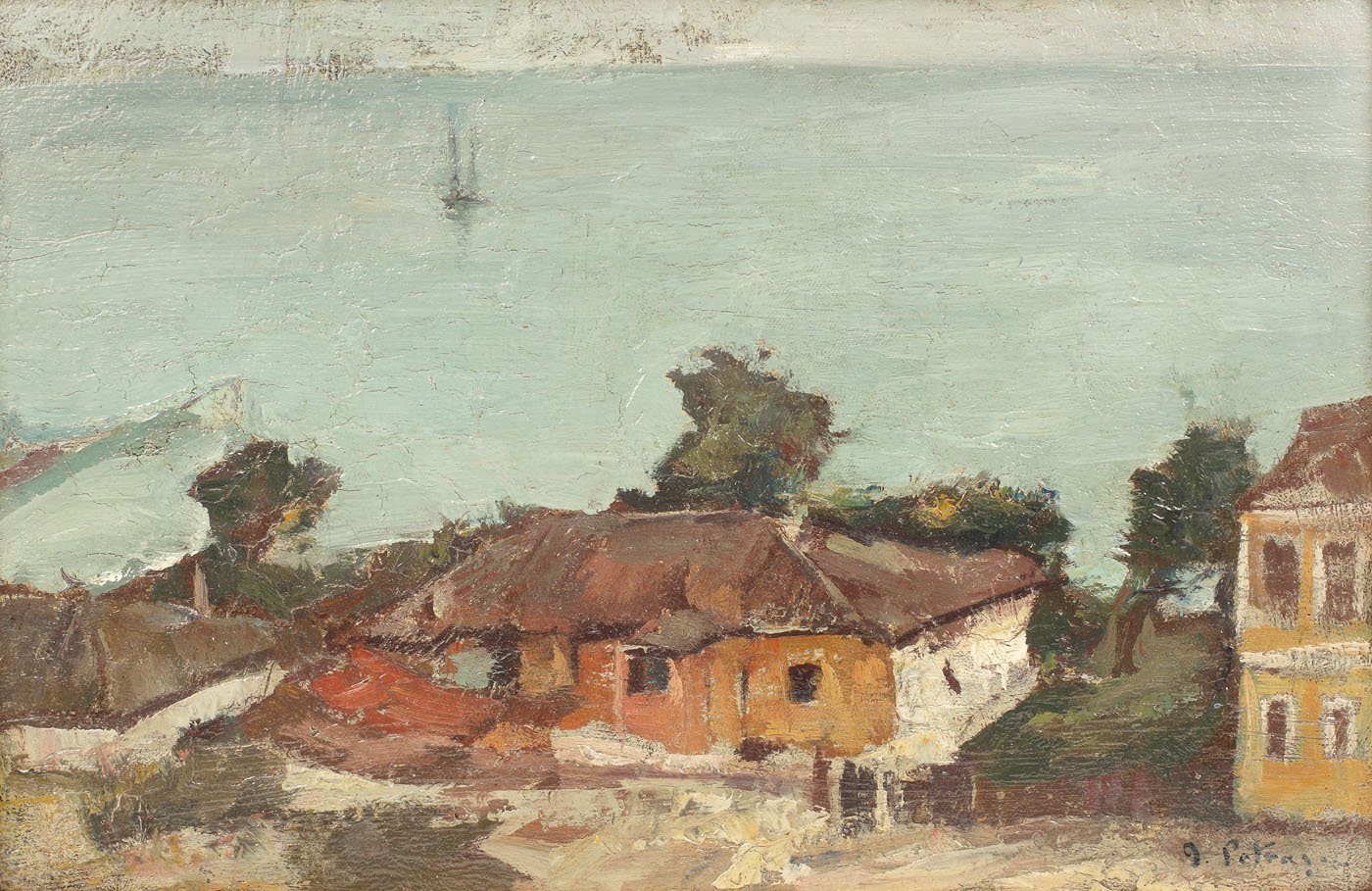

The photos of the lot are informative and indicative, and cannot provide a highly detailed view of the object from all angles. We recommend a careful physical inspection of the lot before bidding.
Over the course of his decades of activity, Iser always worked on presenting the human types, and even if the social spectrum from which he chose his models is quite extensive, his power of observing specific features always remained sharp. With his final return to the country, which happened in 1934, Iser's work opened a new representative aesthetic chapter. At least in terms of compositions with characters, in portraits or interiors, the painter began to perfect more and more often the presented human instances. The shapes appear more individualised and, whether his paintings are about odalisques, harlequins or peasants, the motif is being purged, the character becoming a central, unique element. In this statement of composition personification, the characters are brought to the forefront, to the point of filling the whole frame. If we take a careful look at the entire human picture that Iser obtained over the decades, we can see a universal feature of the presented characters. Whether it is Tatar families in Dobrogea, or circus artists, ballerinas, peasants or harlequins, regardless of the technique he used, the characters wear their apathetic face, of controlled sadness, or rather an assumed resignation, very often a contemplative one.
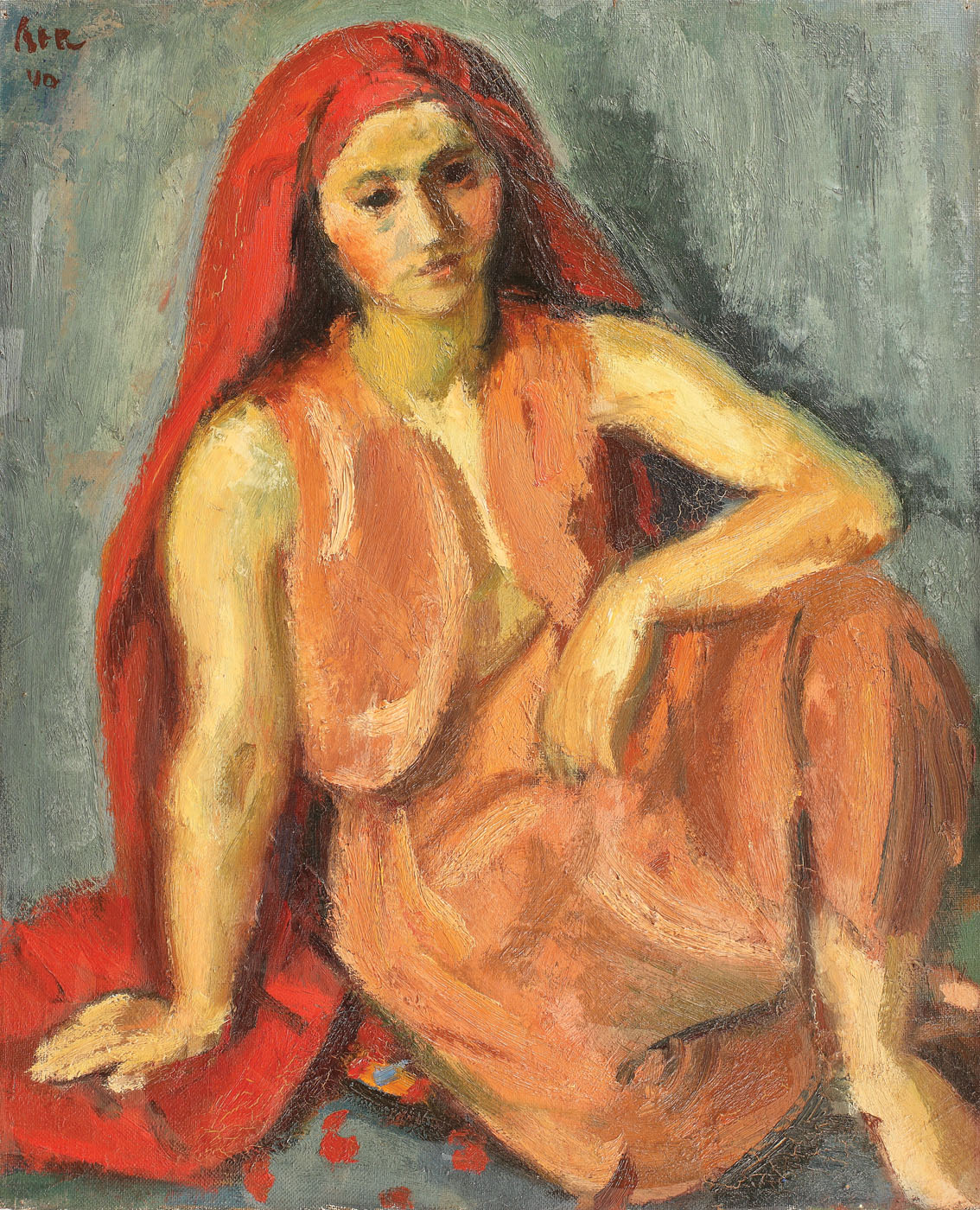
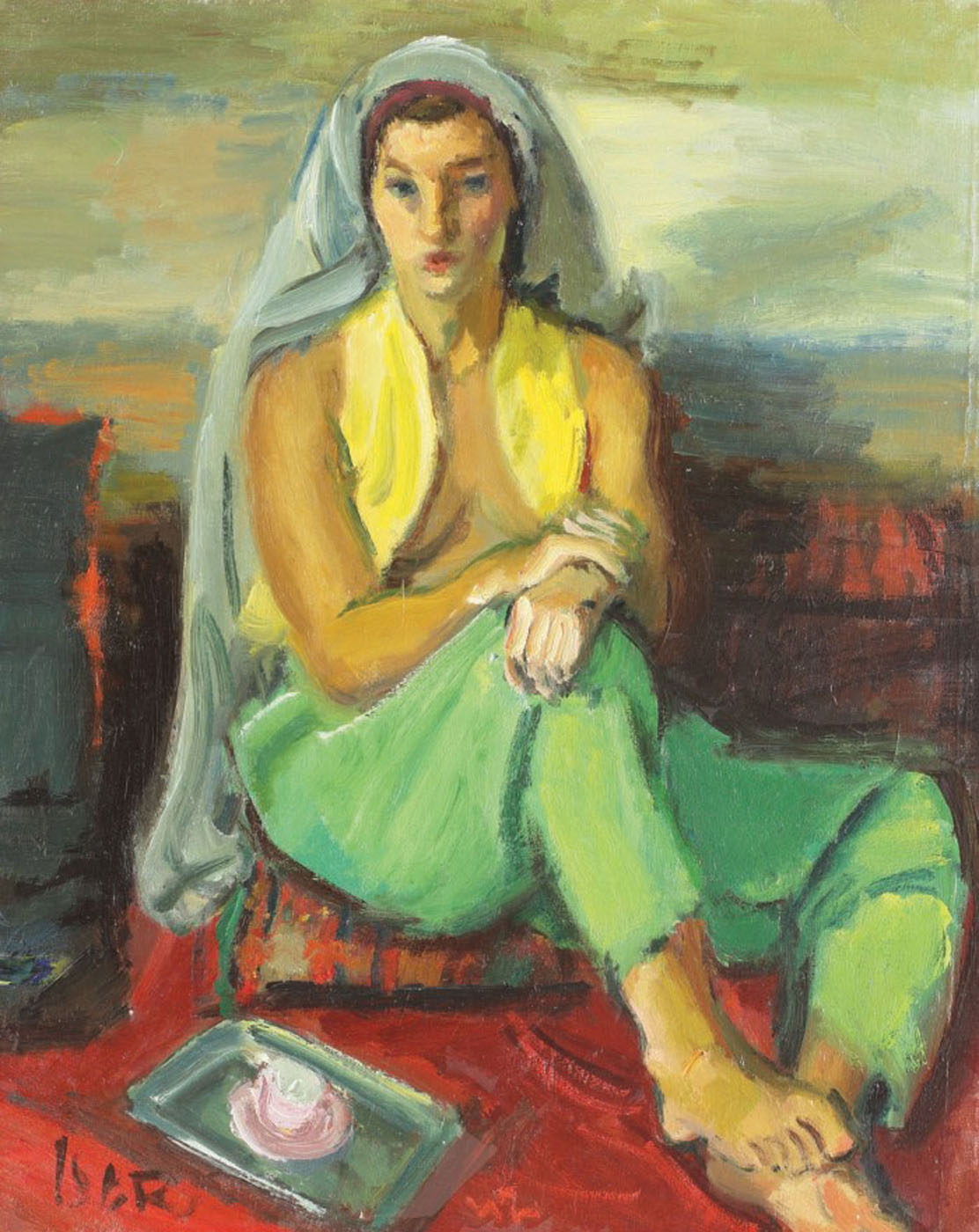
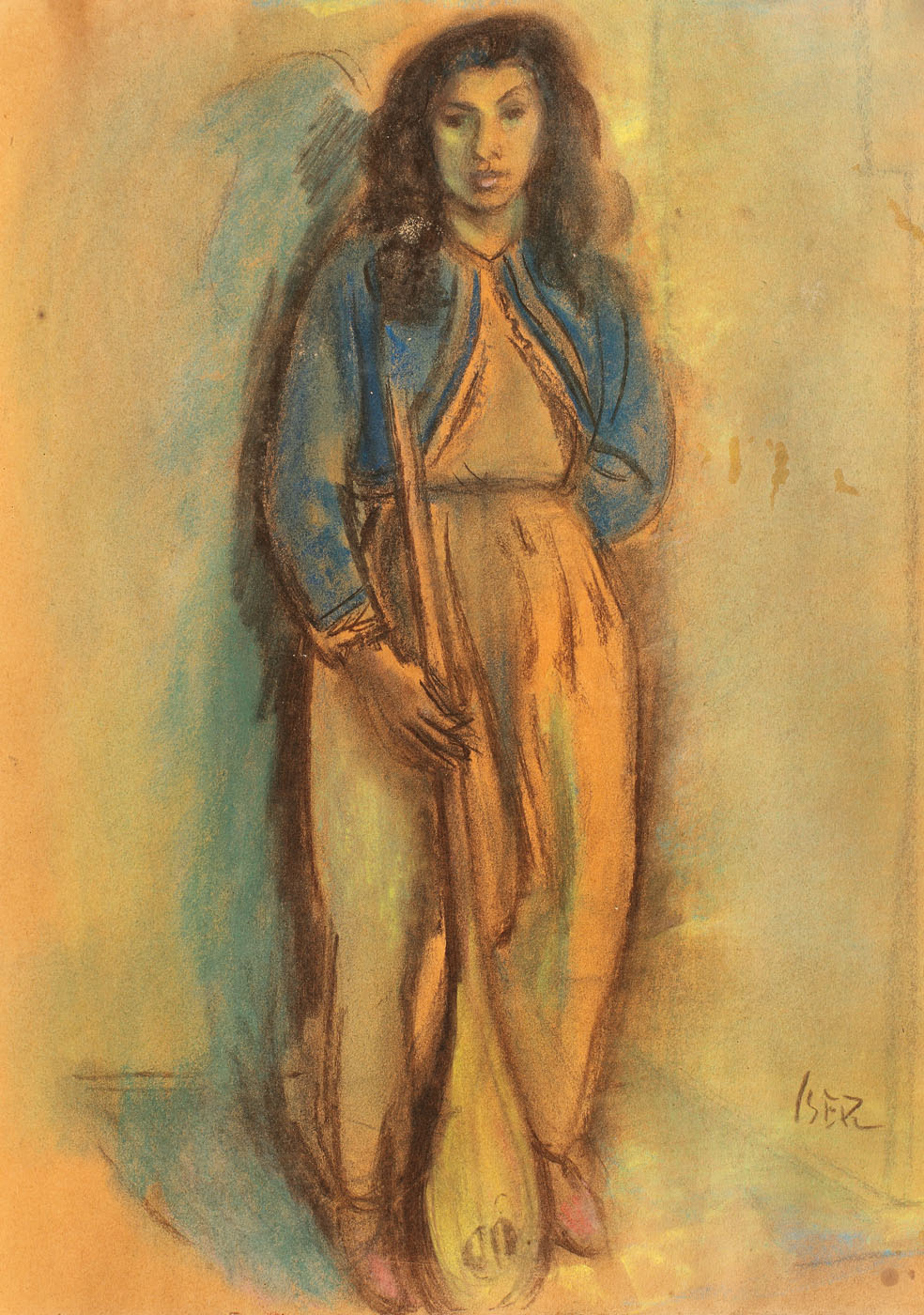
Iser’s female typology, regardless of the subject, was not marked by delicacy, but on the contrary, his women have a robust structure, their features are harsh, and their sensuality resides in their glance and in an intrinsic attitude. The Oriental woman has transplanted herself on this specific vision, through the hardness caused by the living environment and the social status. His odalisques, with salwars and vests, lying among pillows or musical instruments, seem to show the reason for the painter's expressionist discourse, both through colour and the explored feeling.
Dimensions
width 38 cm, height 45.5 cm, custom 38x45,5
Description
oil on canvas, signed and dated upper left, in brown, "ISER, (19)40"
ADDITIONAL INFORMATION
For clarifications regarding the bidding procedure, hammer price costs, guarantee, payment, and collection terms for the winning lot, we recommend carefully reading/re-reading the Bidding Regulations.
For additional information regarding the lot and the auction, please contact the Art Consultants Department.
Detalii
Over the course of his decades of activity, Iser always worked on presenting the human types, and even if the social spectrum from which he chose his models is quite extensive, his power of observing specific features always remained sharp. With his final return to the country, which happened in 1934, Iser's work opened a new representative aesthetic chapter. At least in terms of compositions with characters, in portraits or interiors, the painter began to perfect more and more often the presented human instances. The shapes appear more individualised and, whether his paintings are about odalisques, harlequins or peasants, the motif is being purged, the character becoming a central, unique element. In this statement of composition personification, the characters are brought to the forefront, to the point of filling the whole frame. If we take a careful look at the entire human picture that Iser obtained over the decades, we can see a universal feature of the presented characters. Whether it is Tatar families in Dobrogea, or circus artists, ballerinas, peasants or harlequins, regardless of the technique he used, the characters wear their apathetic face, of controlled sadness, or rather an assumed resignation, very often a contemplative one.
Iser’s female typology, regardless of the subject, was not marked by delicacy, but on the contrary, his women have a robust structure, their features are harsh, and their sensuality resides in their glance and in an intrinsic attitude. The Oriental woman has transplanted herself on this specific vision, through the hardness caused by the living environment and the social status. His odalisques, with salwars and vests, lying among pillows or musical instruments, seem to show the reason for the painter's expressionist discourse, both through colour and the explored feeling.
ADDITIONAL INFORMATION
For clarifications regarding the bidding procedure, hammer price costs, guarantee, payment, and collection terms for the winning lot, we recommend carefully reading/re-reading the Bidding Regulations.
For additional information regarding the lot and the auction, please contact the Art Consultants Department.
Dimensions
width 38 cm, height 45.5 cm, custom 38x45,5
Description
oil on canvas, signed and dated upper left, in brown, "ISER, (19)40"