

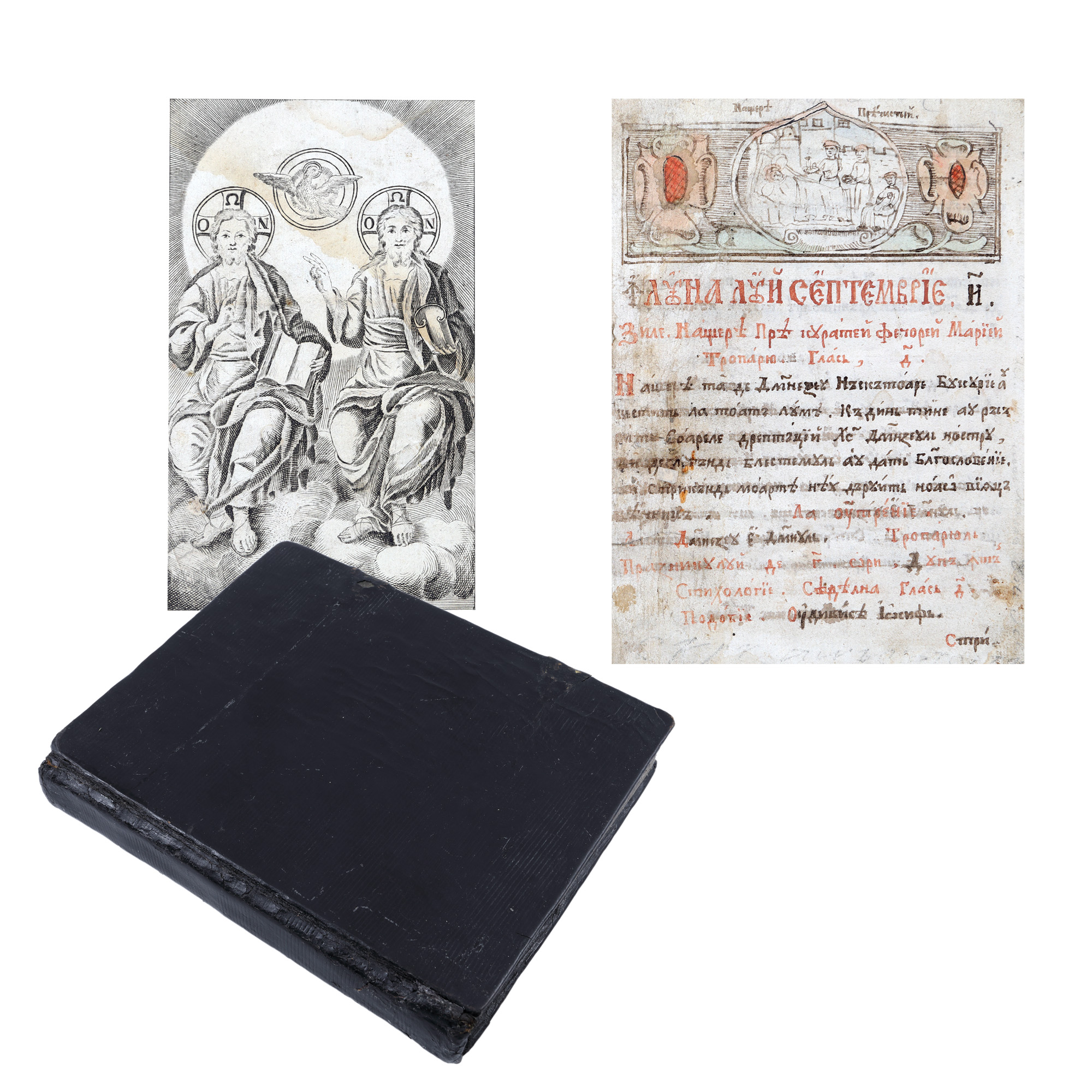
11Т. Manuscript "Festal Menaion Miniature", possibly by Teacher Ioan from Hălmagiu, approx. 1750-1780, rare piece, collector's item
The photos of the lot are informative and indicative, and cannot provide a highly detailed view of the object from all angles. We recommend a careful physical inspection of the lot before bidding.
11Т. Manuscript "Festal Menaion Miniature", possibly by Teacher Ioan from Hălmagiu, approx. 1750-1780, rare piece, collector's item
Starting price:
EUR 900
Sold
EUR 1.800
22 x 18 cm
Research information
The Halmagiu Fair is located in the south of the Cris Countries, in the Zarand region, not far from Tebea, being one of the renowned settlements of the Apuseni Mountains area, especially through the voivodal foundation of the fifteenth century and the knightly foundation of the eighteenth century, monuments adorned with murals of inestimable value. Teacher Ion from Halmagiu lived and worked, from the middle of the eighteenth century, in several villages in the Halmagiu region, being among the leaders of the national movement carried out for the defense of the Orthodox faith. He was professionally a teacher, but a teacher with scholarly concerns, being, alongside teacher Ion Muncăceanu (one of his manuscripts is exhibited in the National History Museum in Bucharest) and deacon Alexandru Râmniceanu (known to have peddled books and copied the "Pravila of Govora"), one of the notable copiers from western Transylvania. There is evidence that Teacher Ion from Hălmagiu and Ioan Muncăceanu even worked together on the writing of educational and reading books, such as the miscellaneous codex from 1775, which includes homilies, apocalyptic literature, hagiographies and even a fragment of the popular novel "Archirie and Anadan" (the text is kept in the Museum of the Archbishopric of Arad). Today we know from Teacher Ion a number of ten handwritten texts, the most important being Homilies to Dead People (kept in the Library of the Romanian Academy in Bucharest), the Codex of 1775 (kept in the Museum of the Archbishopric of Arad), a Ceaslov (kept in the Library of the Romanian Patriarchy) and the Miniature Minea. We do not know if Teacher Ion from Halmagiu participated in Horea's uprising. A document from those days certifies that, at the "fire of the burnings" in Hălmagiu, the whole people, young and old, participated. However, his testimony remains full of meaning, written on the Gospel of the village of Budești, near Hălmagiu, as a reminder, that in "the year 1784, in the month of December, the day 6, there was an uprising among our people, led by Horea and his colleagues, Crisan Giurgiu and Cloșca Ioan. They burnt the Lords' courtyards and killed everyone. And before the uprising there was and was seen a large sign (comet - ed.), like a haystack, wandering at noon and seen throughout the country, Emperor being Josef II".
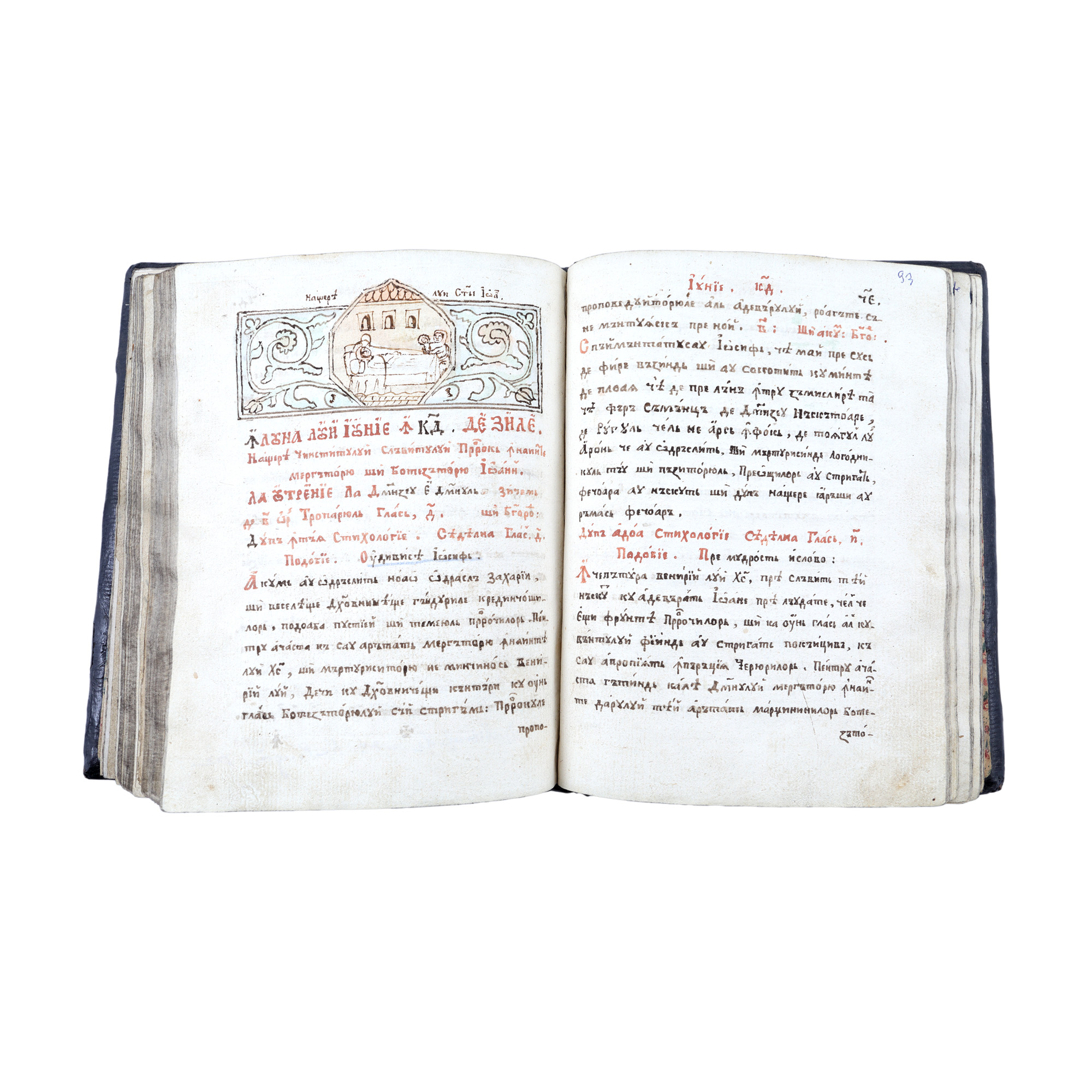
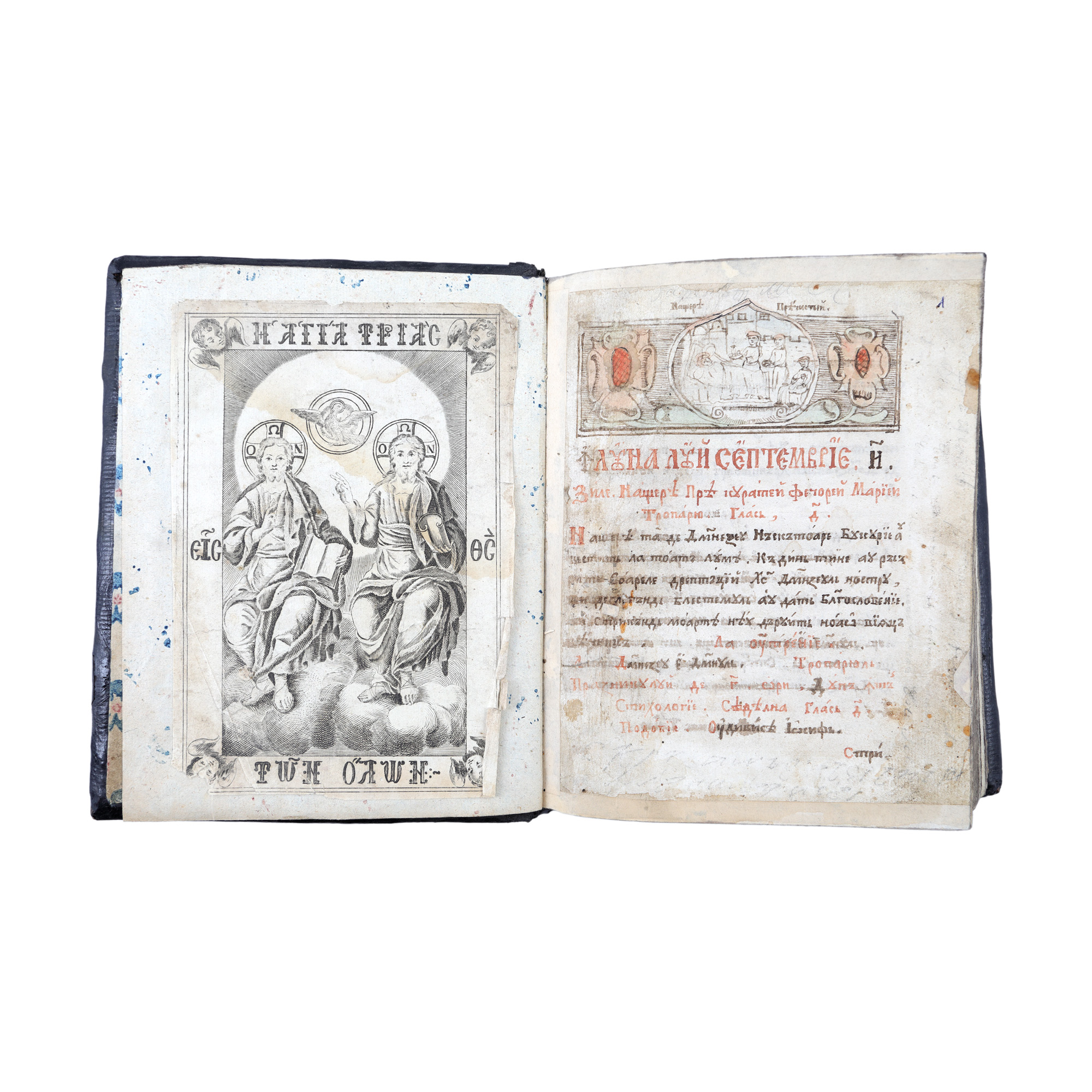
The mine was copied between the years 1750-1780 possibly by the teacher Ioan from Hălmagiu. The volume has a black, unadorned leather binding.
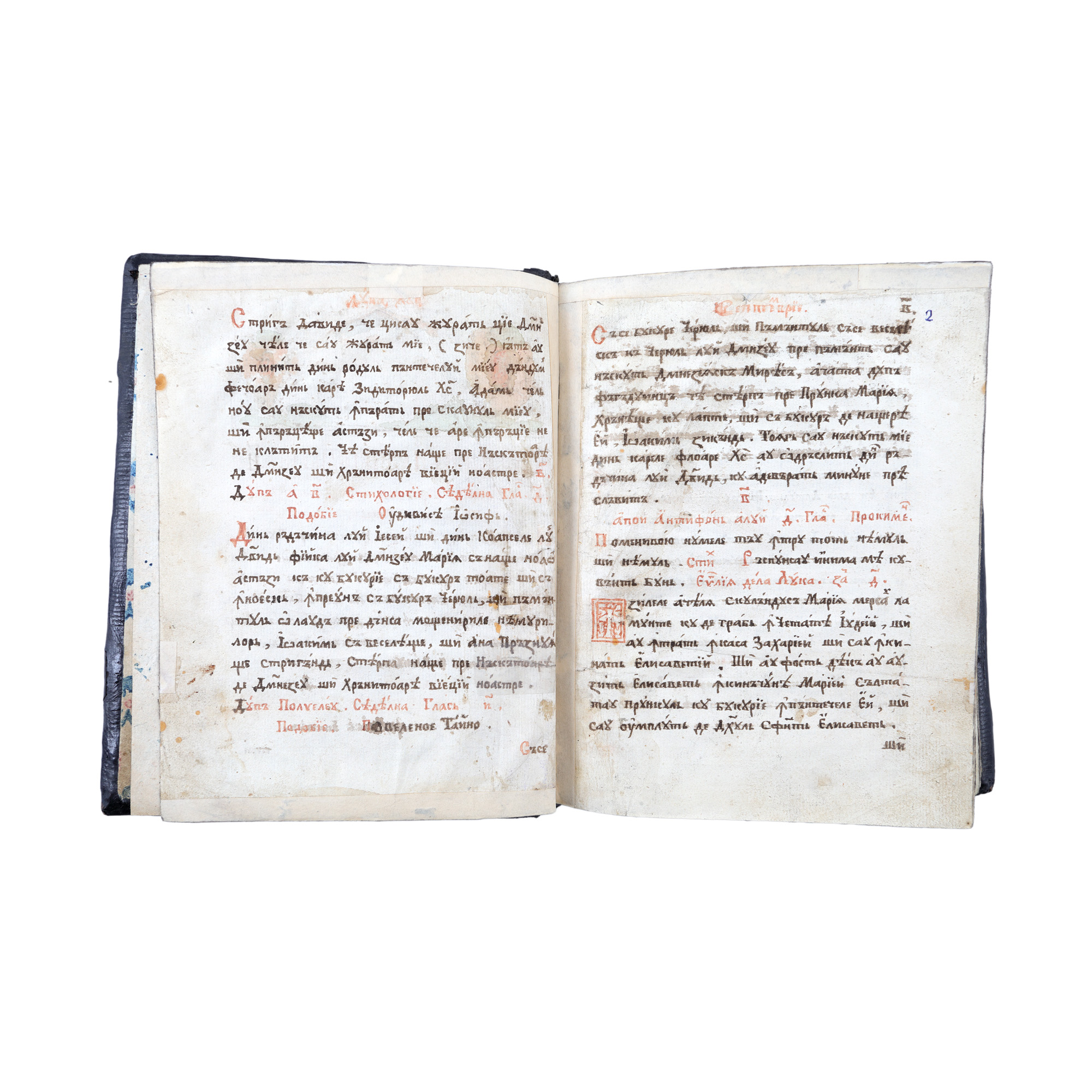
The pagination indicates 116 pages, numbered in Cyrillic numerals by the scribe. The codex includes the most important texts of the Menaion from September to August, teachings written in one column, in black and red ink.
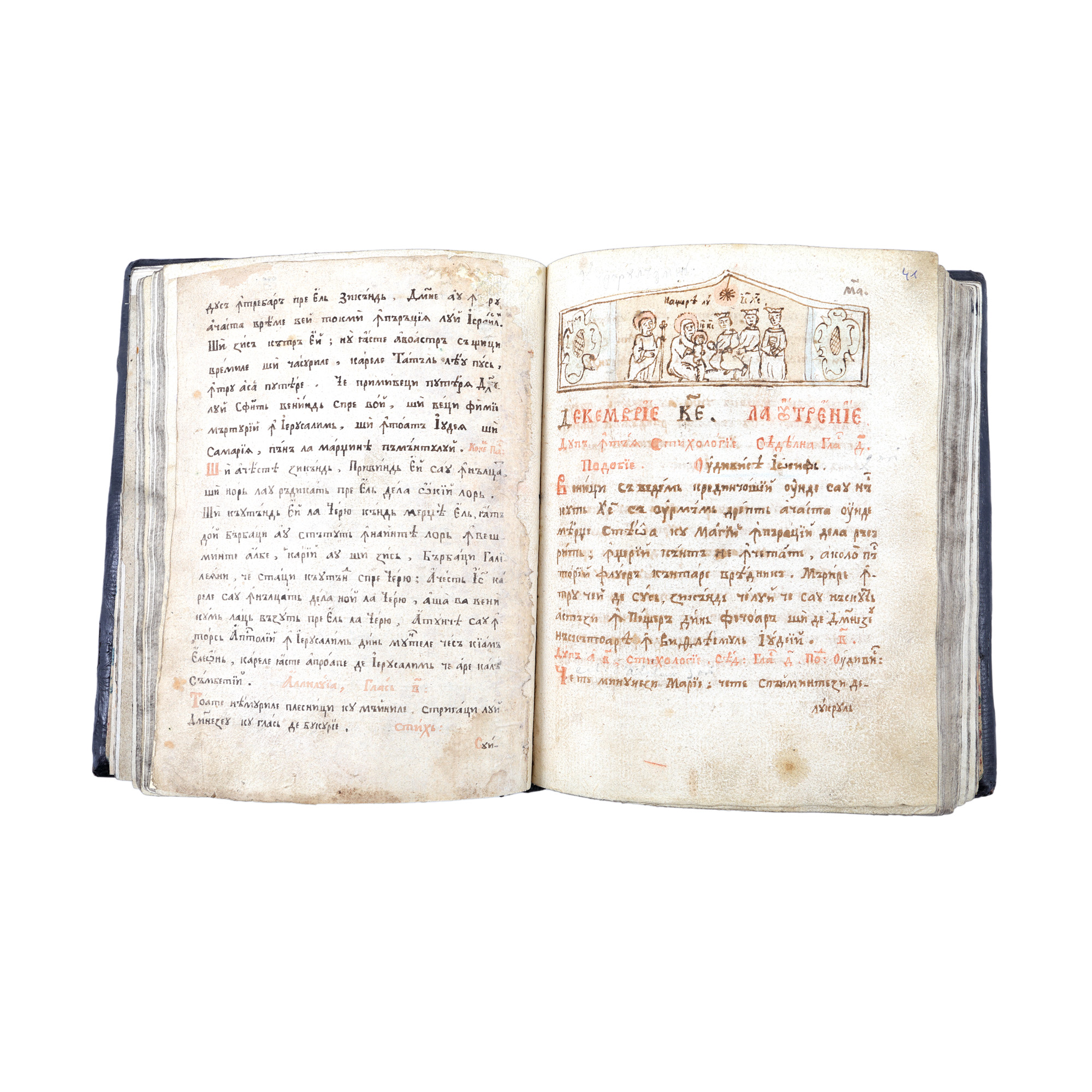
Only some parts of the titles have been rendered in Slavonic, the rest of the book is written in Romanian. From a graphic point of view, this volume is one of the most important artistic achievements of the scribe. Interestingly, we note the application of illustration as a frontispiece. At the head of the teachings of writing, Teacher Ioan drew scenes rendered after engravings and from imagination: The Birth of the Precise, medallion framed by vines (p.1), The Day of the Cross, medallion between vines (p. 6), St. Paraskevi (p. 13), St. Dimitrie (p. 18), Archangel Michael (p. 24), Entrance to the Church (p. 30), St. Nicholas (p. 34), Nativity of Jesus (p. 41), The Baptism (p. 48), The 40 Martyrs (p. 53), Annunciation (p. 59), Palm Sunday, medallion between Phoenixes (p. 65), Resurrection of the Lord (p. 70), St. George (p. 78), Ascension of the Lord (p. 84), Pentecost (p. 88), St. Peter and Paul (p. 103), Lord's Transfiguration (p. 109), and Dormition of Precise (p. 114).
We highlight the portrait of St. Paraskevi (rendered as in the old engravings and glass icons), of St. Arch. Mihail, the scene with the adoration of the magi, but especially the scene Dormition of the Mother of God (at p. 114), celestial and earthly ceremony equally.
All these drawings were miniaturized with brick red, yellow, blue, and green, with special artistic skill and clear inspiration, deeply folkloric, true to the art of icon painters and engravings from Hășdate, which preceded the art of renowned Picu Pătruț from Săliștea Sibiului.
Evidence that this codex was heavily used over time are numerous notes due to readers. A note from 1887 refers to the great flood in Criș River valley, and another one, from later years, to the invasion of bird flies (which caused animal death), which, in past centuries, crossing over the Danube, reached the center of Transylvania.
About the manuscripts of Teacher Ioan from Hălmagiu, over the past decades, wrote theologians Dumitru Fecioru and Vasile Frențiu, bibliologists like Gabriel Ștrempel (in the Catalog of Romanian Manuscripts from the Romanian Academy Library) and Florian Dudaș (in the corpus about old Romanian manuscripts from Crișana).
For clarifications regarding the bidding procedure, hammer price costs, guarantee, payment, and collection terms for the winning lot, we recommend carefully reading/re-reading the Bidding Regulations.
For additional information regarding the lot and the auction, please contact the Art Consultants Department.
SESSION
Brought to you by