
Meniu

English
Gifts

Rare Books, Documents, Photography & Posters

Collectible Religious Art

Asian Art, Technical Objects, Taxidermy, Curiosities & Antiques

Jewelry & Watches

Numismatics, Medals, Maps, Arms & Decorations

Luxury, Elegance, Collectible Cars & Beverages

Collectible Folk Art

Sneakers & Toys


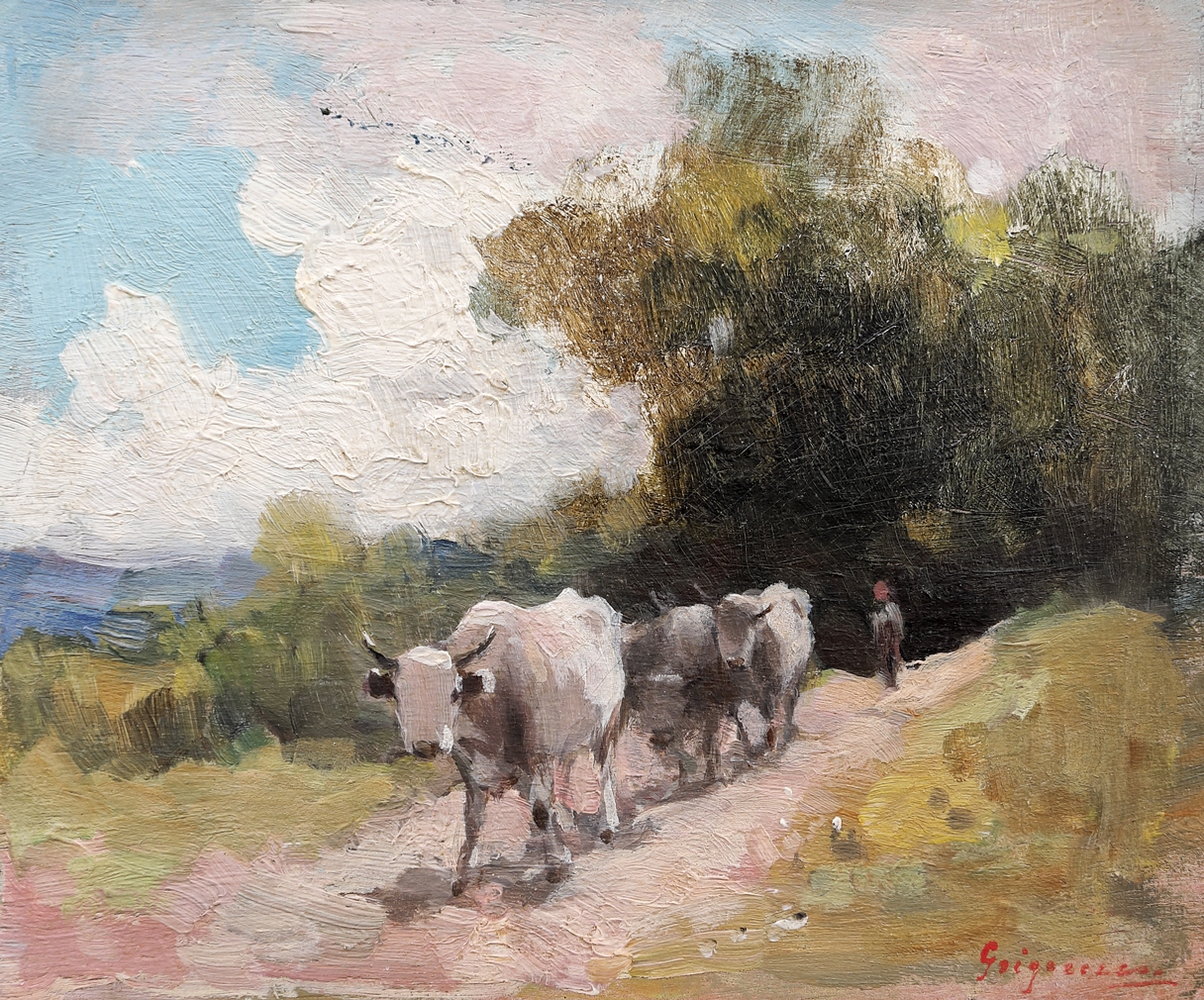
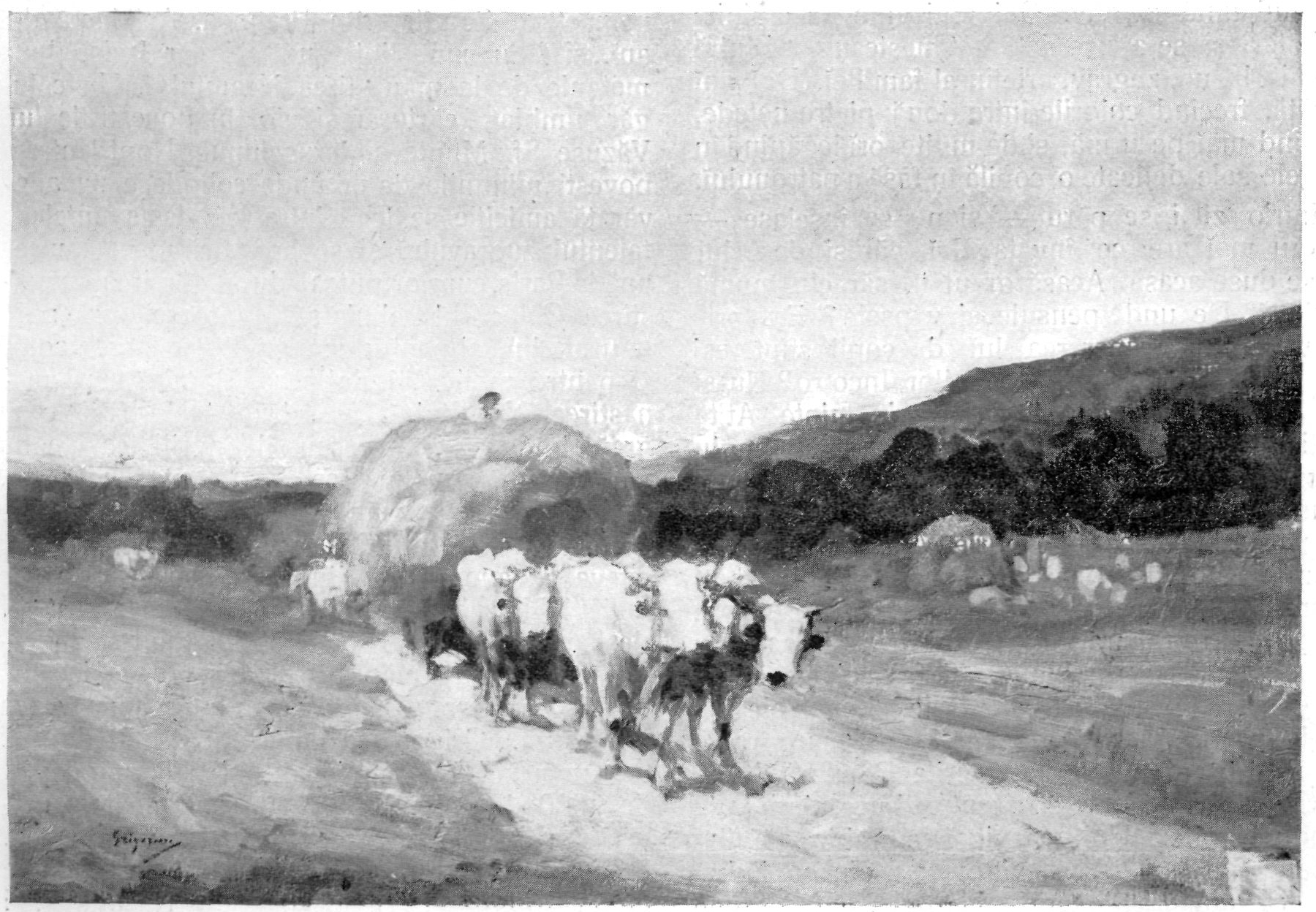
121. Returning from the Field
The photos of the lot are informative and indicative, and cannot provide a highly detailed view of the object from all angles. We recommend a careful physical inspection of the lot before bidding.

121. Returning from the Field
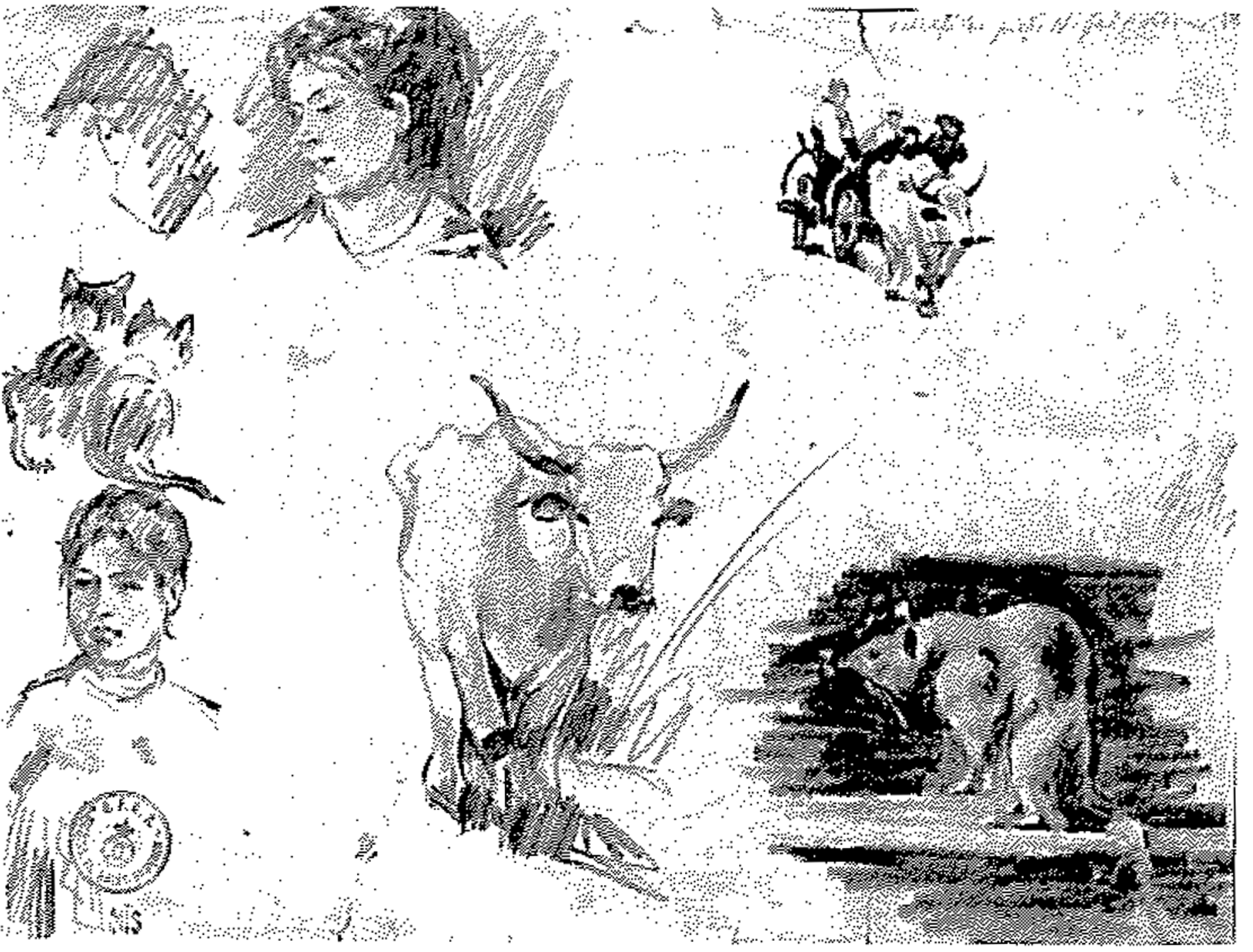
1838, Pitaru, Dâmboviţa - 1907, Câmpina

Estimate:
EUR 15.000 - 25.000
Sold
EUR 26.000

References

OPRESCU, George, "Nicolae Grigorescu", Meridiane Publishing House, Bucharest, 1963. CEBUC, Alexandru, "Grigorescu", Official Journal, 2017. VLAHUȚĂ, Alexandru, "Pictorul Grigorescu - Viața și opera lui", Alexandru Vlahuță, Bucharest, 1910.

oil on wood, 13 x 17 cm, signed bottom right, with red, "Grigorescu"

Research information

The artwork is reproduced in the magazine "Universul Literar", April 13, 1930.

The name of Nicolae Grigorescu is closely connected to the extension of Romanian painting towards modernity. The artist introduces himself to the world as a creator of pictorial melodies, which he dedicates to his country. He pleas for the honest feeling and advocates for rendering the nature of his homeland in a deeply purified and pictorial manner, synthesised through artistic fascination. Life itself would represent the departure point of his creation, and consequently he would persistently search for a pictorial language meant to render the beauty of Romanian lands as accurately as possible. During his stay in Paris, he finds out from his school colleagues about the existence of the Barbizon group of artists. He joins the movement during his pathway towards a much more realistic painting and works together with some of the most important names in French art: Rousseau, Courbet, Millet, Monet or Renoir. At the Barbizon he finds inspiration in the life of French peasants, transposing on canvas landscapes and human characters specific for the geographical space where he works. This is where Grigorescu acquires a particular attitude towards life and the purpose of art, allowing the pictorial manner to converge towards a secondary place. During his studies in France, his preference for landscape is deeply enforced. Throughout his entire artistic career, he would actively seek captivating views and frescos, and he would immortalise the beauty of his native lands with an unrivalled virtuousness. Just like Alexandru Vlahuță reminds us in the book dedicated to the painter, the landscape in Grigorescu's work appears as "a window wide open towards the outside light". With an unusual reflexiveness, our artist would meditate on the peasant's condition, achieving an actual panoramic view of the Romanian village. He chooses nature as a model, dedicating a broad part of his creation to oxen drawn carriages. Throughout his life, he would complete a consistent study of the bovine representative, including the peasant's working and suffering companion in many of his works. He researches oxen with an extraordinary patience, and he depicts them with an obvious affection on his canvases. He paints endless rows of elements, flocks of sheep returning from the field, groups captured while approaching or distancing themselves from the close-up. His work conveys a contagious peaceful feeling, sometimes it seems like not even a light blow of wind is sketched in the calmness of his canvases. He is also concerned with the subtle integration amidst nature of the human being and the animal. From the close-up vitality, until the slowly fading backgrounds, Grigorescu paints the modest peasant and the village life, lacking complex meanings. He succeeds like no one else in creating a particular correspondence between shepherds and the represented animals. He illustrated with complete freedom the figures of the peasants, captured in everyday pastoral life situations. Their appearance is vaguely suggested, whether by a careful spreading of the light, or by using strong accents, or by counting on delicate transitions into shadow. Having passed away from pneumonia in 1907, he would be led towards eternal rest according to the custom he had described in his paintings - in an oxen drawn carriage.

For clarifications regarding the bidding procedure, hammer price costs, guarantee, payment, and collection terms for the winning lot, we recommend carefully reading/re-reading the Bidding Regulations.

For additional information regarding the lot and the auction, please contact the Art Consultants Department.
SESSION
Wed, 29 March 2023 19:00

Similar lots

Odalisque in Interior

36. Odalisque in Interior [1942-1944]

Iosif Iser

    Estimate: EUR 5.000 - 8.000
    Sold EUR 9.500
After the Bath

38. After the Bath [1934]

Oscar Han

    Estimate: EUR 9.000 - 16.000
    Sold EUR 16.500