
Meniu

English
Gifts

Rare Books, Documents, Photography & Posters

Collectible Religious Art

Asian Art, Technical Objects, Taxidermy, Curiosities & Antiques

Jewelry & Watches

Numismatics, Medals, Maps, Arms & Decorations

Luxury, Elegance, Collectible Cars & Beverages

Collectible Folk Art

Sneakers & Toys


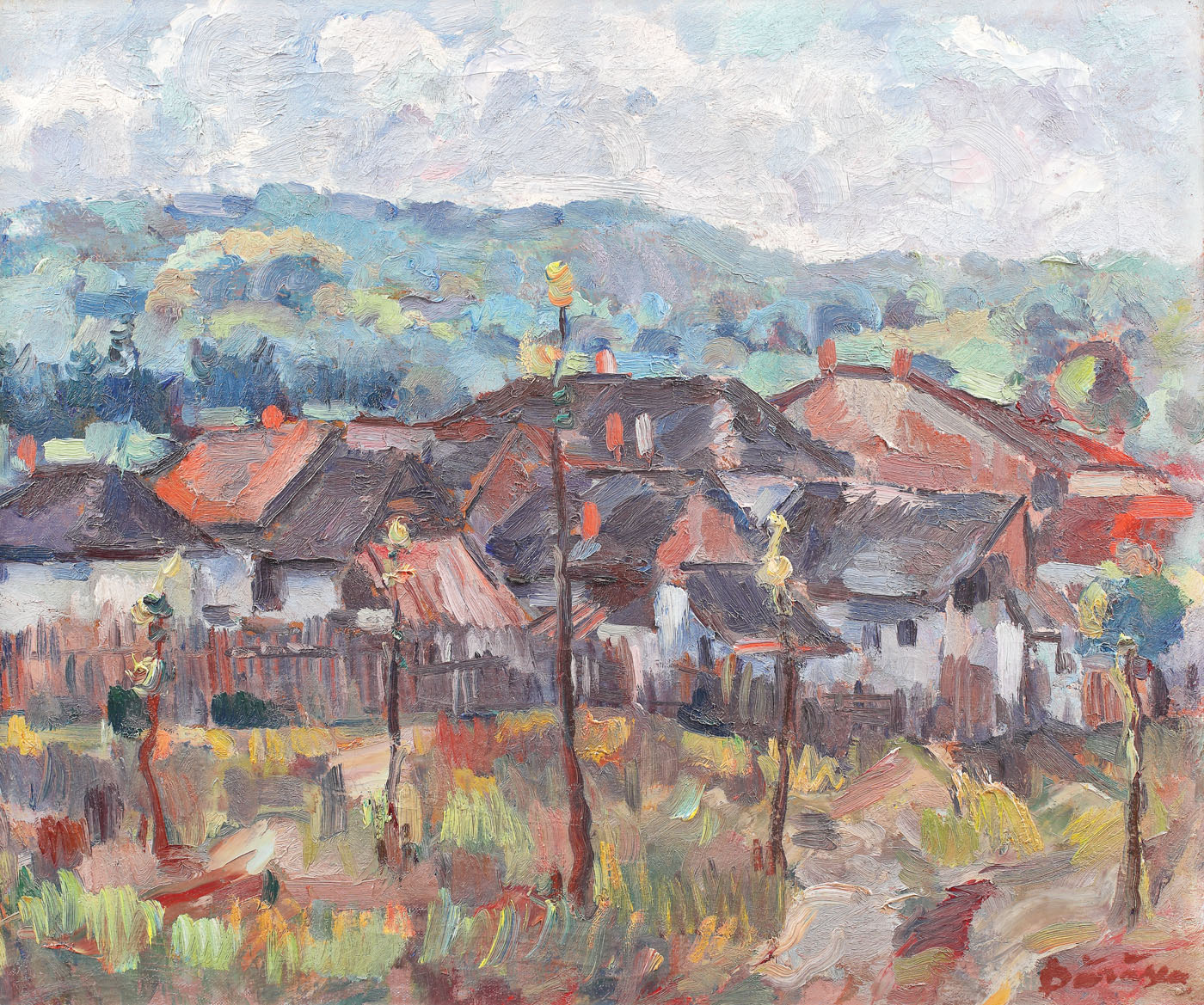
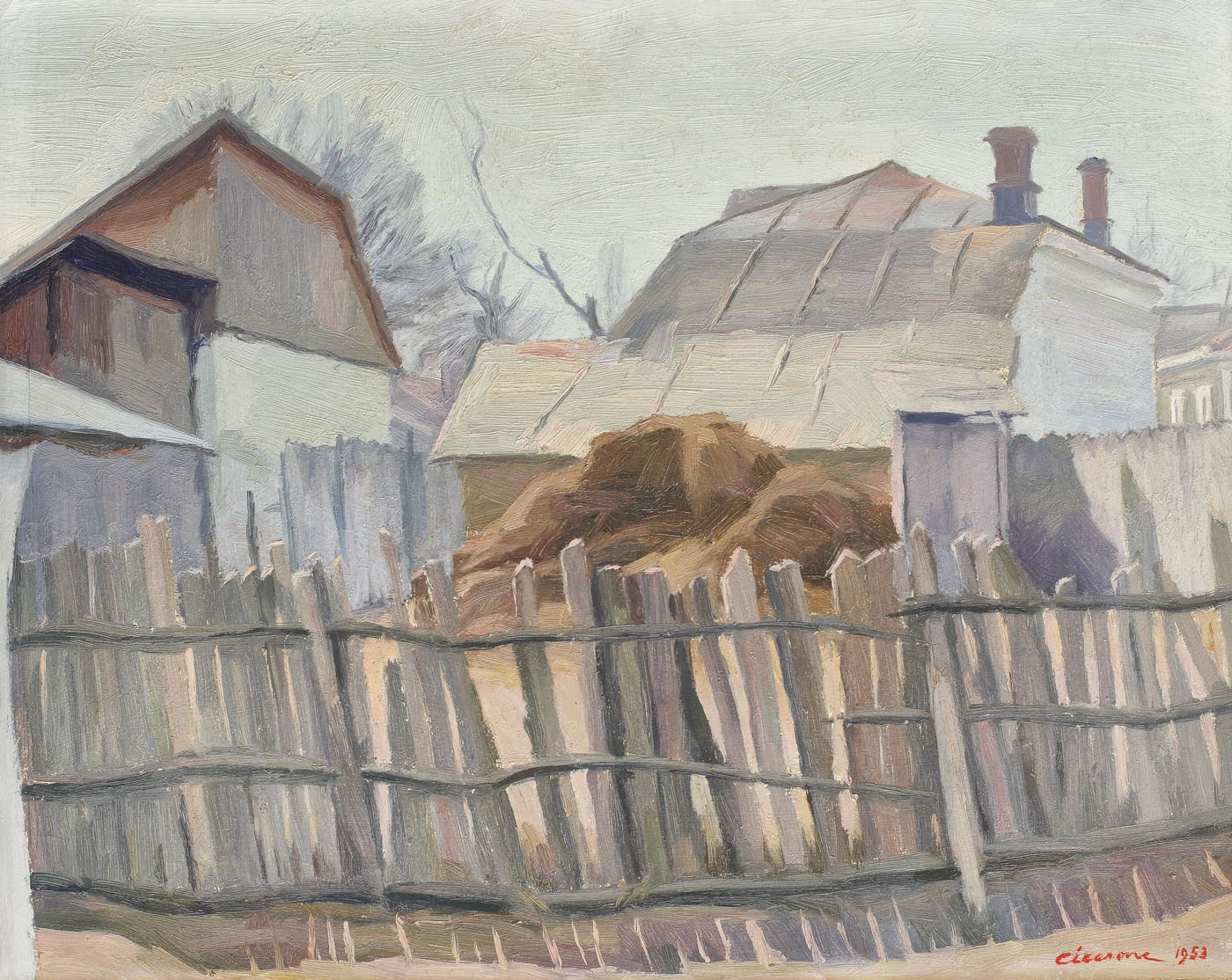
223. Village in Argeș [40s]
The photos of the lot are informative and indicative, and cannot provide a highly detailed view of the object from all angles. We recommend a careful physical inspection of the lot before bidding.

223. Village in Argeș [40s]

1883, Giurgiu - 1959, Bucureşti

Estimate:
EUR 8.000 - 14.000
Sold
EUR 9.500

References

"Nicolae Dărăscu, Magician al culorii", Muzeul Național Cotroceni, Bucureşti, 2009
CONSTANTINESCU, Paula, CLONARU, Hariton,"Expoziția N. Dărăscu", Muzeul de Artă al R.S.R, Bucureşti, 1966
DRĂGUȚ, Vasile, "Nicolae Dărăscu", Ed. Meridiane, București, 1966

oil on canvas, 46.5 x 55.5 cm, 55,5x46,5, signed lower right, in brown, "Dărăscu"

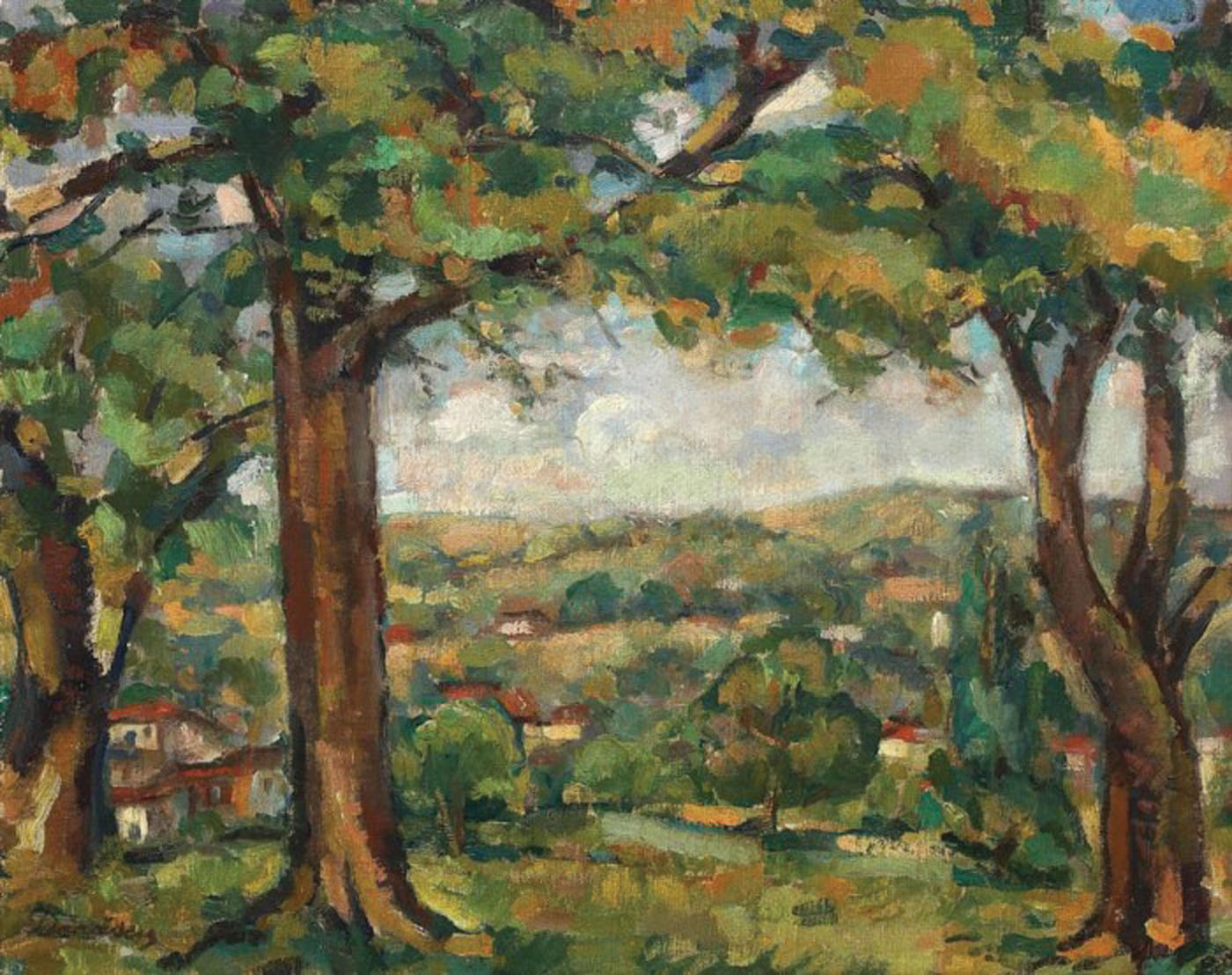
Before the Romanian landscape, Nicolae Dărăscu’s vision would mould, both chromatically, as well as compositionally, to a more personal impressionist structure. Thus occurred the typical composition, settled with time into his artworks, the foreground dominated by trees flanking the second plane, the landscape that can be seen in the distance. The brush vibration subsides (after a Neo-Impressionistic period), and the palette is enriched with valorised greys. Moreover, the establishment of the correspondence between reality and the plastic image became an imperative issue. The need for architectural stability to be translated onto the canvas brings him closer to Cezanne, whose influence is especially felt in the way of rendering the clusters of houses emerging from the abundant vegetation, always placed in the background. Colour is used for creating perspective, bringing cold colours to the foreground and warm colours to the background. By his technical resolve, Dărăscu’s landscapes indicate their place of creation. If such are created with wide touches with mediated strokes of intermediate tonalities in the country, the French or Venetian ones comprise small touches. The light in Dărăscu’s works neither decomposed, nor filtered, but rather consolidated the colour. It is visible in his works through the reflective capacity of the rendered objects, therefore through the colour applied. The legacy of the Neo-Impressionistic experience has been the dialogue of two chromatic dominants in his work, red and blue, which brought him closer to Cezanne’s method regarding the chromatic ratio between warm and cold. Specifically for the landscapes created during the last 10 years of his career, and more precisely for the works created in the Argeș area, Dărăscu would once again recalibrate his manner, by painting more freely, with free brush strokes, and the colour, obviously connected to the touch, would vibrate more towards the secondary tones.

For clarifications regarding the bidding procedure, hammer price costs, guarantee, payment, and collection terms for the winning lot, we recommend carefully reading/re-reading the Bidding Regulations.

For additional information regarding the lot and the auction, please contact the Art Consultants Department.
SESSION
Tue, 19 June 2018 19:00

Similar lots

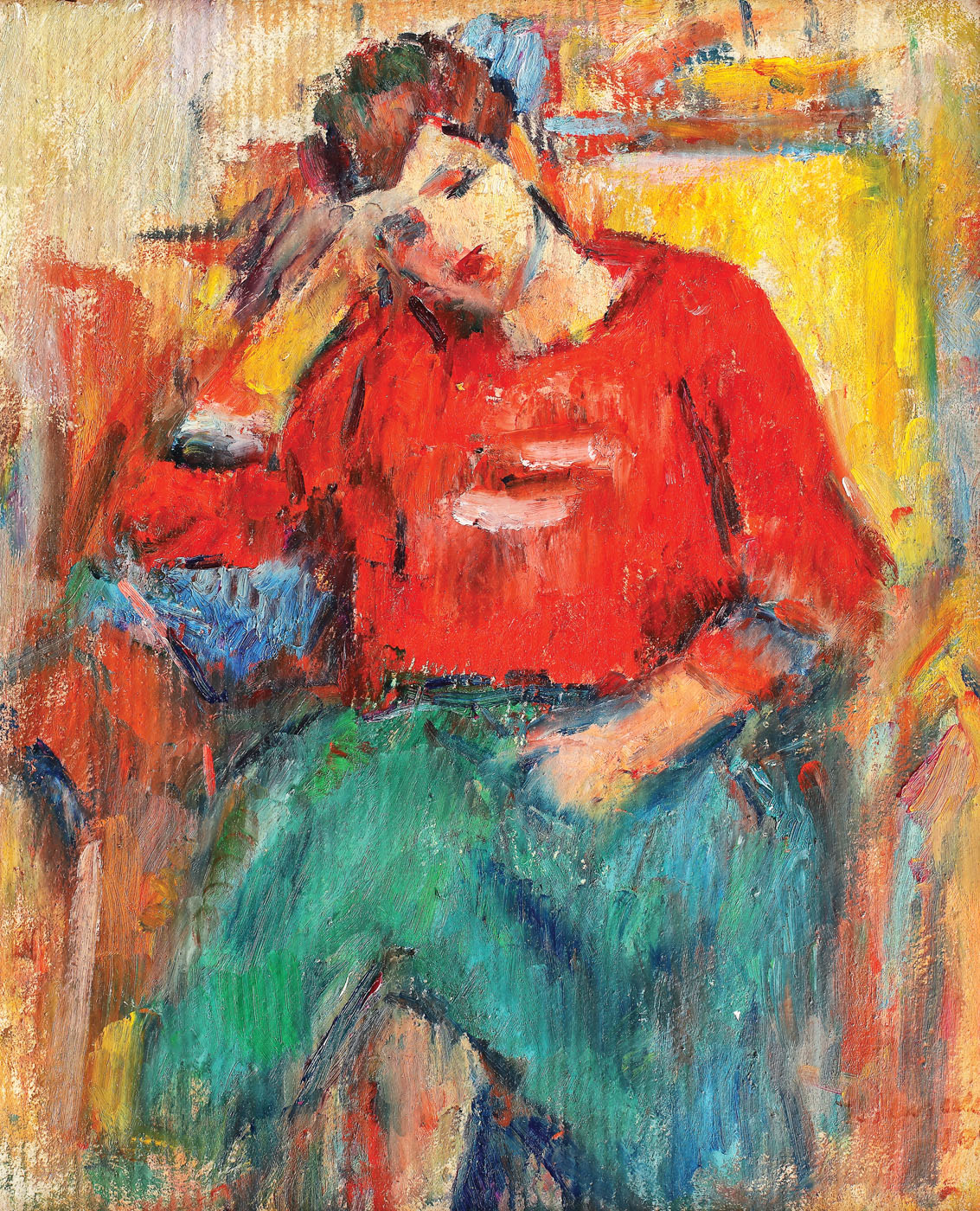
Lost in Thought

120. Lost in Thought

Ion Musceleanu

Ion Musceleanu

    Estimate: EUR 800 - 1.200
    Sold EUR 1.000