
Meniu

English
Gifts

Rare Books, Documents, Photography & Posters

Collectible Religious Art

Asian Art, Technical Objects, Taxidermy, Curiosities & Antiques

Jewelry & Watches

Numismatics, Medals, Maps, Arms & Decorations

Luxury, Elegance, Collectible Cars & Beverages

Collectible Folk Art

Sneakers & Toys


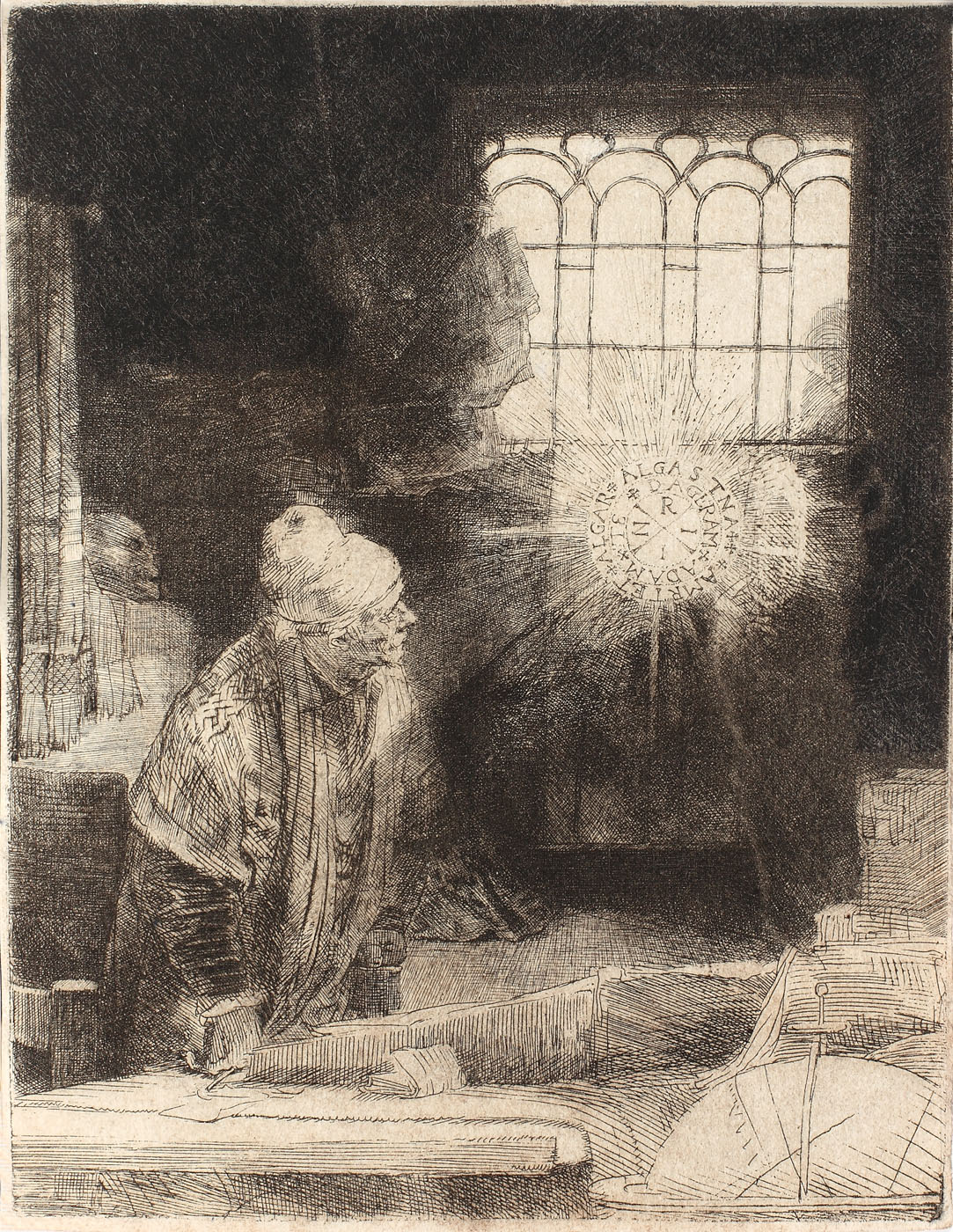
319. Faustus [1652; 17th-18th century run]
The photos of the lot are informative and indicative, and cannot provide a highly detailed view of the object from all angles. We recommend a careful physical inspection of the lot before bidding.

319. Faustus [1652; 17th-18th century run]

1606, Leiden - 1669, Amsterdam

Estimate:
EUR 9.000 - 16.000
Not sold

etching, needle engraving and chisel etching, 21 x 16 cm, 16x21

Notes

marca colecţiei P. Davidsohn (Lugt 654) şi anul 1882, cu peniţa în cerneală brună.

PROVENANCE

early 20th century, the collection of Paul Davidsohn (1839-1927), collector, merchant, associate of the British Museum, sold in 1920 in Leipzig.

The engraving made by Rembrandt in 1652 is one of the most analysed and debated images created by the artist in his entire work. Without the annotations and a title given by the artist, art historians have constantly tried to decipher this complex picture since as early as the end of the 17th century. The first interpretation, typical of the past centuries, was to be given in the 1670s by Clement de Jonghe, a contemporary and collector of Rembrandt, who entitled it "The Practical Alchemist." The picture presents a wise man/an alchemist in his study, but the intriguing element is undoubtedly the "apparition" at the window and the three magical circles starting from the INRI Christian tetragram and ending outward with the anagramation of TETRAGRAM GRAAL SATAN (God, Holy Grail/Ideal, Satan). The interior of the study presents the symbolism known for the presentation of the individuality and the practices of a wise man: the Earth globe, the human skull (Vanitas), the papers and documents. At the beginning of the 18th century the engraving received a new interpretation, being entitled "Doctor Faustus" in 1731 by Valerius Röver (1686-1739), a title that has since been used in the history of art as the most relevant one. Rembrandt would certainly have known the tragedy written by Christopher Marlowe and performed in Amsterdam in 1650.

For clarifications regarding the bidding procedure, hammer price costs, guarantee, payment, and collection terms for the winning lot, we recommend carefully reading/re-reading the Bidding Regulations.

For additional information regarding the lot and the auction, please contact the Art Consultants Department.

SESSION
Thu, 23 November 2017 19:30

Similar lots