
The photos of the lot are informative and indicative, and cannot provide a highly detailed view of the object from all angles. We recommend a careful physical inspection of the lot before bidding.
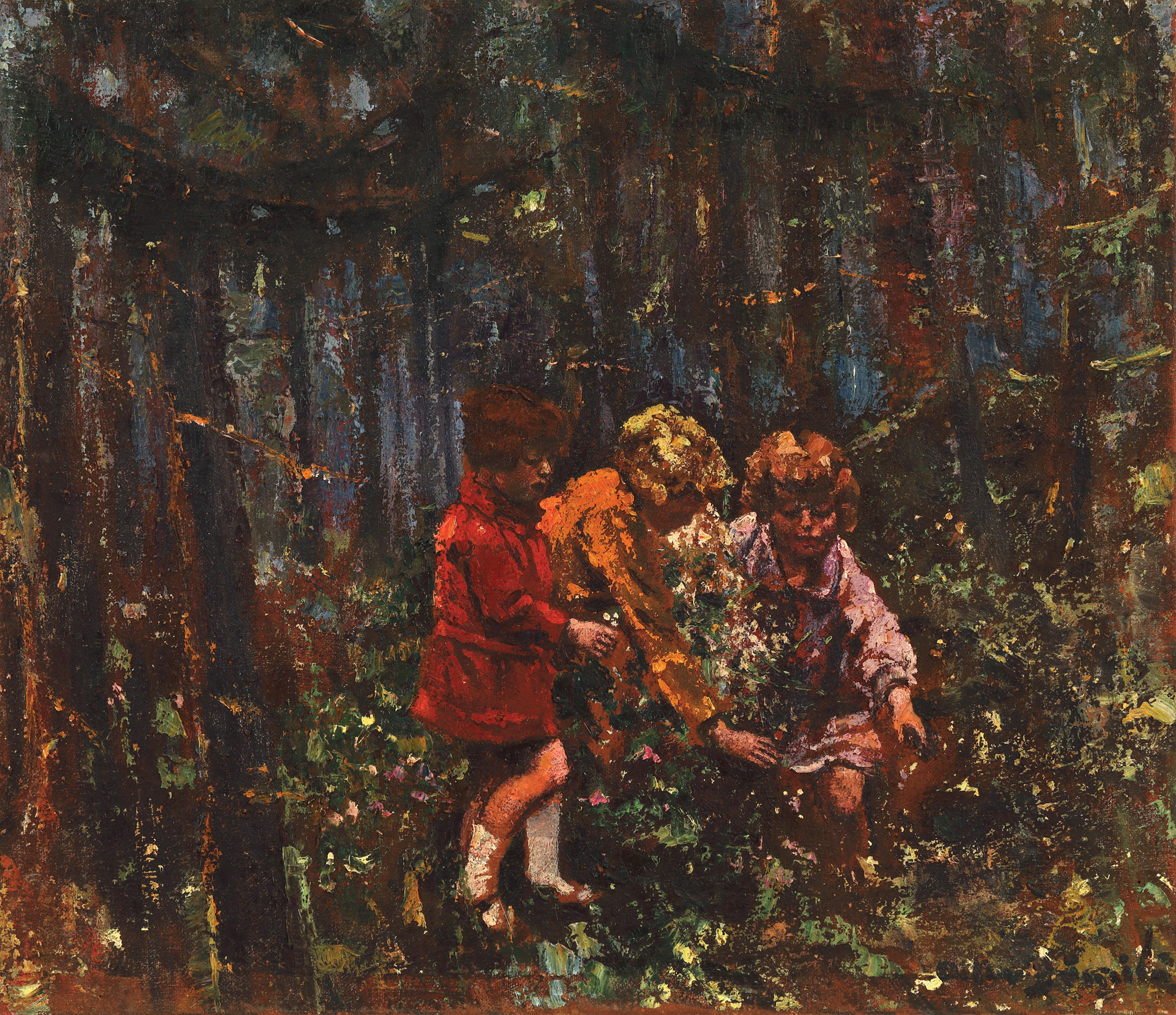
Unlike his predecessor - the master from Câmpina - Băncilă does not idealize rustic life, but rather paints it on the canvas respecting its authenticity, with all its ups and downs. With a multitude of works in the center of which the human being gravitates, the artist constantly affirms himself in Romanian art. Rural subjects are exemplified by suggestive titles such as "Ploughing", "Sowing" or "Weeding". Slaves of the land they toil, Băncilă's protagonists appear with calloused hands and sunburnt faces, exponents of the social class from which they come. The artist is not interested in the aesthetic functionality of painting, but rather in the faithful depiction of reality. Thus, he will render the silhouettes of his protagonists during the activities of labor, as indicated by the titles: "Woman wiping dishes," "With the laundry," "The washerwoman" or "Little peasant girl with spindle". The artist uses a sober palette dominated by shades of brick, ocher, or brown. The hardness of the paste is softened by a few white, luminous strokes, yet Băncilă bets on the choice of the chromatic palette in enhancing the psychology of the characters represented. Thus, he constructs interpretative portraits, whose decorative function is canceled out by the profound essence that the artist imprints on the work. The present work reveals a rarely encountered subject in the artist's creation. We still remember the famous composition "Tangled in calculations", in which the small protagonist in front of the blackboard struggles, with his head down, in front of a laborious mathematical operation. This time, however, we are dealing with a unique work through the perspective of the rarely encountered subject in the artist's work. We highlight the vibrant color palette that synthesizes the innocence and joy of childhood. The three protagonists, with blond hair and colorful garments, are caught during the flower picking from the garden. The playful theme, transposed into a work of considerable dimensions, highlights a competition between children, a "battle" to find out who can pick the flowers first. Octav Băncilă's little muses become three colored focal points; shades such as red or yellow definitively dominating and ornamenting the canvas. In addition to the playful theme, the artist also discusses the communion of man and nature, placing his protagonists in a natural setting with rich vegetation. Liberty and the candor of childhood are attributes that definitively emerge from the carefully placed strokes by the artist.
References
SĂTEANU, C., "Painter Octav Băncilă", in "Art and Archaeology", year III, issue 4, 1930, pp. 11-24.
COMAN, Anton, "Octav Băncilă", State Publishing House for Literature and Art, Bucharest, 1954.
Dimensions
width 67 cm, height 57.5 cm
Description
ulei pe pânză, signed bottom right, in black, "Octav Băncilă"
Dating
anii '20
ADDITIONAL INFORMATION
For clarifications regarding the bidding procedure, hammer price costs, guarantee, payment, and collection terms for the winning lot, we recommend carefully reading/re-reading the Bidding Regulations.
For additional information regarding the lot and the auction, please contact the Art Consultants Department.
Detalii
Unlike his predecessor - the master from Câmpina - Băncilă does not idealize rustic life, but rather paints it on the canvas respecting its authenticity, with all its ups and downs. With a multitude of works in the center of which the human being gravitates, the artist constantly affirms himself in Romanian art. Rural subjects are exemplified by suggestive titles such as "Ploughing", "Sowing" or "Weeding". Slaves of the land they toil, Băncilă's protagonists appear with calloused hands and sunburnt faces, exponents of the social class from which they come. The artist is not interested in the aesthetic functionality of painting, but rather in the faithful depiction of reality. Thus, he will render the silhouettes of his protagonists during the activities of labor, as indicated by the titles: "Woman wiping dishes," "With the laundry," "The washerwoman" or "Little peasant girl with spindle". The artist uses a sober palette dominated by shades of brick, ocher, or brown. The hardness of the paste is softened by a few white, luminous strokes, yet Băncilă bets on the choice of the chromatic palette in enhancing the psychology of the characters represented. Thus, he constructs interpretative portraits, whose decorative function is canceled out by the profound essence that the artist imprints on the work. The present work reveals a rarely encountered subject in the artist's creation. We still remember the famous composition "Tangled in calculations", in which the small protagonist in front of the blackboard struggles, with his head down, in front of a laborious mathematical operation. This time, however, we are dealing with a unique work through the perspective of the rarely encountered subject in the artist's work. We highlight the vibrant color palette that synthesizes the innocence and joy of childhood. The three protagonists, with blond hair and colorful garments, are caught during the flower picking from the garden. The playful theme, transposed into a work of considerable dimensions, highlights a competition between children, a "battle" to find out who can pick the flowers first. Octav Băncilă's little muses become three colored focal points; shades such as red or yellow definitively dominating and ornamenting the canvas. In addition to the playful theme, the artist also discusses the communion of man and nature, placing his protagonists in a natural setting with rich vegetation. Liberty and the candor of childhood are attributes that definitively emerge from the carefully placed strokes by the artist.
ADDITIONAL INFORMATION
For clarifications regarding the bidding procedure, hammer price costs, guarantee, payment, and collection terms for the winning lot, we recommend carefully reading/re-reading the Bidding Regulations.
For additional information regarding the lot and the auction, please contact the Art Consultants Department.
References
SĂTEANU, C., "Painter Octav Băncilă", in "Art and Archaeology", year III, issue 4, 1930, pp. 11-24.
COMAN, Anton, "Octav Băncilă", State Publishing House for Literature and Art, Bucharest, 1954.
Dimensions
width 67 cm, height 57.5 cm
Description
ulei pe pânză, signed bottom right, in black, "Octav Băncilă"