
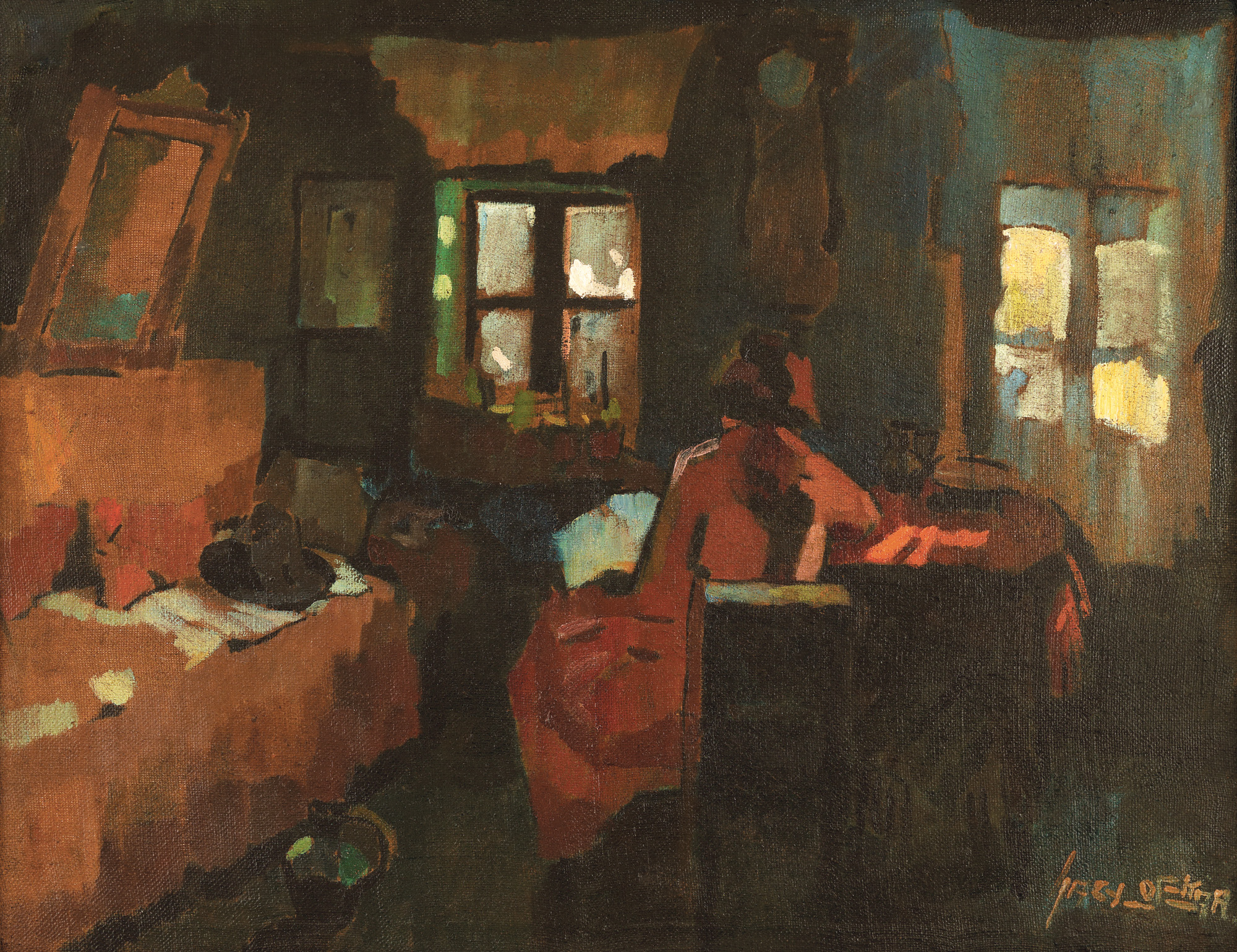
72. In the artist's workshop [cca. 1920]
The photos of the lot are informative and indicative, and cannot provide a highly detailed view of the object from all angles. We recommend a careful physical inspection of the lot before bidding.
72. In the artist's workshop [cca. 1920]
1883, Pecica, Arad - 1965, Baia Mare
Estimate:
EUR 2.000 - 4.000
Sold
EUR 4.000
ulei pe pânză, 81 x 100 cm, signed bottom right, with ochre, "Nagy Oszkar"
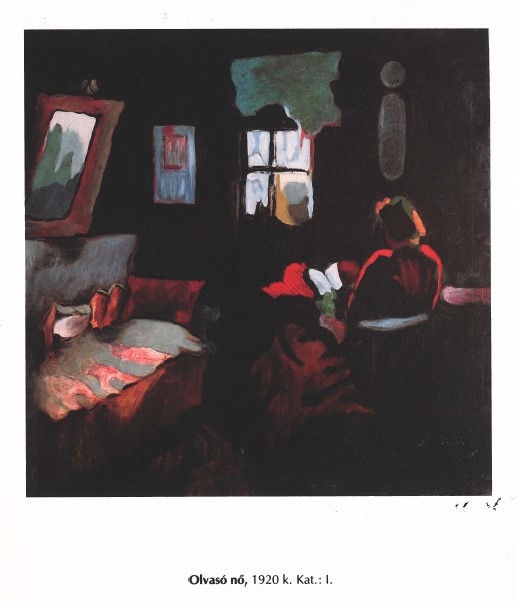
Oszkár Nagy began his artistic journey at the School of Fine Arts in Budapest in 1913, under the guidance of Károly Ferenczy. His journey was abruptly interrupted during World War I, when he was taken prisoner. After being released, he settled in Arad for a while, and later attended the artistic colonies in Szolnok and Kecskemét, where he worked alongside Béla Iványi Grünwald. In 1920, he settled in Baia Mare, the same year he exhibited in Arad, and in 1921 he participated with works in an exhibition organized in Cluj. Supported by the poet Octavian Goga, he received a study scholarship in Italy. At the end of his study trip, he returned to Baia Mare and became an active member of the artistic community there. Throughout his career, we note many exhibitions, both personal and group ones, in cities such as Baia Mare, Cluj, Satu Mare or Zalău. Oszkár Nagy has a distinctive perception of colors and a remarkable technique for arranging perspective. In this work we observe a broad composition, in which the artist treats a subject that we also find in another work from the same period. The work thus depicts an interior with a female character, perhaps even the artist's studio. The previously mentioned work, "Woman Reading," dates from 1920, which is when the artist settled in the artistic colony in Baia Mare. We note the same woman reading, positioned with her back towards us, sitting at the desk, facing the window through which light enters. The couch is also placed on the left side of the work, and the picture hung above it is also present here. This time the artist lets even more light enter his composition, so we can see two windows now, and also the addition of some other details - the hat on the couch, the carafe in front of it, or the plants arranged on the windowsill. Predominant are shades of orange and red, but the shadow areas are also well defined by the dark tones, like the pendant work. The intimate atmosphere of the family environment is the element that emerges from both works, the artist able to crown, through a large-format work, an episode of his daily life.
For clarifications regarding the bidding procedure, hammer price costs, guarantee, payment, and collection terms for the winning lot, we recommend carefully reading/re-reading the Bidding Regulations.
For additional information regarding the lot and the auction, please contact the Art Consultants Department.
SESSION