
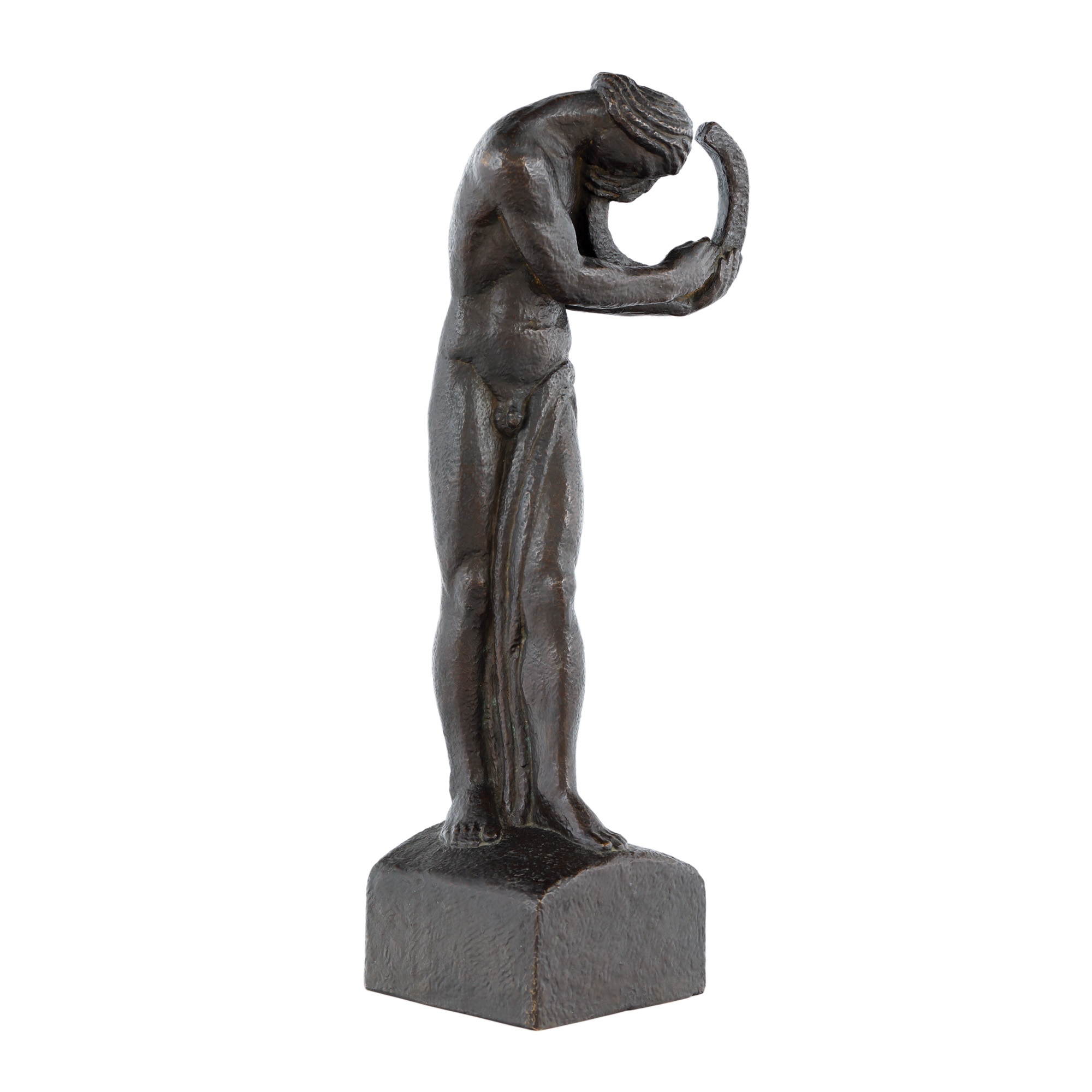
48. Orpheus [1929]

The photos of the lot are informative and indicative, and cannot provide a highly detailed view of the object from all angles. We recommend a careful physical inspection of the lot before bidding.
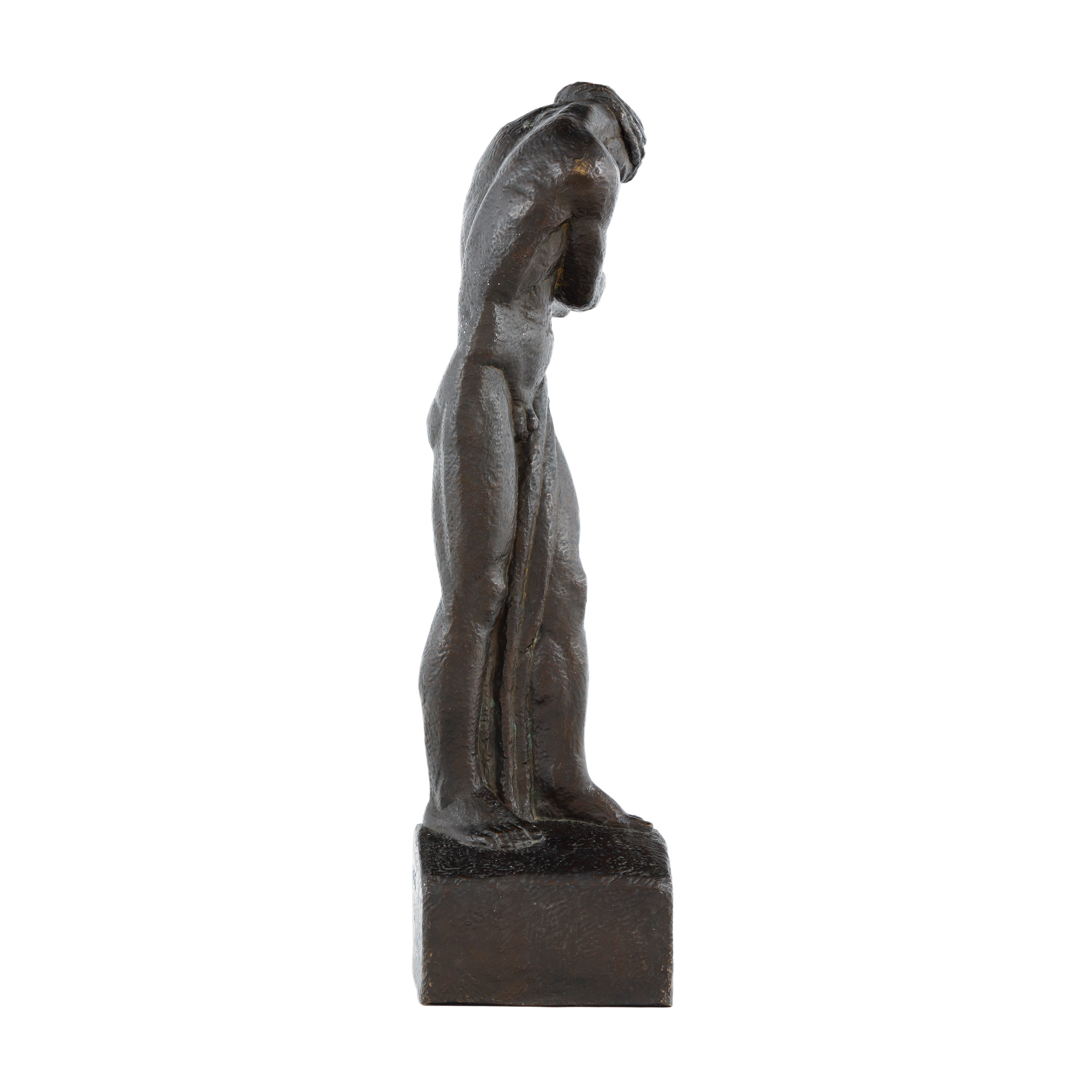
48. Orpheus [1929]
1903, Hunedoara - 1979, Oradea
Estimate:
EUR 3.000 - 5.000
Sold
EUR 18.000
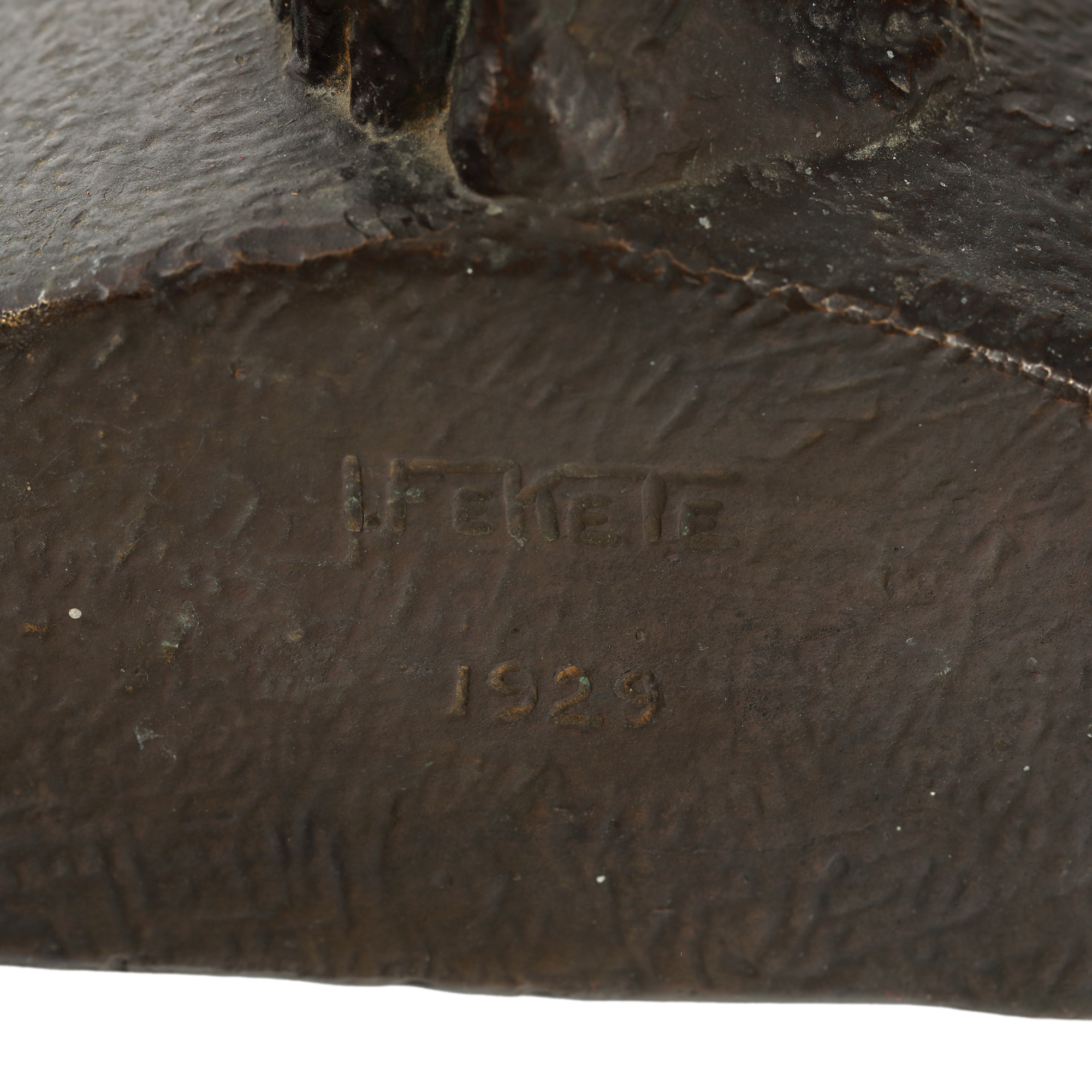
bronz, 53 x 14.5 x 19.5 cm, signed and dated, on the back of the base, "I. FEKETE, 1929"
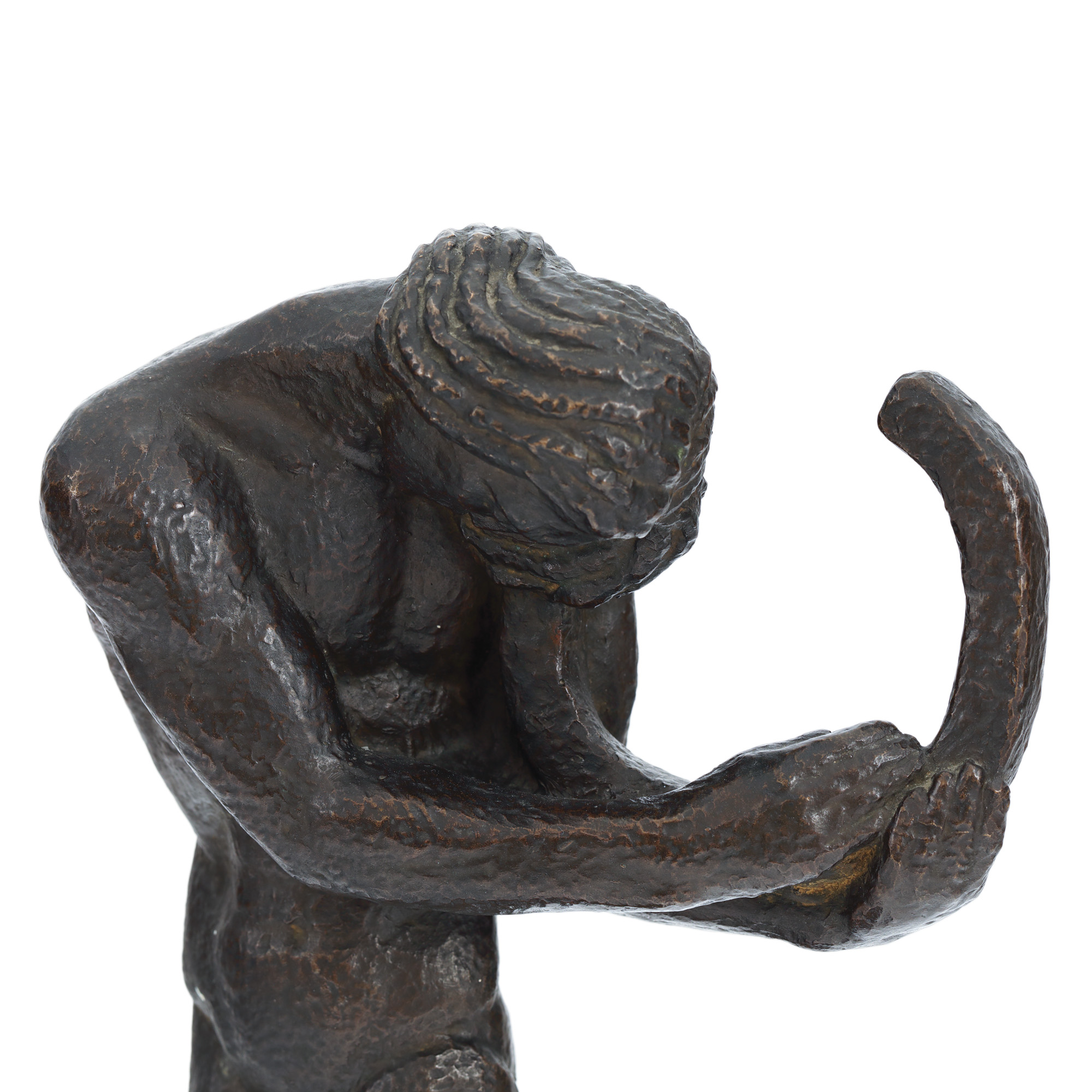
Significant monumental works such as "The Monument of the Air Heroes" in Bucharest, created in collaboration with Lidia Kotzebue or "The Reliefs of the Ministry of Justice portal" consecrated Iosif Fekete in the collective memory of the general public. However, the artist also focused on other subjects and worked in various thematic cycles, incorporating mythological, historical or biblical motifs in his work. Through the silhouettes he sculpts in stone or bronze, Iosif Fekete proposes a lyrical approach while maintaining his status as an objective narrator. From Don Quixote to Adam and Eve, the artist sculpts biblical myths and legends, with his untamed skill and an unmistakable sense of the material he is working with. This time, he focuses his attention on the Greek god Orpheus, a virtuoso of the lyre, whose song enchanted all living creatures and all elements of nature. A descendant of the muse of the epic genre and of eloquence: Calliope, but also of the god of light and arts, Apollo, Orpheus will win, in history, the title of a perfect artist. His myth dates back to Ancient Greece, and the roots of this myth can be traced to even older legends. The legend is known to us today mainly due to the poets Virgil and Ovid. Orpheus' name is closely linked to that of his life partner, Eurydice, who will unfortunately pass away too early. Tormented by the emotional pain of losing his great love, our protagonist travels after her to hell. Once there, he tames the three-headed dog, Cerberus, with his music. Once in front of the god of hell - Hades, and his wife - Persephone, he captivates them with his song and convinces them to let him take Eurydice back with him. However, the agreement required the protagonist to respect one condition: Eurydice had to follow him from behind, and he was not allowed to look back at her. Driven by care for his loved one, no longer hearing her steps, he fears he has been deceived by Hades, so he looks back - a fact that will lead to Eurydice's permanent capture in hell. Devastated by this course of events, Orpheus plays his lyre for the last time, to then be torn apart by Dionysus's maenads.
For clarifications regarding the bidding procedure, hammer price costs, guarantee, payment, and collection terms for the winning lot, we recommend carefully reading/re-reading the Bidding Regulations.
For additional information regarding the lot and the auction, please contact the Art Consultants Department.
SESSION
Similar lots