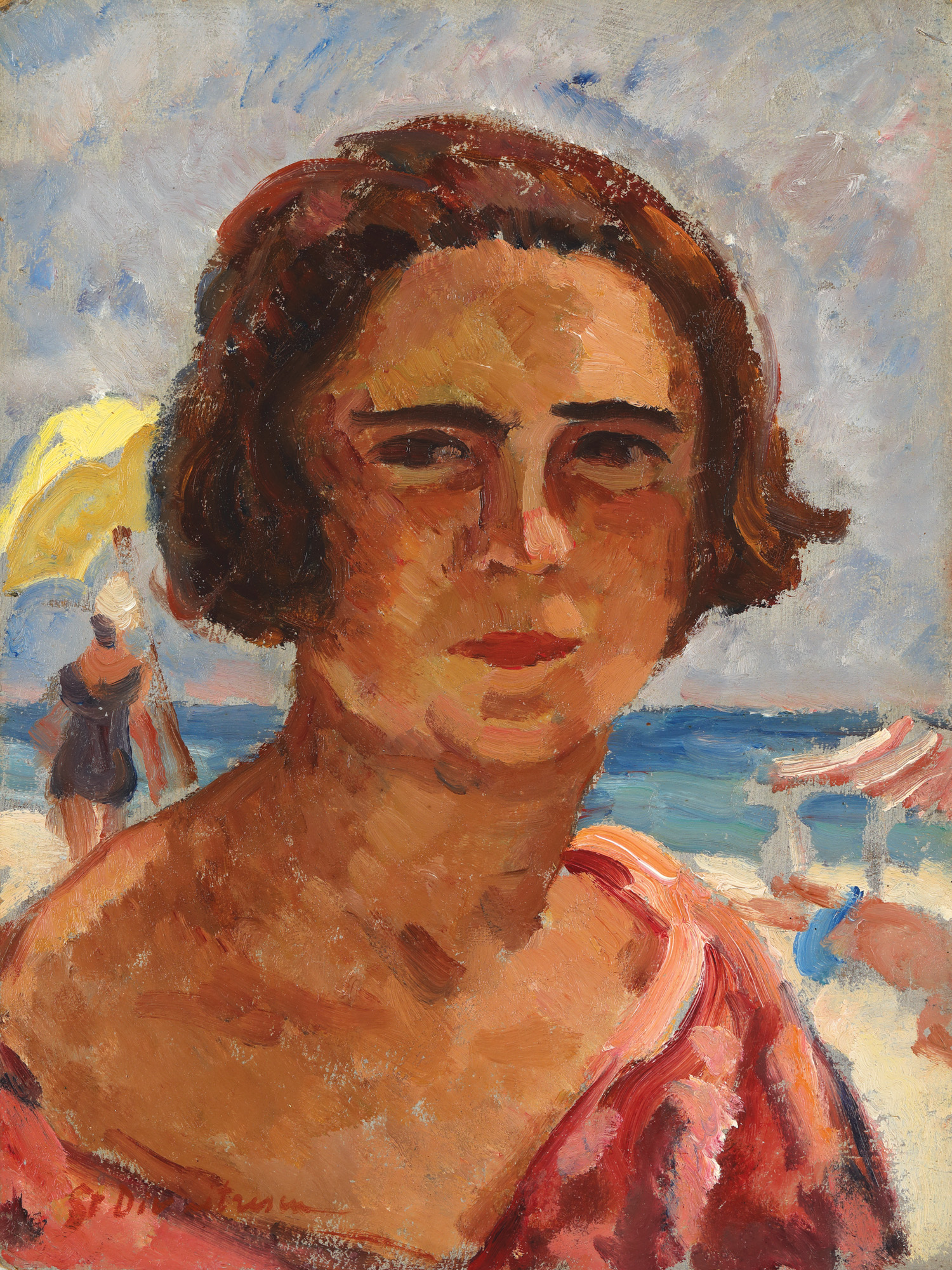
The photos of the lot are informative and indicative, and cannot provide a highly detailed view of the object from all angles. We recommend a careful physical inspection of the lot before bidding.
DRĂGUȚ, Vasile, "Nicolae Dărăscu", Meridiane Publishing House, Bucharest, 1966.
The article "Retrospective Nicolae Dărăscu", by Mircea Deac.
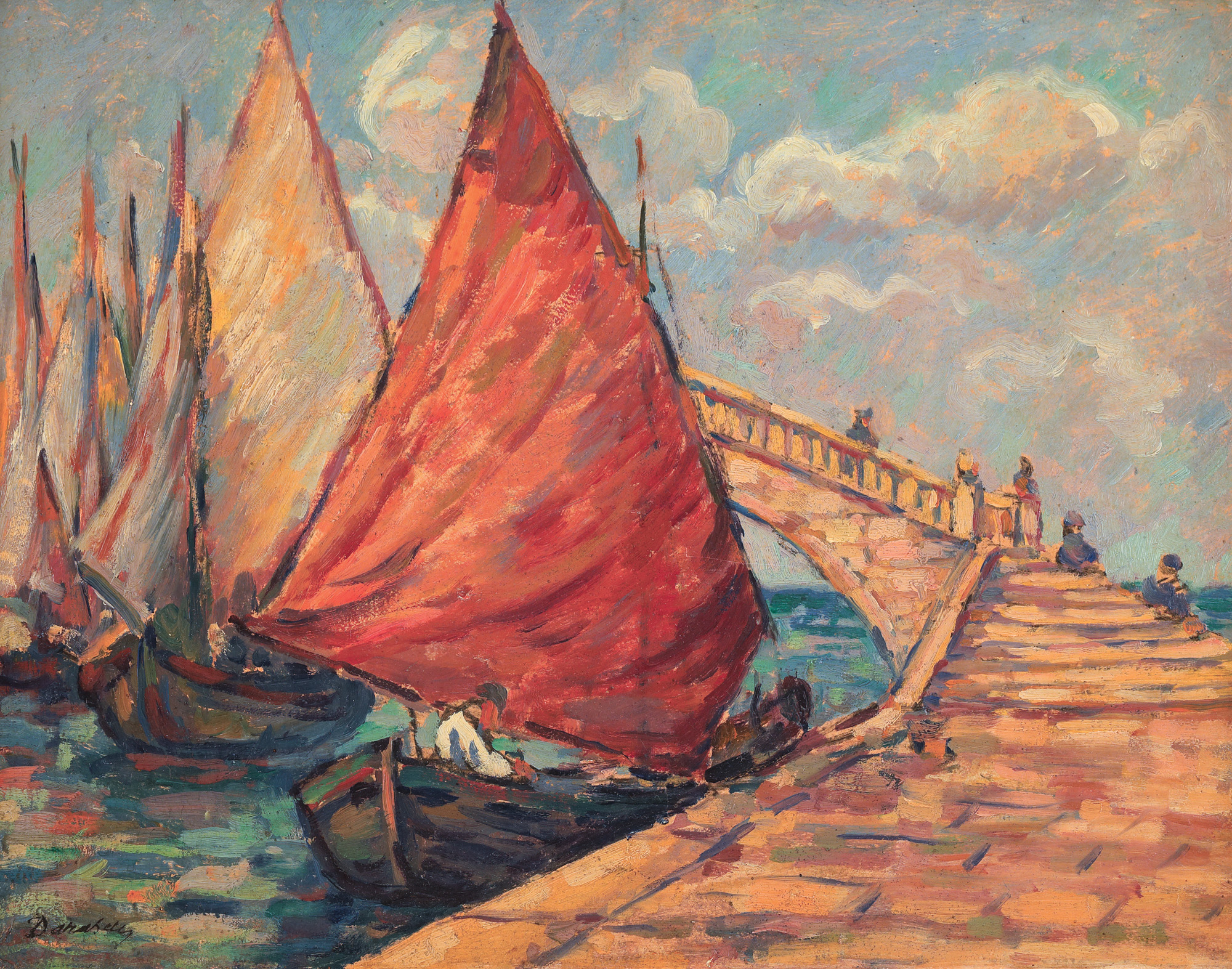
ulei pe carton, 36 x 44.5 cm, signed bottom left, in black, "Dărăscu"
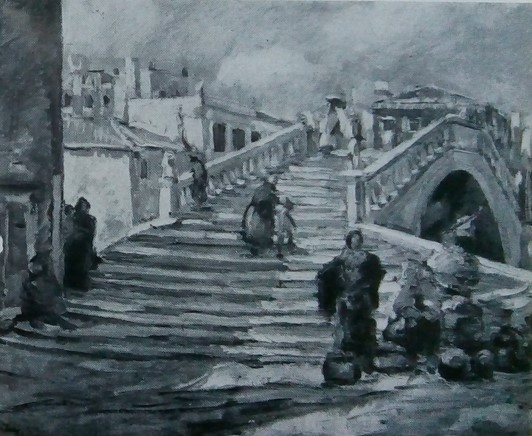
Born in the Danube regions, in a small port town, Nicolae Dărăscu will incorporate into his work the sunny atmosphere and the fullness of nature he has always been surrounded by. Thus, the artist will dedicate a series of works in which he captures the fishing vessels, small houses with rich gardens, crowded markets or endless blue stretches. Having gone abroad to study, he will extract his creative essence from Claude Monet's compositions, later discovering pointillism. He thus transforms his love for nature into a sunny and optimistic painting and takes imprints from impressionism and neo-impressionism in a praise dedicated to nature. He paints the constancy of water, molds it plastically, and conveys the intensity of experiences with symbol valences. In Dărăscu's work, the water becomes a trick of journeys and departures. From Saint Tropez and Venice to Balchik or Tulcea, he will always lean towards the arid landscape, where we find the same warm chromatic and the dull color of his native Dobrudja. ”I would like after death to be said about me: he was a daring navigator and a good painter”, Nicolae Dărăscu would declare. The artist will manage to combine both passions masterfully, so that besides his prodigious cultural activity he will also obtain the frigate captain's certificate. Therefore, his infinite love for the aquatic environment will extend beyond the canvas surface. In addition to the many paintings that lined the walls of his house, there was also a library where many volumes relating to navigation and travel were stored. Water will therefore play an important role both in his life and in his work. We find a painting abundant in landscapes - a landscape "sneaked between a white and a green", as Tudor Arghezi appreciated in the review dedicated to his first exhibition organized at the Athenaeum. Around 1915, Nicolae Dărăscu traveled to Venice and Chioggia, locations from which he made an extensive painting series. Venice, a favorite theme among impressionist painters, appears countless times at Monet, Renoir, Manet, or Boudin; however, Dărăscu's works from the Italian period are closer to a Pissaro or a Sisley. The fast-applied, overlaid and divided touches, or nature understood as the symbolic expression of color, become prerogatives that dominate the entire work made by the artist during this period. He will return here in 1925-1926, and the result of the journey will materialize through an exhibition in 1927, when he brings to the attention of the public no less than 45 works, most of them views from the Grand Canal, or of the Ducal Palace, of the Dorio palace, Rio della Salute or of the Contarini palace.
For clarifications regarding the bidding procedure, hammer price costs, guarantee, payment, and collection terms for the winning lot, we recommend carefully reading/re-reading the Bidding Regulations.
For additional information regarding the lot and the auction, please contact the Art Consultants Department.
By choosing "Accept all cookies" you agree to the use of cookies to help us provide you with a better user experience and to analyse website usage. By clicking "Adjust your preferences" you can choose which cookies to allow. Only the essential cookies are necessary for the proper functioning of our website and cannot be refused
Cookie settings
Our website stores four types of cookies. At any time you can choose which cookies you accept and which you refuse. You can read more about what cookies are and what types of cookies we store in our Confidentiality Policy.
are necessary for technical reasons. Without them, this website may not function properly.
are necessary for specific functionality on the website. Without them, some features may be disabled.
allow us to analyse website use and to improve the visitor's experience.
allow us to personalise your experience and to send you relevant content and offers, on this website and other websites.