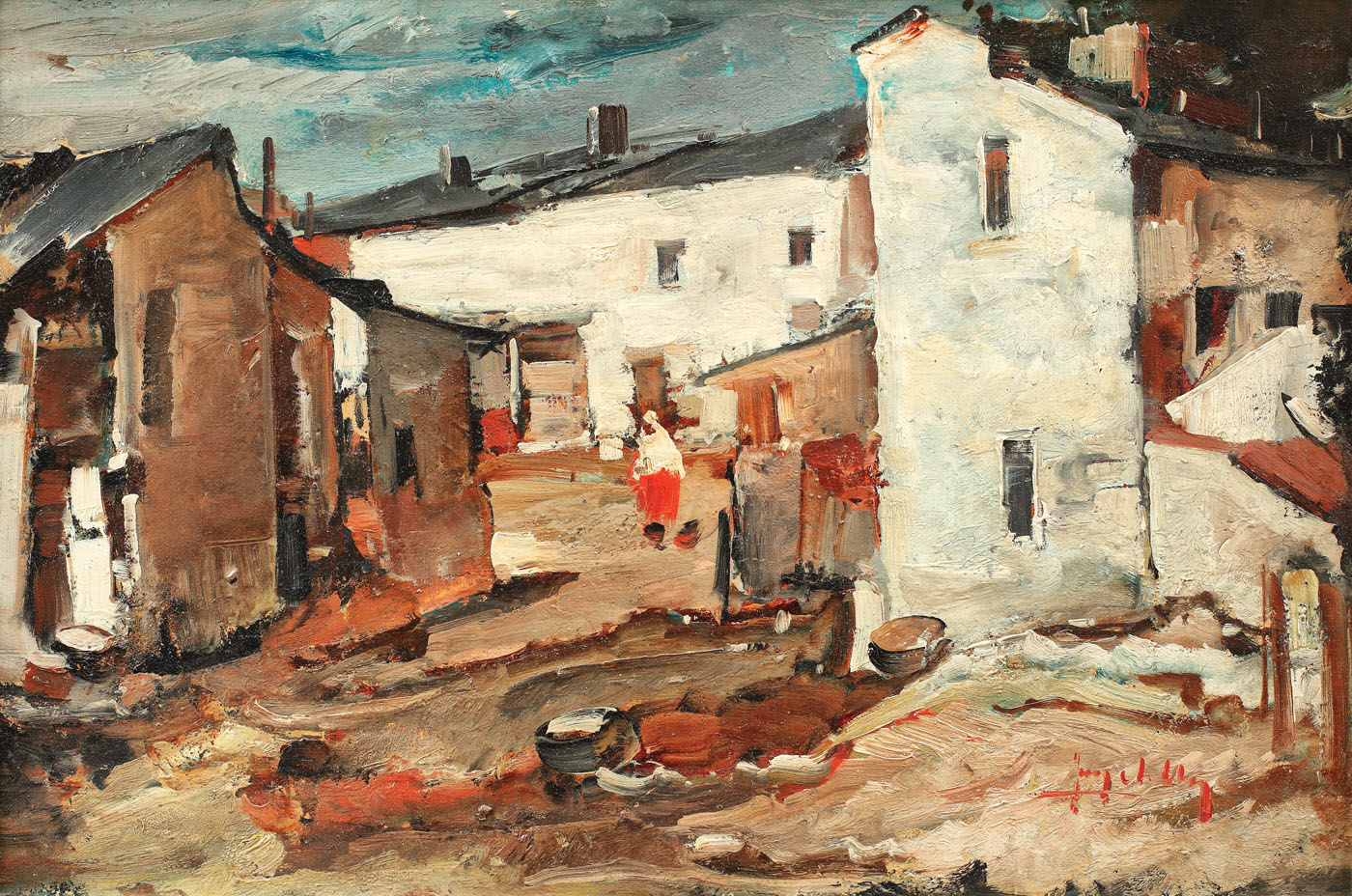

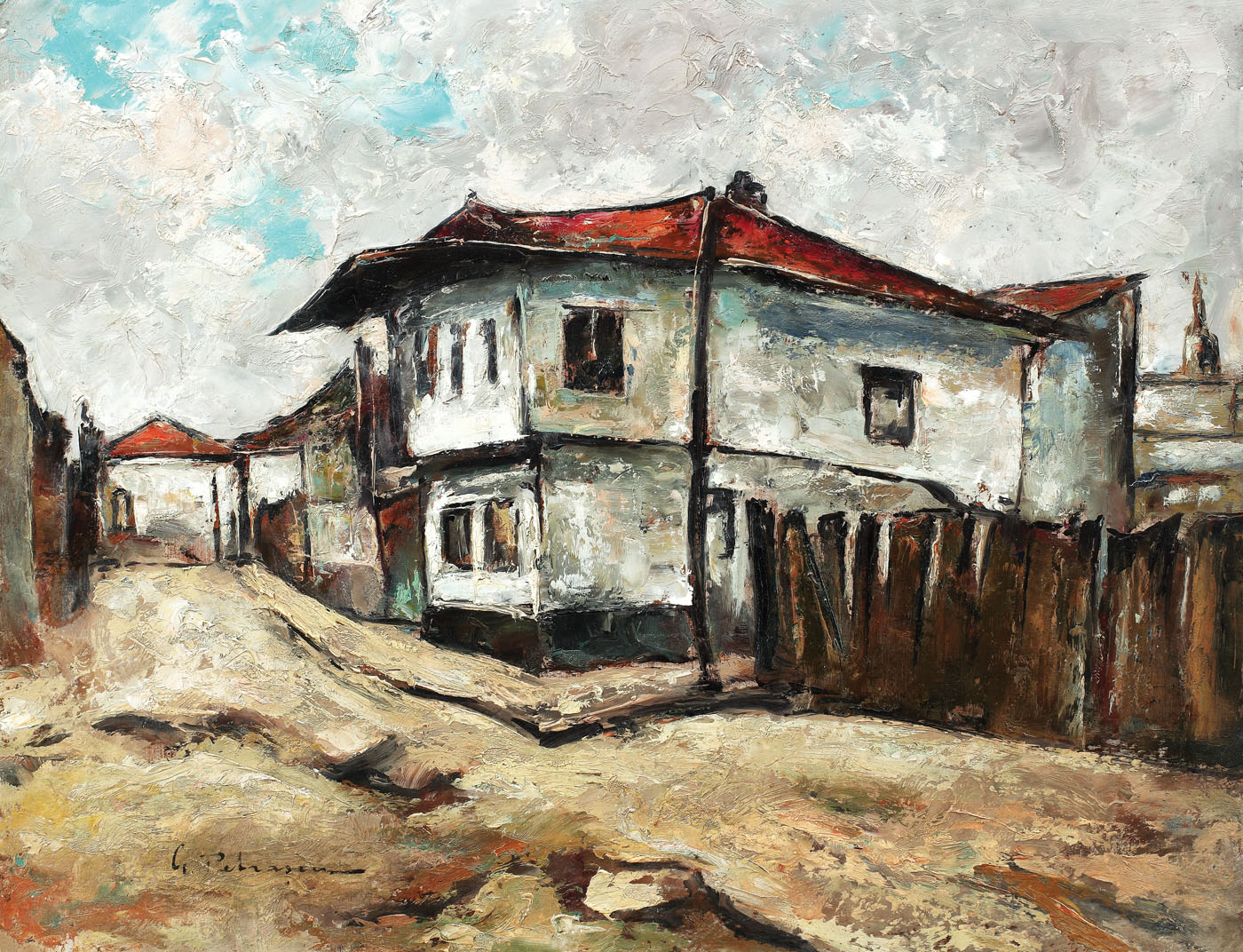

65. Houses in Silistra [1930-1932]
Estimate
EUR 8.000 - 12.000
Session
Tue, 19 December 2017 19:30
References
COSTESCU, Eleonora, "Gheorghe Petrașcu", Editura Meridiane, București, 1975
FLOREA, Vasile, "Petrașcu", Editura Meridiane, București, 1989
Dimensions
width 39.5 cm, height 30 cm, custom 39,5x30
Description
oil on cardboard, signed lower left, in black, "G. Petrașcu"
Research information
Opere realizate de Gheorghe Petrașcu în anii 1930-1932 la Silistra intrau în marea expoziție personală din cursul anului 1933, în catalogul expoziției fiind prezente 4 opere din orășelul dunărean (cat. 119, 121, 137 și 196).
Dating
1930-1932
ADDITIONAL INFORMATION
For clarifications regarding the bidding procedure, hammer price costs, guarantee, payment, and collection terms for the winning lot, we recommend carefully reading/re-reading the Bidding Regulations.
For additional information regarding the lot and the auction, please contact the Art Consultants Department.
Detalii
ADDITIONAL INFORMATION
For clarifications regarding the bidding procedure, hammer price costs, guarantee, payment, and collection terms for the winning lot, we recommend carefully reading/re-reading the Bidding Regulations.
For additional information regarding the lot and the auction, please contact the Art Consultants Department.
References
COSTESCU, Eleonora, "Gheorghe Petrașcu", Editura Meridiane, București, 1975
FLOREA, Vasile, "Petrașcu", Editura Meridiane, București, 1989
Dimensions
width 39.5 cm, height 30 cm, custom 39,5x30
Description
oil on cardboard, signed lower left, in black, "G. Petrașcu"
Research information
Opere realizate de Gheorghe Petrașcu în anii 1930-1932 la Silistra intrau în marea expoziție personală din cursul anului 1933, în catalogul expoziției fiind prezente 4 opere din orășelul dunărean (cat. 119, 121, 137 și 196).
Dating
1930-1932