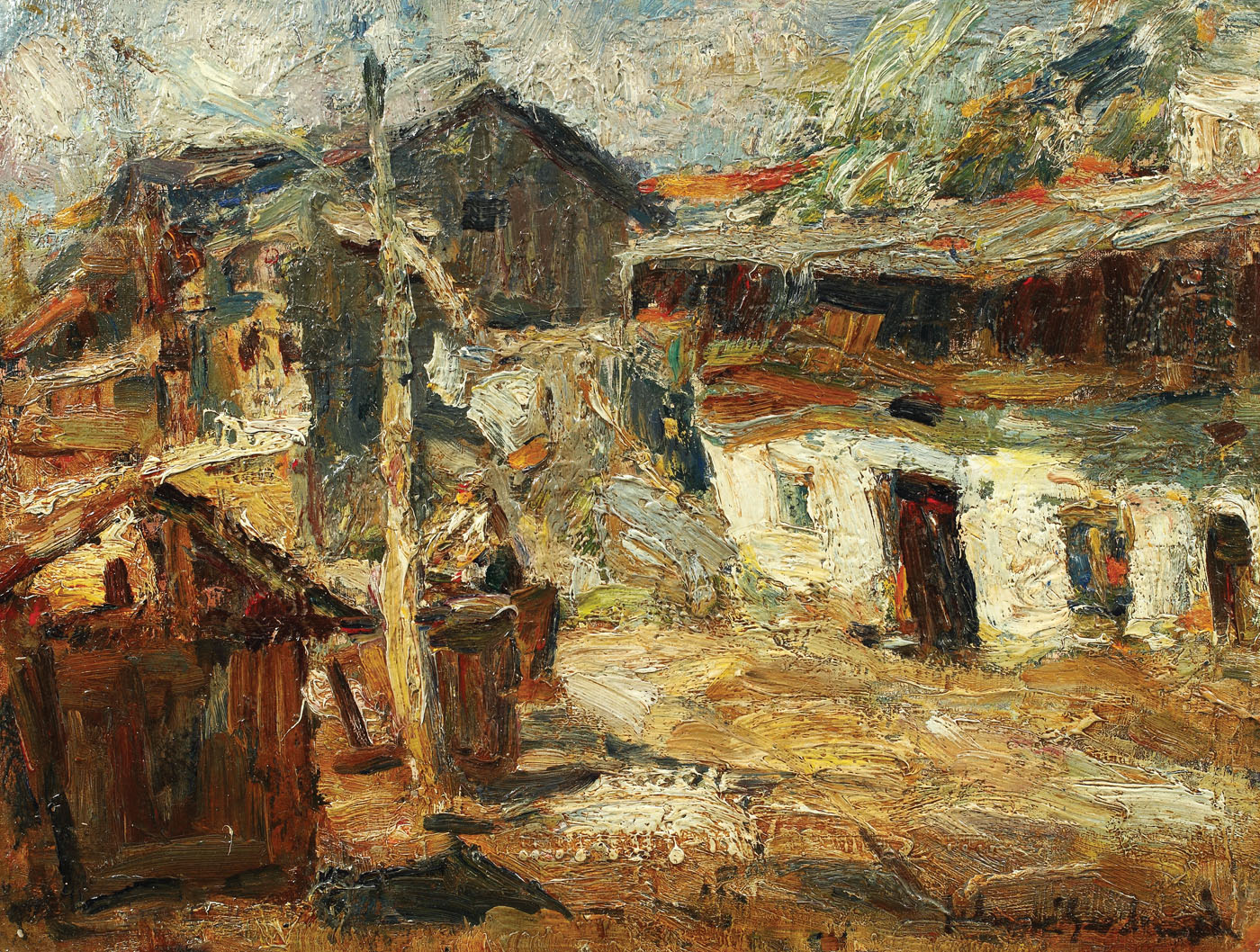

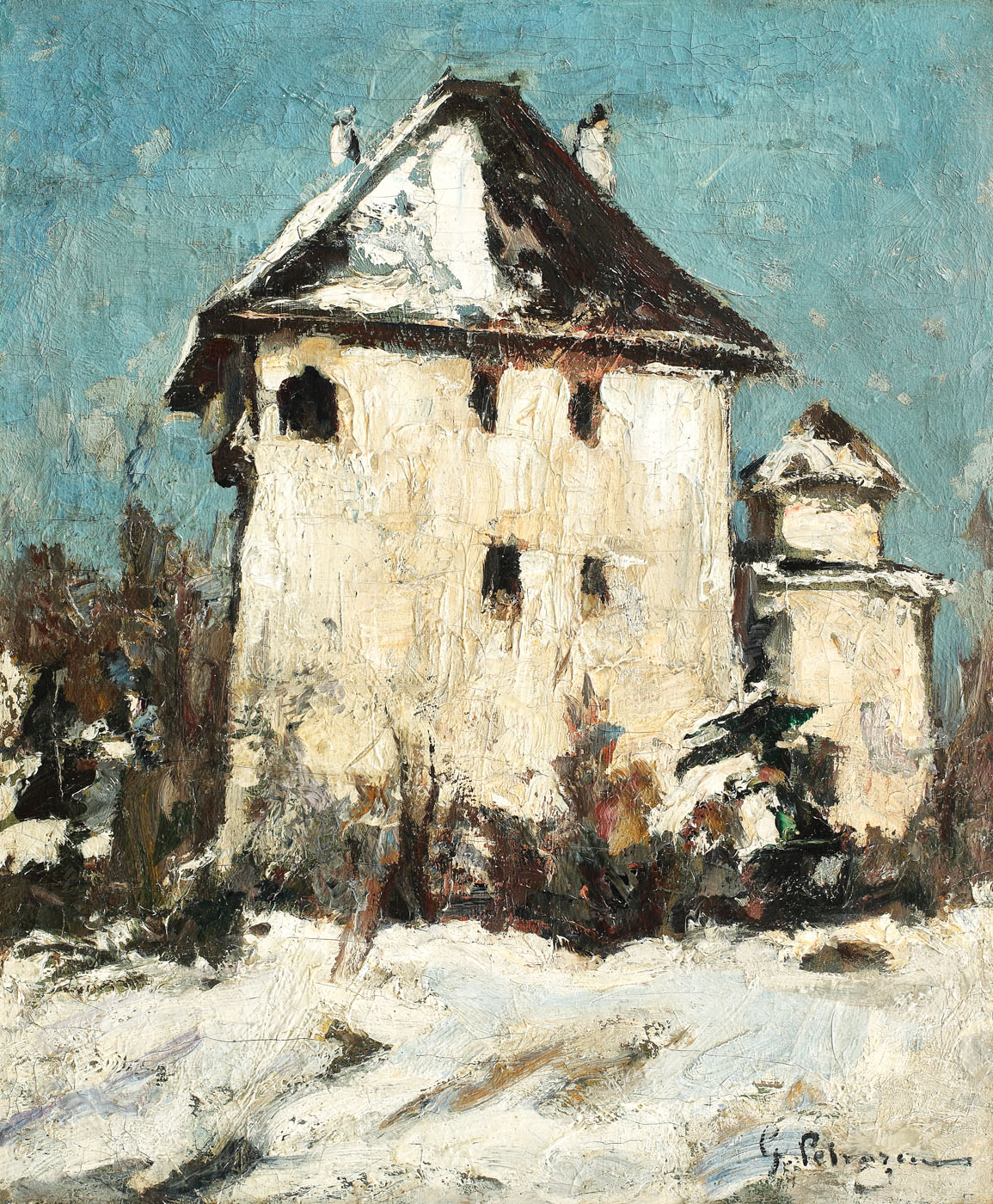
57. Cula from Olt [1915-1918]
Estimate
EUR 8.000 - 14.000
Sold
EUR 14.000
Session
Tue, 19 December 2017 19:30
References
FLOREA, Vasile, "Gheorghe Petraşcu", Ed. Meridiane, Bucureşti, 1989
"Gh. Petraşcu", Catalogul expoziţiei de pictură, Muzeul de Artă al Republicii Socialiste România, Bucureşti, 1972
Dimensions
width 35 cm, height 42 cm, custom 35x42
Description
oil on canvas, signed lower right, in blue, "G. Petraşcu"
Research information
Opera a participat în expoziția "Casa în pictura românească din colecțiile particulare", Muzeul Municipiului București, în perioada 4-21 iunie 2013 şi este reprodusă în catalogul expoziţiei la pag. 70
Opera a participat în expoziția "Iarna în pictura românească din colecţii particulare", Muzeul Municipiului București, în perioada 5 octombrie-3 noiembrie 2010 şi este reprodusă în catalogul expoziţiei la pag. 37.
Dating
1915-1918
PROVENANCE
historic collection of the writer and journalist Eugen Barbu (1924-1993).
ADDITIONAL INFORMATION
For clarifications regarding the bidding procedure, hammer price costs, guarantee, payment, and collection terms for the winning lot, we recommend carefully reading/re-reading the Bidding Regulations.
For additional information regarding the lot and the auction, please contact the Art Consultants Department.
Detalii
ADDITIONAL INFORMATION
For clarifications regarding the bidding procedure, hammer price costs, guarantee, payment, and collection terms for the winning lot, we recommend carefully reading/re-reading the Bidding Regulations.
For additional information regarding the lot and the auction, please contact the Art Consultants Department.
References
FLOREA, Vasile, "Gheorghe Petraşcu", Ed. Meridiane, Bucureşti, 1989
"Gh. Petraşcu", Catalogul expoziţiei de pictură, Muzeul de Artă al Republicii Socialiste România, Bucureşti, 1972
Dimensions
width 35 cm, height 42 cm, custom 35x42
Description
oil on canvas, signed lower right, in blue, "G. Petraşcu"
Research information
Opera a participat în expoziția "Casa în pictura românească din colecțiile particulare", Muzeul Municipiului București, în perioada 4-21 iunie 2013 şi este reprodusă în catalogul expoziţiei la pag. 70
Opera a participat în expoziția "Iarna în pictura românească din colecţii particulare", Muzeul Municipiului București, în perioada 5 octombrie-3 noiembrie 2010 şi este reprodusă în catalogul expoziţiei la pag. 37.
Dating
1915-1918
PROVENANCE
historic collection of the writer and journalist Eugen Barbu (1924-1993).
Similar lots