
38. Peasant Girl [1915]
The photos of the lot are informative and indicative, and cannot provide a highly detailed view of the object from all angles. We recommend a careful physical inspection of the lot before bidding.
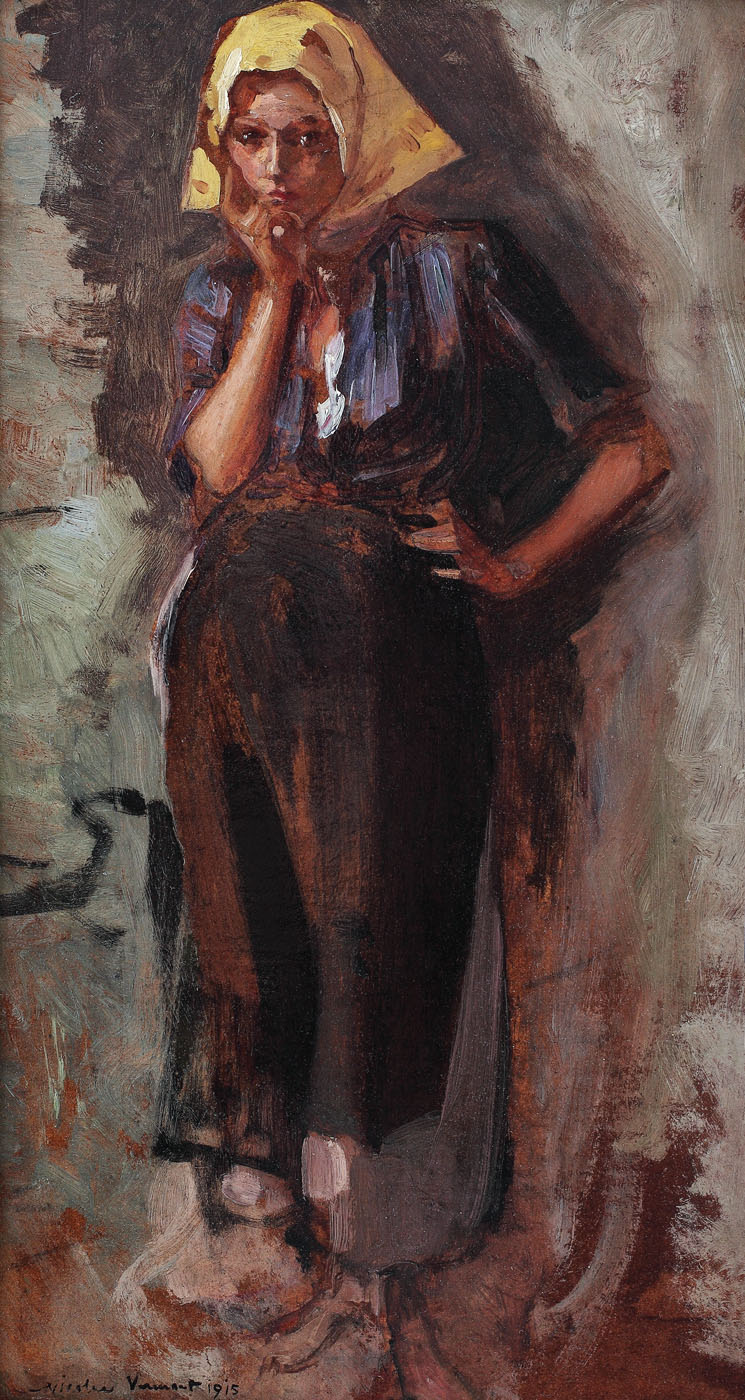
38. Peasant Girl [1915]
1866, Bacău - 1932, Bucureşti
Estimate:
EUR 2.500 - 3.500
Sold
EUR 2.500
oil on cardboard, 44.5 x 24.5 cm, 24,5x44,5, signed and dated lower left, in black, "Nicolae Vermont, 1915"
The subject of the human figure was one of Vermont's constant preoccupations, manifested as early as the artist's first affirmations, who proved to be a skillful and attentive researcher of the people. Initially attracted by the psychological traits of his characters, Vermont's artistic evolution brings an implementation of his interest in social dynamics, people’s social status, elements that have contributed to the transformation of the soul and body. Generally, in the specialty studies, it is accepted that there is a difference between genre painting and portraits, the former having a particularly narrative character, by depicting people while performing their own activity, and the latter placing more emphasis on those features that define and distinguish an individual from others. In Vermont's painting, the artist knows how to combine both genres in a unique, original way, paying the same attention to objects related to the occupation of people as well as to those psychological features specific to portraiture. Thus, works of great value were born: "Chimney Sweep" (1900), "The portrait of Bernard Vermont" (1902) - the artist's brother, "Italian Bagpipe Player" (1912), a series of paintings with peasant or gipsy women and self-portraits of the artist. Seemingly inspired by the same creative ideas underlying Nicolae Grigorescu's works, but with a certain note of vigour, Vermont's Gipsies and Peasants appear idyllic, with delicate bodies and graceful attitudes, reminiscent of the French genre painting of the eighteenth century. The painting "Gipsy Girl with Yellow Headscarf" gave the artist the possibility of translating a strong expressiveness from the young gipsy's face. The position of the upper body, slightly tilted back, thus revealing the thigh area, suggests femininity and sensuality. The meditative, yet languorous gaze of the woman, the neglected, slightly unbuttoned shirt, which exposes a bit of her chest, the strong contrast between the yellow headscarf and the sunburnt skin make this piece a work of art of particular sensuality.
For clarifications regarding the bidding procedure, hammer price costs, guarantee, payment, and collection terms for the winning lot, we recommend carefully reading/re-reading the Bidding Regulations.
For additional information regarding the lot and the auction, please contact the Art Consultants Department.
SESSION