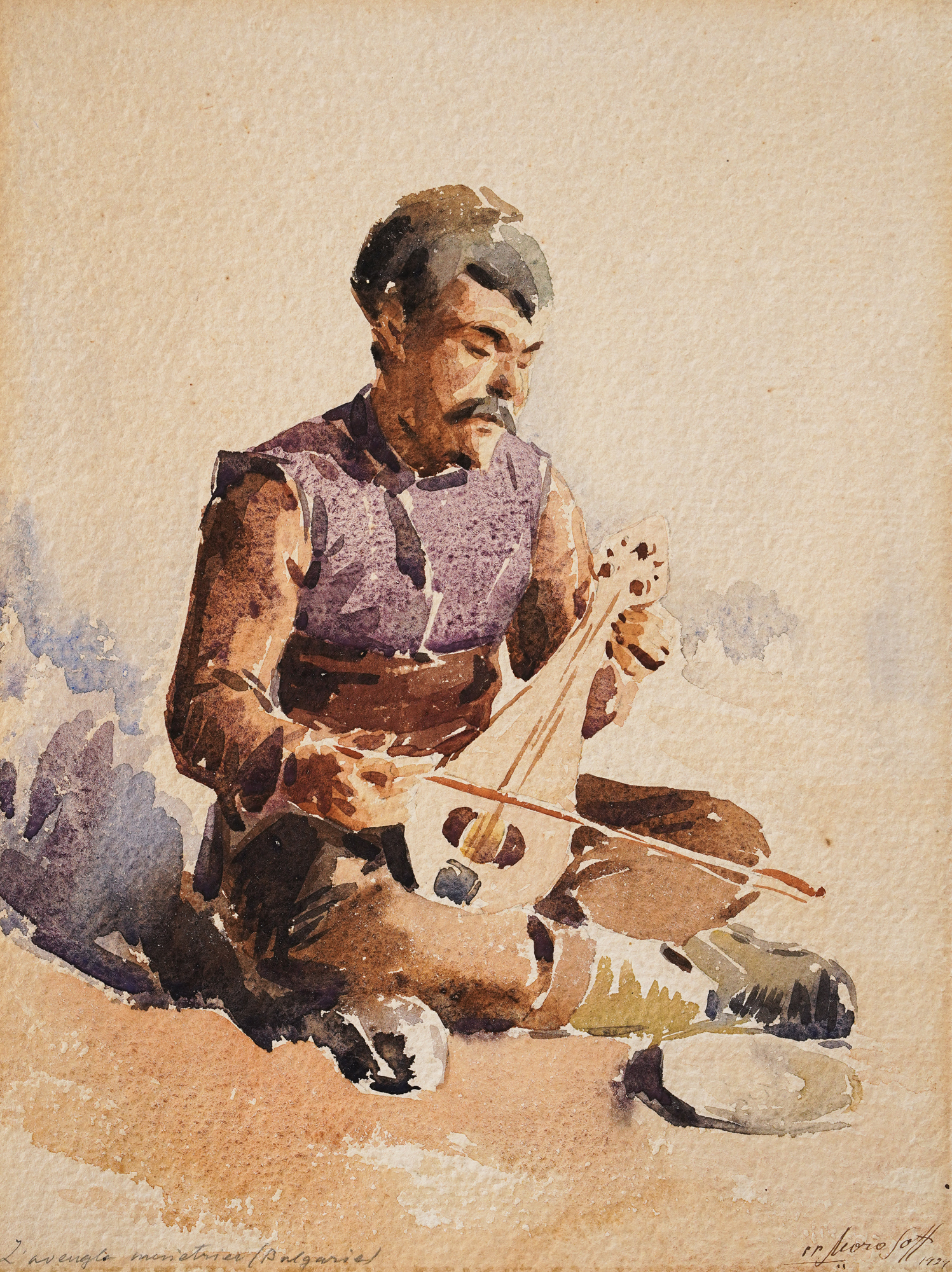

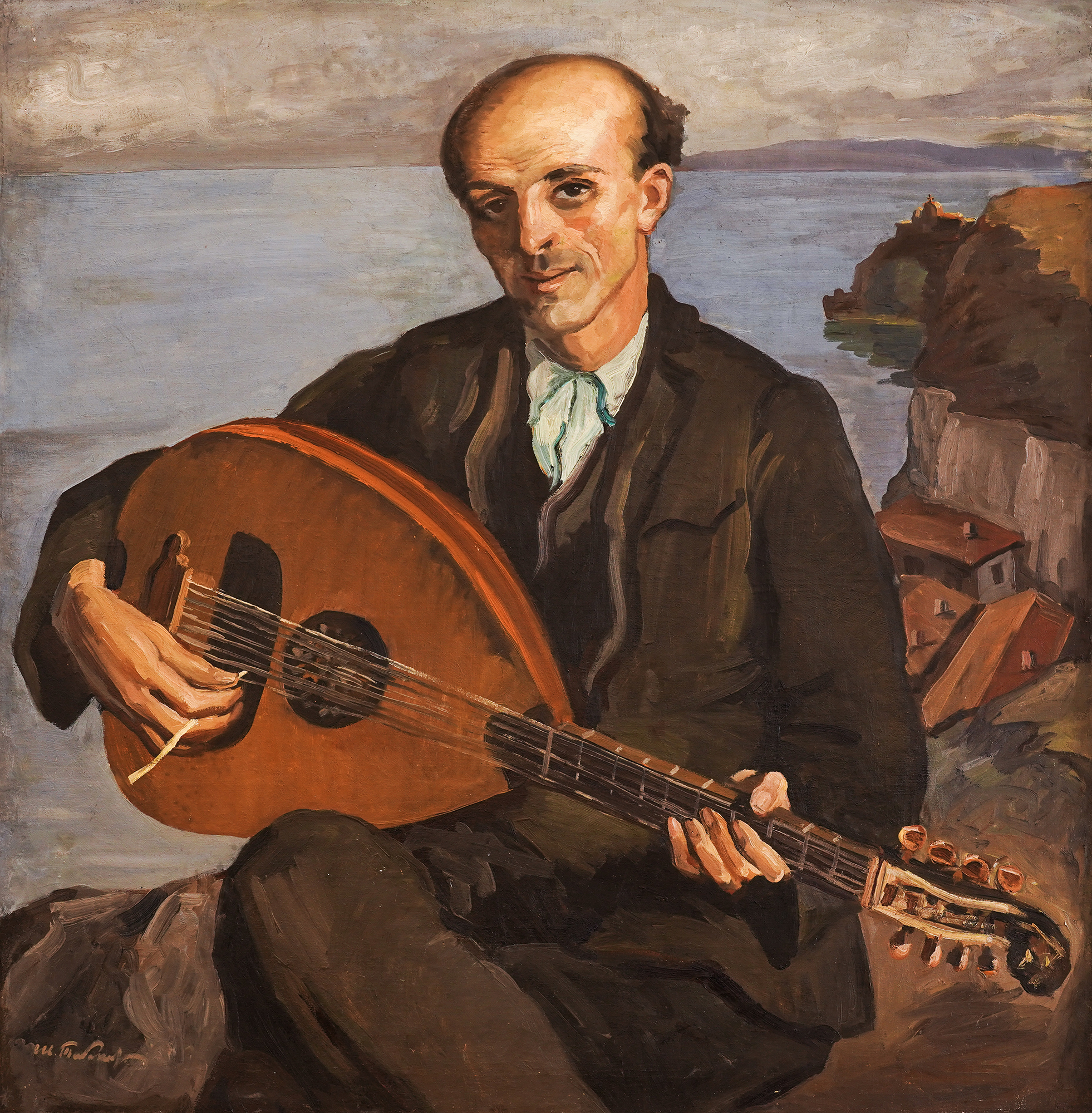
57. The Ohrid musician
The photos of the lot are informative and indicative, and cannot provide a highly detailed view of the object from all angles. We recommend a careful physical inspection of the lot before bidding.
57. The Ohrid musician
1901, Sofia - 1977, Sofia
Estimate:
EUR 2.000 - 3.000
Not sold
маслени бои върху платно, 101 x 99 cm, 101 Ã 99 cm, signed bottom left, in brown, "И. Табаков"
Research information
The portrayed man was part of the Ohrid troubadour group (tajfa) âSadilovtsi,â founded by Klime Sadilo (Kliment Sadilov) in the second half of the 1940s. They later became known as the âOhrid Troubadours.â The group was famous for performing concerts not only in the Macedonian region but also in Bulgaria, Greece, Turkey, Albania, and the Yugoslav member states. The songs they performed included both pieces from the traditional culture of these countries and compositions in the local languages and dialects. They are considered one of the most renowned troubadour groups in the Balkans in the years following World War II.
For clarifications regarding the bidding procedure, hammer price costs, guarantee, payment, and collection terms for the winning lot, we recommend carefully reading/re-reading the Bidding Regulations.
For additional information regarding the lot and the auction, please contact the Art Consultants Department.
SESSION
Brought to you by
Similar lots