
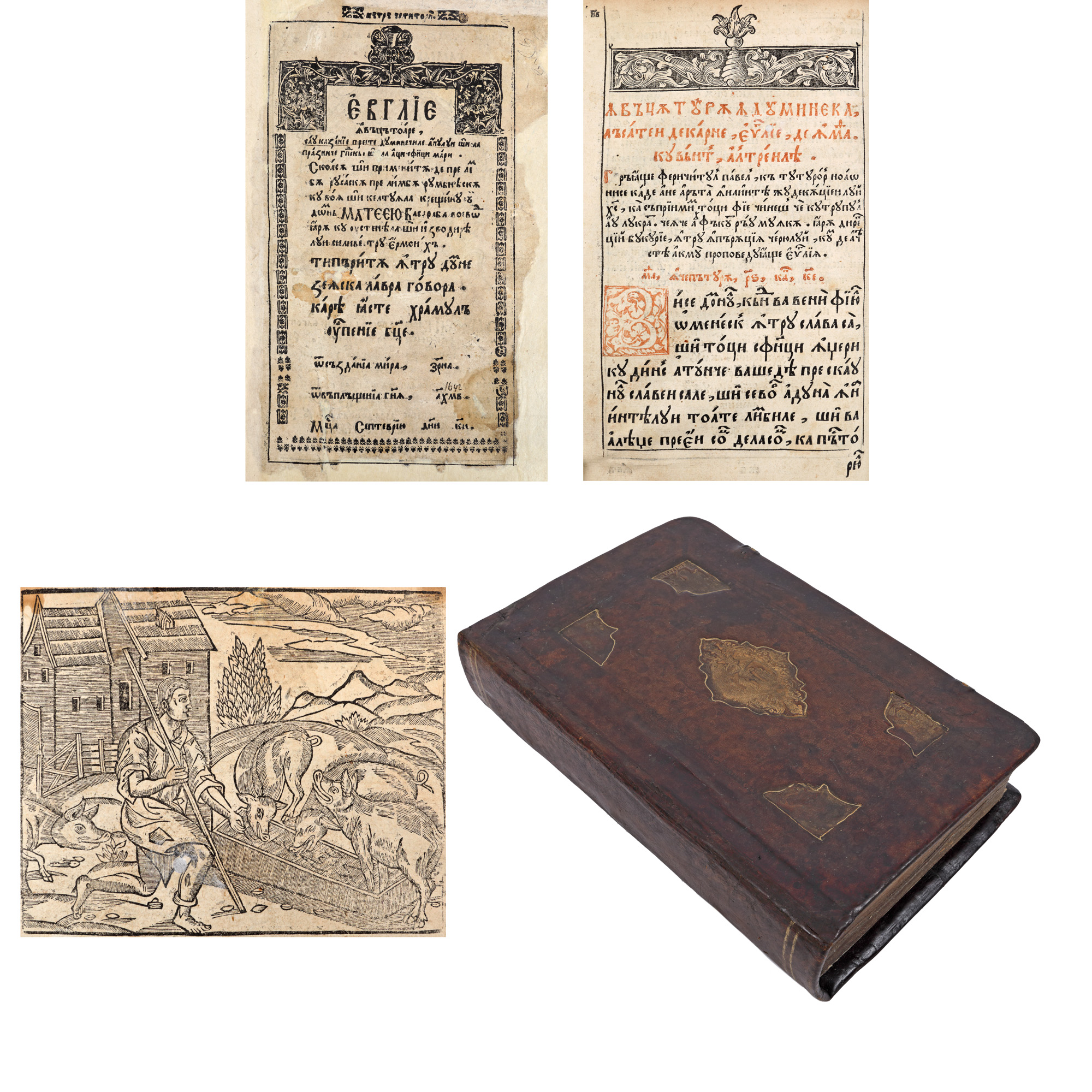
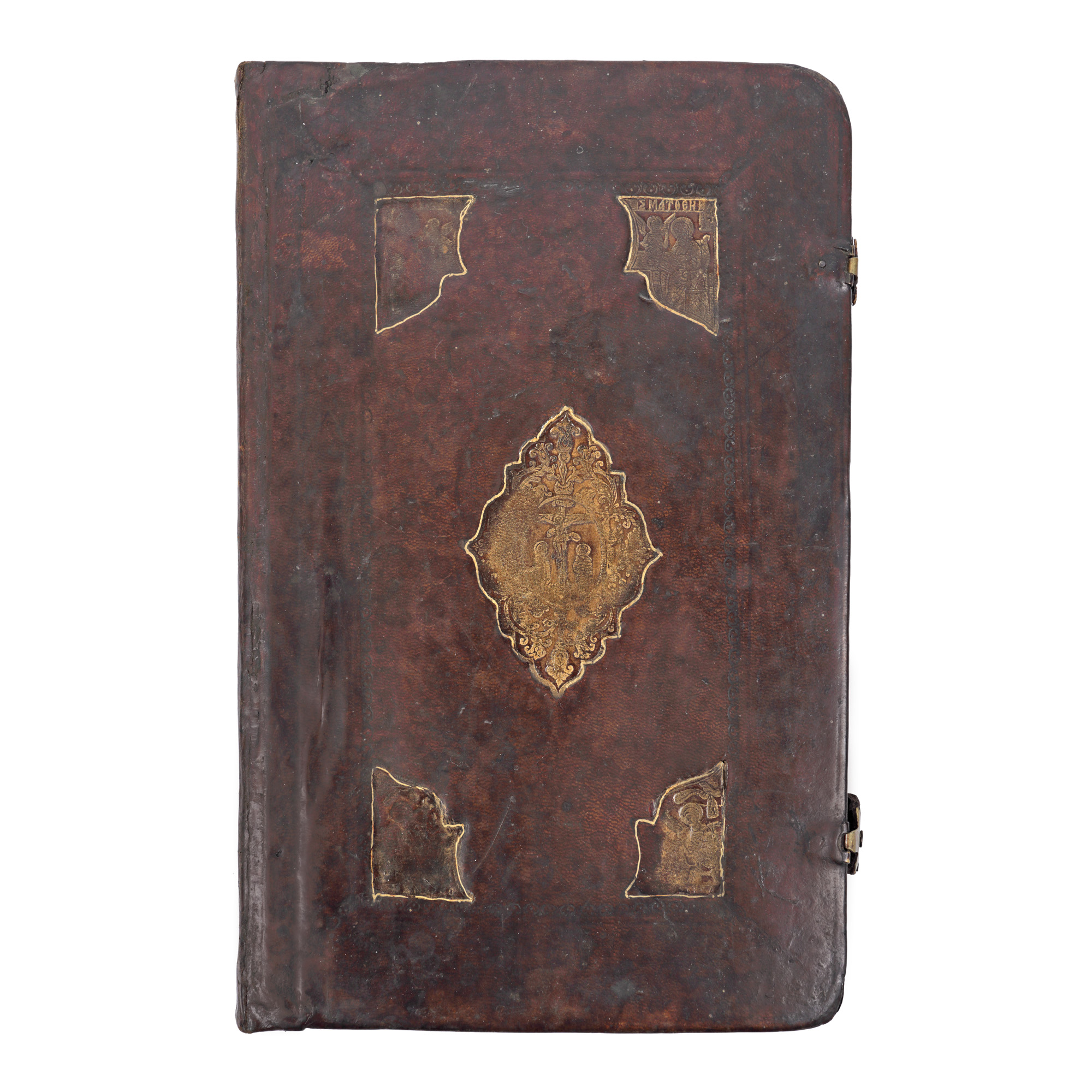
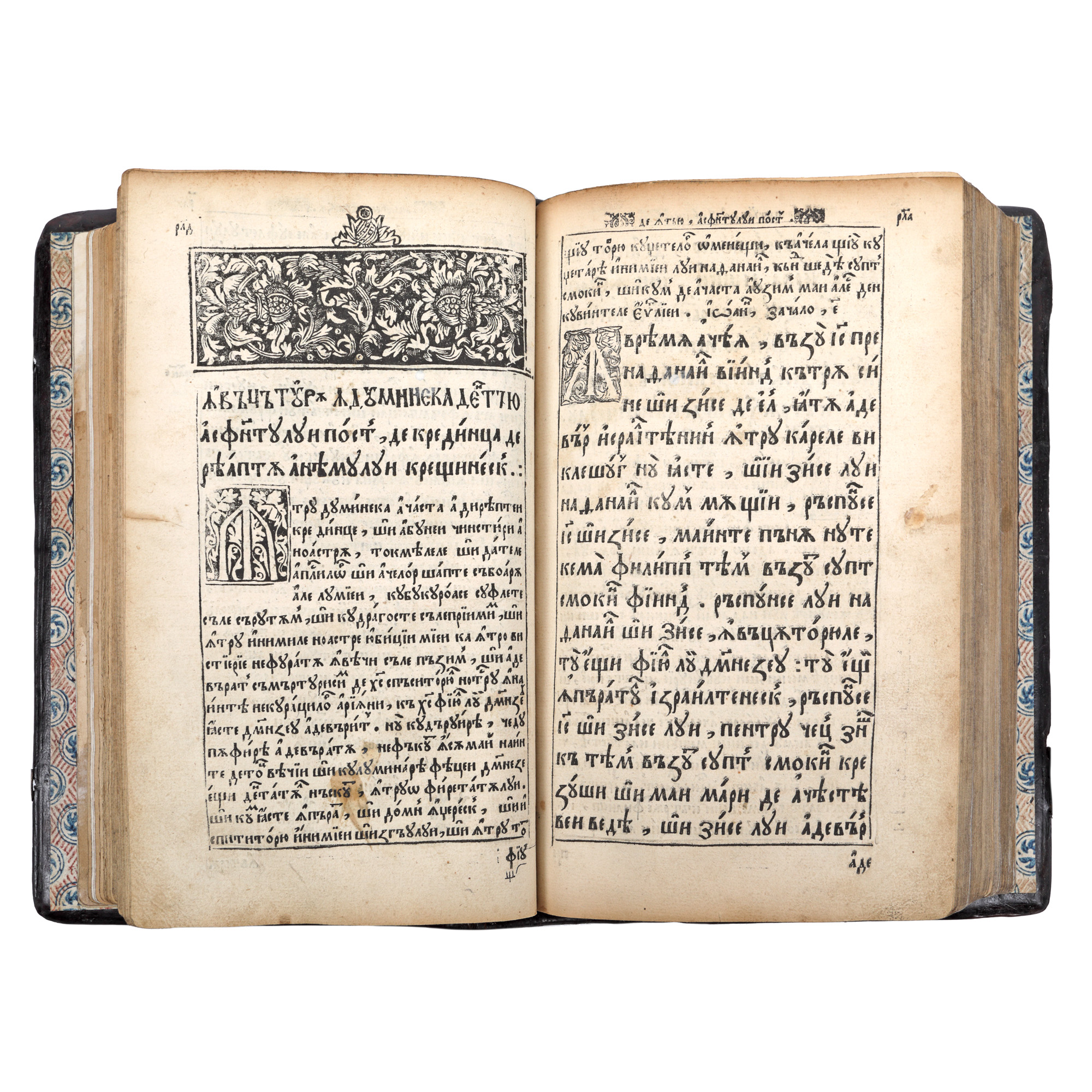
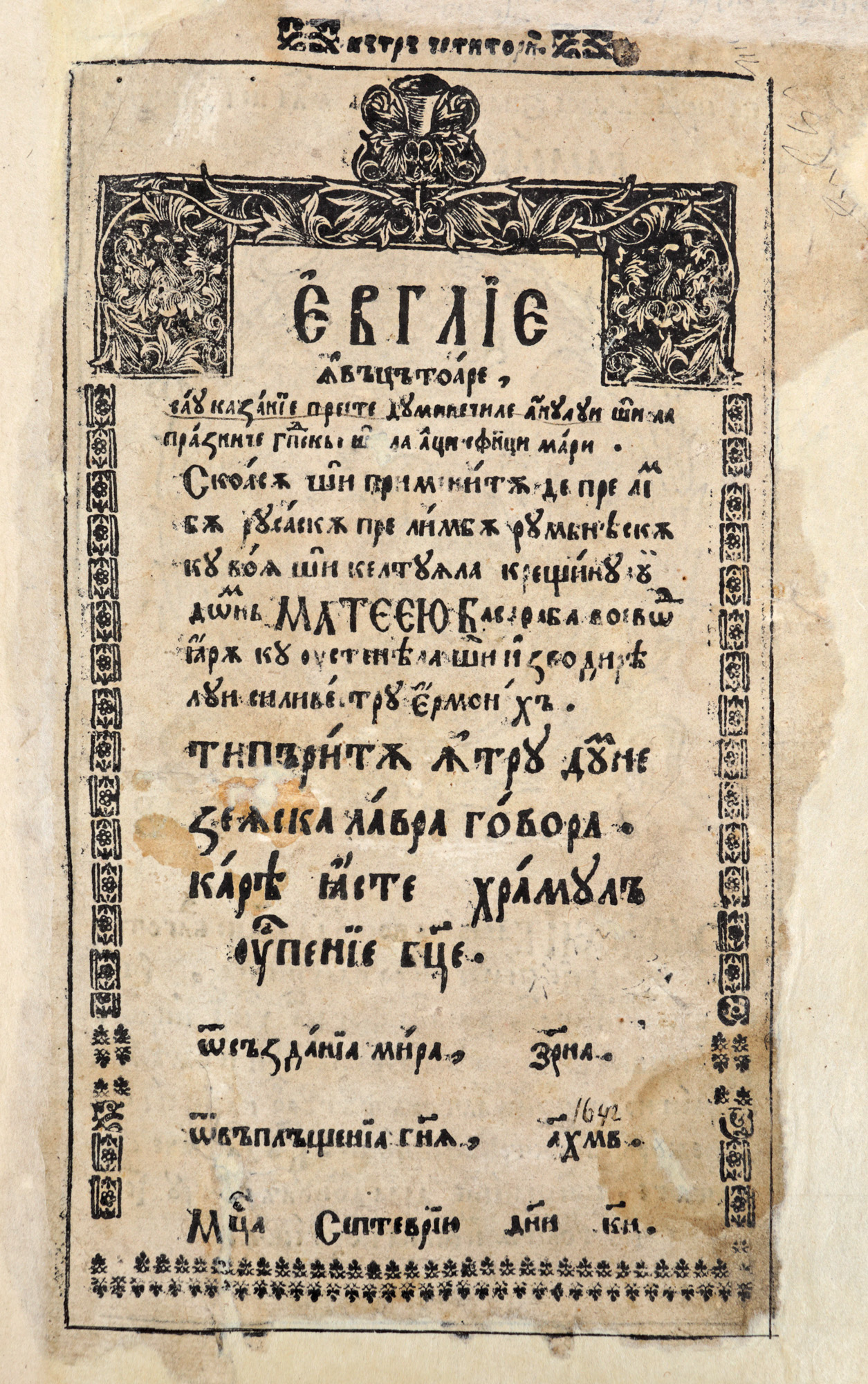
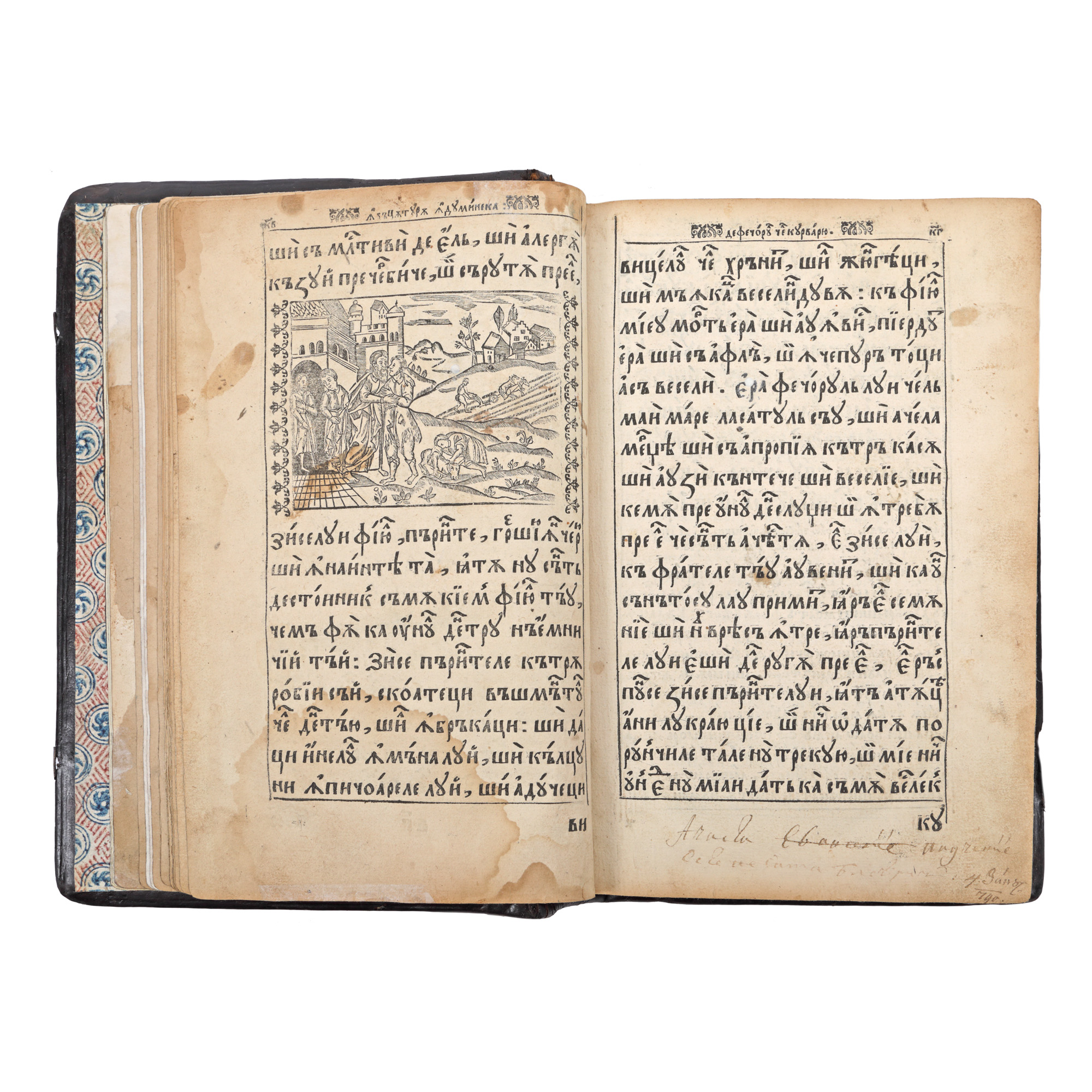
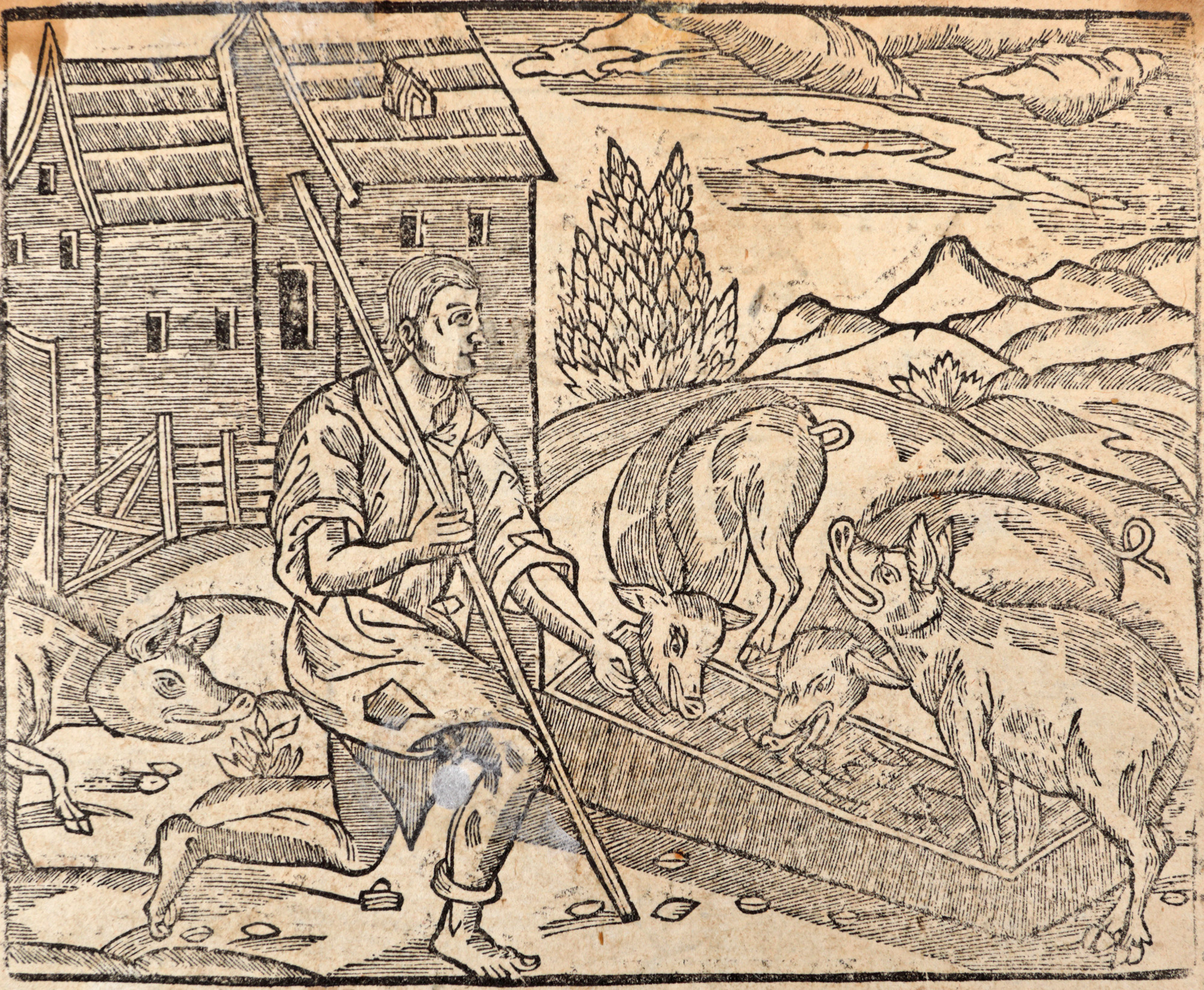
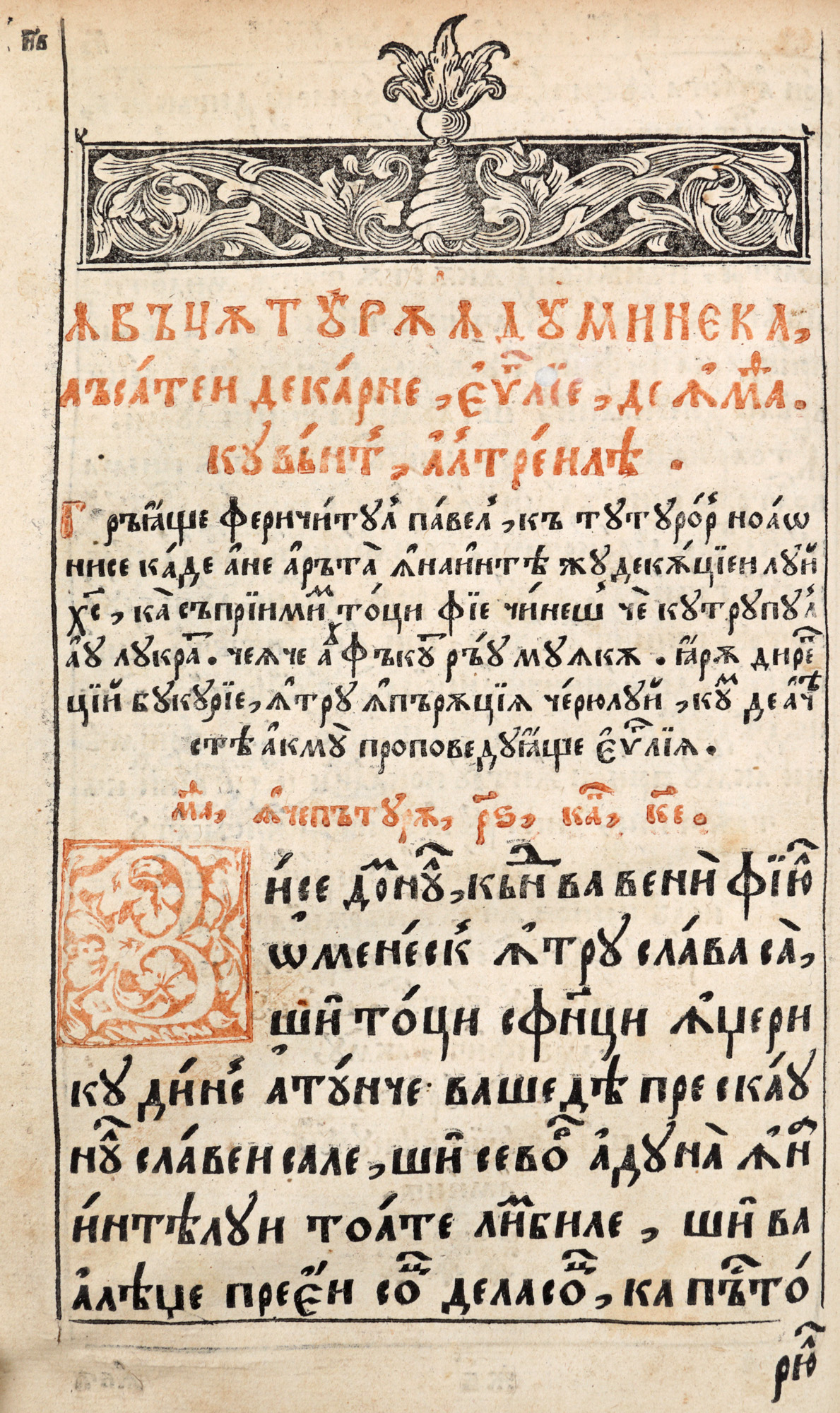
54Т. "Cazania by la Govora" ("Evanghelie învățătoare sau cazanie preste duminecile anului") ("The Holily of Govora" - "Teaching gospel or homily for the Sundays of the year"), printed during the time of Matei Basarab, Govora, 1642, the first book written by hieromonk Silvestru, the abbot of Govora Monastery, final correction ensured by copyist Udriște Năsturel, with ex libris, from the collection of professor Ion Iliescu, extremely rare collectible piece
The photos of the lot are informative and indicative, and cannot provide a highly detailed view of the object from all angles. We recommend a careful physical inspection of the lot before bidding.
54Т. "Cazania by la Govora" ("Evanghelie învățătoare sau cazanie preste duminecile anului") ("The Holily of Govora" - "Teaching gospel or homily for the Sundays of the year"), printed during the time of Matei Basarab, Govora, 1642, the first book written by hieromonk Silvestru, the abbot of Govora Monastery, final correction ensured by copyist Udriște Năsturel, with ex libris, from the collection of professor Ion Iliescu, extremely rare collectible piece
References
Bucharest, Library of the Romanian Academy. Cipariu, Analects, 150. - Lambrior, Reading book, 90. - Gaster, Chrestomatie, I, 97. Cipariu, Analects, XXV, XXVI, - Principia, 109. - Sbiera, Cultural movements:, 61 BRV. I, p. 42
30.5 x 19.5 cm
Research information
During the ruling of Matei Basarab (1632-1654), in Wallachia, and Vasile Lupu (1634-1653), in Moldova, we are witnessing a genuine cultural "rebirth" process, among other things, through the resumption of the printing activity, discontinued at the end of the 16th century, and through the publication of the first books in Romanian with the endorsement of the Orthodox Church. During this period, under the auspices of orthodoxy, the first legal codes ("pravila") and the first homilies (or collections of sermons) in Romanian are printed, as well as the first books for worship with type indications ("direction" indications addressed to the priests), also transposed from Slavic into Romanian. This is the first Romanian homily published by the Orthodox Church, preceding the appearance of the Homily of Metropolitan Varlaam of Moldova by one year. Such first occurrence is against the background of an increasingly low number of Romanian priests who spoke Slavic, but in which they did, however, have an obligation to worship, in keeping with the tradition of the worship languages considered to be sacred. On the other hand, with the partial introduction of Romanian in the Orthodox worship books, the aim was to counted the influence of Calvinist propaganda books translated and printed in Romanian in Transylvania. For this reason, copyist UdriÈte NÄsturel â the rulerâs brother-in-law, the one who wrote the bookâs preface and who revised the text of the translation - wrote in the preface of the Govora Homily: "I have still seen in our people many like those, people of both kinds, dullards and spiritual, who, because of their ignorance, turned away, with foreign teachings and with their dull little mind straying âfrom the true faith, against Godâs church, mingling with the heretics". The translator of the teaching Gospel of 1642 is hieromonk Silvestru, the abbot of Govora Monastery, who also translated part of the New Testament (BÄlgrad/Alba Iulia, 1648). If we look at the year in which the preface was written, 1638-1639, it follows that the printing of the book took more than three years (the year of publication, 1642, being indicated on the title page). The complete title of the work is Teaching Gospel or homily for the Sundays of the year and other gospodski (Slavic for "royal") holy days and on the days of other great saints. The sermons are translated from the Teaching Gospel (Rohmaniv, 1619)of Ukrainian Kiril Trankvillion StavroveÈki. The contents of the volume indicated on the title page (reproducing the one of the Ukrainian original) did not, however, correspond to the actual content of the Romanian Hoily. The latter only contains the Sunday sermons, starting from the first Sunday of the Triodion (of the Publican and the Pharisee) and only up to the Sunday of All Saints, in no less than 616 pages. To cover the entire heralded content, another four volumes would have been necessary, of similar sizes to the one that was printed. The sermons have the following structure: an exordium (an introduction), the Gospel pericope (the Gospel quote read at the end of the worship service) for the respective Sunday and the interpretation of the pericope, usually divided into two distinct parts. The texts, which are very long, are punctuated with numerous anti-Calvinistic polemic accents. The contents of the Govora Homily is to be resumed and reprinted two years later, in 1644, at the Dealu Monastery, where the Govora typographic material had been transported in the meantime. In this second edition of the Teaching Gospel, the content notified on the title page is observed, by printing, as a continuation of the texts from the Govora volume, the corresponding part of Varlaamâs Homily (IaÈi, 1643), with shorter, simpler, and clearer sermons.
For clarifications regarding the bidding procedure, hammer price costs, guarantee, payment, and collection terms for the winning lot, we recommend carefully reading/re-reading the Bidding Regulations.
For additional information regarding the lot and the auction, please contact the Art Consultants Department.
Similar lots
94. Ample handwritten dedication of the writer Marin Sorescu to Vasile Vaida, 1968, with ex libris