

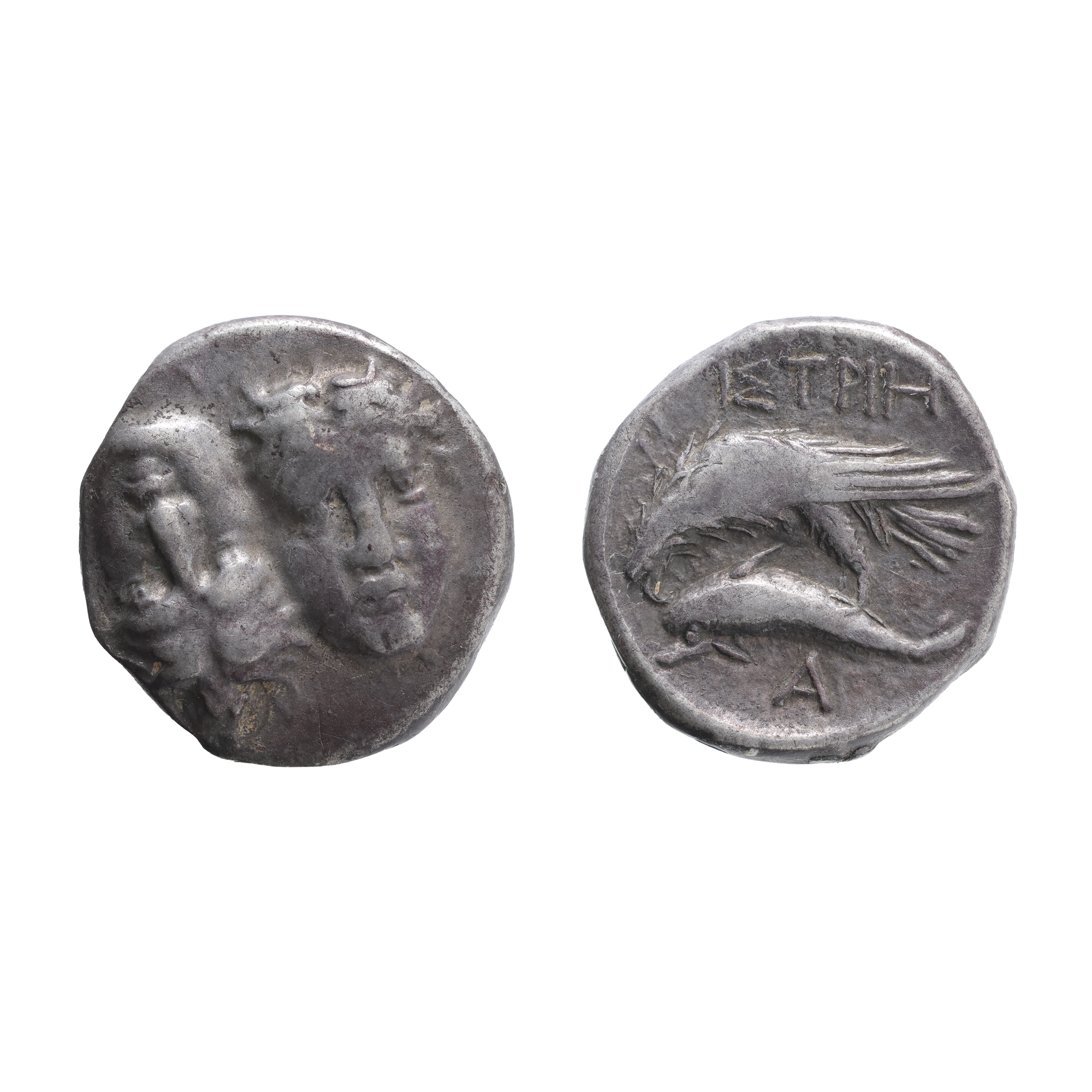
70F. Drahma Coin, Gemini type - the two faces of the Danube, Histria, 434-300 BC, the first coin struck on the current territory of Romania, silver
The photos of the lot are informative and indicative, and cannot provide a highly detailed view of the object from all angles. We recommend a careful physical inspection of the lot before bidding.
70F. Drahma Coin, Gemini type - the two faces of the Danube, Histria, 434-300 BC, the first coin struck on the current territory of Romania, silver
Starting price:
EUR 350
Sold
EUR 450
silver, d=16 mm
In the 5th century BC, Histria entered a new phase of economic development, marking the beginning of the mints. Between 480-475 BC, the Greek colony began to issue its own coins, the famous silver drachmas, considered the first coins on the current territory of Romania. These coins had on the obverse the emblem of the city, represented by an eagle above a dolphin, oriented to the left, alongside the Greek inscription IΣTPI (ISTRI), naming the colony.
According to Nicolae Iorga, these symbols, the eagle holding a dolphin in its claws, were also used by other Greek cities, such as Sinope and Olbia. On the reverse of the Istrian coins, there are two adjoining human heads, one of them being positioned inverted, probably representing the Dioscuri or other protective deities of the city's trade.
The silver drachmas issued in Istria circulated over quite a wide area, including Dobrogea, being also discovered in Muntenia and Moldova. Over time, the weight of the Istrian drachma decreased, going from 7-8 grams in the 5th century BC, to 5-6 grams in the 4th century BC. In addition to drachmas, other silver division coins were also minted in Istria, such as the hemidrachm (half a drachma), a quarter drachma, obol (equivalent to 1/6 of a drachma) and hemiobol (equivalent to 1/2 of an obol or 1/12 of a drachma).
For clarifications regarding the bidding procedure, hammer price costs, guarantee, payment, and collection terms for the winning lot, we recommend carefully reading/re-reading the Bidding Regulations.
For additional information regarding the lot and the auction, please contact the Art Consultants Department.
SESSION
Similar lots
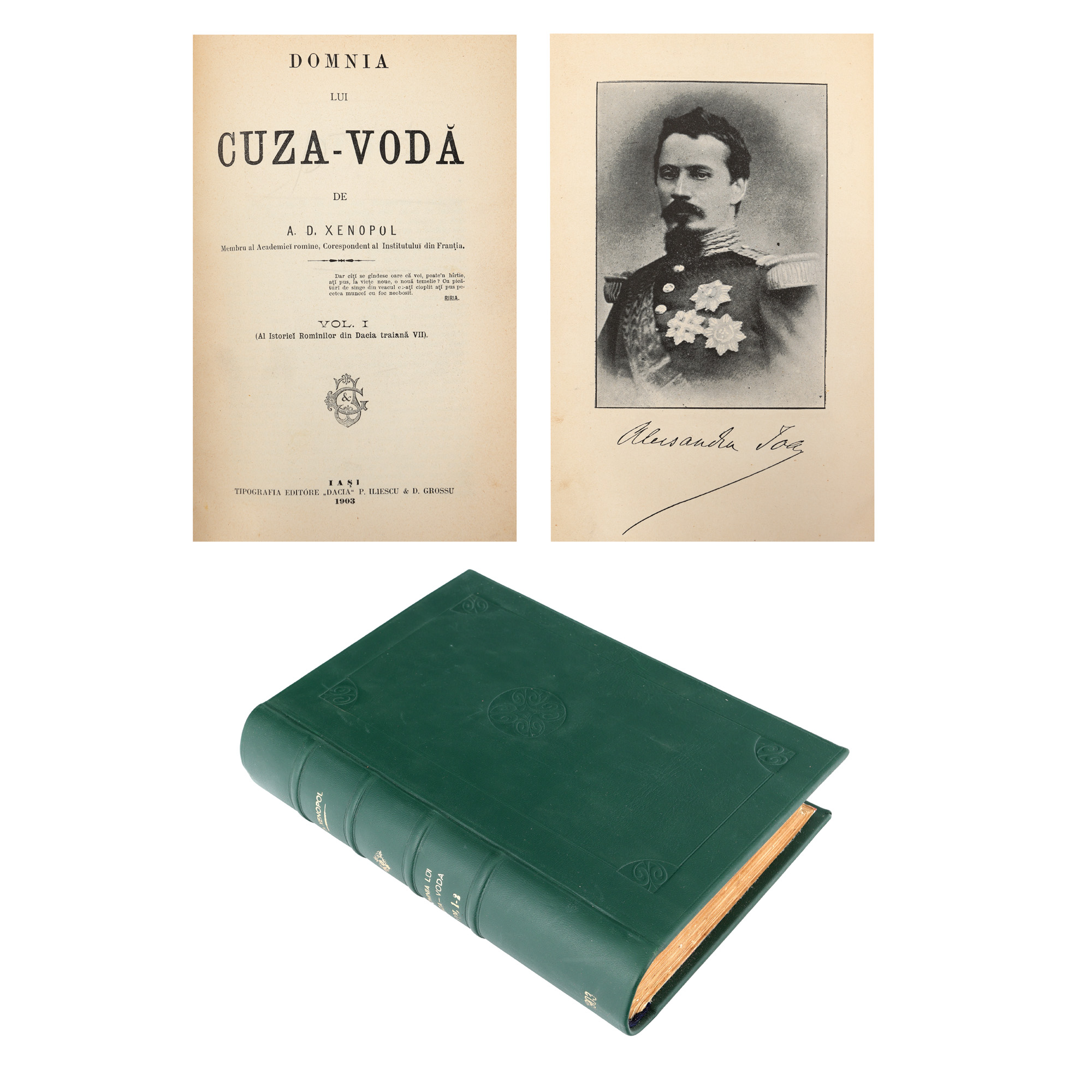
196. "The Reign of Cuza-Vodă" by A.D. Xenopol, two volumes, Iași, 1903
Starting price:
EUR 100
Sold
EUR 400
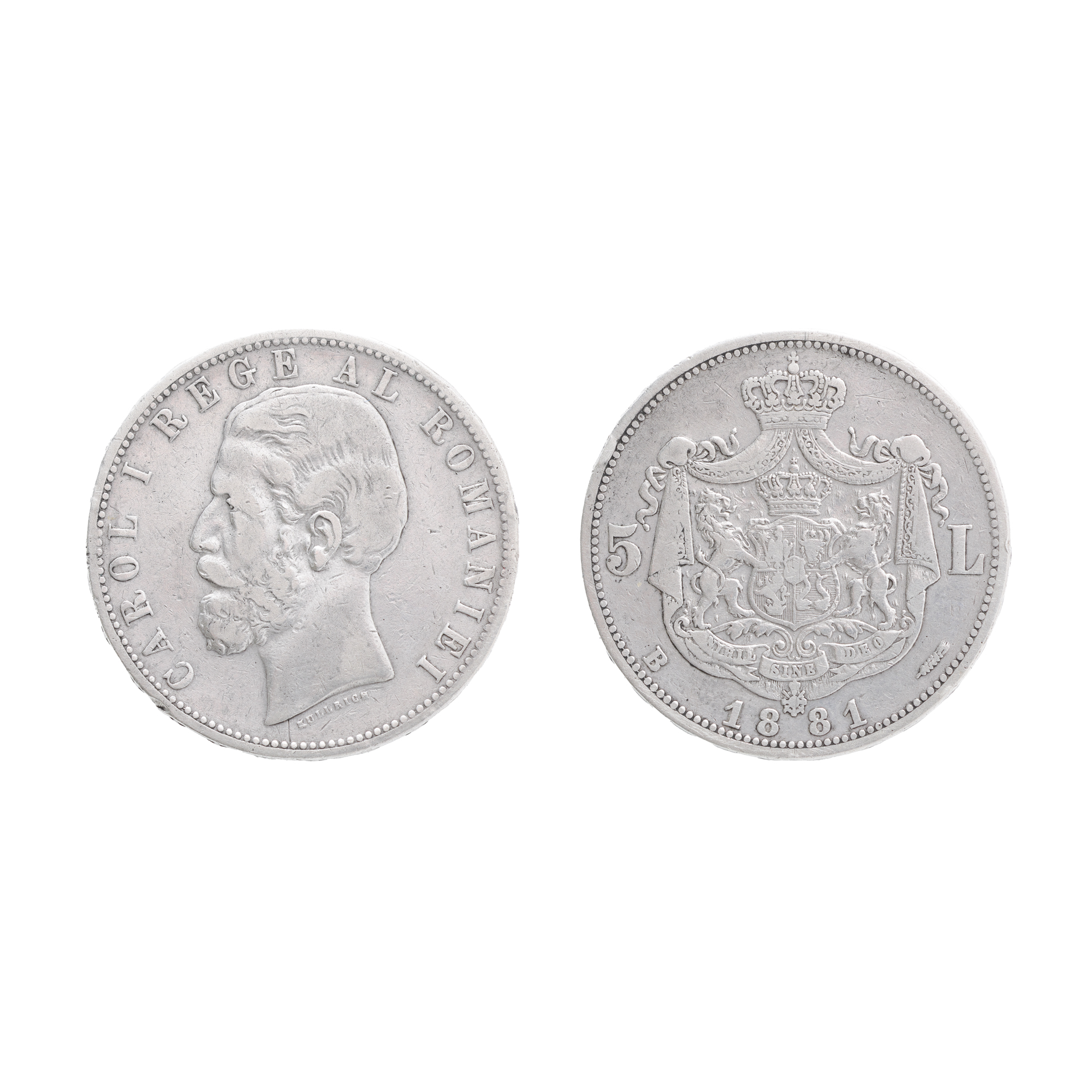
102. 5 Lei Coin 1881, silver, with 6 stars of which one sits on a radius
Starting price:
EUR 100
Sold
EUR 125