
The photos of the lot are informative and indicative, and cannot provide a highly detailed view of the object from all angles. We recommend a careful physical inspection of the lot before bidding.
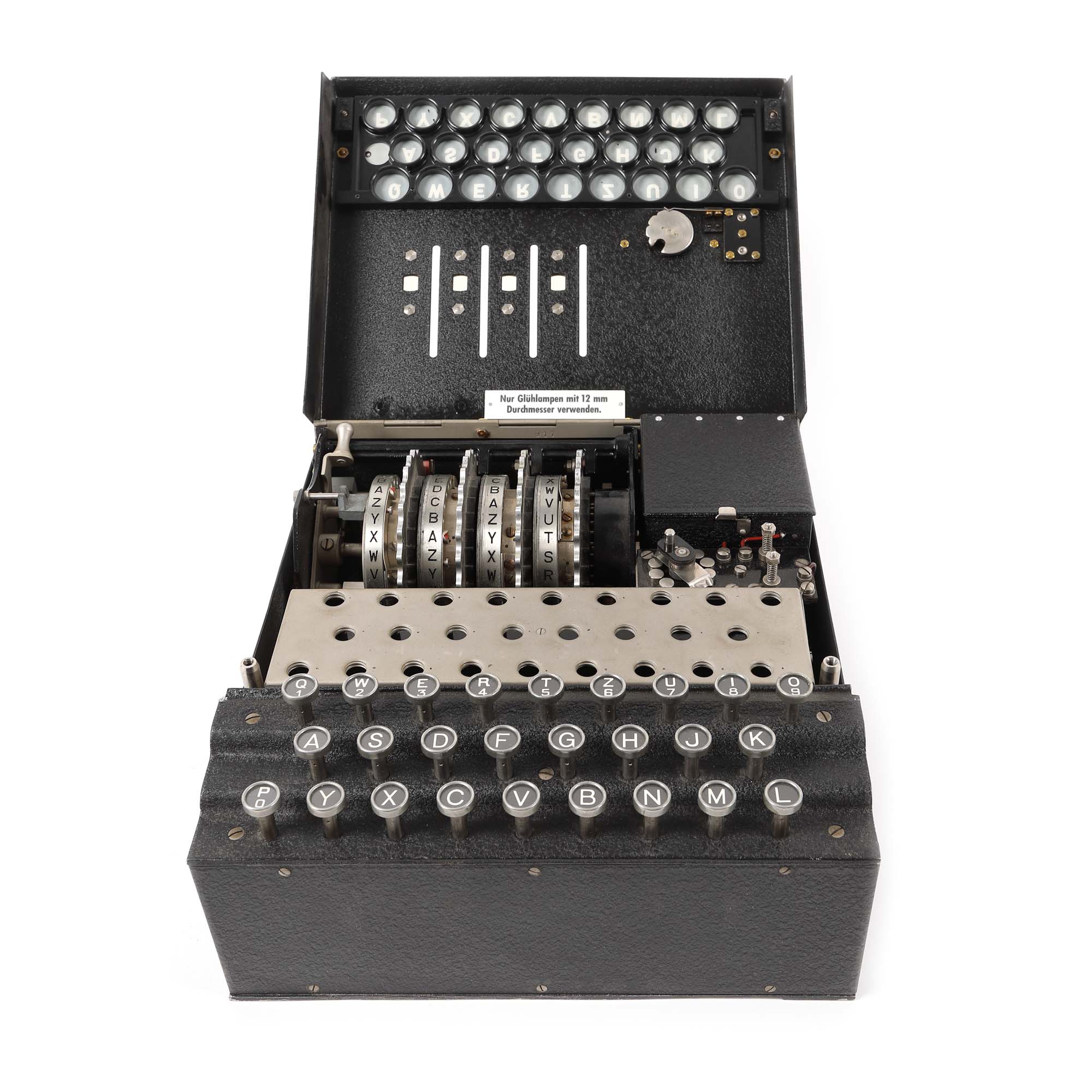
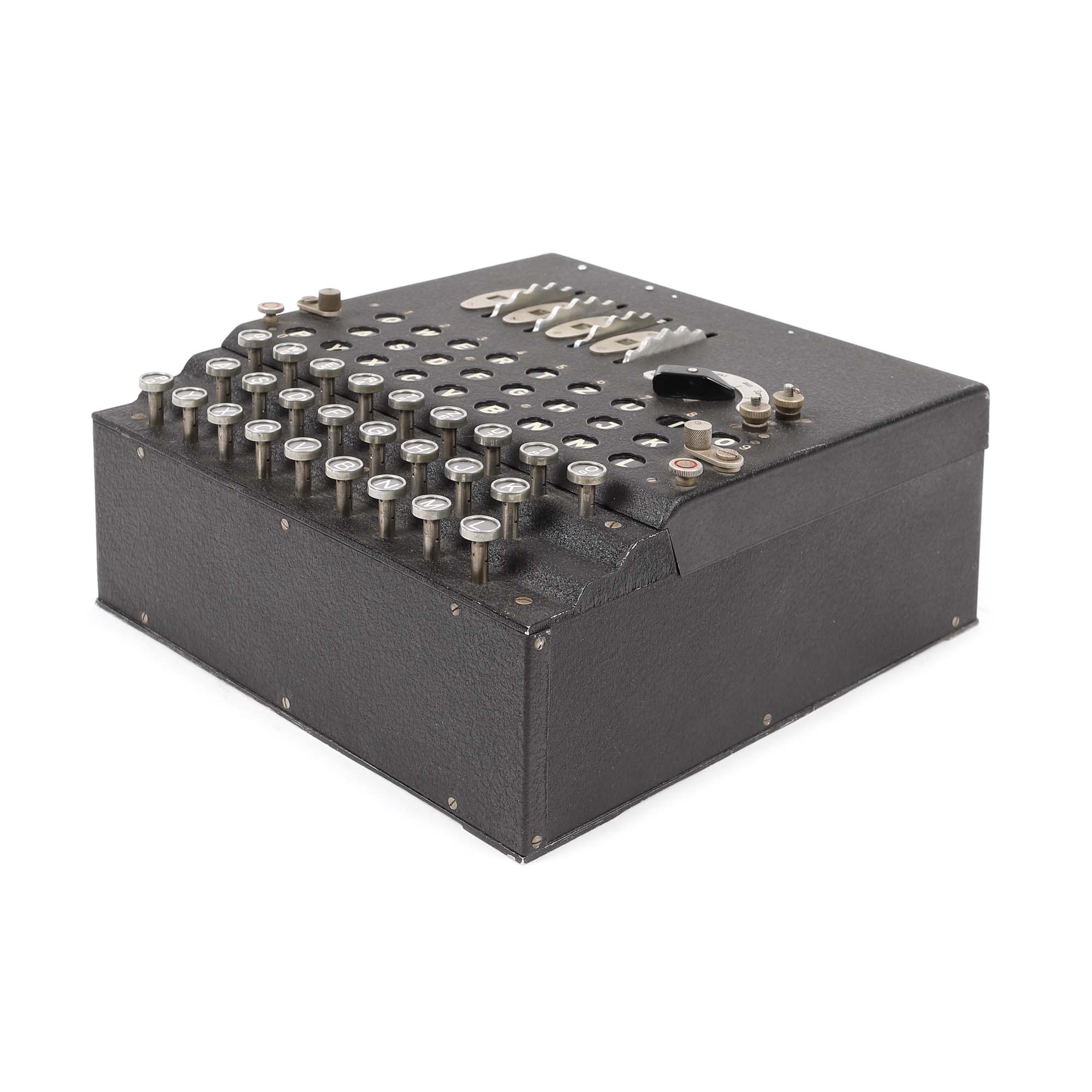
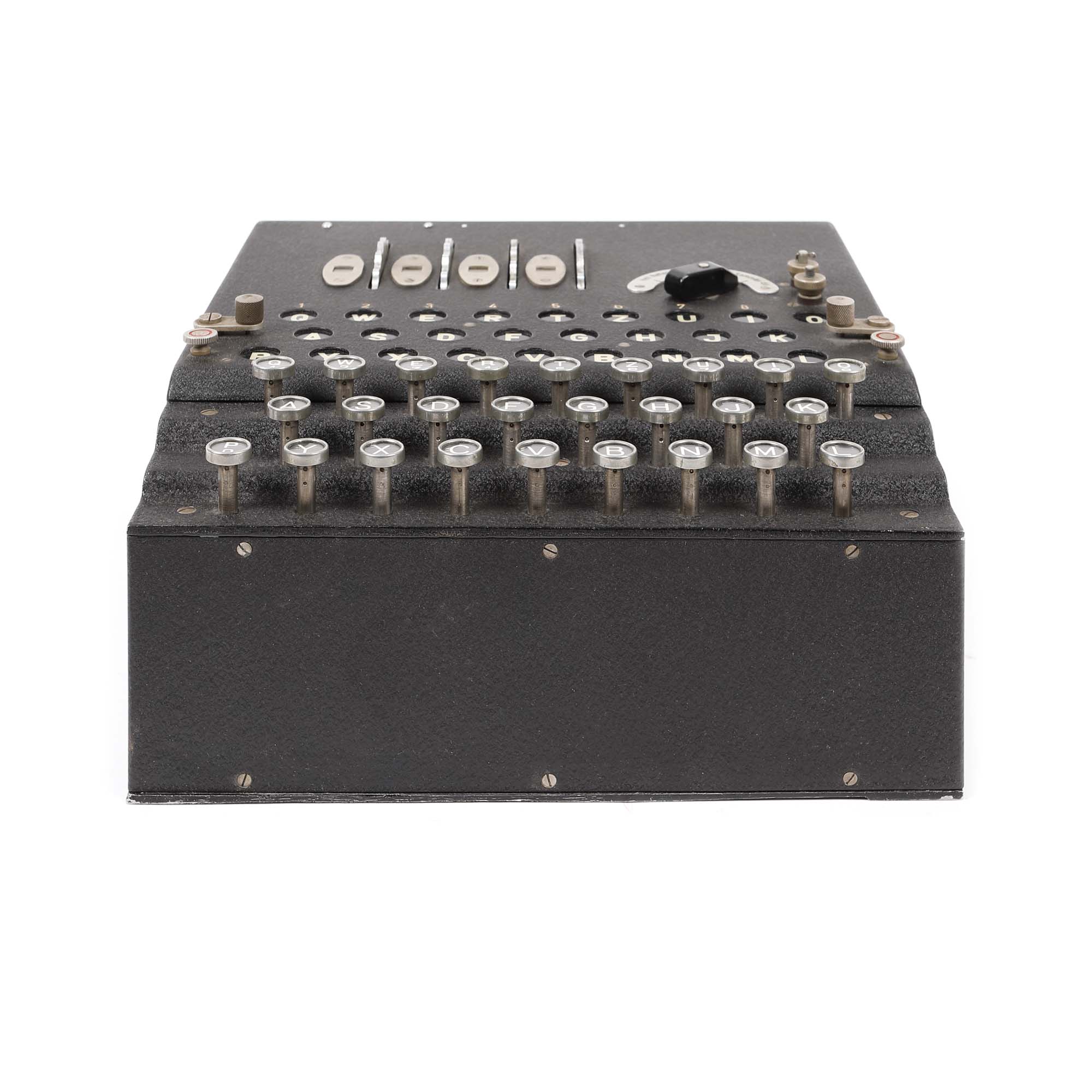
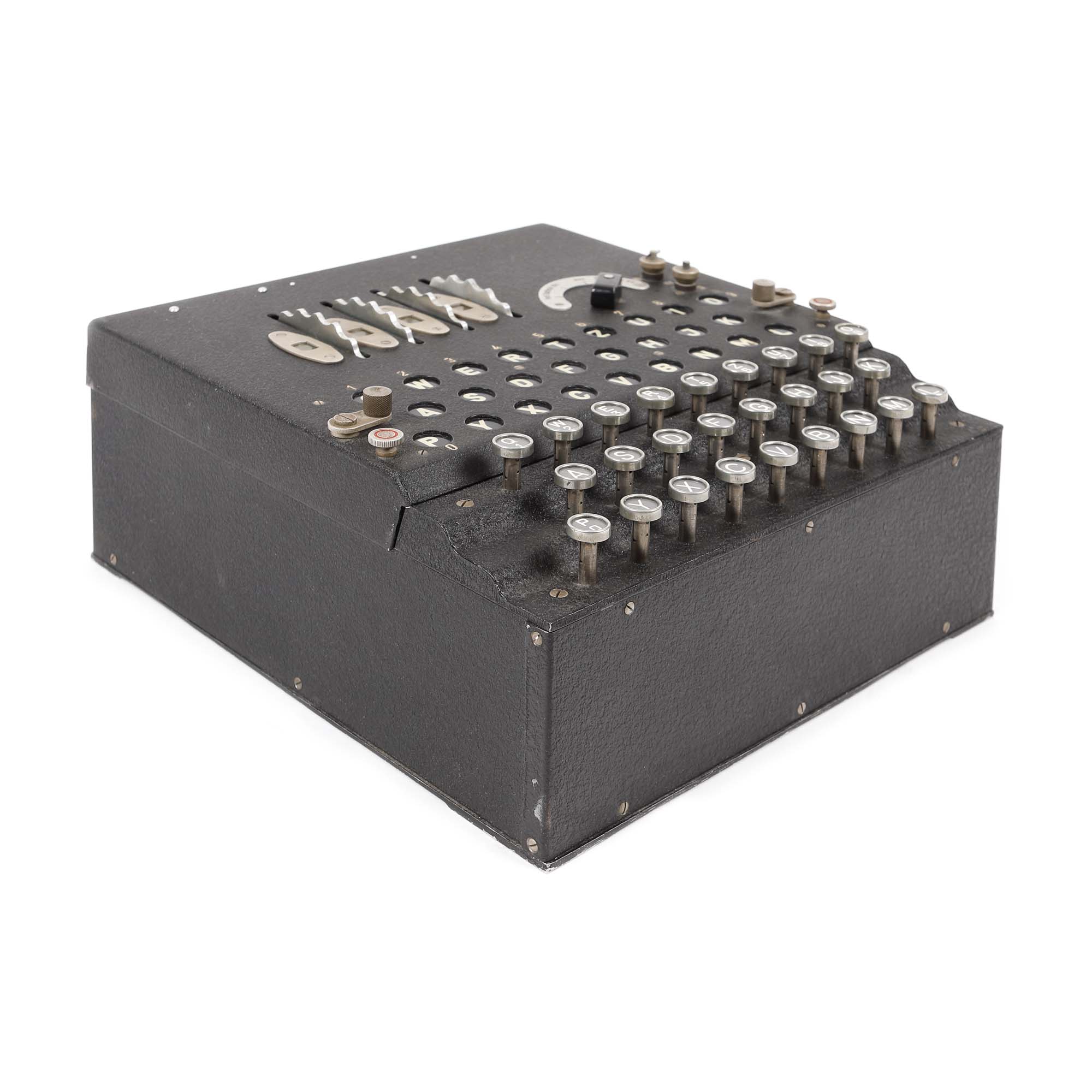
45. The famous encryption machine Enigma, used by the Nazi Germany during the Second World War, model K, 1936-1940, an extremely rare museum piece
Starting price
Pretul de pornire si cel estimat nu sunt preturi de vanzare efective
EUR 10.000
Sold
Pretul de pornire si cel estimat nu sunt preturi de vanzare efective
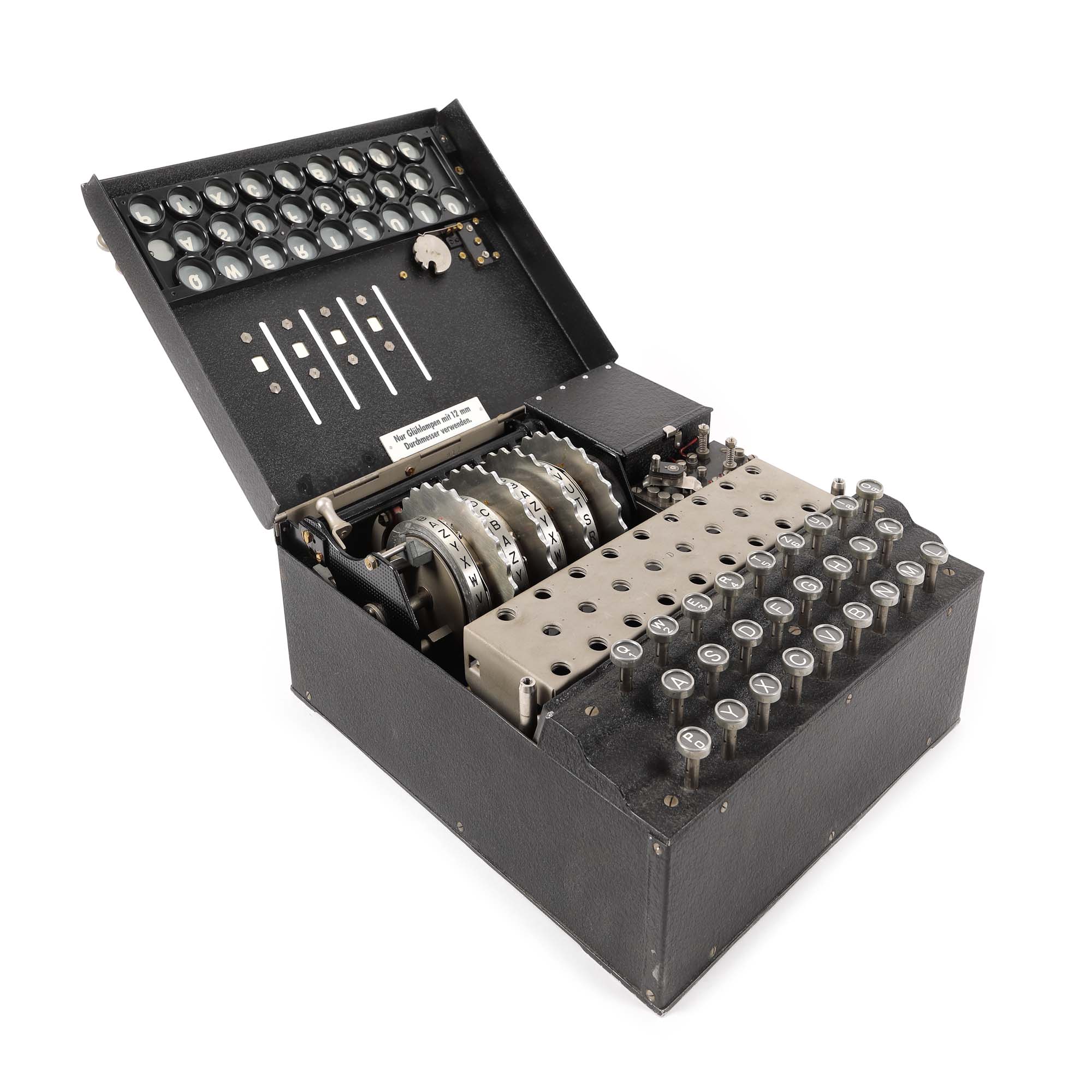
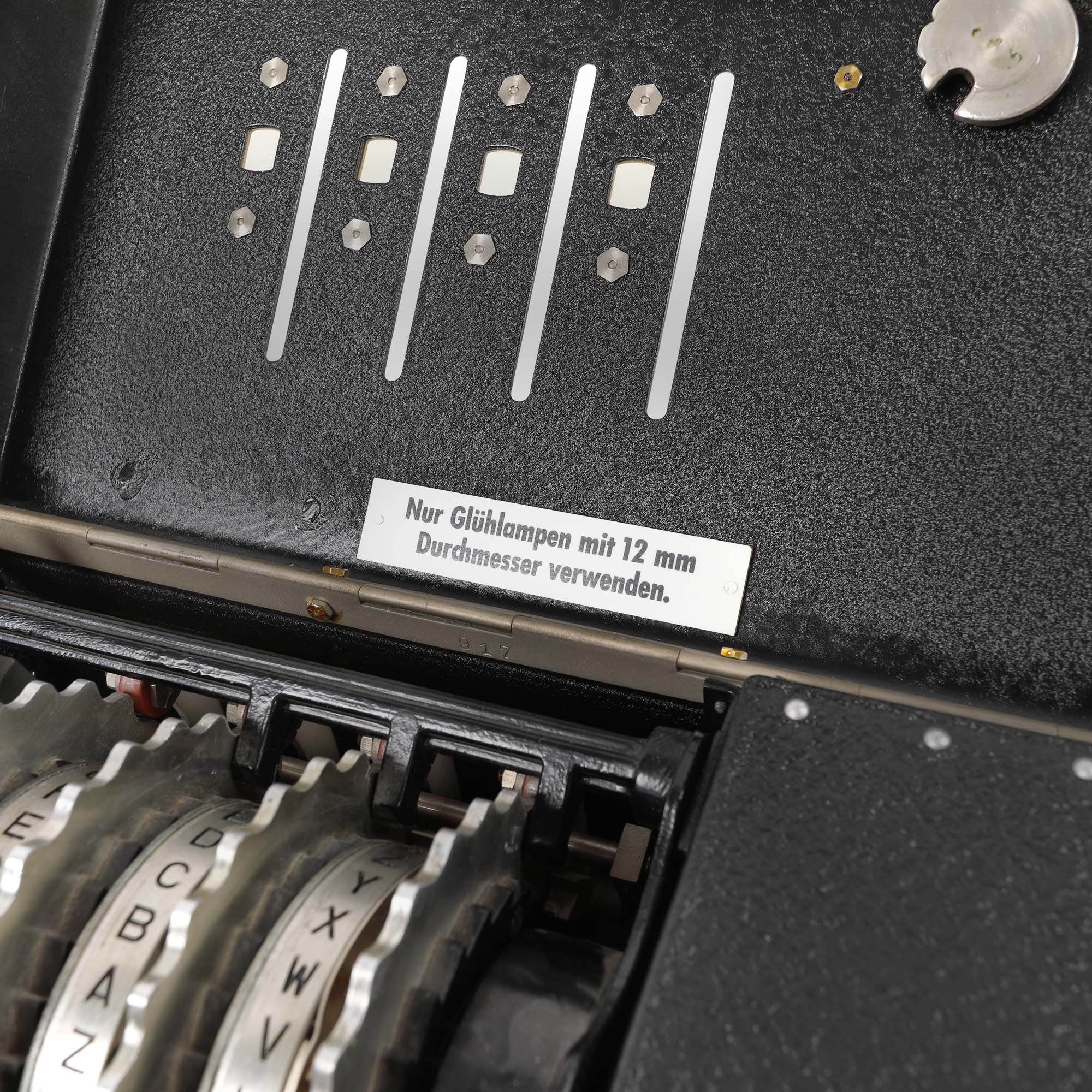
The machine has series K877 on its four rotors.
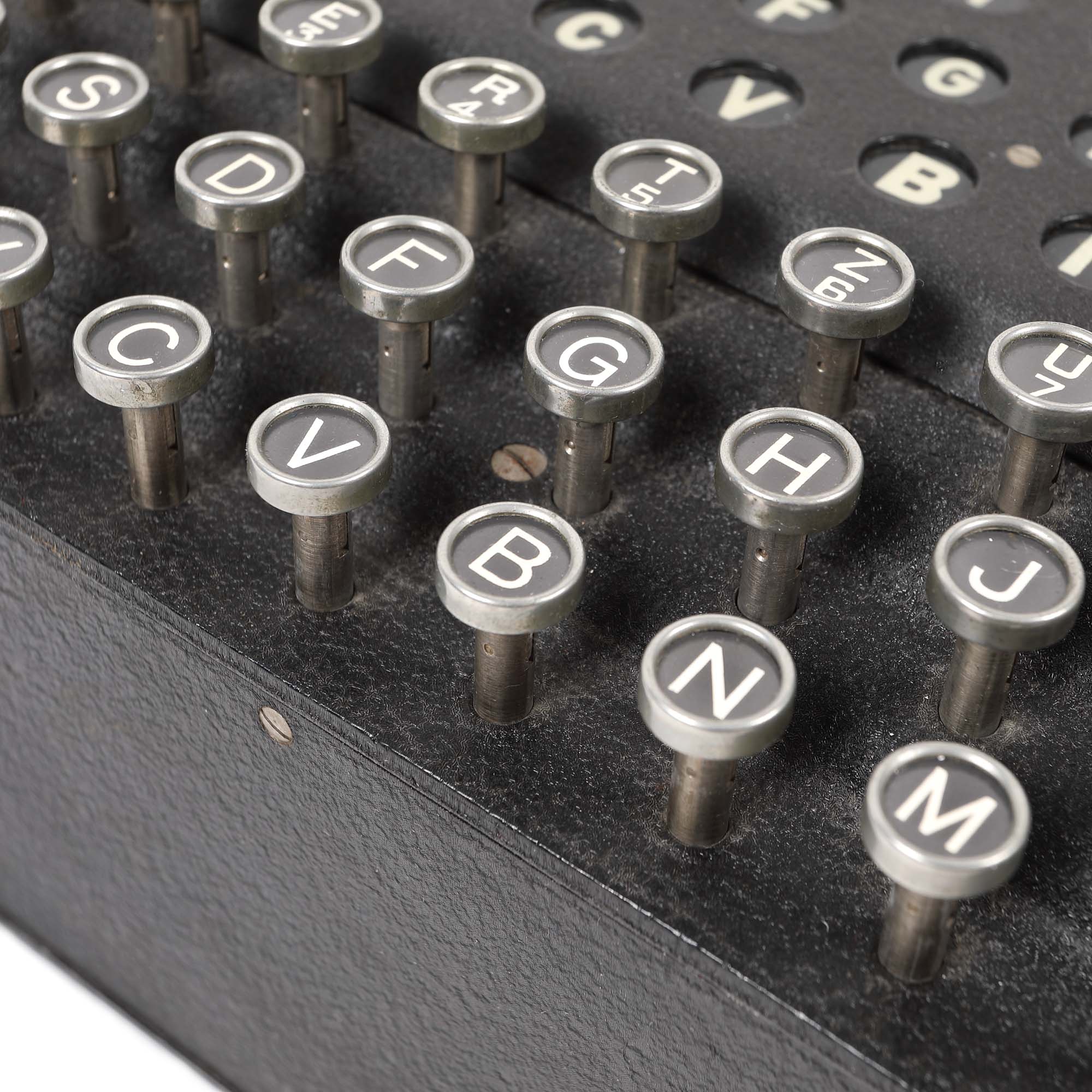
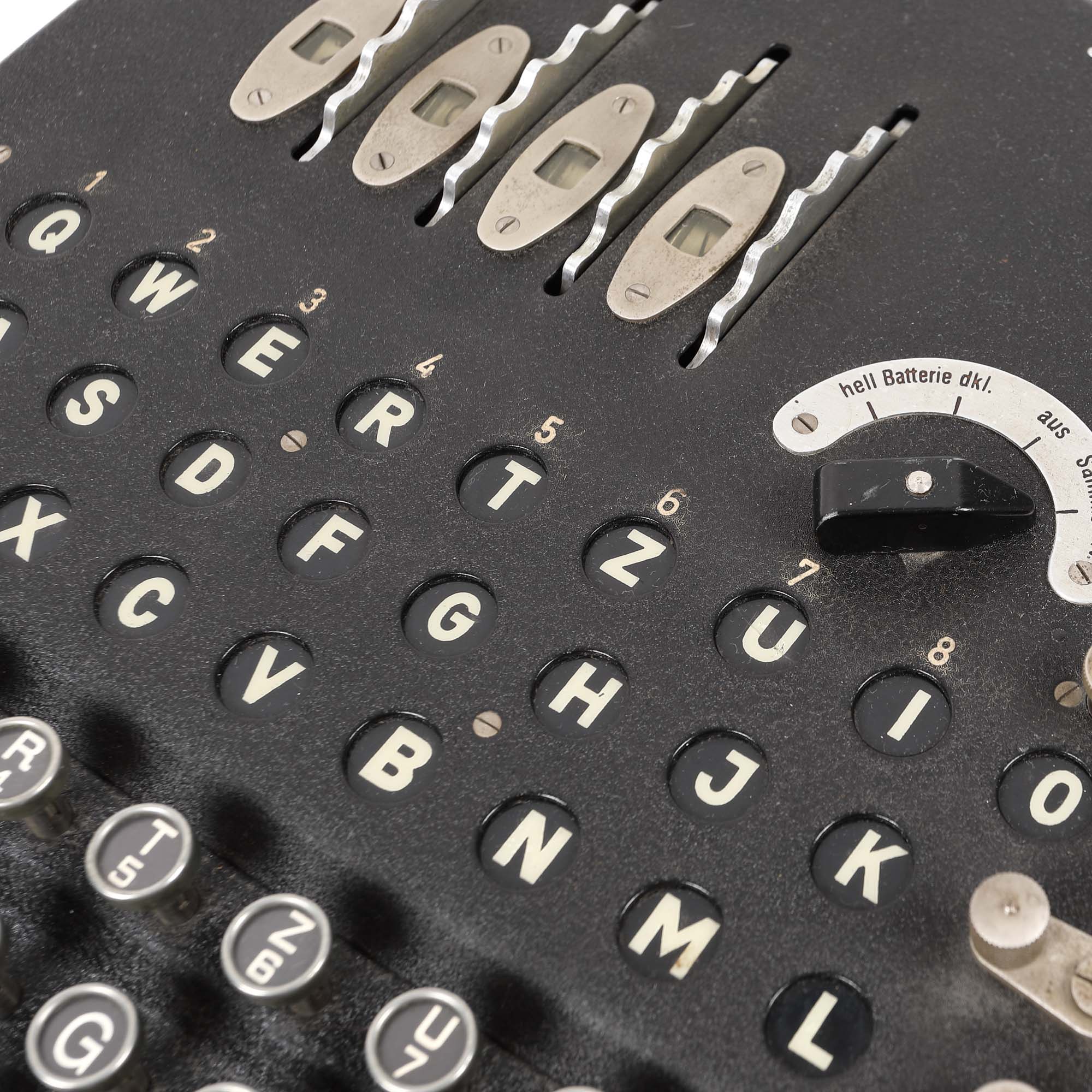
A portable cryptographic electromechanical machine, with four rotors, used to generate cyphers to encrypt and decrypt secret messages. The machine is equipped with a keyboard used to enter the clear text symbol by symbol, and, on the other end, (the panel with missing bulbs), the encrypted symbols result. They are calculated depending on the state of the rotors (which is updated upon pressing each key), which control the routes of the electric circuits from input to output. Each letter typed is randomly converted into another letter of the alphabet.
The cryptographic resistance generated by the machine was obtained by using the rotors which allow, upon sequentially typing the same letter, for another "resulting letter" to be obtained (encrypted message).
The machine is made up of: an alphanumeric keypad with three rows of keys (10 alphanumeric keys and 16 letters), a panel with bulbs (display with bulbs), a lamp lighting each letter that was to be inscribed upon pressing the key; a panel of switches where the plugs are, one for each letter, each of them connected to the others; four removable rotors, each having a set made up of 26 contacts, one for each letter; a fixed wheel, with an identical shape of the rotors, but which cannot be removed and which has a set made up of 26 contacts, grouped by pairs. To supply the electric circuits, a 4-volt battery and interconnection cables were used. The machine does not have a transport case.
The first creators of the rotor were two Dutch officers, Theo A. van Hengel (1875-1939) and R.P.C. Spengler (1875-1955), in 1915. In the period 1917-1919, the American Eduard H. Hebern, the German Arthur Scherbius, the Dutch Hugo Alexander Koch, and the Swedish Arvid Gerhard Damm independently developed the cryptographic rotor, which constituted the main element in developing the Enigma projects, as well as the other encrypting machines following it. However, the first one to discover the rotor is considered to be Arthur Schebius in 1918, at the end of the First World War. A few years later, this invention materialized into the first version of the Enigma machine in 1923. The final version of the machine was completed in 1932, being known under the name Enigma I, being intended for the German Army. For that matter, the entire copyright over this machine, as well as over the commercial ones, was transferred under the authority of the German Army, and their trading was only approved by it. Mid-year in 1930, Germany started preparations for war, and, for this purpose, it decided the necessary measures to produce a large number of Enigma machines.
Dimensions
custom 12 x 26 x 27 cm
Description
common metal, Bakelite, electromechanical components
ADDITIONAL INFORMATION
For clarifications regarding the bidding procedure, hammer price costs, guarantee, payment, and collection terms for the winning lot, we recommend carefully reading/re-reading the Bidding Regulations.
For additional information regarding the lot and the auction, please contact the Art Consultants Department.
Detalii
The machine has series K877 on its four rotors.
A portable cryptographic electromechanical machine, with four rotors, used to generate cyphers to encrypt and decrypt secret messages. The machine is equipped with a keyboard used to enter the clear text symbol by symbol, and, on the other end, (the panel with missing bulbs), the encrypted symbols result. They are calculated depending on the state of the rotors (which is updated upon pressing each key), which control the routes of the electric circuits from input to output. Each letter typed is randomly converted into another letter of the alphabet.
The cryptographic resistance generated by the machine was obtained by using the rotors which allow, upon sequentially typing the same letter, for another "resulting letter" to be obtained (encrypted message).
The machine is made up of: an alphanumeric keypad with three rows of keys (10 alphanumeric keys and 16 letters), a panel with bulbs (display with bulbs), a lamp lighting each letter that was to be inscribed upon pressing the key; a panel of switches where the plugs are, one for each letter, each of them connected to the others; four removable rotors, each having a set made up of 26 contacts, one for each letter; a fixed wheel, with an identical shape of the rotors, but which cannot be removed and which has a set made up of 26 contacts, grouped by pairs. To supply the electric circuits, a 4-volt battery and interconnection cables were used. The machine does not have a transport case.
The first creators of the rotor were two Dutch officers, Theo A. van Hengel (1875-1939) and R.P.C. Spengler (1875-1955), in 1915. In the period 1917-1919, the American Eduard H. Hebern, the German Arthur Scherbius, the Dutch Hugo Alexander Koch, and the Swedish Arvid Gerhard Damm independently developed the cryptographic rotor, which constituted the main element in developing the Enigma projects, as well as the other encrypting machines following it. However, the first one to discover the rotor is considered to be Arthur Schebius in 1918, at the end of the First World War. A few years later, this invention materialized into the first version of the Enigma machine in 1923. The final version of the machine was completed in 1932, being known under the name Enigma I, being intended for the German Army. For that matter, the entire copyright over this machine, as well as over the commercial ones, was transferred under the authority of the German Army, and their trading was only approved by it. Mid-year in 1930, Germany started preparations for war, and, for this purpose, it decided the necessary measures to produce a large number of Enigma machines.
ADDITIONAL INFORMATION
For clarifications regarding the bidding procedure, hammer price costs, guarantee, payment, and collection terms for the winning lot, we recommend carefully reading/re-reading the Bidding Regulations.
For additional information regarding the lot and the auction, please contact the Art Consultants Department.
Dimensions
custom 12 x 26 x 27 cm
Description
common metal, Bakelite, electromechanical components
Brought to you by
Simona Oprea
Head of Oriental Art, Traditional Art & Carpets Evaluation Office; Chinese Language Certificate HSK 4