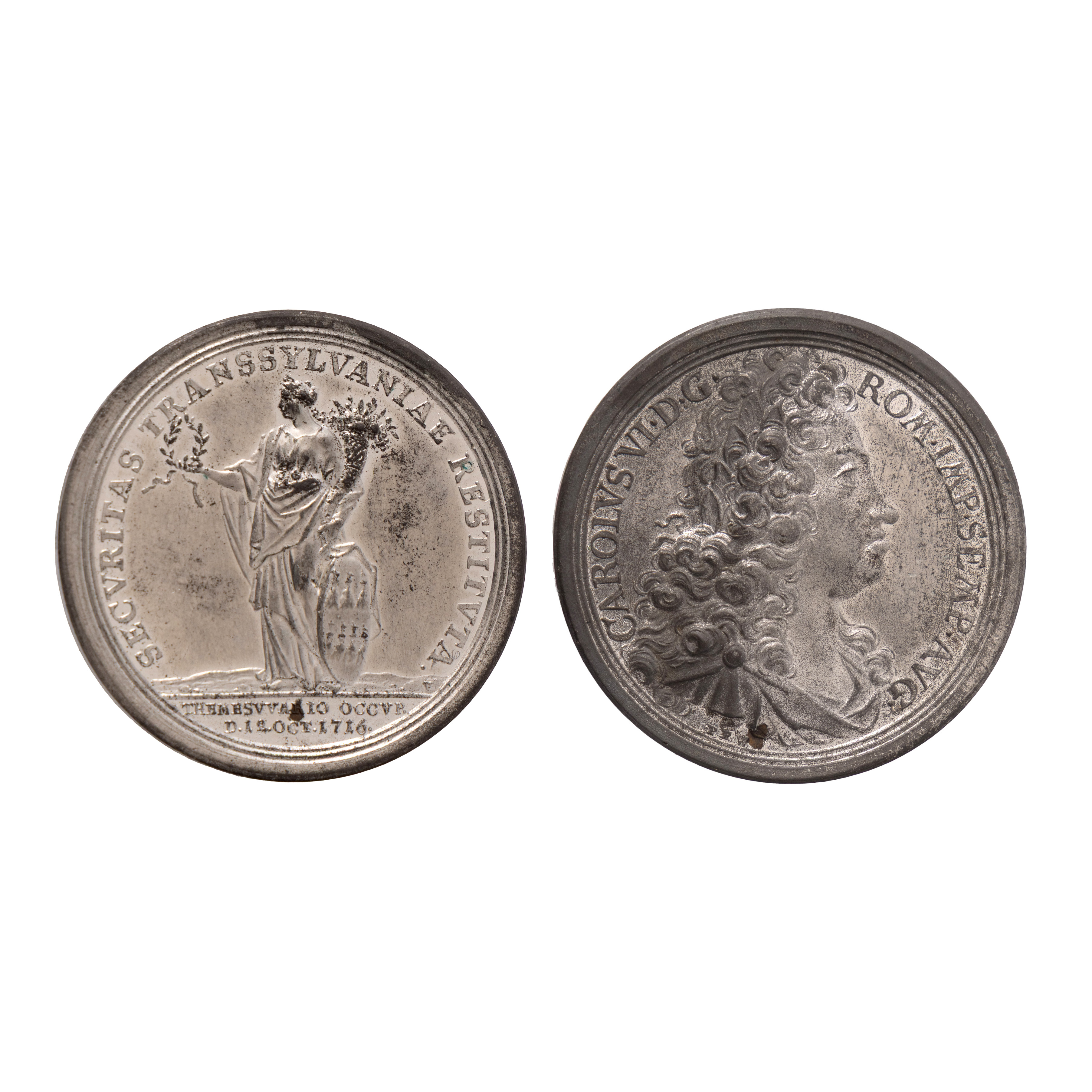
86. "Carol VI Medal, Liberation of Timișoara from the Ottomans", Habsburg Empire, 1716, rare piece
The photos of the lot are informative and indicative, and cannot provide a highly detailed view of the object from all angles. We recommend a careful physical inspection of the lot before bidding.
86. "Carol VI Medal, Liberation of Timișoara from the Ottomans", Habsburg Empire, 1716, rare piece
Starting price:
EUR 250
Sold
EUR 350
silver plated white metal, d=44 mm
Issued to celebrate the conquest of the city of Timisoara and the end of Ottoman dominance over Banat, the medal is an artistic and historical witness of one of the decisive moments for the evolution of Transylvania and Central Europe at the beginning of the 18th century. The piece was made in Nuremberg by the engraver Georg Wilhelm Vestner, one of the most important German medalists of the Baroque era. The type is known in specialized literature under the references Julius 1269; Resch 130; BDM VI, p. 254.
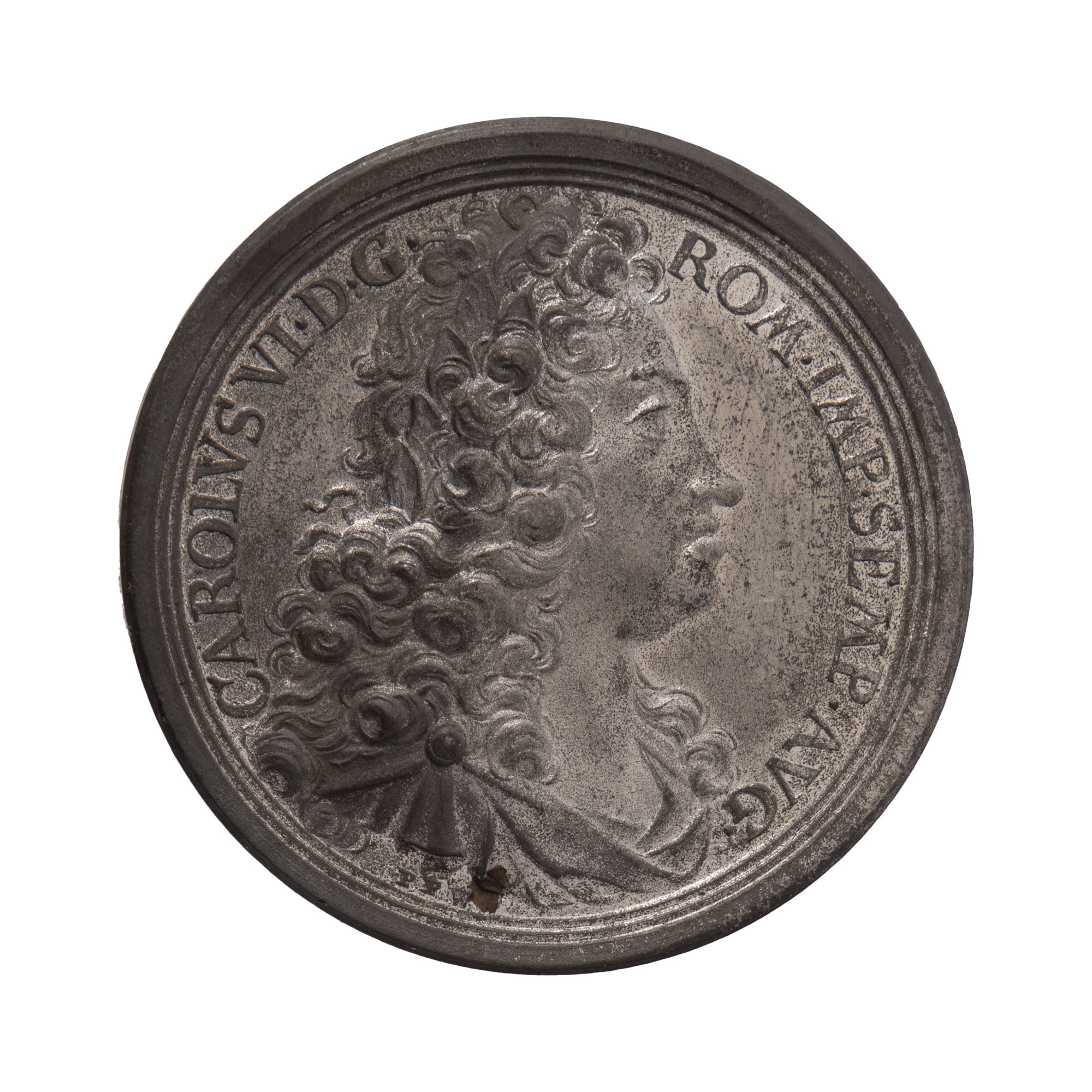
The obverse presents the laureate bust of Emperor Charles VI, facing right, represented with a voluminous wig and classicizing garments. Below the bust is the engraver's signature, V. The legend is CAROLVS VI · D · G · ROM · IMP · SEMP · AVG ·, translated into Romanian as "Charles VI, by God's grace, emperor of the Romans, always august". The portrait goes beyond the function of a simple official effigy. The laurel crown associates the sovereign with the victorious generals of Antiquity, turning the military success into an argument of legitimacy and imperial prestige.
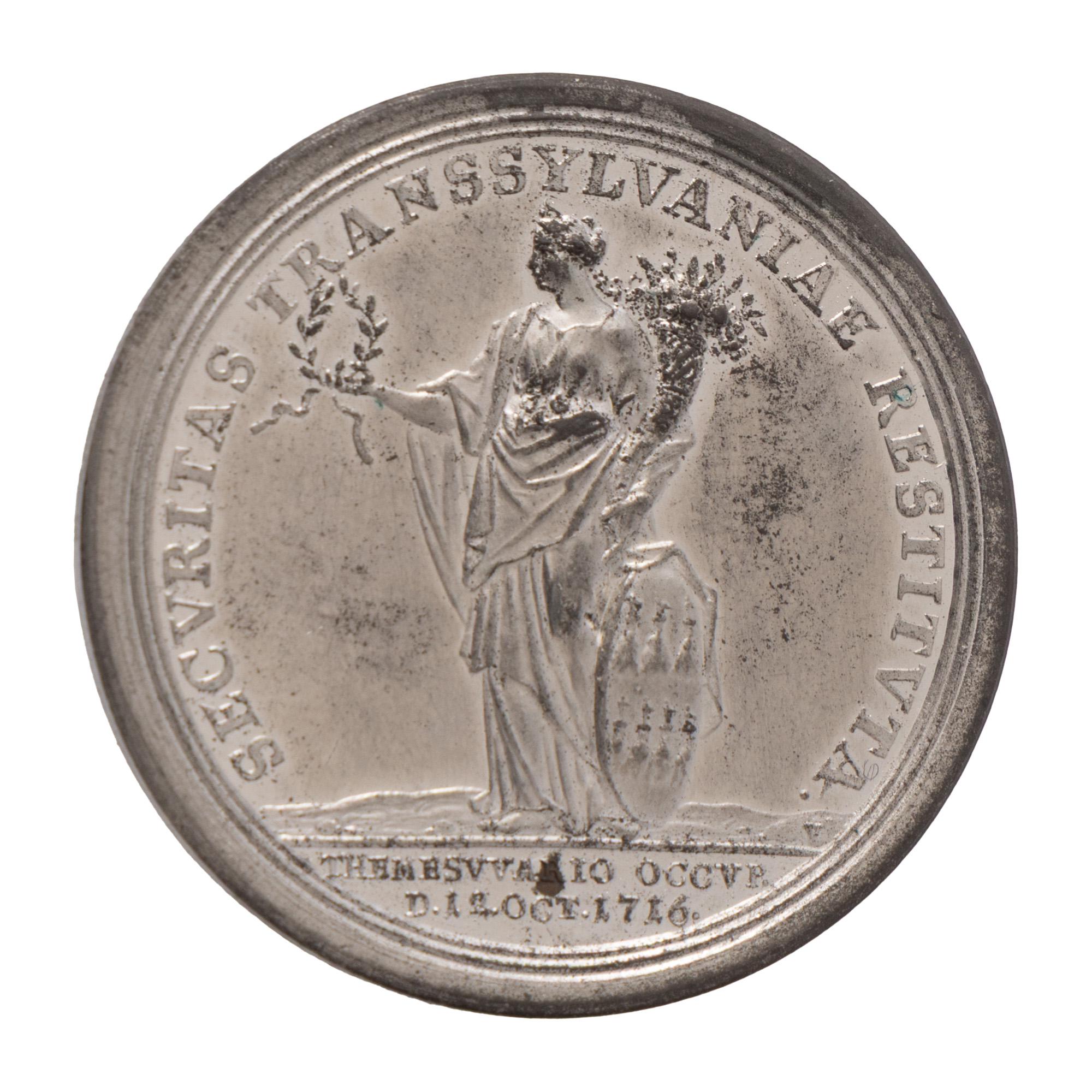
The reverse depicts the feminine personification of Security or Peace, seated next to a shield on which the seven cities of Transylvania are represented. She wears a laurel wreath and the horn of abundance, attributes that link military victory to the promise of peace, stability, and prosperity. The legend is SECVRITAS TRANSSYLVANIAE RESTITVTA, translated as "The safety of Transylvania restored". The composition is constructed as a genuine Baroque political allegory: Transylvania and neighboring territories are not only presented as conquered spaces, but as provinces brought back, according to the imperial message, under the protection of Habsburg order. The seven towers on the shield refer to the traditional image of Transylvania, while the horn of abundance suggests economic and urban rebirth possible after the end of the conflict.
The medal evokes the siege of Timisoara in 1716, led by the imperial army of Prince Eugene of Savoy. After more than four decades of conflicts between the Habsburgs and the Ottoman Empire, the city's surrender ended an Ottoman domination that began in 1552. Timisoara and Banat thus entered a new historical stage, marked by imperial administration, extensive fortification works, and the transformation of the city into an important military and urban center of the Habsburg Monarchy. The siege lasted over 40 days, and Banat's status as a Habsburg military frontier zone was subsequently confirmed by the Peace of Passarowitz in 1718.
Beyond its numismatic interest, the piece is a miniature Baroque art object and a visual document of the political remodeling of Central Europe. It combines the imperial portrait, the heraldry of Transylvania, and the allegorical language of victory, being relevant for collectors of art, military history, symbolic cartography, and objects related to the past of Timisoara and Banat. Through the power of its images and its direct link with the year 1716, the medal preserves, in a concentrated format, the memory of the moment when the fate of one of the most important cities of the region fundamentally change.
For clarifications regarding the bidding procedure, hammer price costs, guarantee, payment, and collection terms for the winning lot, we recommend carefully reading/re-reading the Bidding Regulations.
For additional information regarding the lot and the auction, please contact the Art Consultants Department.
By choosing "Accept all cookies" you agree to the use of cookies to help us provide you with a better user experience and to analyse website usage. By clicking "Adjust your preferences" you can choose which cookies to allow. Only the essential cookies are necessary for the proper functioning of our website and cannot be refused
Cookie settings
Our website stores four types of cookies. At any time you can choose which cookies you accept and which you refuse. You can read more about what cookies are and what types of cookies we store in our Confidentiality Policy.
are necessary for technical reasons. Without them, this website may not function properly.
are necessary for specific functionality on the website. Without them, some features may be disabled.
allow us to analyse website use and to improve the visitor's experience.
allow us to personalise your experience and to send you relevant content and offers, on this website and other websites.