


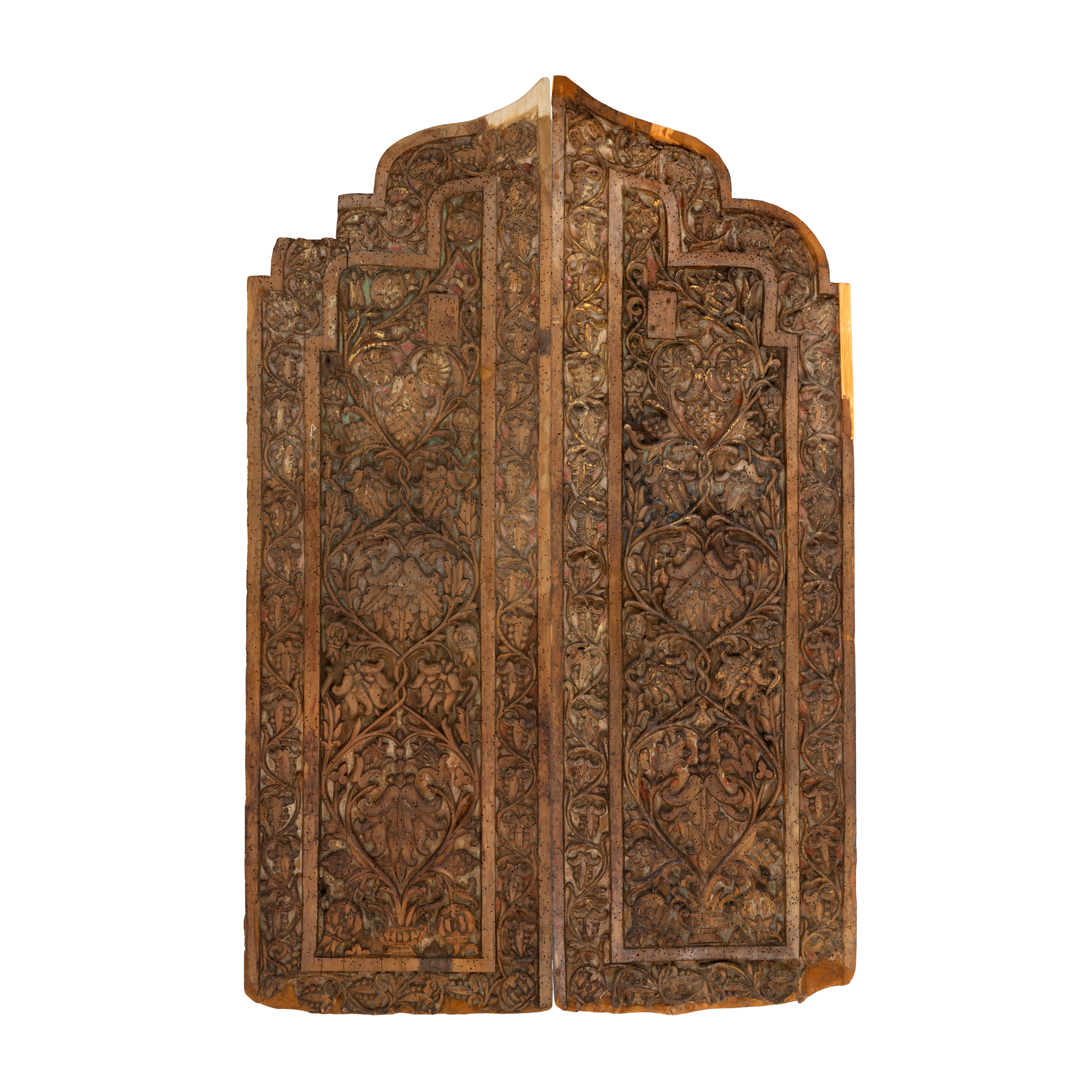
5Т. Imperial Doors, Moldovan workshop, era of Michael the Brave, towards the end of the 16th century, absolute rarity
The photos of the lot are informative and indicative, and cannot provide a highly detailed view of the object from all angles. We recommend a careful physical inspection of the lot before bidding.
5Т. Imperial Doors, Moldovan workshop, era of Michael the Brave, towards the end of the 16th century, absolute rarity
Starting price:
EUR 20.000
Not sold
hand-carved polychrome wood, 118 x 38.5 x 3 cm (each)
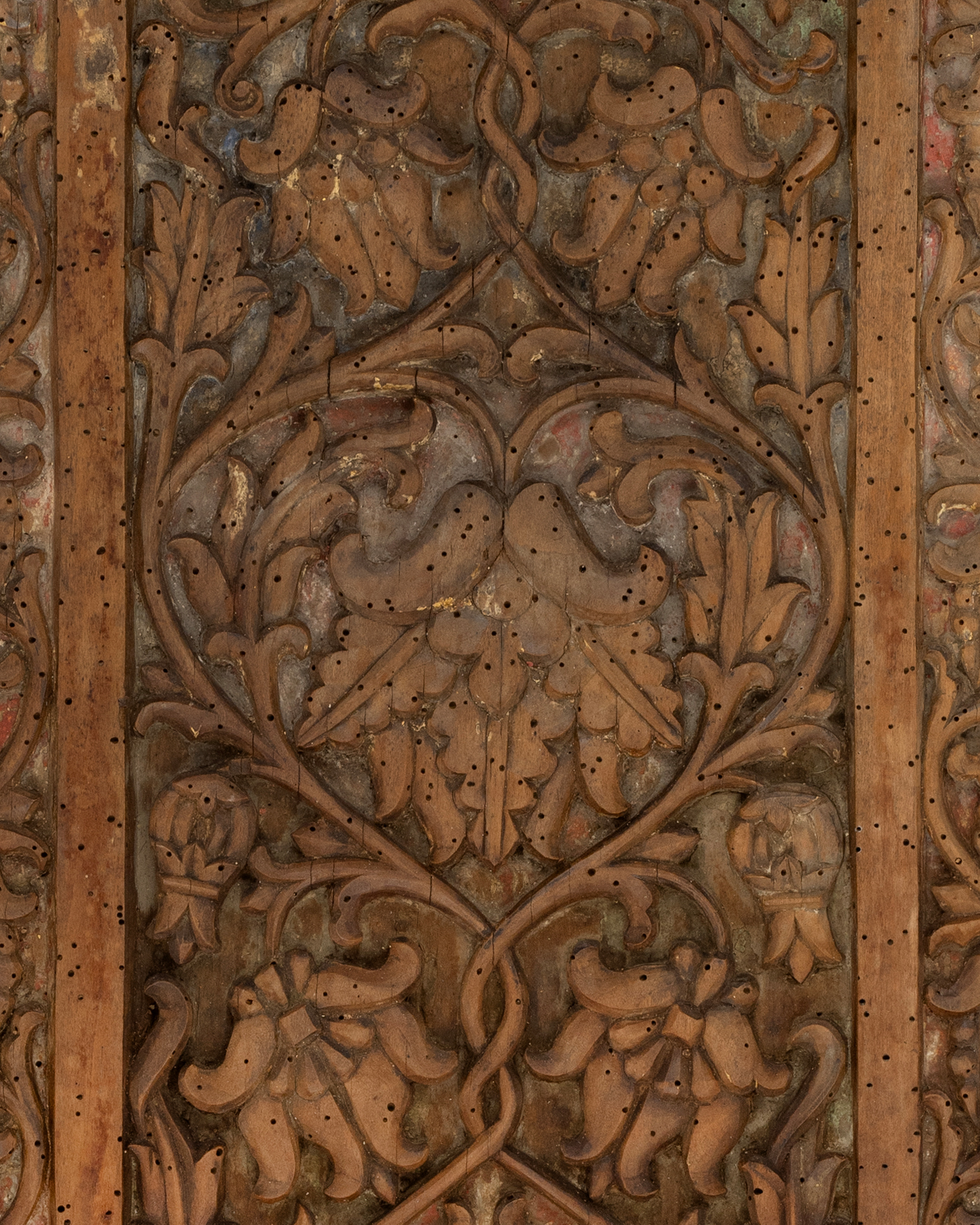
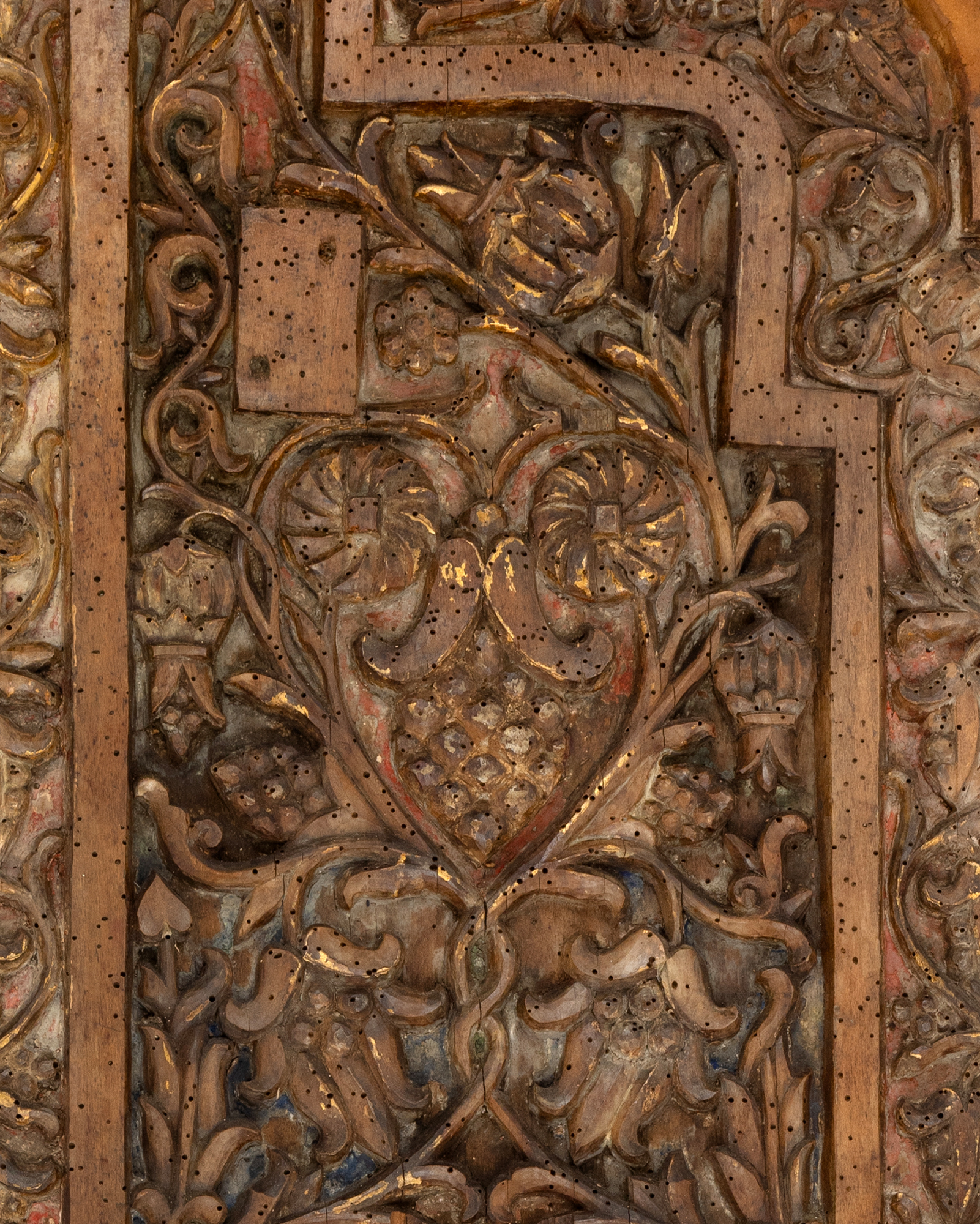
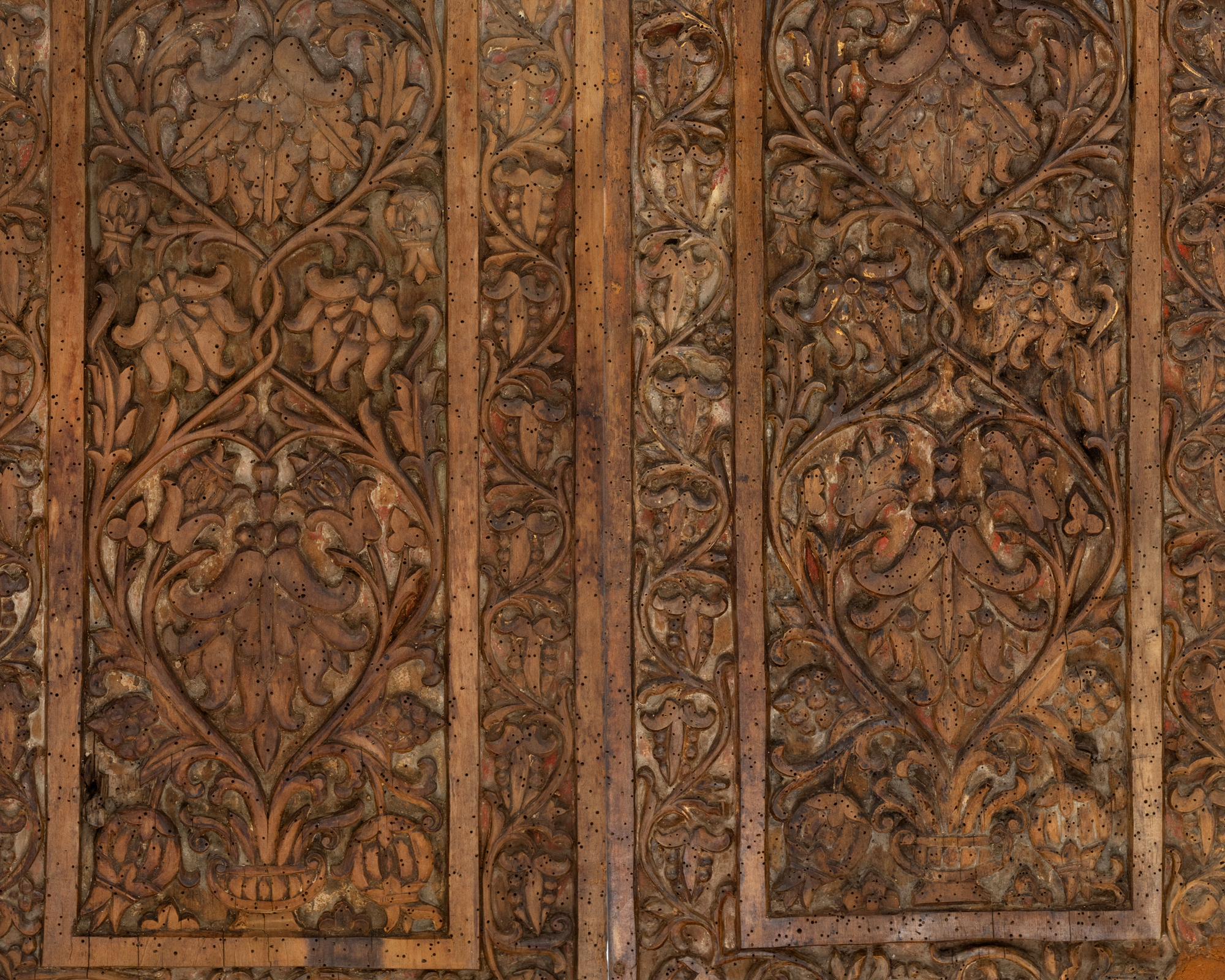
Identification elements of an iconographic and stylistic order: The royal door is made up of two panels, finished at the top in a trilobed arch. The stop is missing. On the edges, each door is contoured by a simple, undecorated frame. Towards the interior, another frame of the same type doubles the outer contour of the door. The space formed between the two frames is decorated with a continuous meander vine, with pomegranate leaves and fruit, thus surrounding, like a frame, the central panel of each door. From the base of the door, from a vase, two vines go up and, intertwining, form three large "hatay" medallions, in which a wide Chinese lotus flower and other small tulips are inscribed, representing the Tree of Life - symbol of the resurrection and a decorative motif closely related to the moment of the Eucharist during the Holy Liturgy (through salvation, man aspires to eternal life). The entire space between the medallions is decorated with flowers, pomegranate fruit and crested leaves. At the top of the royal doors, in two small rectangles, the Archangel Gabriel and, respectively, the Virgin Mary, were painted in the scene dedicated to the royal doors - The Good News (currently, the painting is missing). If in the first half of the sixteenth century the royal doors were entirely painted, now, at the end of the century, the tendency towards decoration, manifested in the second half of the sixteenth century, becomes predominant, reflecting the mentality and taste of Moldovan society.
Identification elements of a technical order: The flat relief sculpture, the gilding of the decoration (currently missing) and the painting of the background in blue and red are technical elements that frame the execution of the royal doors in the sixteenth century Moldovan.
Conclusions: The work ranks among the valuable artistic creations of the genre, through the way of making the sculpted decoration of the royal door, due to the skill of the master carpenter, who mastered at a high level the execution technique and interpretation of decorative motifs (A.D.).
For clarifications regarding the bidding procedure, hammer price costs, guarantee, payment, and collection terms for the winning lot, we recommend carefully reading/re-reading the Bidding Regulations.
For additional information regarding the lot and the auction, please contact the Art Consultants Department.
SESSION
Brought to you by
Similar lots
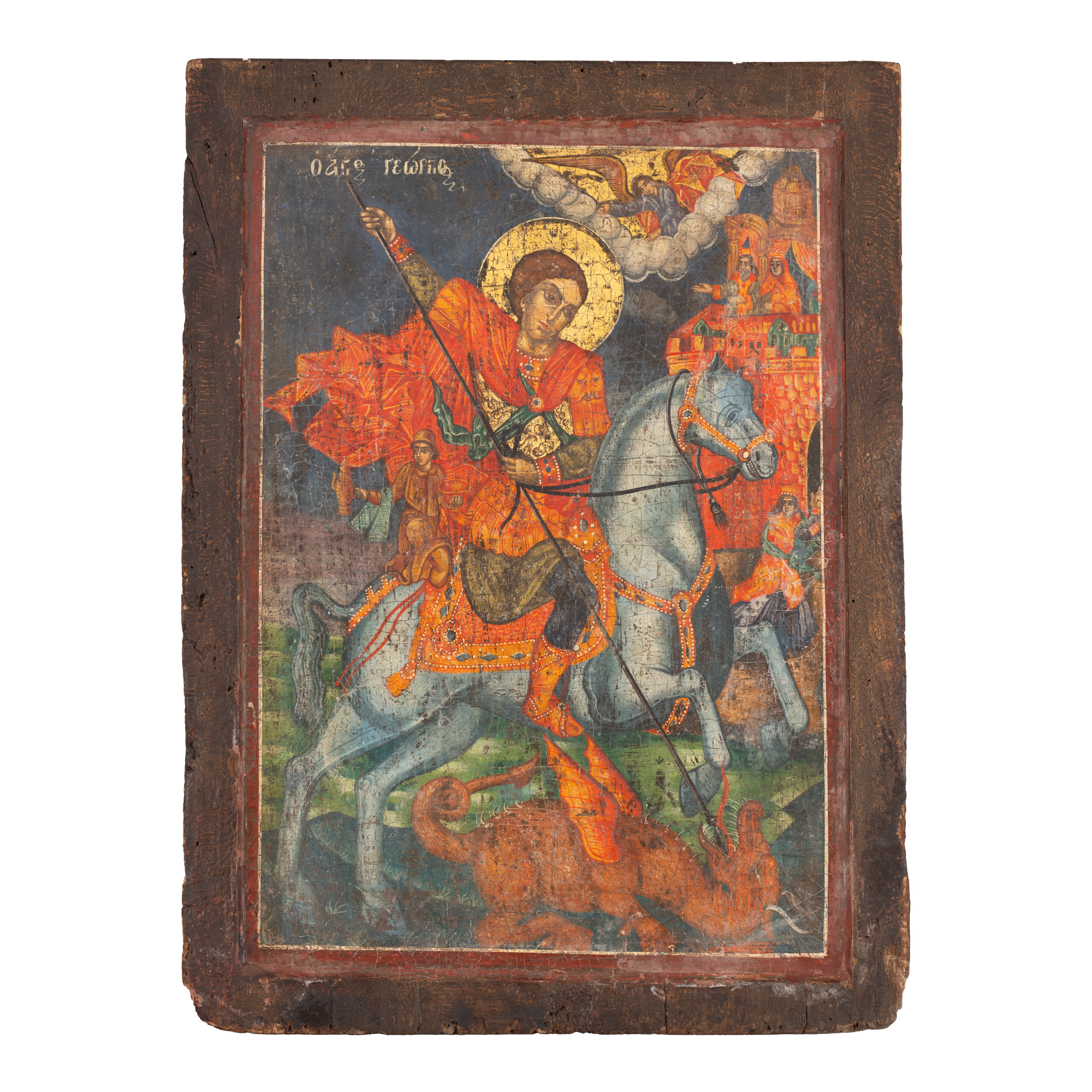
46. Icon on wood, "Saint George killing the dragon", Greek school, end of the 17th century-beginning of the 18th century
Starting price:
EUR 1.800
Sold
EUR 2.750
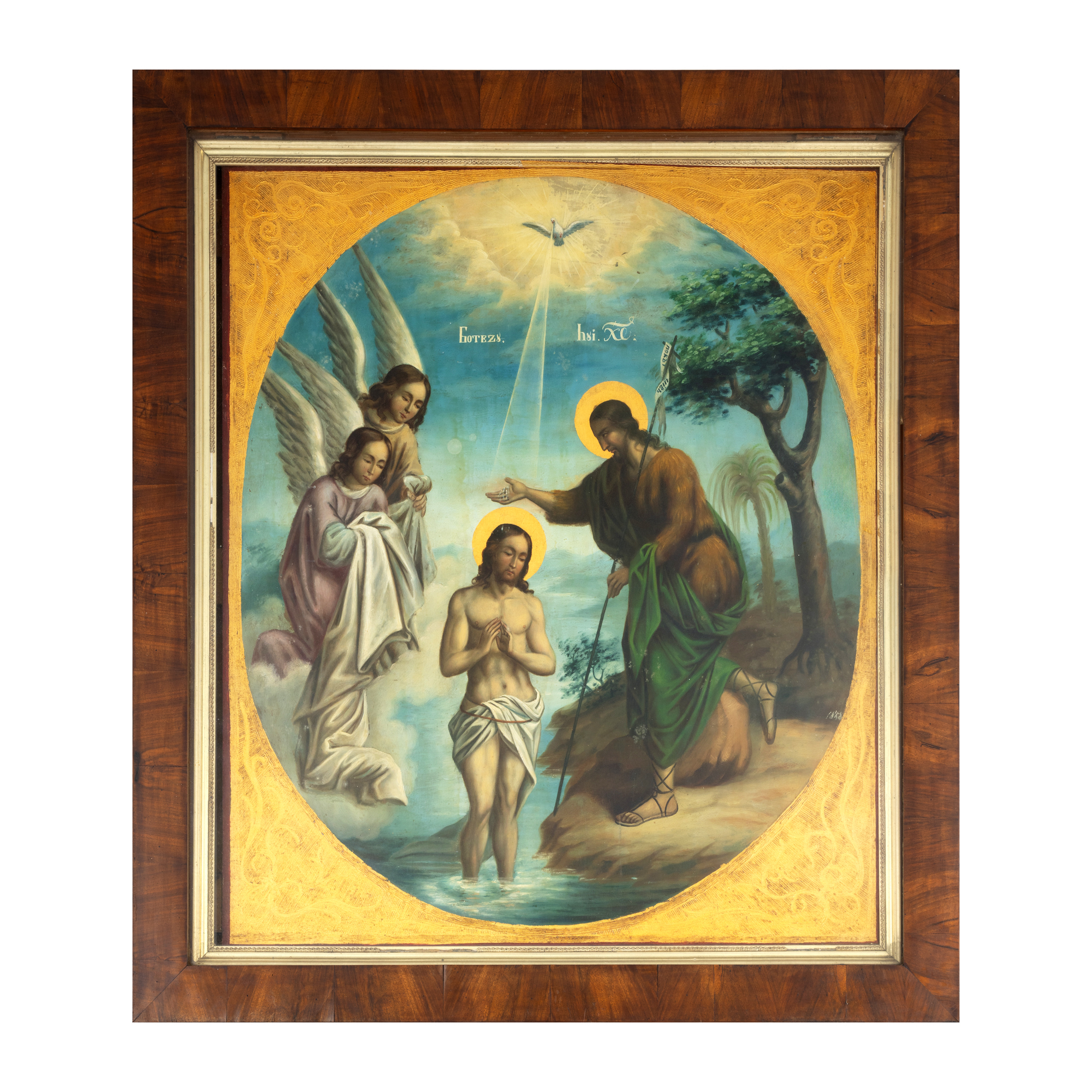
114. Imperial Icon on Wood, "The Baptism of the Lord", Gheorghe Tattarescu School, 1858, Collection Piece
Starting price:
EUR 1.200
Not sold