


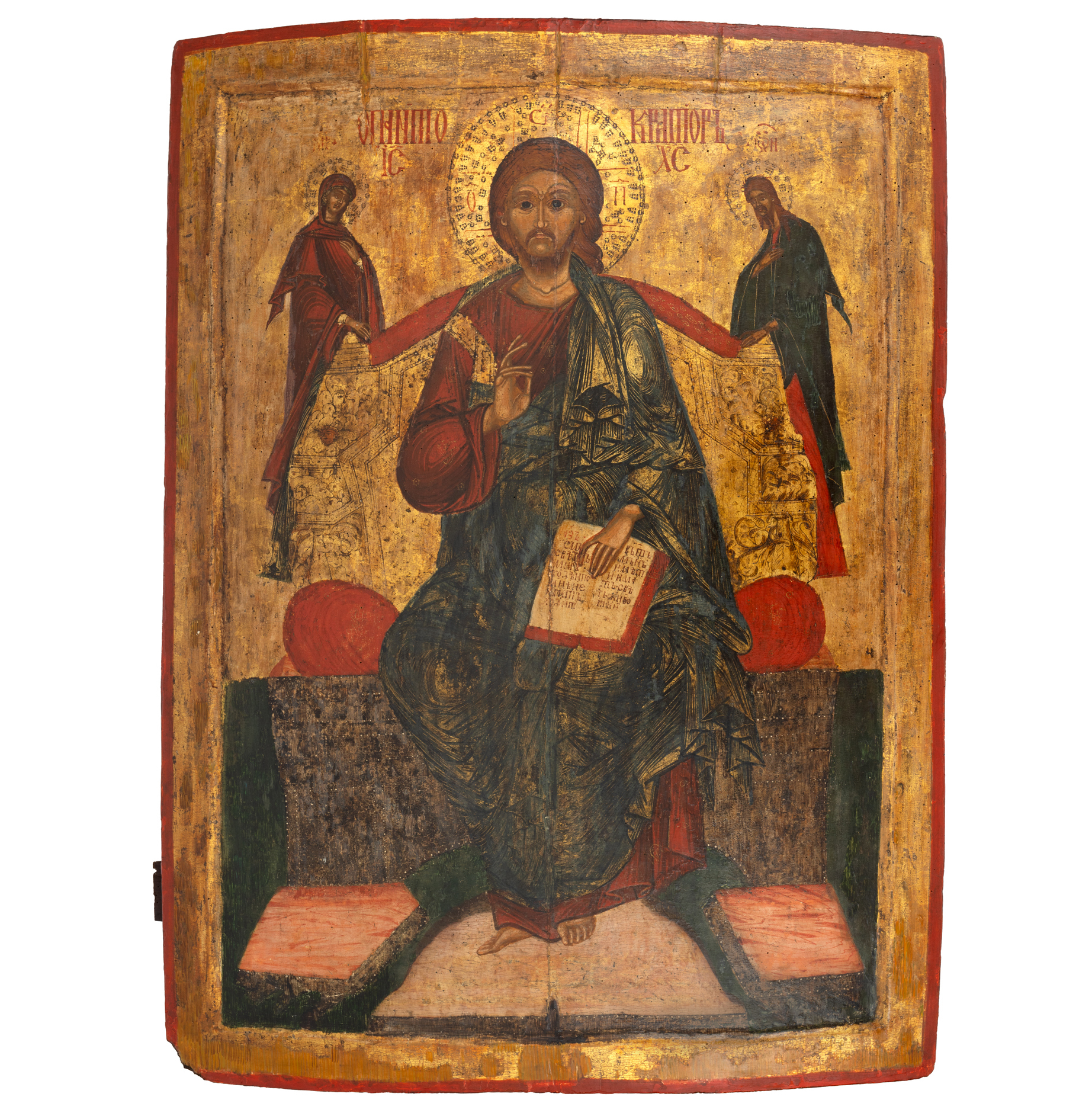
24Т. Imperial Icon on Wood, "Jesus Pantocrator", attributed to Costandin Zugravul, Wallachia, Brâncovenesc style, era of Constantin Brâncoveanu, last decade of the 17th century, museum piece
The photos of the lot are informative and indicative, and cannot provide a highly detailed view of the object from all angles. We recommend a careful physical inspection of the lot before bidding.
24Т. Imperial Icon on Wood, "Jesus Pantocrator", attributed to Costandin Zugravul, Wallachia, Brâncovenesc style, era of Constantin Brâncoveanu, last decade of the 17th century, museum piece
Starting price:
EUR 17.000
Sold
EUR 30.000
tempera and gold leaf on wood, 102 x 75 cm
Research information
Of high artistic value, the painting of the icon falls within the stylistic coordinates of the Brâncoveanu painting, and through its entire outfit, which expresses wealth, pageantry, and opulence, it can be considered a princely command. Constantinos, a Greek painter active in Wallachia between 1658 and 1720, played an essential role in the development of Brâncoveanu art. Brought in by Șerban Vodă Cantacuzino to paint the Lady's Church in Bucharest in 1683, his talent was quickly recognized, leading Constantin Brâncoveanu to appoint him "chief of painters" at Hurezi Monastery in 1692, where he created one of the most successful mural assemblies in all of Wallachian medieval art. Among his most important works are the frescoes at the Church of the Princely Court in Târgoviște (the first monument painted by the painters of the "Hurezi School" outside the Hurezi Monastery assembly, in 1698), the Monastery of the Wood (founded by Preda Brâncoveanu in 1635), Ostrov Hermitage in Călimănești (1701), Polovragi Monastery (1703) and the Church within the Brâncoveanu assembly at Mogoșoaia (1705). As for the painting of icons, until now, only six icons belonging to Constantinos are known, of which only one is signed, the rest being attributed to him. His distinctive style represents a synthesis between the art of Byzantine tradition and echoes of the late Renaissance and the Baroque. Thus, Constantinos significantly contributed to shaping the visual identity of the Brâncoveanu era, giving birth to the first national style. There are specialists who discuss the hypothesis that the painter Constantinos, toward the end of his career, appreciating the art of Russian icon painters, shows interest in their style of painting and transitions into producing icons close to the Russian spirit and stylistics of the period.
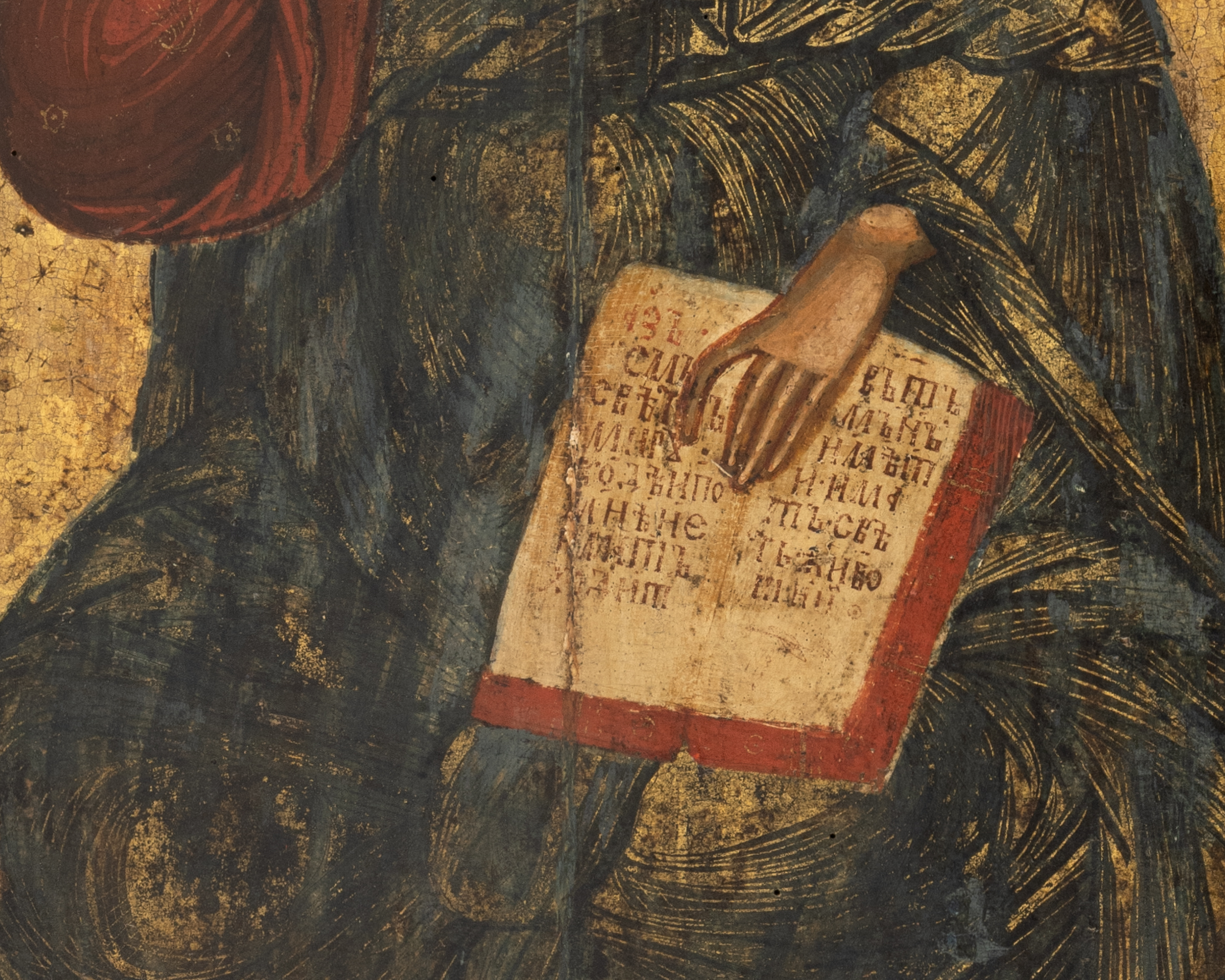
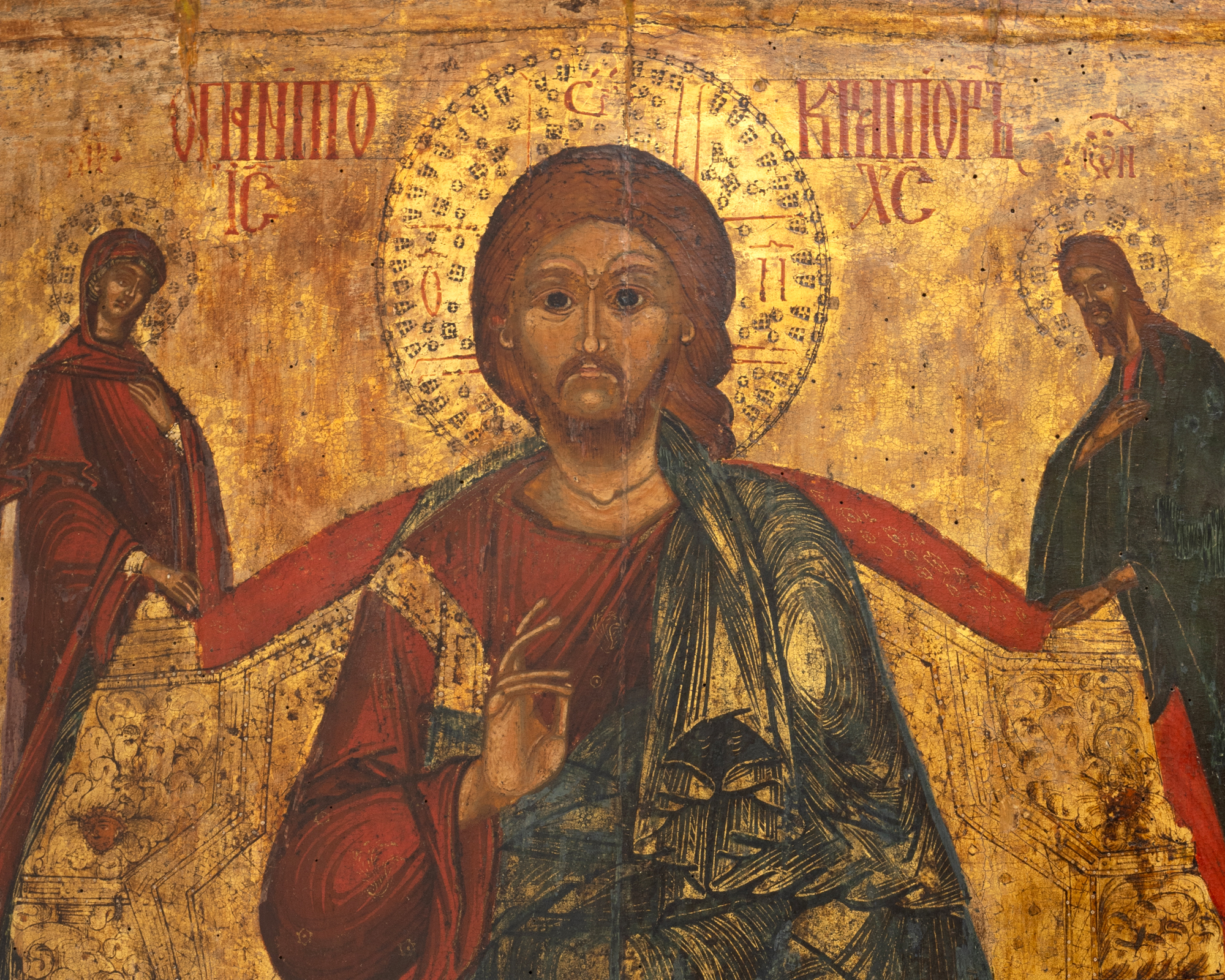
Identification elements of iconographic and stylistic order: The icon of Jesus Christ is part of a series with the Virgin Mary and Child, Saint Nicholas, as well as the icon of Saint John the Baptist and Archangel Michael. In the hollow nave of the icon, on a gold background, the top part is painted green, and the bottom part presents the depiction of Jesus Christ, seated on a gold chair, with a straight bench and a curved backrest, decorated on the sides with gold Brancovenesc motifs. He blesses with his right hand, and with his left he holds the open Gospel, resting on his knee. According to tradition, Jesus Christ is dressed in a red chiton with golden embroidered loros and a blue himation. The folds of the garment are rendered in darker or lighter shades of the same color, and for the himation the painter used gold for highlights. Behind the chair, in a standing posture, of smaller dimensions, in an attitude of prayer, the intercessors the Virgin Mary and Saint John the Baptist are depicted, dressed according to tradition: the Virgin Mary with a red maforion and blue gown, and Saint John the Baptist with a blue cloak lined with red. The characters' faces have the typology typical of the Brancovenesc style, and around their heads, they wear haloes decorated with "wheel".
Identification elements of a technical order: Like the icon of the Virgin Mary, with which it is paired, in this case too, the linden wood panel is reinforced at the back with two semi-sunken crossbars, and on the front is planed: ground, gold leaf, tempera on wood, varnish.
Conclusions: According to the stylistic and technical characteristics, the icon can be placed in the Brancovenesc style, and given the overall richness and sumptuousness it reflects, it can be considered a princely order (A.D.).
For clarifications regarding the bidding procedure, hammer price costs, guarantee, payment, and collection terms for the winning lot, we recommend carefully reading/re-reading the Bidding Regulations.
For additional information regarding the lot and the auction, please contact the Art Consultants Department.
SESSION
Brought to you by
Similar lots
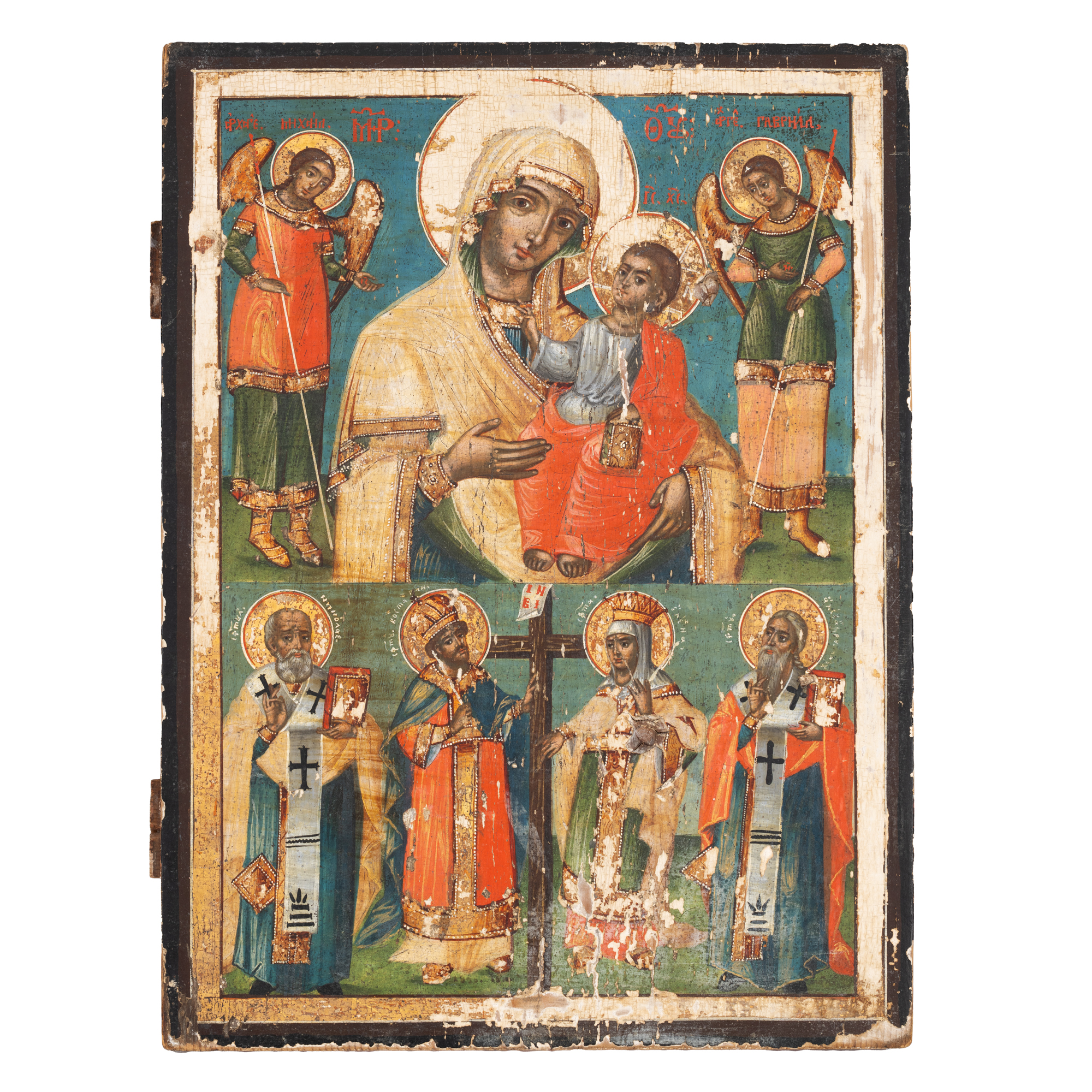
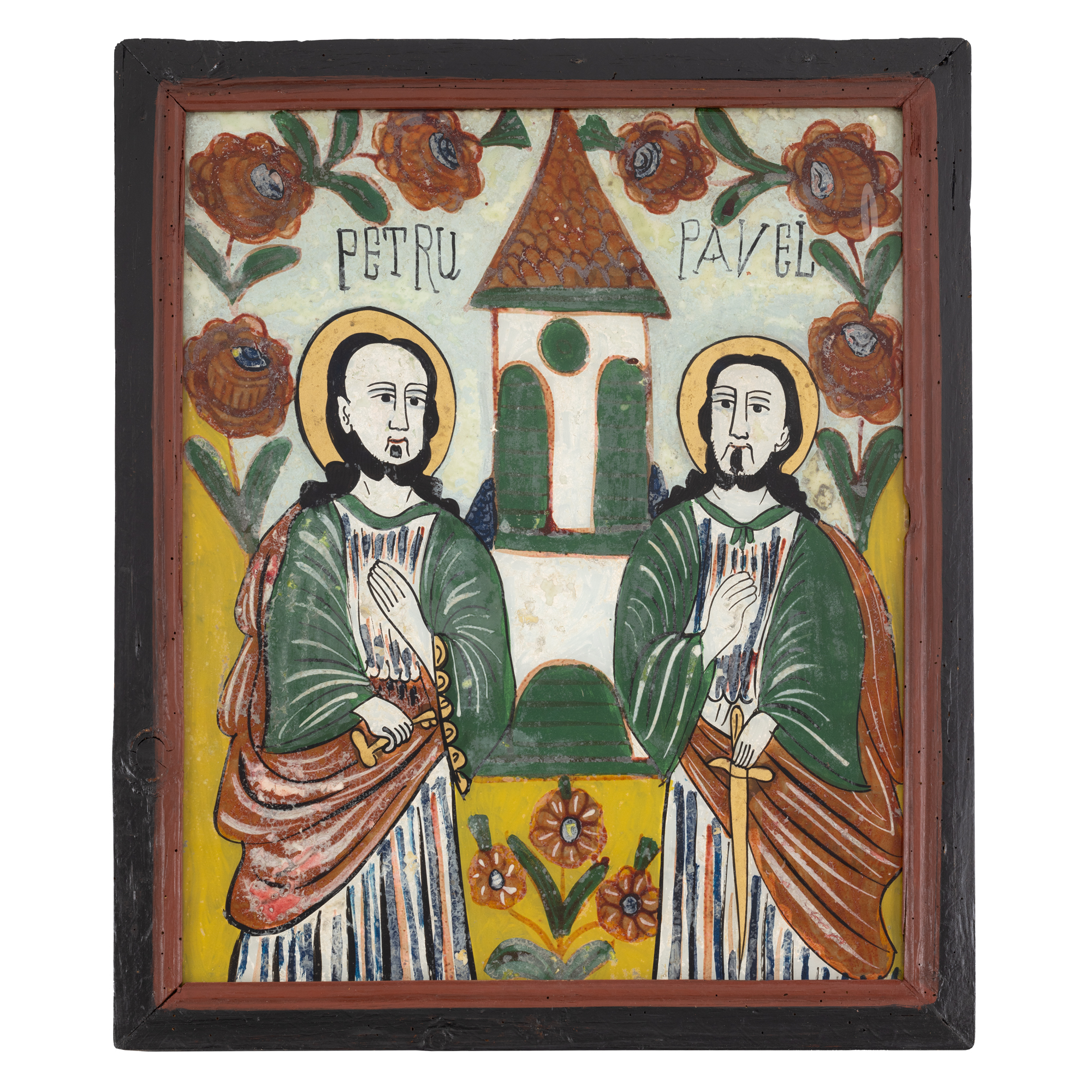
92. Icon on glass, "Saints Apostles Peter and Paul", workshop from Gherla, end of the 19th century.
Starting price:
EUR 250
Sold
EUR 300
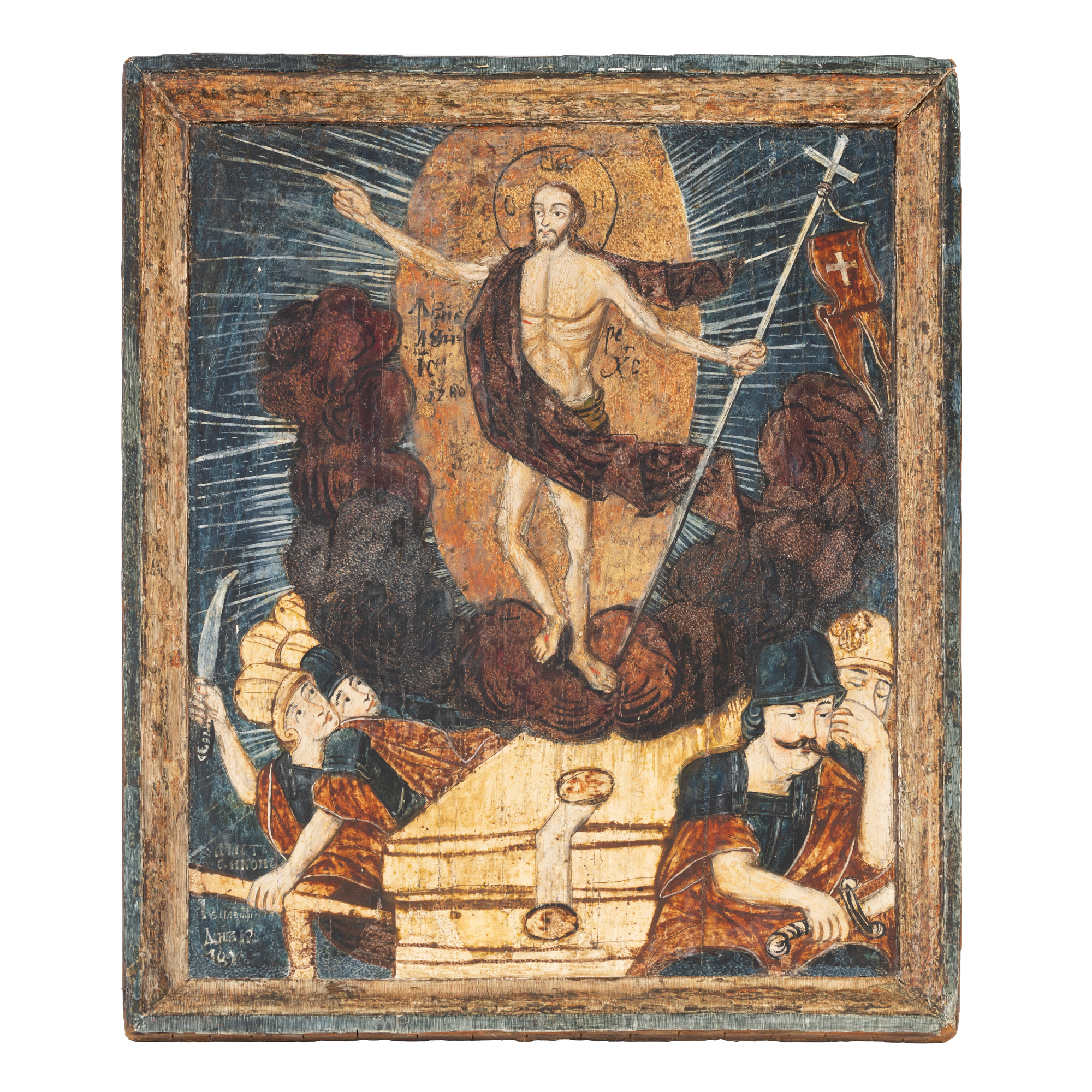
12. Icon on wood, "Resurrection of the Lord", Transylvanian school, workshop from Maramureș, 1780
Starting price:
EUR 1.400
Not sold