The photos of the lot are informative and indicative, and cannot provide a highly detailed view of the object from all angles. We recommend a careful physical inspection of the lot before bidding.
JIANU, I., "Gheorghe Petrașcu", Royal Foundation "King Mihai I", Bucharest, 1945.
OPRESCU, George, “Gheorghe Petrașcu”, Meridiane Publishing House, Bucharest, 1963.
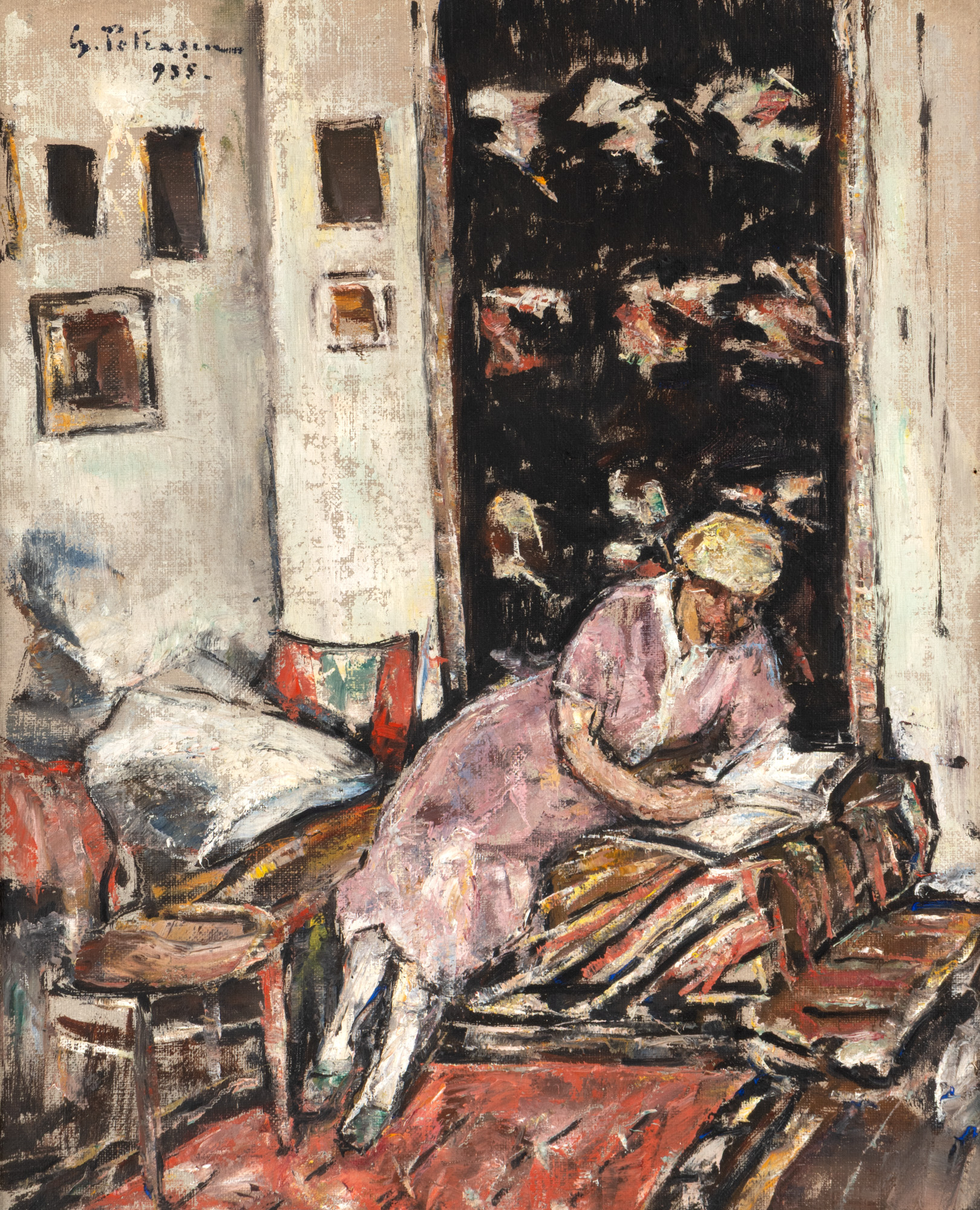
oil on canvas, 42 x 33.5 cm, signed and dated top left, in black, "G. Petrașcu, (1)935"
Research information
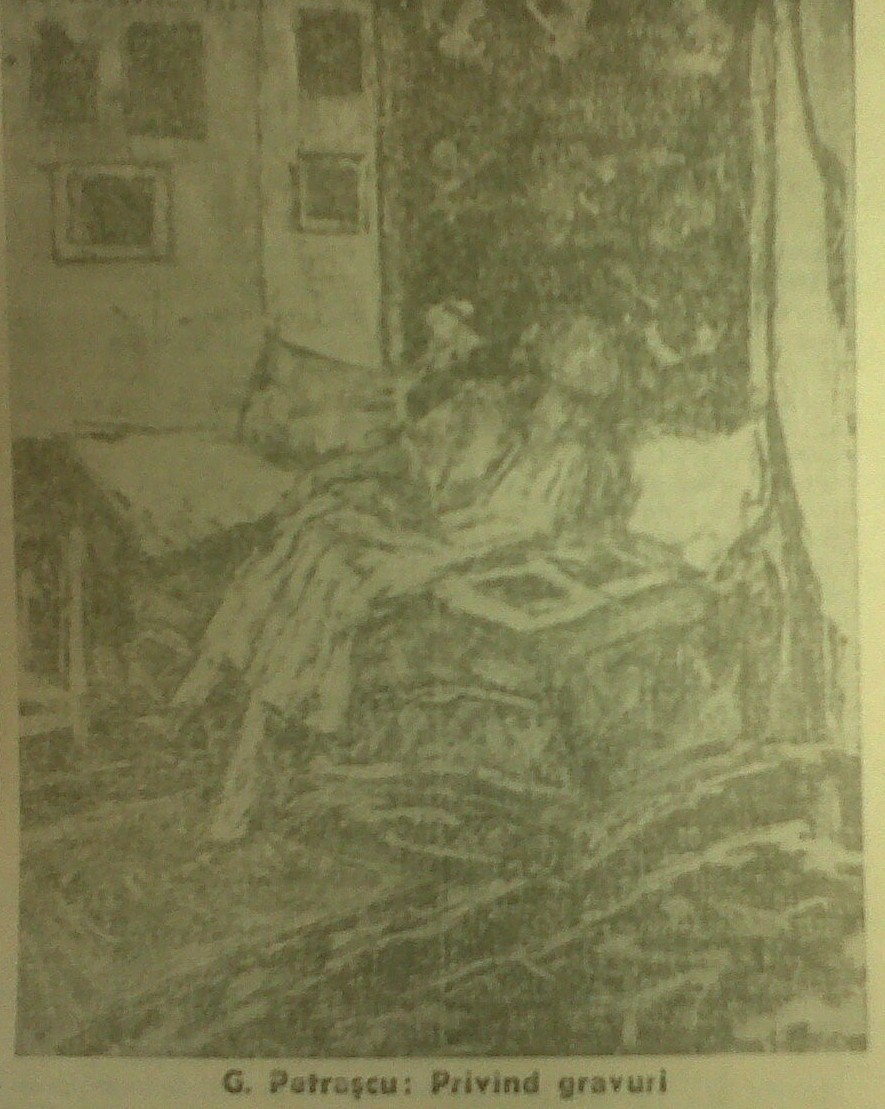
The artwork participated in the personal exhibition Gheorghe Petrașcu, Dalles Hall, Bucharest, March 18-April 14, 1936 and is reproduced in the exhibition catalog under the title "Looking at engravings".
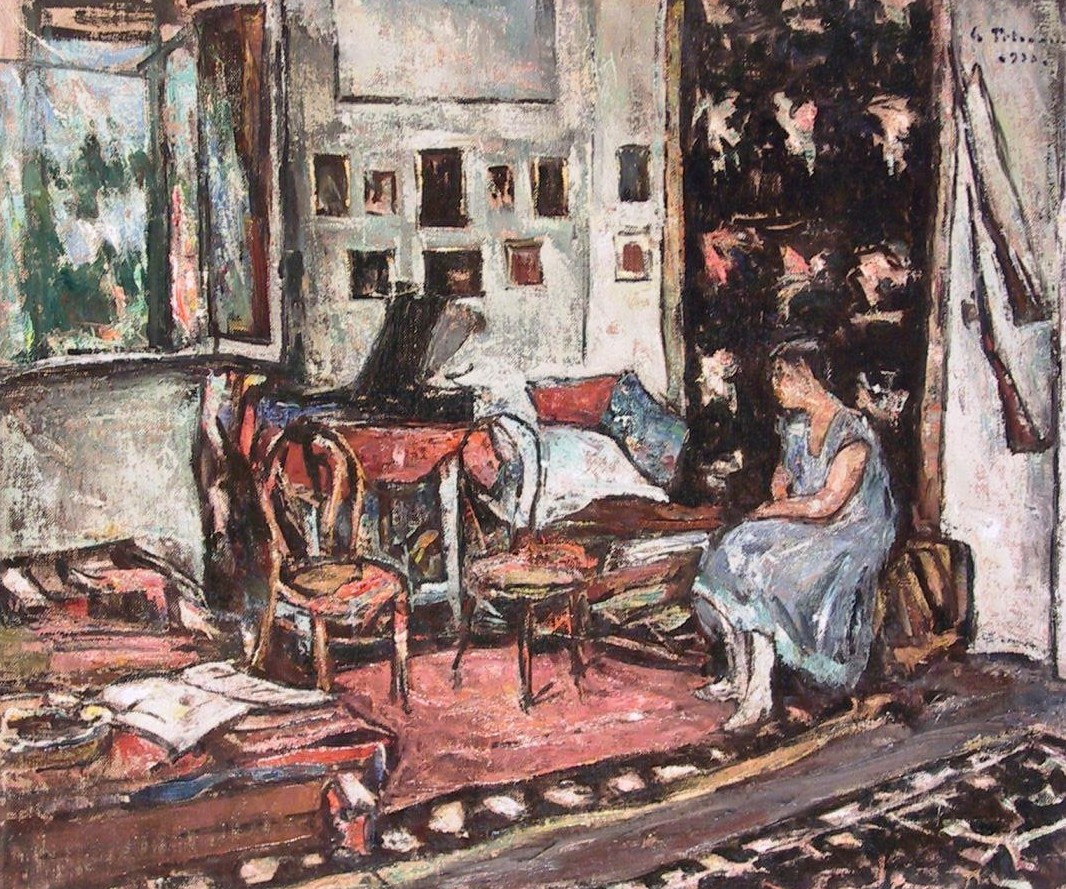
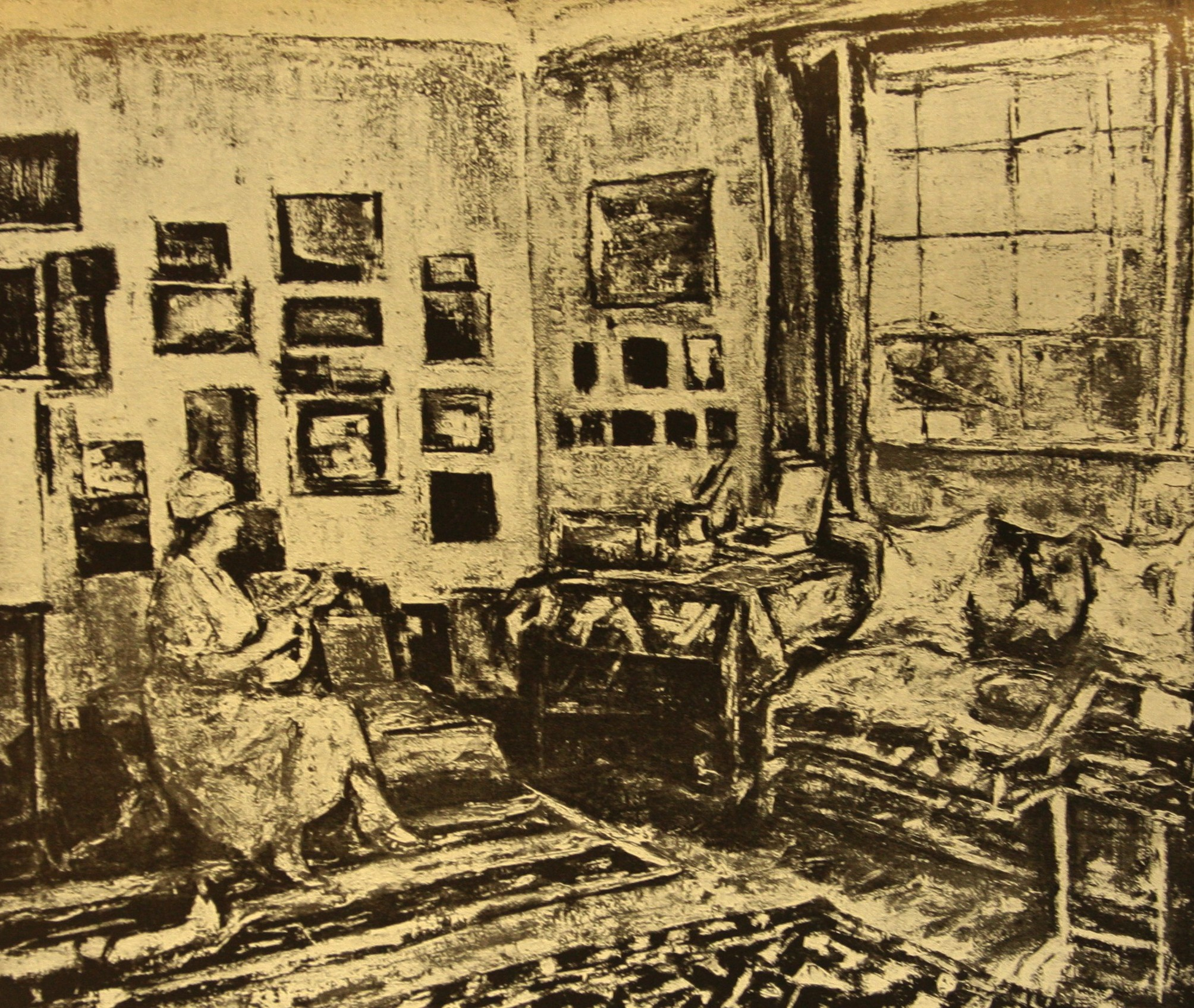
Gheorghe Petrașcu's work reveals indoor scenes, the workshop, endless floral paintings, up to the portraits dedicated to Lucreția, his wife, who often serves as his model. Placed in the middle of nature, by the sea, caught admiring paintings or engravings, sitting on the couch or browsing the newspaper, Lucreția will become the leitmotif of Gheorghe Petrasco's life and work. The artist works directly from color, giving the pictorial matter a particular consistency, a mark of his personal style. Lucreția is not only a model, but a recurring character, invested with symbolic value, representing the intimacy of the home and the stability of family life. Gheorghe Petrașcu will be particularly concerned with the specificity of his own home and will reveal to us, through a long series of canvases dedicated to the motive, aspects of his workshop in Bucharest or Târgoviște or aspects of his family life. According to the style that he realizes in his work, we can notice that this subject of his work will be often repeated between 1920-1940, due to his passion for executing this subject, and the female character realized, is most likely his wife Lucreția, serving him many times as a model. Petrasco focuses on outlining fluid forms, unquestionably highlighted by the use of light effects. The artist has given extraordinary expressiveness to chiaroscuro, which he almost scenographically adapted in an attempt to include in his canvases the atmosphere from his workshop decorated with shades of black, white, and ruddy accents. His wife, Lucreția, as well as his children, will begin to appear more and more often in his work. The artist's interiors become a modest record of daily life and at the same time a leitmotif of his mature opera. He captures the image of the home in its intimacy, with the silhouette of his wife caught on the couch, where she changes the interior atmosphere by illustrating the motive of the character caught in static poses or in relaxing moments. Upon closer inspection of his entire opera, we recurrently encounter an ensemble of elements with emotional value. From the traditional black carpet, with colorful touches, to the indispensable couch, armchair, or the unmistakable wall with paintings. The wall covered with paintings also becomes a central motive in these works, but Petrasco does not venture into a miniaturist tour, but rather sketches summarily, in places recognizable background. The work is dated 1935 and portrays Lucreția in a room, looking at several engravings. Her gesture is calm, internalized, suggesting a state of reflection and contemplation. We do not witness a dynamic scene, but a static, meditative one, specific to Petrașcu's interiors, where time seems suspended. The artist narrows the wide frame to a close plan, cutting the nonessential elements and keeping only a fragment from the wall of the room, where a few paintings are exhibited. This technique accentuates the intimate character of the scene and focuses the attention on the relationship between the character and the objects. The interior becomes a modest record of daily life, but also a space for introspection. We find recurring elements in his work: the wall with paintings or engravings, the specific furniture (couch, armchair), the color dominated by black, white and reddish accents, where all these compose an ensemble with emotional value, recognizable in his entire creation.
Petrașcu's interiors are not simple descriptions of space, but metaphors of intimacy and emotion memory. The work reflects the stylistic maturity of Gheorghe Petrașcu and reveals the essential role of Lucreția in his life and creation. The interior becomes a symbolic universe, and the female character a constant emotional and artistic landmark. Through deep chromaticity and the expressive use of light, Petrașcu builds an intimate, meditative atmosphere in which art and life intertwine harmoniously. (S.S)
For clarifications regarding the bidding procedure, hammer price costs, guarantee, payment, and collection terms for the winning lot, we recommend carefully reading/re-reading the Bidding Regulations.
For additional information regarding the lot and the auction, please contact the Art Consultants Department.