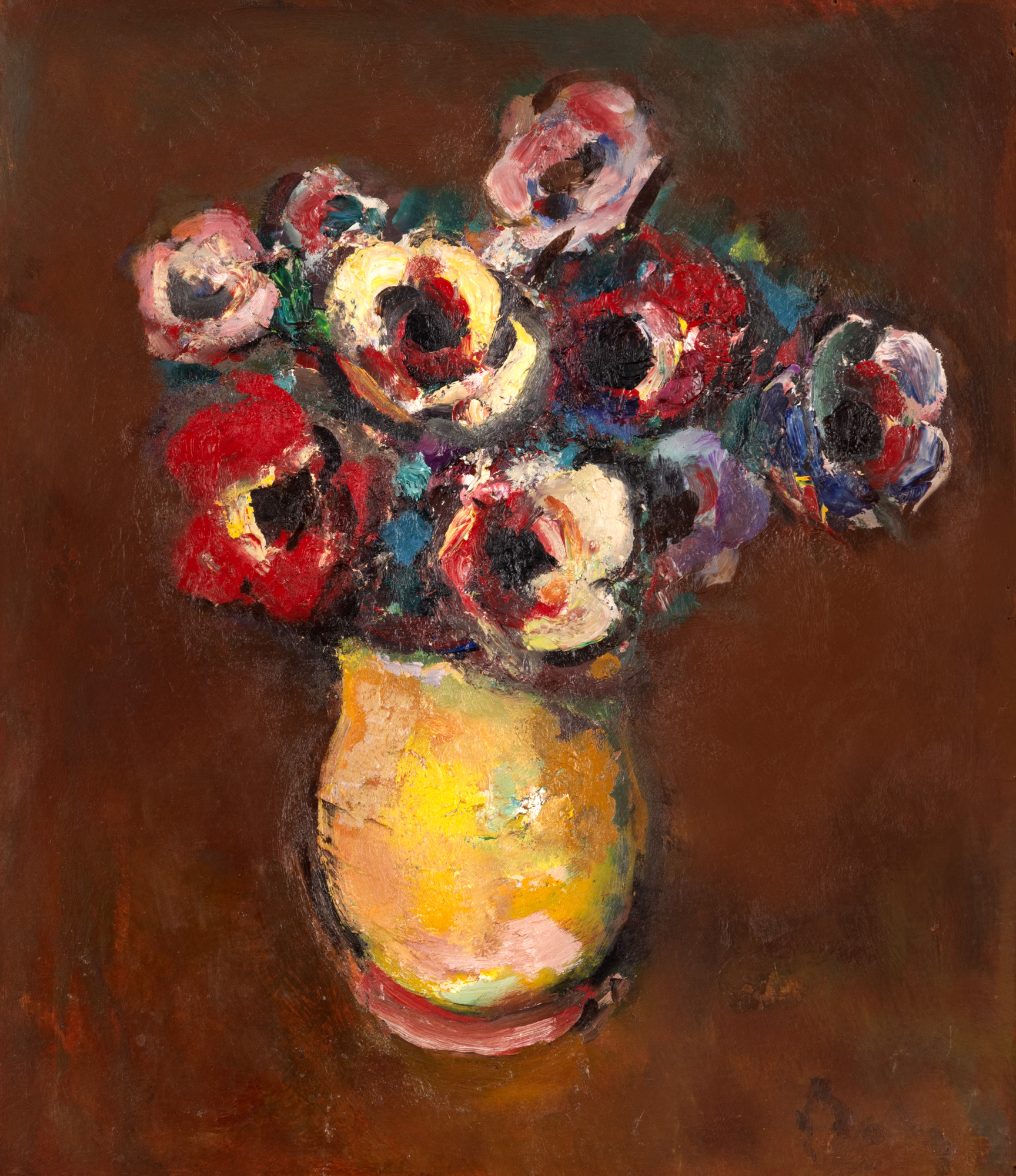
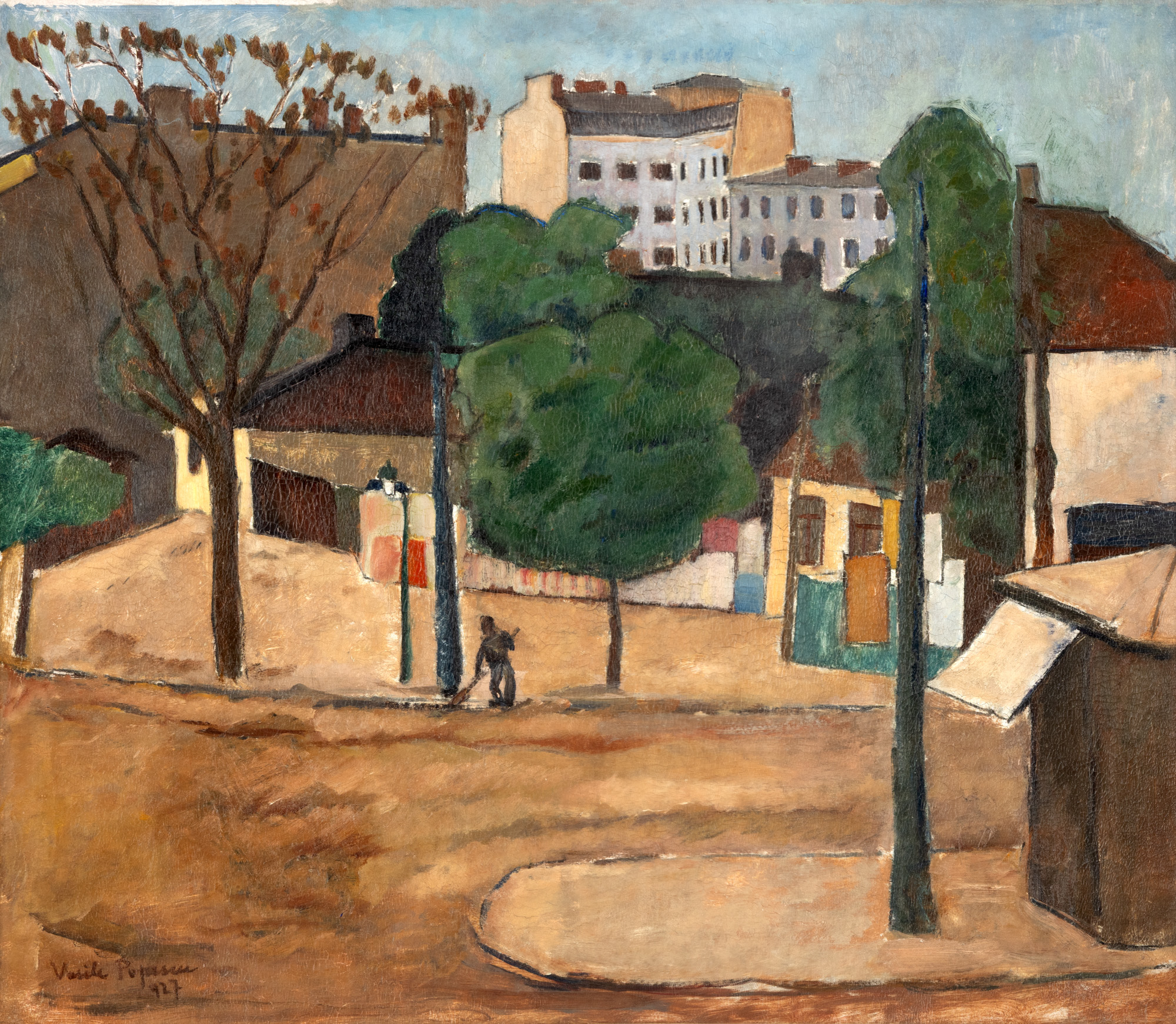
The photos of the lot are informative and indicative, and cannot provide a highly detailed view of the object from all angles. We recommend a careful physical inspection of the lot before bidding.
COSMA, Gaston Gh., Camil Ressu, Meridiane Publishing House, Bucharest, 1967.
ENESCU, Theodor, Camil Ressu, Romanian Academy Publishing House, Bucharest, 1958.
ENESCU, Theodor, C. Ressu, Meridiane Publishing House, Bucharest, 1984.
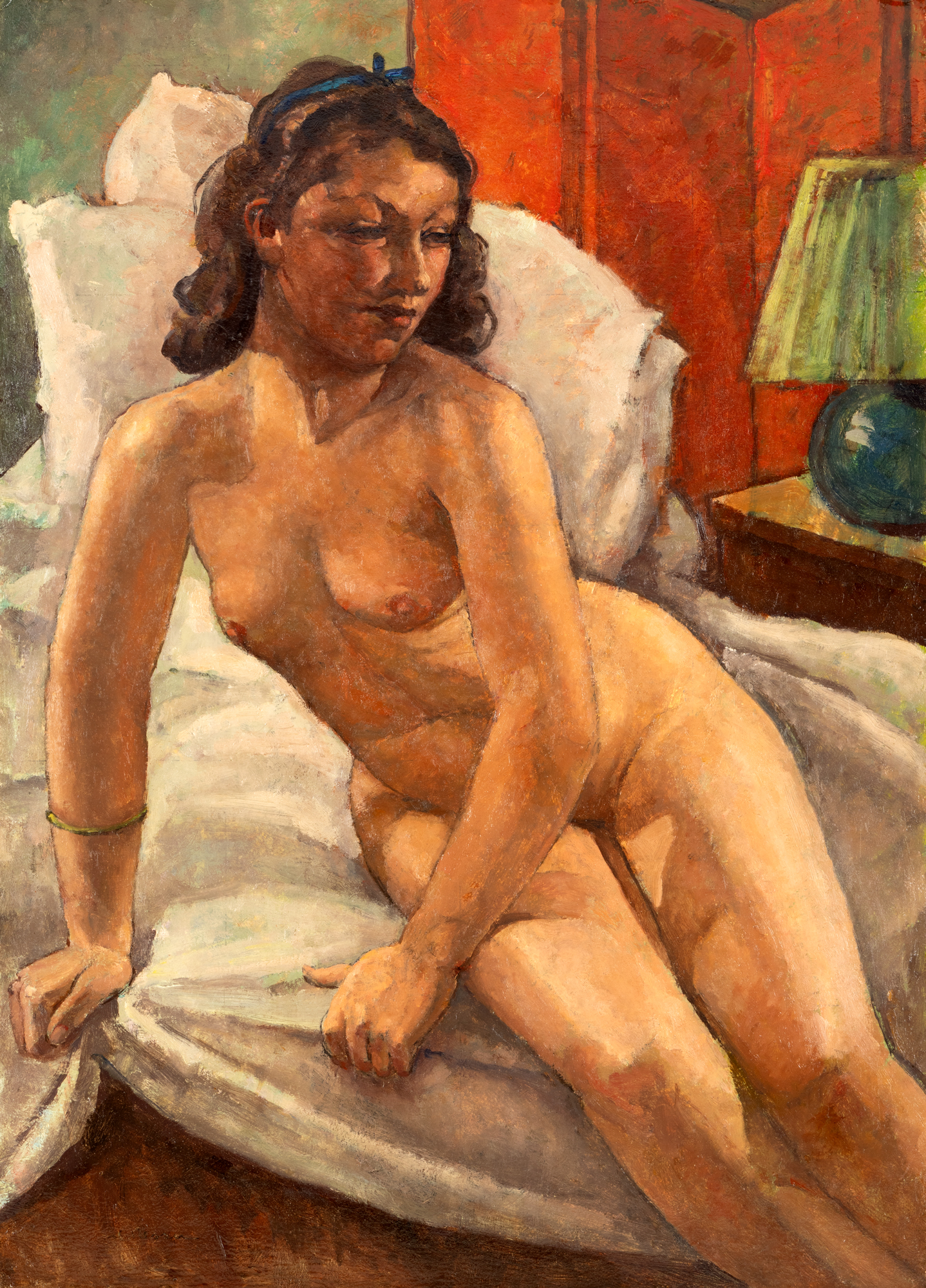
oil on cardboard, 70.5 x 51 cm, signed bottom left, in black, "C. Ressu"
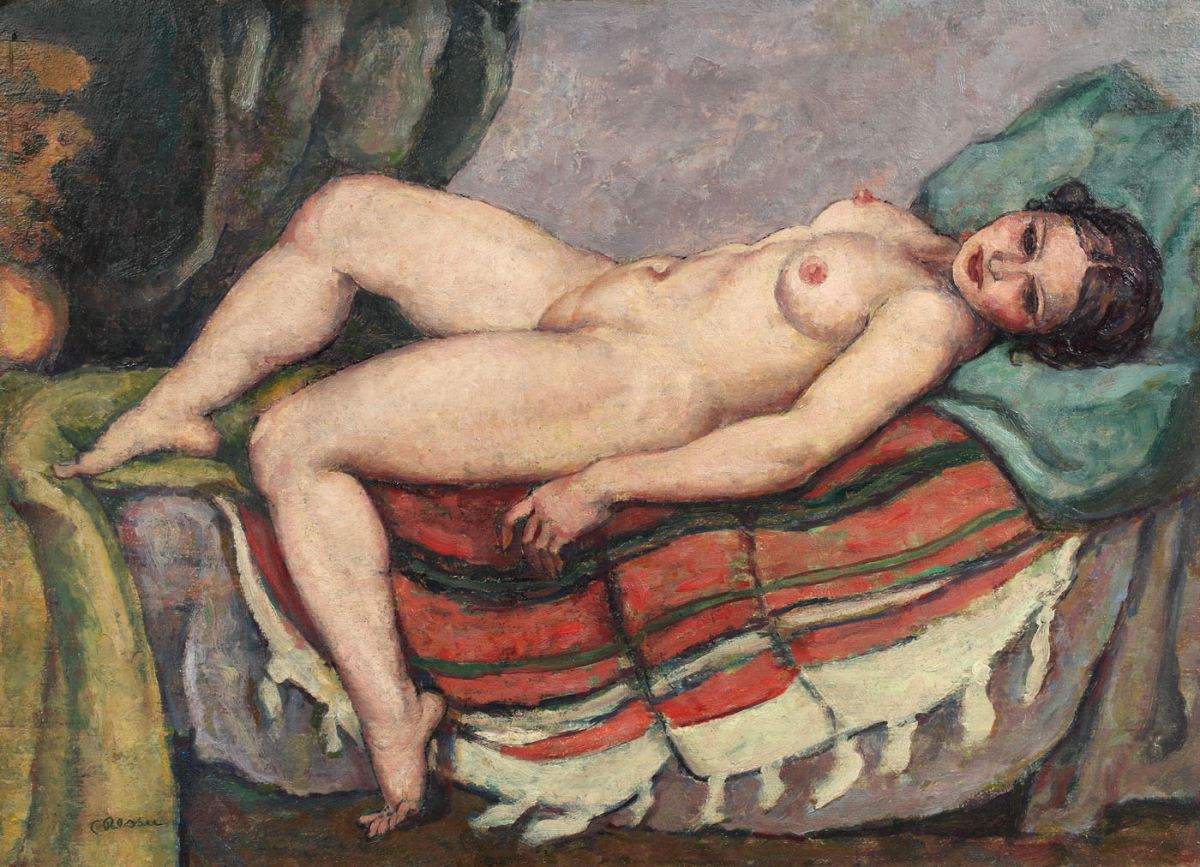
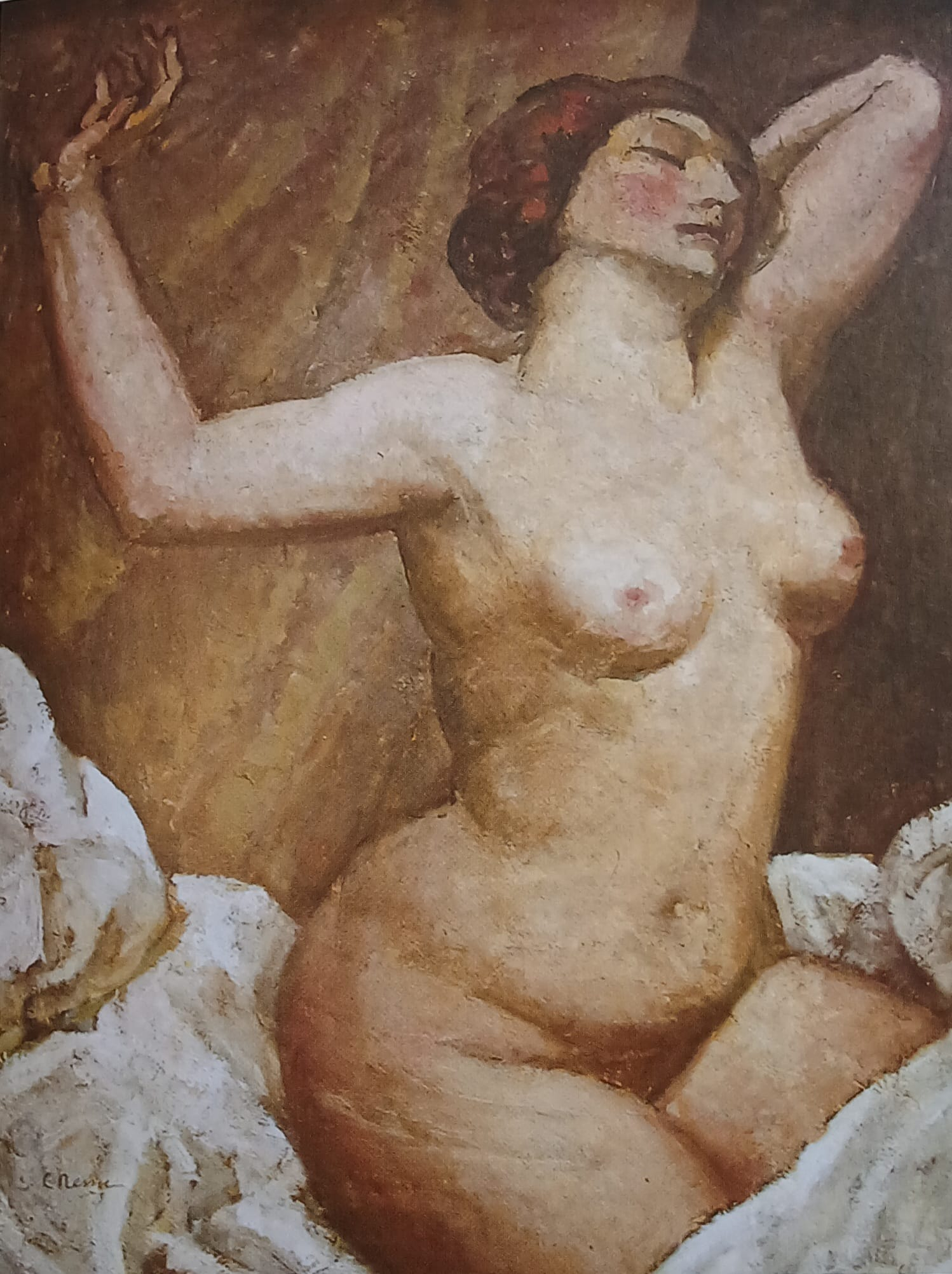
One of the favorite themes within his work is the nude, which represents an assumption of freedom in art and which will stand out, throughout history, as a special genre of painting. The period 1920-1950 is an important one in his creation, as it represents the interest in making nudes. He focuses on overcoming academicism and anatomical knowledge and stakes more on perfecting his own ideal of beauty. The portrait was practiced by Camil Ressu throughout his career, but it did not manifest itself as a standalone category, but most often it was integrated into a more generous composition. Whether he chooses interiors or landscapes, the painter shapes a theatrical register that coordinates the background of these works in which the model is offered a context. He uses the nude as a means of expression and combines the Renaissance muscular vigor and Baroque carnality within his works, where they stand out through a Renaissance type monumentality that reminds of Raphael, Giorgione or Michelangelo. The characters created by the artist are predominantly represented in a robust manner, overflowing with vital energy and fertility, as can be seen in the present representation, where the character is portrayed from semi-profile. Within the representation of the character, the full and well-defined forms can be observed: both in the area of the bust, abdomen, arms and thighs. The composition is harmonized not only through strokes and forms, but also through well-argued chromatic choices. It focuses on the rendering of the reality of volumes and constructive rhythms, where this element is particularly observed in portraits, where he pays special attention to models, lines and rendered strokes. Camil Ressu is concerned with the precise delimitation of contours, uses a predominantly linear rhythm and a bright chromatic in an attempt to underline the silhouettes of the characters in his works, such as: "On the cliff" (1920s), "Aișe" (1920s), "At the bath" (1930s) or "Nude on a divan" (1930s). Emphasis is placed on bright chromatics and the precision of contours, with the artist managing to transform reality into a profoundly balanced form of art, in which vital energy intertwines with the rigor of plastic construction, and the human figure becomes the center of an artistic and coherent vision of the scene. The background is designed to highlight the human figure, where most often, it is simplified, treated in wide chromatic surfaces, with balanced tones, creating a harmonious contrast with the characters. Through this simplification, the background becomes a space supporting the volumes, accentuating the clarity of the silhouette. Light plays a fundamental role in defining shapes. Ressu uses a bright, but controlled, chromatic, avoiding dramatic effects or violent contrasts. Light shapes the body of the female character through smooth transitions from illuminated to shadowed areas, contributing to the impression of solidity and stability, where the volumes gain consistency, and the human figure asserts itself with force and balance in the compositional space. (S.S).
For clarifications regarding the bidding procedure, hammer price costs, guarantee, payment, and collection terms for the winning lot, we recommend carefully reading/re-reading the Bidding Regulations.
For additional information regarding the lot and the auction, please contact the Art Consultants Department.
By choosing "Accept all cookies" you agree to the use of cookies to help us provide you with a better user experience and to analyse website usage. By clicking "Adjust your preferences" you can choose which cookies to allow. Only the essential cookies are necessary for the proper functioning of our website and cannot be refused
Cookie settings
Our website stores four types of cookies. At any time you can choose which cookies you accept and which you refuse. You can read more about what cookies are and what types of cookies we store in our Confidentiality Policy.
are necessary for technical reasons. Without them, this website may not function properly.
are necessary for specific functionality on the website. Without them, some features may be disabled.
allow us to analyse website use and to improve the visitor's experience.
allow us to personalise your experience and to send you relevant content and offers, on this website and other websites.