Meniu

Buying
How to sell
Contact
English
Gifts
Reduced Twice

Rare Books, Documents, Photography & Posters

Collectible Religious Art

Asian Art, Technical Objects, Taxidermy, Curiosities & Antiques

Jewelry & Watches

Numismatics, Medals, Maps, Arms & Decorations

Luxury, Elegance, Collectible Cars & Beverages

Collectible Folk Art

Sneakers & Toys

Discover


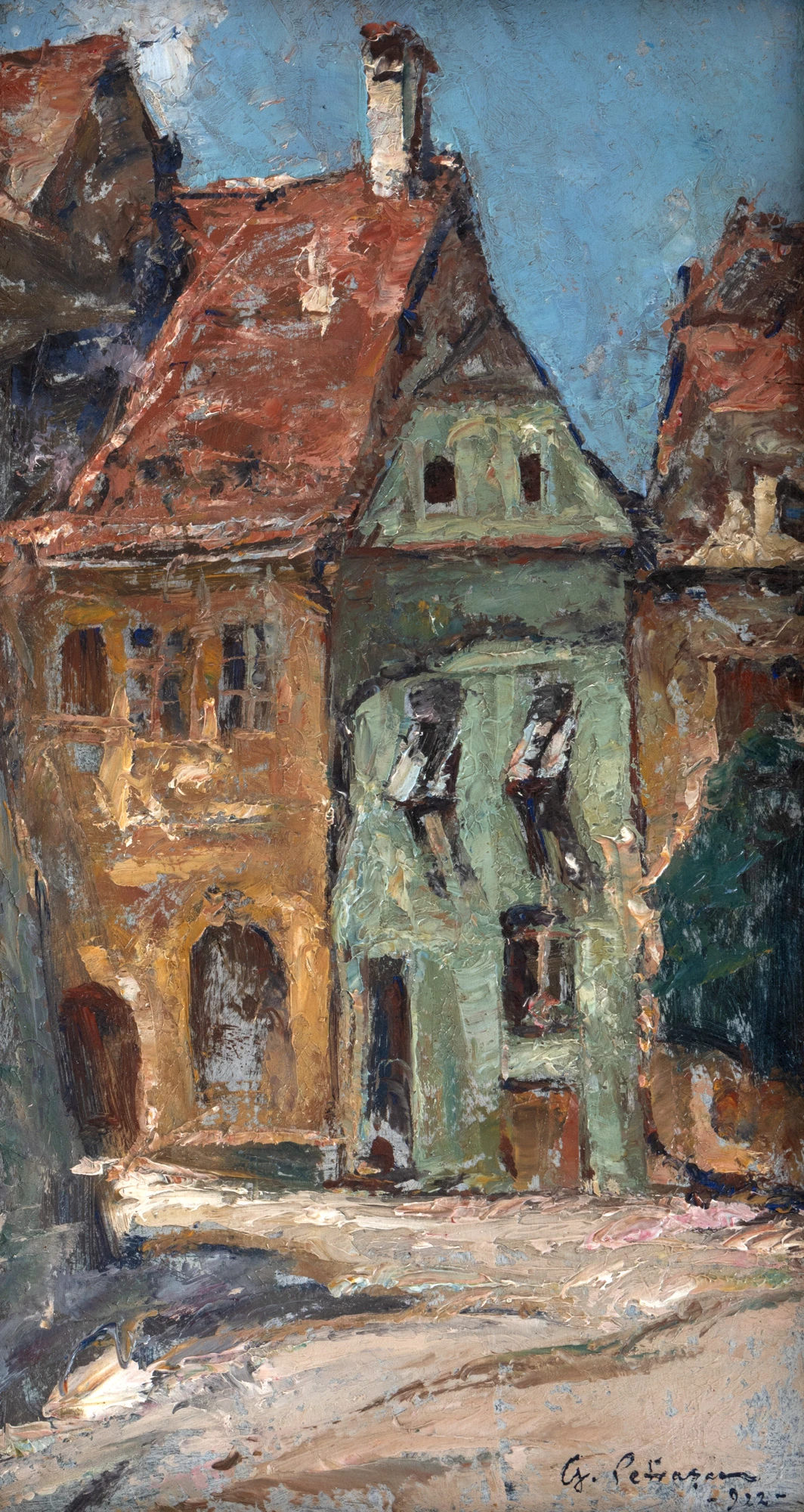
60. Houses at Vitré [1931]
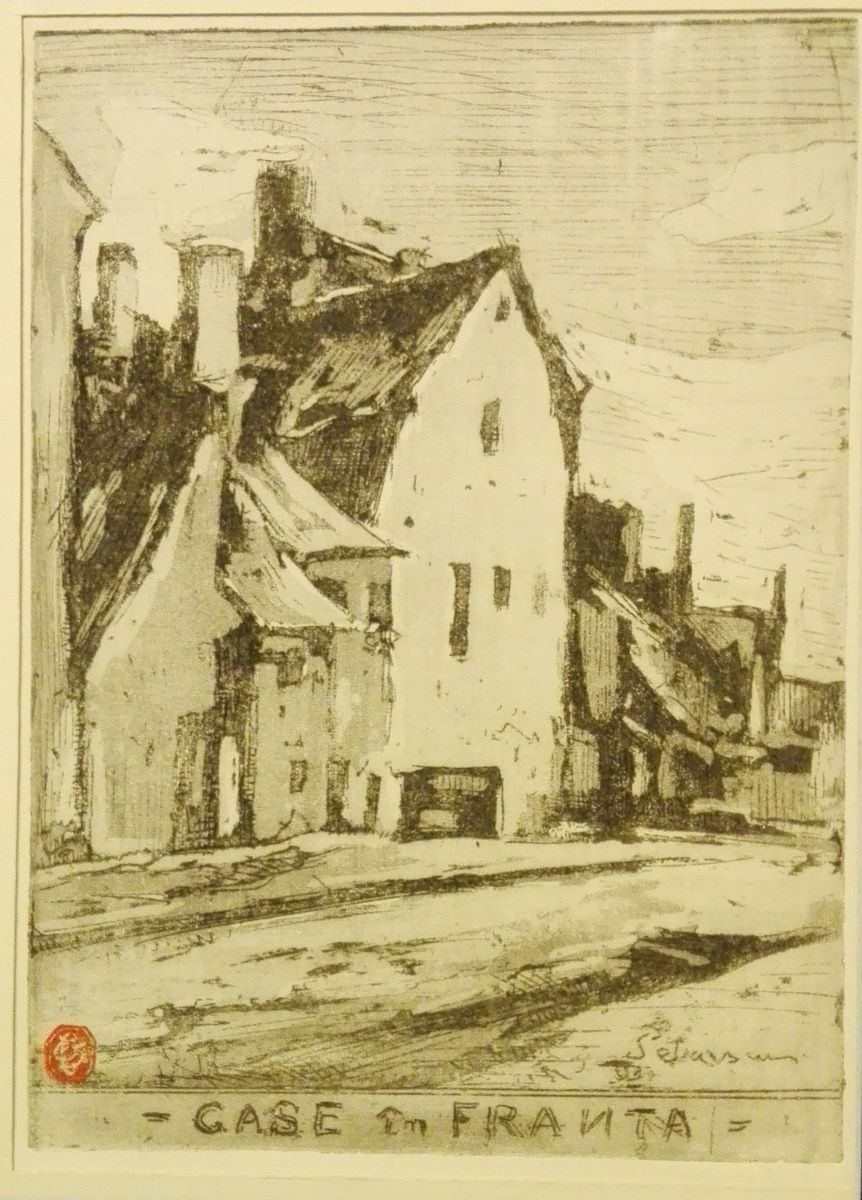
The photos of the lot are informative and indicative, and cannot provide a highly detailed view of the object from all angles. We recommend a careful physical inspection of the lot before bidding.

60. Houses at Vitré [1931]
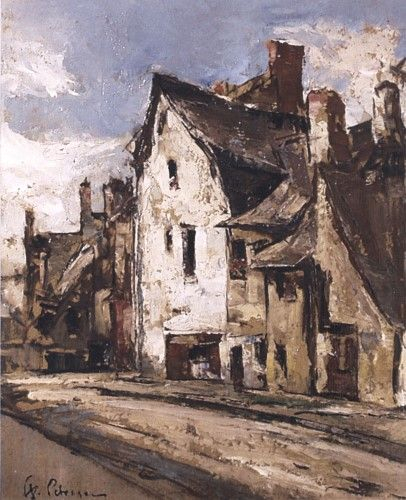
1872, Tecuci, Galați - 1949, Bucureşti

Estimate:
EUR 7.000 - 10.000
Sold
EUR 14.000

References

JIANU, I., "Gheorghe Petrașcu", Royal Foundation "King Mihai I", Bucharest, 1945. OPRESCU, George, "Gheorghe Petrașcu", Meridiane Publishing House, Bucharest, 1963.

oil on cardboard, 29 x 16 cm, signed and dated bottom right, in black, "G. Petrașcu, (1)922"

PROVENANCE

Ecaterina Caragiale-Logadi's historical collection.

Between 1900-1930, Gheorghe Petraşcu embarked on several journeys to the north of France, where he created numerous scenes inspired by places such as Vitré, Morlaix, Saint-Malo, and Ploumanac’h. His first visits to Brittany took place at the beginning of the century, in a context where the artist followed an almost initiatory process, following the route previously taken by Nicolae Grigorescu in the northwest of France. Over the years, Petraşcu returned to Brittany, especially to Vitré, being attracted by the specifics of the medieval towns and the possibilities they offered for exploring the urban space. Narrow streets, the facades of old buildings, the succession of architectural volumes and the perspectives they created became recurring elements in his work, with architecture surpassing the role of a simple background and becoming a true pictorial subject. The year 1921 represents one of the most prolific periods of Petraşcu's creativity, being the year in which the artist created a significant number of works inspired by Vitré. Having returned here after the end of World War I, Petraşcu continued his journey through Brittany, also stopping in Saint-Malo, Saint-Énogat, and Morlaix. In this sense, he can be considered, indirectly, a successor of Nicolae Grigorescu, both artists showing a particular interest in the landscape and specifics of Brittany and contributing to the transposition of these landscapes into Romanian painting. If Grigorescu had found above all the expressiveness of the landscape and local life in Brittany, Petraşcu developed this experience in a personal direction, focusing more and more on architecture and the relationship between construction, street, and the urban space. Petraşcu's interest in the architecture of Vitré can be explained by its peculiar character, dominated by medieval constructions, houses with a traditional structure, narrow facades and streets that create fragmented and dynamic perspectives. Between 1921-1936 he embarked on journeys not only in France, but also in Italy and Spain. However, the unique architecture of the houses in the small settlement on the western tip of Brittany remained a favored and recurring motif for the artist, such as: "Houses in Vitre", "Houses in Vitre", "Street in Vitre" or "Houses" that can be found at the National Museum of Art of Romania.

For clarifications regarding the bidding procedure, hammer price costs, guarantee, payment, and collection terms for the winning lot, we recommend carefully reading/re-reading the Bidding Regulations.

For additional information regarding the lot and the auction, please contact the Art Consultants Department.

SESSION
Tue, 20 October 2026, 19:00

Similar lots

Street in Bucharest

164. Street in Bucharest [1930]

Horia Damian

    Estimate: EUR 1.000 - 2.000
    Sold EUR 1.200
Breton

Breton

Nicolae Tonitza

EUR 85.600
Nude

50. Nude [1933]

Nicolae Tonitza

    Estimate: EUR 18.000 - 25.000
    Sold EUR 18.000