Meniu

Buying
How to sell
Contact
English
Gifts
Reduced Twice

Rare Books, Documents, Photography & Posters

Collectible Religious Art

Asian Art, Technical Objects, Taxidermy, Curiosities & Antiques

Jewelry & Watches

Numismatics, Medals, Maps, Arms & Decorations

Luxury, Elegance, Collectible Cars & Beverages

Collectible Folk Art

Sneakers & Toys

Discover


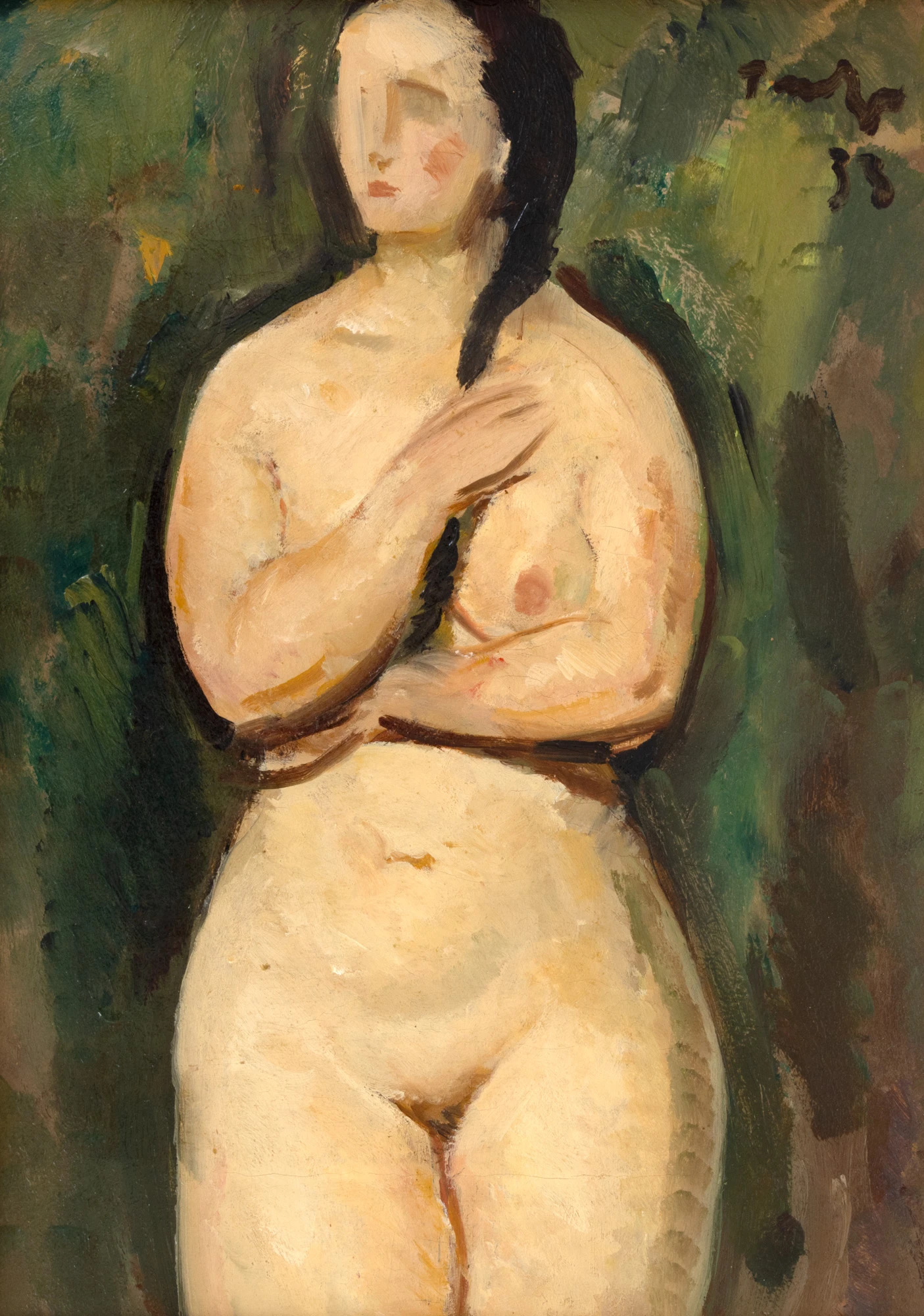
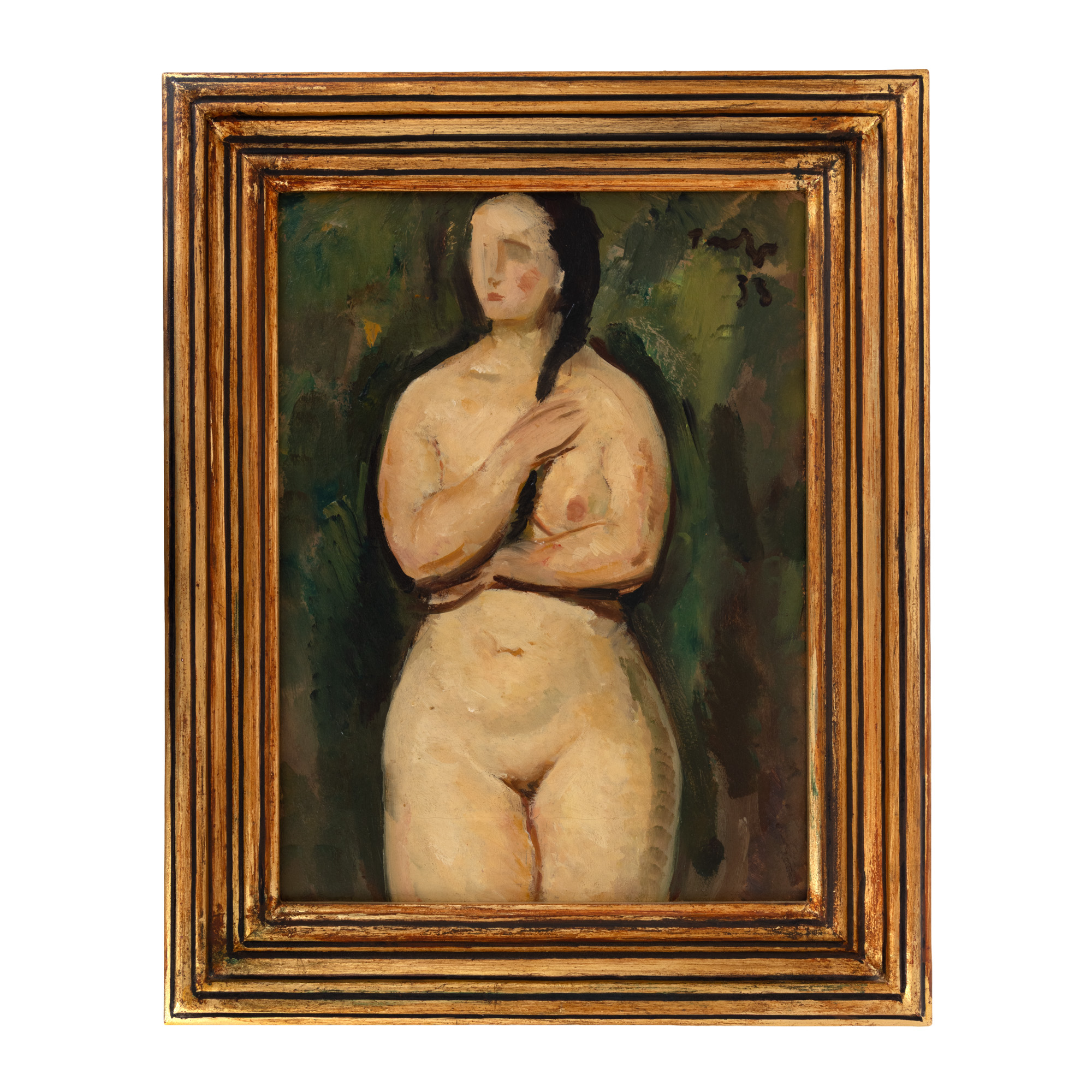
50. Nude [1933]

The photos of the lot are informative and indicative, and cannot provide a highly detailed view of the object from all angles. We recommend a careful physical inspection of the lot before bidding.

50. Nude [1933]

1886, Bârlad - 1940, Bucureşti

Estimate:
EUR 18.000 - 25.000
Sold
EUR 18.000

References

TONITZA, Nicolae, "Writings about Art", Ed. Meridiane, Bucharest, 1964. ȘORBAN, Raoul, "Nicolae Tonitza", Ed. Meridiane, Bucharest, 1965. ȘORBAN, RAOUL, "Nicolae Tonitza", Ed. Meridiane, 1973. OPREA, Petre, "Art collector Dr. Maria Avramescu" (1902-1994), Museums Magazine, No. 2, 1996.

oil on canvas, 40 x 30 cm, signed and dated upper right, in black, "Tonitza, (19)33"

Research information

The artwork participated at the "Group of Four" Exhibition, 1933, cat. No. 153, under the title "Study". The artwork also took part in the "N. N. Tonitza" Exhibition, Art Museum of R.P.R., January-March 1964, and is reproduced in the exhibition catalog at cat. 212, under the title "Nude Girl on a Green Background". The artwork is reproduced in "Tonitza", Barbu Brezianu, Ed. Academy of Socialist Republic Romania, Bucharest, 1967, at cat. 116, under the title "Nude Girl on a Green Background". The artwork is reproduced in "N. N. Tonitza", Barbu Brezianu, Ed. Meridian, 1986, at cat. 84, under the title "Nude Girl on a Green Background". The artwork is mentioned in "Museum Review", No. 2, 1996, p. 28.

PROVENANCE

A. Florian historical collection; Aurel and Maria Avramescu historical collection.

Starting from 1926, one of the themes in which the artist Tonitza would excel both graphically and pictorially, would be the theme of nudity. Captured at home, in the intimacy of the home or in Balcic, nudes would provide the image of profound sculptural interpretations, within which the artist would position color on the scale of his creative values. According to his own beliefs, nudity would reflect a subtle brotherhood between color and light, thus becoming a study problem, and over time, a leitmotif of his creation. A virtuous draftsman, with a hand trained in "academy" classes, the artist will become accustomed to rendering the human body from the first years of study, researching volumes, proportions, dynamics, plasticity, which he would later envelop in new sculptural interpretations. His contemplation is warm, achieved with delight in the vicinity of a luminous palette that he observes and understands. He does not copy the nature he has in front of him, nor does he try to imitate it, but will recompose the forms in chromatic correspondences and freely caught luminosities. He will juggle the strokes on large planes, avoiding perfect anatomies, a detail that will explain his preference for the representation of torsos, in which he will demonstrate a special interest for tonal luminosities. The vibrant interpretation of the diaphanous epidermis, outlined by the artist through details of fine lines, frames the character in almost matte backgrounds, usually dominated by a single color, and sometimes in lavish scenes, with arabesques and intense chromatics. His practice of painting from memory will separate the theme of nudity from the sphere of the human, placing it in a general sculptural plane, thus revealing the contemplative manner of the artist's interpretations of life, as well as of study problems, which he will treat for the unique purposes of chromatic and light, which will in time become his belief. Present in 1964 at the retrospective exhibition of the painter Nicolae Tonitza, organized at the National Museum of Art, the opera "Nude" was to join the other 11 paintings from the collection of Dr. Maria Avramescu ("Woman in the room" - 1925, "Dolls" - 1927-1928, "Still life with ceramic vessel" - 1927, col. H. Trembinski, "Spaniard" - 1927-1928, "Vase with yellow flowers on decorative background" - 1927-1929, "Still Life with Vessel and Book" - 1927-1929, "Vase with flowers and umbrella" - 1927-1929, col. N. Tabacovici, "Vase with flowers" - 1928-1940, "Vase with flowers" - 1928-1930, both once a pendant, "Gladiolus" - 1935, from the former collection of Constantin Potârcă), praised as the most consistent participation on behalf of a collector. (GM)

For clarifications regarding the bidding procedure, hammer price costs, guarantee, payment, and collection terms for the winning lot, we recommend carefully reading/re-reading the Bidding Regulations.

For additional information regarding the lot and the auction, please contact the Art Consultants Department.

SESSION
Tue, 20 October 2026, 19:00

Similar lots

Cornflowers

52Т. Cornflowers [1908-1910]

Ştefan Luchian

    Estimate: EUR 45.000 - 75.000
    Sold EUR 60.000
Seedlings

141. Seedlings [1992]

Constantin Piliuţă

    Estimate: EUR 4.000 - 6.000
    Sold EUR 5.500
Houses at Vitré

60. Houses at Vitré [1931]

Gheorghe Petraşcu

    Estimate: EUR 7.000 - 10.000
    Sold EUR 14.000